Two more things emerged from stirring the 4.00 a.m. pot, an unsought consequence of which. last night, was a long bout of sleeplessness and some scribbled notes. A couple of these will serve as an addendum to yesterday’s piece.
The first comes from Rachel Kushner in her new, Booker short-listed novel, Creation Lake.
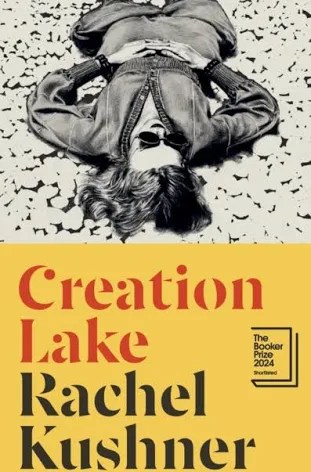
At one point in her story (p. 209) Kushner’s narrator, Sadie Smith — an undercover agent provoking disruption at a protest by eco-activists in southern France — pauses to reflect on the notion of identity:
‘It is natural to attempt to reinforce identity, given how fragile people are underneath these identities they present to the world as “themselves.” Their stridencies are fragile, while their need to protect their ego, and what forms the ego, is strong.’
Her conclusions are striking:
‘People might claim to believe in this or that, but in the four a.m. version of themselves, most possess no fixed idea on how society should be organised. When people face themselves, alone, the passions they have been busy performing all day, and that they rely on to reassure themselves that they are who they claim to be, to measure their milieu of the same, those things fall away.
What is it people encounter in their stark and solitary four a.m. self? What is inside them?
Not politics. There are no politics inside of people.
The truth of a person, under all the layers and guises, the significance of group and type, the quiet truth, underneath the noise of opinions and “beliefs,” is a substance that is pure and stubborn and consistent. It is a hard, white salt.
This salt is the core. The four a.m. reality of being.’
The second piece of feedback from the universe came in the form of an article in The New Yorker, by Alan Burdick, writing in 2016. Burdick is also the author of the book Why Time Flies: A Mostly Scientific Investigation. In the extract that interests me, he is commenting on the uncanny way in which the seasoned insomniac — or anyone prone to sleep disruption — somehow knows what time it is when they awaken at night. Sometimes, or rather, often, to the precise minute. How does that work?
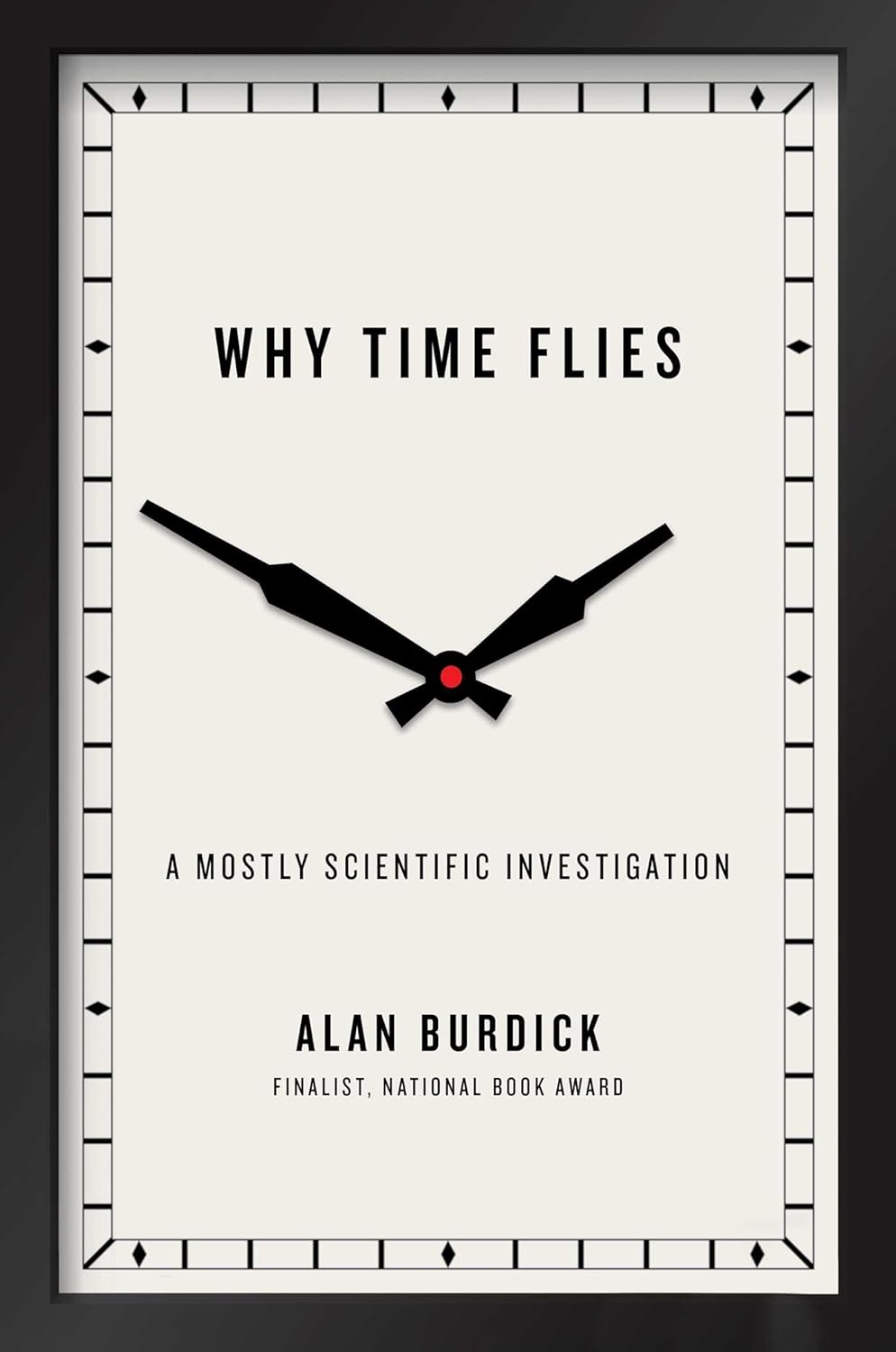
For Burdick, ‘it is always 4.00 a.m., or 4.10 a.m., or once, for a disconcerting stretch of days, 4.27.a.m.’ He quotes Proust, that maestro of insomnia, who wrote: ‘When a man is asleep, he has in a circle around him the chain of the hours, the sequence of the years, the order of the heavenly bodies. Instinctively he consults them when he awakes, and in an instant reads off his own position on the earth’s surface and the time that has elapsed during his slumbers.’
But, beyond the poetry of the heavenly bodies and our own instinct, just why do we awaken so consistently at precisely the same time?
Burdick, writing of his own case, says: ‘It may . . . be a simple matter of induction: it was 4.27 a.m. when I last woke at whatever hour this is, so that’s what time it is now. The surprise is that I can be so consistent. William James wrote, “All my life I have been struck by the accuracy with which I will wake at the same exact minute night after night and morning after morning.” Most likely it’s the work of the circadian clocks, which, embedded in the DNA of my every cell, regulate my physiology over a twenty-four hour period. At 4.27 a.m., I’m most aware of being at the service of something; there is a machine in me, or I am a ghost in it.’
Beyond that, it’s difficult, or even pointless to hypothesise. I continue to wake at precisely the same time for a stretch, until I don’t. And then, of course, whenever I notice it’s that time again — 3.45 in my case — I make a mental note of it, as if acknowledging someone we pass at the same place each day on the way into work, but never get to know.


 Richard Gwyn