Further reflections on waking at 4.00 a.m.
Two more things emerged from stirring the 4.00 a.m. pot, an unsought consequence of which. last night, was a long bout of sleeplessness and some scribbled notes. A couple of these will serve as an addendum to yesterday’s piece.
The first comes from Rachel Kushner in her new, Booker short-listed novel, Creation Lake.
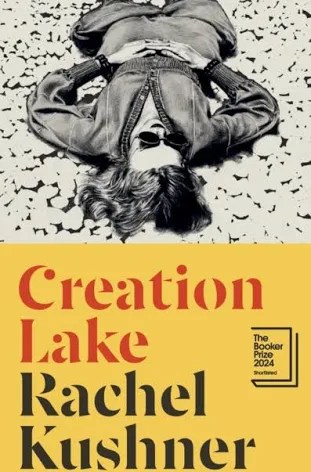
At one point in her story (p. 209) Kushner’s narrator, Sadie Smith — an undercover agent provoking disruption at a protest by eco-activists in southern France — pauses to reflect on the notion of identity:
‘It is natural to attempt to reinforce identity, given how fragile people are underneath these identities they present to the world as “themselves.” Their stridencies are fragile, while their need to protect their ego, and what forms the ego, is strong.’
Her conclusions are striking:
‘People might claim to believe in this or that, but in the four a.m. version of themselves, most possess no fixed idea on how society should be organised. When people face themselves, alone, the passions they have been busy performing all day, and that they rely on to reassure themselves that they are who they claim to be, to measure their milieu of the same, those things fall away.
What is it people encounter in their stark and solitary four a.m. self? What is inside them?
Not politics. There are no politics inside of people.
The truth of a person, under all the layers and guises, the significance of group and type, the quiet truth, underneath the noise of opinions and “beliefs,” is a substance that is pure and stubborn and consistent. It is a hard, white salt.
This salt is the core. The four a.m. reality of being.’
The second piece of feedback from the universe came in the form of an article in The New Yorker, by Alan Burdick, writing in 2016. Burdick is also the author of the book Why Time Flies: A Mostly Scientific Investigation. In the extract that interests me, he is commenting on the uncanny way in which the seasoned insomniac — or anyone prone to sleep disruption — somehow knows what time it is when they awaken at night. Sometimes, or rather, often, to the precise minute. How does that work?
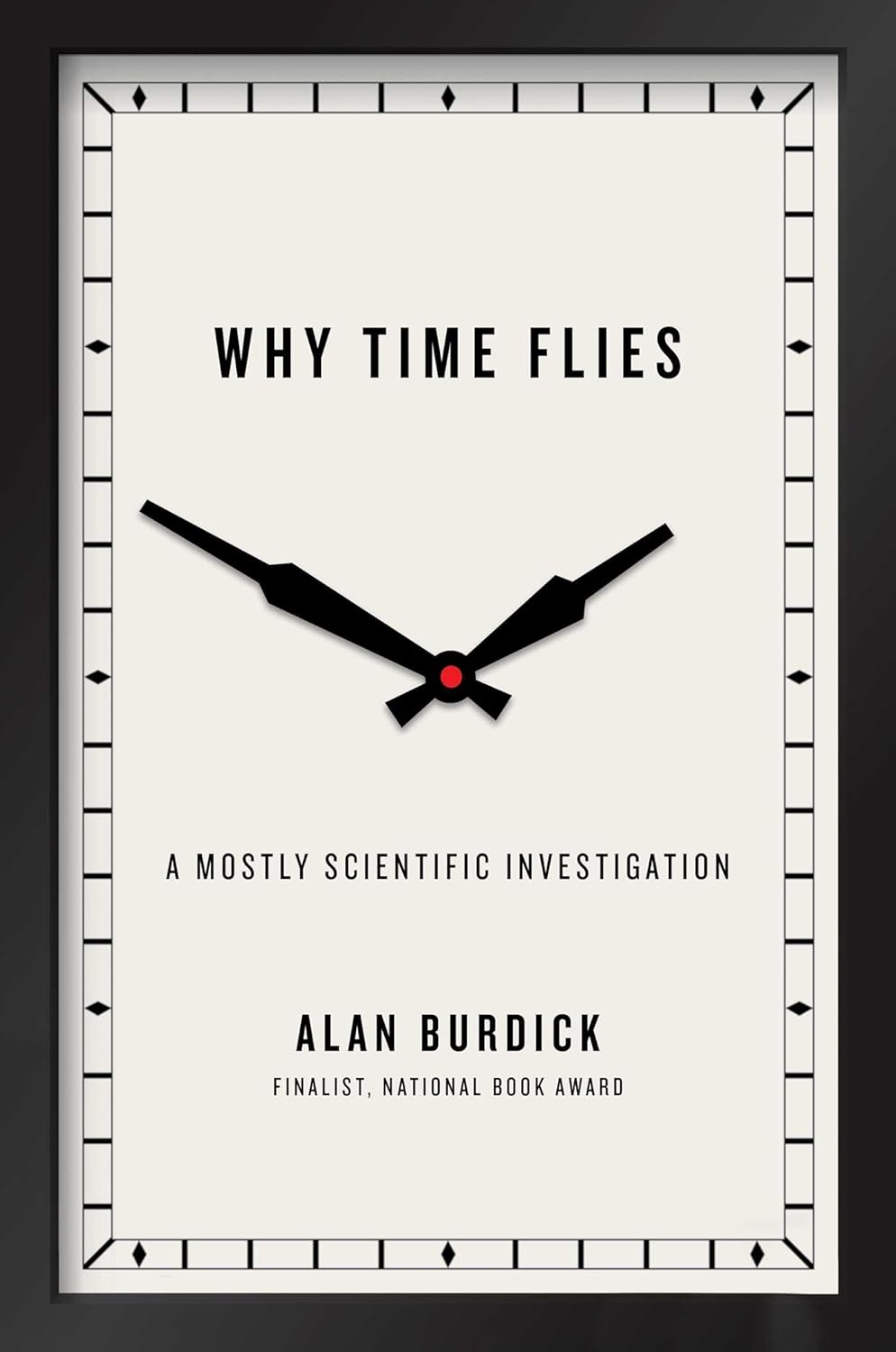
For Burdick, ‘it is always 4.00 a.m., or 4.10 a.m., or once, for a disconcerting stretch of days, 4.27.a.m.’ He quotes Proust, that maestro of insomnia, who wrote: ‘When a man is asleep, he has in a circle around him the chain of the hours, the sequence of the years, the order of the heavenly bodies. Instinctively he consults them when he awakes, and in an instant reads off his own position on the earth’s surface and the time that has elapsed during his slumbers.’
But, beyond the poetry of the heavenly bodies and our own instinct, just why do we awaken so consistently at precisely the same time?
Burdick, writing of his own case, says: ‘It may . . . be a simple matter of induction: it was 4.27 a.m. when I last woke at whatever hour this is, so that’s what time it is now. The surprise is that I can be so consistent. William James wrote, “All my life I have been struck by the accuracy with which I will wake at the same exact minute night after night and morning after morning.” Most likely it’s the work of the circadian clocks, which, embedded in the DNA of my every cell, regulate my physiology over a twenty-four hour period. At 4.27 a.m., I’m most aware of being at the service of something; there is a machine in me, or I am a ghost in it.’
Beyond that, it’s difficult, or even pointless to hypothesise. I continue to wake at precisely the same time for a stretch, until I don’t. And then, of course, whenever I notice it’s that time again — 3.45 in my case — I make a mental note of it, as if acknowledging someone we pass at the same place each day on the way into work, but never get to know.
Illustrious insomniacs: 4.00 o’clock or whatever time in the morning
It sometimes happens that, as soon as I decide to write about something, the universe sends me little pointers and reminders, as if to corroborate the idea. Call it serendipity or call it synchronicity; whenever an idea looks like having legs it will start to attract some kind of corroboration in the things I read or see or hear around and about me. No less a person than Goethe commented on this when he wrote that once one commits oneself throughly to a task, then Providence moves too: ‘All sorts of things occur to help one that would have never otherwise have occurred. A whole stream of events issues from the decision, raising in one’s favour all manner of unforeseen incidents, meetings, and material assistance which no man could have dreamed would have come his way.’
And if by chance Providence doesn’t move in my favour, I tend to forget about it, or rather, having committed myself to a certain kind of magical thinking, and not receiving any feedback from the universe (or Providence) I give up and choose another tack.
But 4.00 a.m. has proved a kind of anti-beacon, a proper misery magnet. Almost everyone has something to say about it; everyone, that is, who happens to be an insomniac. Because for insomniacs, 4.00 a.m. is Prime Time.
A quick scan of the literature supports this idea, and where better to begin than Marie Darrieussecq’s wonderful book, Sleepless, which I have mentioned before in these pages. In fact, a section of Sleepless is titled FOUR O’CLOCK OR WHATEVER TIME IN THE MORNING, which I have appropriated for this piece also.

The first insomniac on the guest list is Kafka, suffering ‘agonies in bed towards morning. Saw only solution in jumping out of the window’, swiftly followed by the ‘career insomniac’ Emil Cioran, whose notebooks contain similarly suicidal ideation: ‘Shocking night, At four in the morning I was more awake than in broad daylight. Thought about Celan. It must have been on a night like this when he suddenly decided to end it.’
Like a slow train chugging towards its unknown destination on a night of fog and rain, Marie Darrieussecq counts us down to zero hour: ’Two o’clock, three o’clock, four o’clock. Insomnia without end.’
Marguerite Dumas, another elite member of the literary insomniac gang (and an alcoholic whose routine intake of vin rouge in her heyday was seven bottles per diem) adds her piece: ‘During serious bouts of insomnia, one says to oneself: “If I died this instant, what a relief that would be.”’ And the worst time, she writes, ‘is around three or four in the morning.’ Christian Oser, meanwhile, muses that ‘to die at four in the morning, in the discomfort of insomnia, constitutes a form of temptation, the hope of bailing out and coming to terms with silence.’
There is, writes MD, no end to this four in the morning literature. F. Scott Fitzgerald, another insomniac (and another drunk — many of the most illustrious insomniacs have also been addicts of some kind) puts in his tuppence worth: ‘What if this night prefigured the night after death . . . I am a ghost now as the clock chimes four.’
And as for music . . . in one of those instances of serendipity that I referred to at the start when the 4.00 a.m. idea was only a twinkle in my eye, someone played a recording of Mike Oldfield’s 1983 song Moonlight Shadow (performed by Maggie Reilly) which contains the tautology ‘Four a.m. in the morning’ (when else would it be?) . . . except 4.00 a.m. isn’t exactly the morning, it’s more of an island in time, a non-place, but a place visited, or rather squatted, by innumerable insomniacs. And another musical reference is, of course, the opening of Leonard Cohen’s Famous Blue Raincoat: ‘It’s four in the morning, the end of December, I’m writing you now just to see if you’re better . . . ’, a song that accompanied me on my most tormented nights as an angst-struck teen.
In my novel The Blue Tent, the insomniac narrator is visited in his library at precisely a quarter to four by his mysterious house-guest, Alice. This specificity, I may as well confess, came about because at the time I was working on the story I was prone to waking at exactly 3.45 myself, and I wondered whether by turning it into fiction, it might stop happening (it did). Magical thinking in action.
Episodic Insomnia
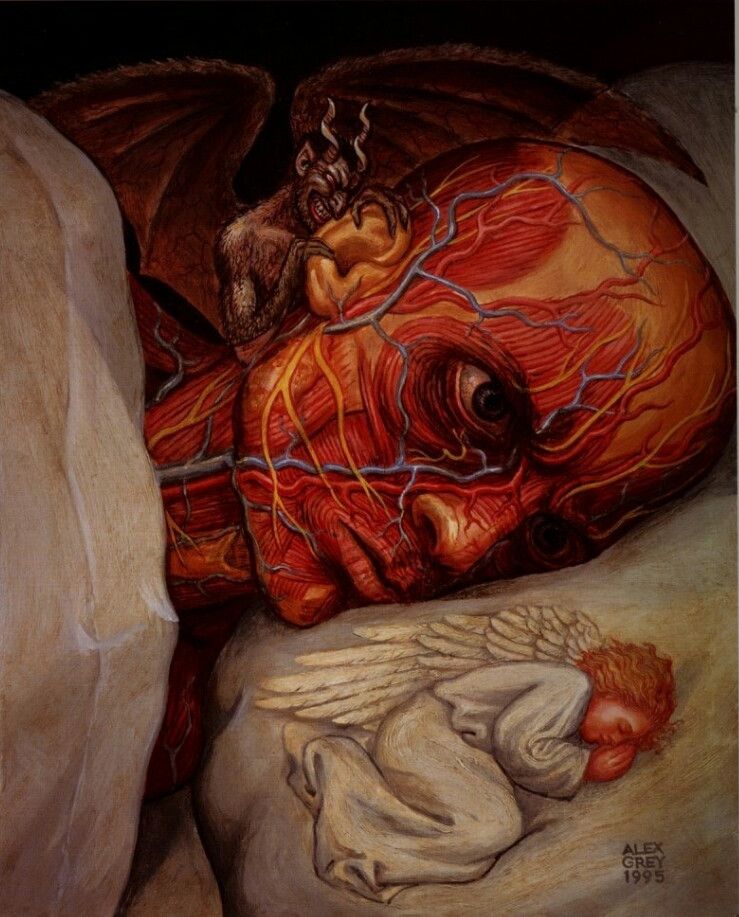
Every night for a month he wakes at a fixed time between the hours of three and four, perplexed by the routes he took around the eastern Mediterranean years ago, following sea-tracks or mountain paths or those alleyways between tall decrepit buildings that hide or reveal a dome or minaret, glimpsing moments of a half-remembered journey. Or else he is mistaken, and it is not the journey that wakes him but the need to write about it, and his alarum is this hypnopompic camel, trotting over memory’s garbage tip: intransigent, determined. How is it that we reach that state in which the thing remembered merges with its remembering, the act of writing with the object of that need to tell and tell? And so he wakes again at a quarter to four, another dream-journey nudging him tetchily into wakefulness like a creature in search of its soul, and this time he is peering from a terrace on the milky heights at Gálata, or else gazing eastward from the battlements at Rhodes, and wondering whether he has always confused the journey with the writing of it, whether the two things have finally become one.


 Richard Gwyn