
The Lottery in Babylon
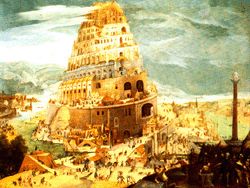
In Borges’ story The Lottery in Babylon, narrated by an exile from that place, we learn that there had once been a regular lottery in Babylon, in which only the winners were announced, but that it began to lose popularity because it had no moral force or purpose, and so the old lottery was replaced by one in which there was a loser for every thirty winners. This small adjustment titillated the public interest and people flocked to buy lottery tickets. The penalty was at first a fine – which, if the loser could not pay, was replaced by a prison term – but then, as you can imagine, the desire for punishment and the administration of retribution on selected individuals became the driving force of the enterprise. Crowds love a victim: look at the stocks in medieval English towns, public hangings at Tyburn in the eighteenth century, or the popularity of public stonings and other barbarities in those places that still practice such things. In Borges’ Babylon the Company – i.e. those who administered the lottery, took control of the society and acquired omnipotence within it: the lottery came to rule the lives of all those who lived in Babylon.
Borges might well have been thinking of the role of the Catholic Church – or of any other autocratic system – when he wrote this story, but it seems to me to have a horrible contemporary relevance. Terror and misery emerge as being just as essential to human survival as the pursuit of some idiotic and unachievable happiness; the kind of elusive happiness that is offered by our own, commonplace lottery, for example, and which is announced on those absurd little TV slots where some moronic interlocutor commentates on the coloured balls as they whizz through the transparent tubes. The lottery for us is the gateway to a realm inhabited by those who have attained ‘celebrity’. Celebrity, of one kind or another, is the only good worth achieving, and the Company – interpret this as you will, but its omnipotence is terrifying – uses celebrity as a reward, but also, as we have so forcefully been reminded by the News of the World phone tapping scandal – as a punishment. Hell, of a kind: not the imprisonment or tortures endured by the losers in Borges’ story, but the pernicious and constant attentions of paparazzi and a culture of intrusion that renders the lives of all who live in the public eye (what a lovely expression) to be satirized, ridiculed and denigrated. Celebrity has replaced the religious status of the elect once occupied by bishops and popes and medieval saints, but has magnified their sufferings and their ecstasies and placed them all in the public eye. And all of it is registered, every hair of the head counted by an all-surveying Company, its cameras at every street corner.
In Borges’ story there is even ‘a sacred latrine called Qaphqa (pronounced ‘Kafka’) which gave access to the Company. In other words, there were CCTV cameras in the lavatories also.
First We Read, Then We Write
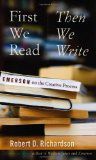 This incontrovertible statement is the title of a book I have just read about the work and ideas of Ralph Waldo Emerson – why is no one called Waldo anymore? – and a very fine book is it too, though it might not be to everybody’s taste, dwelling, as it does, on the concerns and obsessions that beset the writer going about the daily business of writing: a messy business, as a rule.
Robert D. Richardson clearly knows Emerson like no other; he swims with nimble strokes through the waterways of Emerson’s thought, and leaves you with a definite feeling for the measure of the man. I, for one, knew practically nothing of Emerson, and now, although I will find out more, my conception of him will always be coloured by the things I have learned from Richardson.
I suppose in many ways Emerson is the closest thing to an American Montaigne. Reading was his passion, but like many writers, he read ‘almost entirely in order to feed his writing’ – which is more or less the same thing as saying the two activities are contiguous upon each other: writing is simply an extension of reading, and vice versa. But reading needs to be conscious and creative: ‘Reading long at one time anything, no matter how it fascinates, destroys thought as completely as the inflections forced by external causes.’ The advice is to take only what one needs from reading, to stop as soon as it becomes a drudge or an obligation, and to read selectively, casting the dross aside.
He gave advice to many young writers on how best to keep up a journal, to be watchful and to process the material of the world like a tide mill ‘which thus engages the assistance of the moon, like a hired hand, to grind, and wind, and pump, and saw, and split stone, and roll iron.’
As for the planning of a work of fiction, his advice is right up my street: ‘You should start with no skeleton or plan. The natural one will grow as you work. Knock away the scaffolding. Neither have exordium or peroration.’
This is much what E.M. Forster meant, with the words: ‘How do I know what I think until I see what I say?’ Or Coleridge, with his appeal to ‘organic form’.
Writing should be a process of surprising oneself. If I had a plan, down to the last detail, of what my story will be, what would be the point of writing it? I mean, what is in it for me if I know precisely what is going to happen and what my characters are going to think and say and do? It would simply be a matter of typing.
So, Richardson says, ‘If Emerson’s writing does not always, or even usually, proceed in a straightforward, logical manner, it is not because he couldn’t write that way, but because he didn’t want to, and was after something different.’
Other grand quotes from Emerson:
Consistency is the hobgoblin of little minds.
An institution is the lengthened shadow of one man.
Our chief want in life is somebody who shall make us do what we can.
Hitch your wagon to a star. (yeah, well, I thought it was Lee Marvin too)
People do not deserve to have good writing, they are so pleased with bad . . . Give me initiative, spermatic, prophesying, man-making words.
Every hero becomes a bore at last.
The maker of a sentence like the other artist launches out into the infinite and builds a road into Chaos and Old Night.
There is so much here that rings familiar: that we are essentially bound to nature and that all we touch and see is, at some profound level, a metaphor for ourselves. ‘The Universe is the externalisation of the soul’ – all stuff that would not have sounded odd coming from Blake. There’s a lot to take on board, which is how Emerson would have liked it. None of it is easy. Take it or leave it, but for me these writers, like Montaigne, de Quincey, Emerson, Stevenson, Proust, Borges, for whom writing was some kind of epic night journey, are almost always the most rewarding.
And what a motto (even if, like me, you have to look one of them up): Neither have exordium or peroration!
LSD and literature
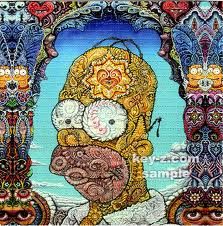
Homer Simpson on acid
“While it’s true that later on I read quite a lot and my literary knowledge was strengthened, it’s also true that LSD, by opening up my visual field, was not at the time by any means an insignificant source of inspiration. Besides, some of these perceptions of a distinct reality have lasted firmly and still today carry a highly remarkable energy, and are the reason I can laugh at realist writers, for example, who duplicate reality and so impoverish it.” (Enrique Vila-Matas, from Never any end to Paris).
At Swim-Two-Birds and an absence of frantic sorrow
My favourite novel when I was nineteen years of age and had just moved to London was At-Swim-Two-Birds by Flann O’Brien and it was with some pleasure that I dipped into an article by Colm Tóibín in the London Review of Books last week entitled ‘Flann O’Brien’s lies’. The essay weaves a fascinating connecting thread between O’Brien’s Dublin, Borges’s Buenos Aires and Pessoa’s Lisbon, and considers these three writers as sharing a fundamental sense of marginality, living in these sea-facing cities, all three of them writing fictions in which ‘they invented further personae and indeed further worlds’ – all three of them writing under alternative identities.
‘An oasis will not appear in a fertile plain. It is impossible to write fiction filled with choices and chances and continuities in a society where these things are thinly spread. In a society where there is no body of readers, it is not easy to write with a reader in mind, a reader who wants a story in which time is represented in a straight line and in which characters are filled with feelings and longings, and in which plot satisfies some large set of rules which insist on completion, and in which words represent what the dictionary states they represent, and in which language is natural and part of a shared culture. It is much easier to make a story or a novel in which the reader is already built-in and which wrong-foots or even usurps the idea of reading. While novelists who wrote in formed, settled and multi-layered societies held a mirror up to those societies in all their variety or to the vicissitudes of the human heart, Borges and O’Brien and Pessoa held instead a mirage up to an oasis, the strange place they came from which gave them their first taste of thirst.’
Thirst was certainly a passion of O’Brien’s, and it eventually killed him, though this, of course, is not what Tóibín means, strictly speaking.
I have always thought At Swim-Two-Birds was O’Brien’s best book. Although people generally go on about The Third Policeman, I was never such a fan. The Poor Mouth – his own translation of his Gaelic novel An Beal Bocht – was hilarious, although I daresay I missed a lot of the nuances. The rest of his work, notably The Hard Life and The Dalkey Archive are derivative or cannibalistic of his earlier stuff. The newspaper column in The Irish Times was fabulous. But with his first book, O’Brien achieved something he would never quite manage again.
‘The aim of At Swim-Two-Birds was to lose control, to take the pieces and refuse to reconcile them, to insist that it was too late for such trickery. O’Brien refused to believe that the writer recreates the world, but instead he set out to show that the world re-creates the writer, and that both the writer and the world are, or might be, a set of illusions, highly implausible, not even worth mistrusting, and that all we have fully to mistrust are pages and the words on them.’
The article also quotes an extract from Henry James, which indicates precisely the kind of novelist James despaired of, and precisely the kind of writer O’Brien was: one who had not the remotest interest in earnestly capturing a particular quality of truth that pretends or claims to be lodged in reality, and who thereby recognizes that ‘realism’ is itself only a particular, stylised mode of representation. For O’Brien, and others like him, the point of fiction lies elsewhere, and largely, though not exclusively, in the telling itself.
Finally, Tóibín cites an absolute gem from Pessoa’s The Book of Disquiet:
‘Why should I care that no one reads what I write? I write to forget about life, and I publish because that is one of the rules of the game. If tomorrow all my writings were lost, I’d be sorry, but I doubt I’d be violently and frantically sorry.’
Poets are liars
So says Björk, in this fascinating interview from 1988, which kind of suggests they – poets – wouldn’t be much good at robbing banks together.
Bank-robber poets
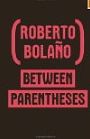 I am currently enjoying the pleasures of the essay and the short ‘occasional piece’, browsing through Roberto Bolaño’s Between Parentheses.What delights await you, gentle reader, between the covers of this excellent collection, if you are unfamiliar with the prose style of this fine writer. But be warned: here you will find speculation of the most dubious kind:
If I had to hold up the most heavily fortified bank in America, I’d take a gang of poets. The attempt would probably end in disaster, but it would be beautiful. (Bolaño, ‘The best gang’).
If I were to rob a bank the last people on earth I would recruit would be poets. They are generally indecisive, opinionated, and almost universally passive aggressive in relation to other poets, and they would therefore certainly take issue with some aspect of poetic discourse (meter, rhyme, assonance, metaphor, what have you) that took precedence over the planning and execution of the job in hand: indeed, once these theoretical differences gained a foothold, there would be no stopping some of them. They would move from poetics to defamatory statements of the most brutal kind, and from there to physical violence. I can assure you, dear reader, that the fiercest disputes occur between individuals when the stakes are really low: academics and poets are prone to the most vitriolic and bloodthirsty of vendettas precisely because the outcome is of practically no interest to anyone else.
This is true, I have hung around with poets and academics for years now, and I’m not sure which group is more inflated in their sense of self-importance, but it’s a close-run thing.
I’m not talking about all poets, of course, or even all academics, and I do hate generalising; but generalisations, like stereotypes, would not exist if there were not a ‘kernel of truth’ to the person, creature or object being generalised or stereotyped. Even if you disagree with the kernel of truth hypothesis on an intellectual level, you almost certainly – if unwittingly – subscribe to it in some aspect of your opinion-forming and decision-making.
But the type of poet or academic I am excusing from this general rule is actually a very small minority. Most of us, whatever we do, and however much we resist the idea, are a part of the herd. And although no one willingly considers himself or herself as part of the herd, the fact is that seen in retrospect, seen from the perspective of a hundred years hence, great swathes of poets (and other writers and artists) will be banded together indiscriminately and one or two exceptions, probably people who are lesser known now, will be isolated as exceptions and therefore bestowed with genius. The typical thinking goes like this: no one wants to think of him or herself as just one of the herd, and everyone thinks that is how it is going to be for everyone else.
We are certain of our uniqueness and individuality, and this would be the first and insuperable problem for Bolaño’s gang of poet-bank robbers, or bank-robber poets: lack of organisational discipline. I may be wrong, but don’t suppose there are many poets in the ranks of the SAS, nor, for that matter have I read any poems by any bank-robber poets. In fact, with all due respect to Roberto, I feel that poets are better suited to working a bank job solo, and probably not planning the job at all, but leaving it all down to fluke and happenstance. In other words, the only way a poet might successfully rob a bank would be alone, and by mistake.
Christopher Hitchens and the uncertainty principle

Image via Wikipedia
Deaths of Vaclav Havel and Christopher Hitchens. Hitchens I don’t know much about as he rose to prominence in the 1980s, a decade that largely passed me by unawares. Havel I was aware of in the late 70s and read a couple of his plays, and then later, at the time of the Velvet Revolution, but not much since. Both seem to have had a character of rumbustious contrariness that I normally admire, even though I am certain Hitchens and I would have numerous areas of intense disagreement.
But how is it that the loonies come out of the woodwork whenever someone’s death hits the news? Following a link to the youtube clip of Hitchens on Death, in the long list of viewers’ comments I find one by ‘ravenelvenlady’:
Rest in Peace Mr. Hitchens. You probably know for yourself now that we continue on, disembodied, and that this is all death really is.
WHAT?????????@****!!!!!
Raven Elven Lady (to break down her moniker a bit) is clearly something of an expert on the beyond (perhaps she got an Arts and Humanities Research grant to take a fact-finding tour of the hereafter, or is dead herself and therefore writing from the other side: if not I am fascinated that she writes about the state of being dead with such carefree authority).
What is it that incites certain individuals to quack on about the afterlife as if they were in possession of secret information which no one in the history of human endeavour has ever been able to prove – in spite of the millions of efforts that have been made, from cranks with crow’s intestines to Ouija boards to Christ raising Lazarus from the tomb? You would have thought if there were an afterlife of any kind at all that there might be some way of getting a message back that laid all doubt to rest, but this has never happened, not once in thousands of years of recorded history.
So just why are the loonies out there, cheering on (or blasting to damnation) Hitchens’ eternal soul? Probably because Hitch himself can’t answer them back now.
What he does say in his interview is: “My strongest allegiance is to a group of people whose main interest is in the uncertainty principle.”
I think I know what he means, but he isn’t talking about Heisenberg, strictly speaking, rather a more generous application of uncertainty, on behalf of those of us who don’t know what exactly is going on in the universe, and can live with that, rather than having to impose infantile explanatory models onto life – one’s own and everyone else’s.
Anyhow, I think I’ll read his book. It isn’t a novel so I’m not cheating.
The Vagabond’s Breakfast: a perfect stocking filler (wash thoroughly after use)

Thanks to Scott Pack for his mention of The Vagabond’s Breakfast and selecting it as runner-up in his top ten ‘Books of the Year.’
Scott says:
The fact that it (The Vagabond’s Breakfast) has been totally ignored by the mainstream literary press – it managed one review in the Morning Star – is bloody annoying but not all that surprising. I don’t think literary editors go looking for great books any more, they are content to wait for them to fall into their laps. Although they still miss them when that happens.
The VB also made it into the hallowed pages of Times Literary Supplement, featuring in its ‘Books of the Year’, as one of the choices of Patrick McGuinness, so perhaps I’d better quote that too:
Richard Gwyn began The Vagabond’s Breakfast while recovering from a liver transplant. A memoir of the nine years of drink, drugs and vagrancy that did for his first liver, it’s a jagged tale gracefully told. Full of humane surreality, there’s something whole, even holistic, about the brokenness of the life it pieces (back) together. Like many books about illness, it’s also about health: Gwyn is a citizen of both realms, describing life with “two passports.”
It is still not too late for you to buy a copy of The Vagabond’s Breakfast as a yuletide gift for your beloved or for a friend or deserving relative, through The Book Depository (£7.23 plus free worldwide delivery), Abebooks (various prices) or even Amazon (£6.99 plus free UK delivery).
Such shameless self-promotion would be scandalous were this not being written at arm’s length for me by my amigo, accomplice, intermediary and sometime translator, Señor Ricardo Blanco.
Nicanor Parra at ninety-seven
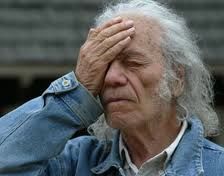
Two weeks ago the Cervantes prize, Spain’s loftiest literary honour, was bestowed on the Chilean poet Nicanor Parra.
Parra, at ninety-seven years of age, is without doubt the most influential of living South American poets. His career as an eminent physicist (he has been a visiting professor at Oxford and Yale) provided him with a livelihood and immunised him to some extent from the worst abuses of the Pinochet regime. A near-contemporary of Neruda, he considered his more famous compatriot’s poetry to be too flowery, too close for comfort to romantic egotism, and his own ‘antipoetry’ – a term that requires some unpacking – presents a “bleaker vision, prosier rhythms, and starker, surrealist deadpan humor”. By the 1930s Parra was already asserting that what was needed was a vernacular poetry that related to ordinary life and which was accessible to the general public. These ideas, as manifested in Poesia y antipoesia (1954) had a huge impact on poets of a younger generation, especially those who were caught up in the politics of resistance. Parra began writing ‘antipoetry’ because, in his words “poetry wasn’t really working”; there was “a distance between poetry and life”. In a gracious twist, Neruda himself confessed to Parra’s influence on his own later work. It has been claimed, not unreasonably, that Parra’s method derived from his mathematical, relativist background, where he used minimal language and avoided metaphors and tropes in order to address his readers directly. However such assertions almost always sound reductive or cockeyed to me.

Parra’s later work is often a mesh of word association games, intentional cliché and spectacularly straightforward rants about the environment, inequality and corporate corruption. He is a ludic poet, while remaining a poet of intense seriousness. It may well be that his influence will be more lasting than either Neruda or his fellow Nobel laureate, the Mexican Octavio Paz.
Here are a few translations of his work:
OUR FATHER
Our father who art in heaven
Laden with problems of every kind
Your brow knotted
Like any common ordinary man
Don’t worry about us any more.
We understand that you suffer
Because you cannot set your house in order.
We know the Evil One doesn’t leave you in peace
Unmaking everything you make.
He laughs at you
But we weep with you:
Don’t be troubled by his diabolical laughter.
Our father who art where thou art
Surrounded by treacherous angels
Truly: do not suffer any more on our account
You must recognize
That the gods are not infallible.
And that we forgive everything.
(From ‘Bío Bío’)
XXII
CAPITALISM AND SOCIALISM
Nineteenth-century economicrapology
Years before the Principle of Finitude
Neither capitalist nor socialist
But quite the contrary Mr Director:
Intransigent ecologist
We understand by ecology
A socioeconomic movement
Based on the idea of harmony
Of the human species with its environment
Which fights for a ludic life
Creative
egalitarian
pluralist
free of exploitation
And based on communication
And collaboration
Between the big guys & the little guys
MEMORIES OF YOUTH
What’s certain is that I kept going to and fro,
Sometimes bumping into trees,
Bumping into beggars,
I found my way through a forest of chairs and tables,
With my soul on a thread I watched big leaves fall.
But it was all in vain,
I gradually sank deeper into a kind of jelly;
People laughed at my rages,
They started in their armchairs like seaweed carried by the waves
And women looked at me with loathing
Dragging me up, dragging me down,
Making me cry and laugh against my will.
All this provoked in me a feeling of disgust,
Provoked a tempest of incoherent sentences,
Threats, insults, inconsequential curses,
Provoked some exhausting hip movements,
Those funereal dances
That left me breathless
And unable to raise my head for days
For nights.
I was going to and fro, it’s true,
My soul drifted through the streets
Begging for help, begging for a little tenderness;
With a sheet of paper and a pencil I went into cemeteries
Determined not to be tricked.
I kept on at the same matter, around and around
I observed everything close up
Or in an attack of fury I tore out my hair.
In this fashion I began my career as a teacher.
Like a man with a bullet wound I dragged myself around literary events.
I crossed the threshold of private houses,
With my razor tongue I tried to communicate with the audience;
They went on reading their newspapers
Or disappeared behind a taxi.
Where was I to go?
At that hour the shops were shut;
I thought of a slice of onion I had seen during dinner
And of the abyss that separates us from the other abysses.
THE CHRIST OF ELQUI RANTS AT SHAMELESS BOSSES
The bosses don’t have a clue
they want us all to work for nothing
they never put themselves in the shoes of a worker
chop me some wood kiddo
when are you going to kill those rats?
last night I couldn’t sleep again
make water gush from that rock for me
the wife has to go to the gala dance
go find me a handful of pearls
from the bottom of the sea
if you please
then there are others who are
even bigger wankers
iron me this shirt shitface
go find me a tree from the forest fuckwit
on your knees asshole
. . . go check those fuses
and what if I get electrocuted?
and what if a stone lands on my head?
and what if I meet a lion in the forest?
aw hell!
that is of no concern to us
that doesn’t matter in the least
the really important thing
is that the gentleman can read his newspaper in peace
can yawn just when he pleases
can listen to his classical music to his heart’s content
who gives a shit if the worker cracks his skull
if he takes a tumble
while soldering a steel girder
nothing to get worked up about
these half-breeds are a waste of space
let him go fuck himself
and afterwards it’s
I don’t know what happened
you can’t imagine how bad I feel Señora
give her a couple of pats on the back
and the life of a widow and her seven chicks ruined
FROM ‘NEW SERMONS AND TEACHINGS OF THE CHRIST OF ELQUI’
XXXII
Those who are my friends
the sick
the weak
the dispirited
those who don’t have a place to lie down and die
the old
the children
the single mothers
– the students, not because they are troublemakers –
the peasants because they are humble
the fishermen
because they remind me
of the holy apostles of Christ
those who did not know their father
those who, like me, lost their mother
those condemned to a perpetual queue
in so-called public offices
those humiliated by their own children
those abused by their own spouses
the Araucanian Indians
those who have been overlooked at some time or other
those who can’t even sign their names
the bakers
the gravediggers
my friends are
the dreamers, the idealists who
like Him
surrendered their lives
to the holocaust
for a better world
ROLLER COASTER
For half a century
Poetry was the paradise
Of the solemn fool.
Until I came along
And set up my roller coaster.
Go on up, if you want.
It’s not my fault if you come down
Bleeding from your mouth and nose.
Translations by Richard Gwyn, first published in Poetry Wales, Vol 46, No 3 Winter 2010-11.
Advice to aspiring writers, and smoking by the riverside
The question – the recurrent question – asked at those events (after a reading, say, or at a literary festival) when the author is expected to wax lyrical and wise on all manner of subjects is ‘what advice would you give to a writer who is just starting out?’ I asked it myself last Monday of Peter Finch, and he gave a damn good answer – the same answer I always give – which is to read more.
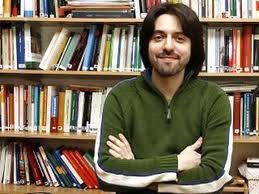
Andrés Neuman. According to Roberto Bolaño "The literature of the 21st century will belong to Neuman and a handful of his blood brothers."
On his blog, Argentinian poet and prizewinning novelist Andrés Neuman (whose fabulous novel, Traveller of the Century will be available in English from February next year) says he was recently asked by a magazine to give six items of advice to beginners, and his perplexed reply was, in my loose translation, as follows:
1. Don’t conform to the patronising attitudes of older writers. They were also young, and in all probability more clueless.
2. Tradition doesn’t weigh on us, but invites us in. We write as we read: writing is a supreme form of re-reading.
3. Try, make mistakes and try again. A bad manuscript is worth far more than a supposed genius who abstains from writing, just to be on the safe side.
4. Keep correcting, to the limits of your patience.
5. Remember that we are all beginners: writing is an inaugural art and lacks experts.
6. Don’t accept six pieces of advice from anyone. One is already too many.
Otherwise – and this is completely unrelated, I was flicking through the cyberworld yesterday, and I discovered that Joseph Hill of the reggae band Culture died five years ago already, when I wasn’t looking. At the risk of going on like an old fart I remember going to see Culture at the 100 Club in Oxford Street, must have been 1977, and being knocked for six, unless that was just from inhaling the fumes from all the people who had been consorting with Mr Bong and Mr Spliff. Anyway, here is a song to remember him by.
Of Nooteboom, Jünger, Céline, and assorted literary gossip
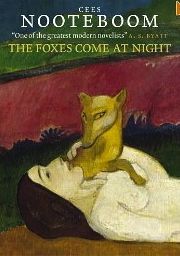 I can confess without shame that occasionally I am persuaded to buy a book on the strength of the cover, and it was certainly a factor in selecting Cees Nooteboom’s collection of stories, published by the superb Maclehose Press. This was before I met Nooteboom and, since I was told I would be doing an event with him at the Translator’s Club in Buenos Aires, thought I had better read at least something by the man, who is very highly regarded in continental Europe and elsewhere, if not in the United Kingdom. Not that this counts for much, as there are many writers who are well-known in the rest of the world but are far less well-known in Britain than our own great authors like Katie Price or Russell Brand, to name but two, or say, more realistically, than Geoff Dyer or Tom Raworth, but hell, who cares. In the end I never got around to reading the book until the weekend just past, and can reveal that – unless I missed something important – none of the stories has anything to do with foxes or with Gauguin (from whose painting the cover picture is taken).
But back to my main gripe, our misguided isolationism, which is reflected in the inability of publishers to translate great works of literature what are writ in the foreign, and that most hideous of ailments, little-Englandism.
Since David Cameron has now put the interests of his chums in the City of London ahead of anyone or anything else, and has decided that the bankers are so good at making things happen that they might as well be given a free hand; and since the rest of Europe is, sensibly, in disagreement, it seems likely that within a couple of decades, our islands will be floundering in mid-Atlantic, spurned both by Europe and our North American cousins (what special relationship?), a non-productive, antisocial wasteland, with a tiny privileged elite and a humungus underclass of the poor and unskilled, and little in between. A bit like Latin America in the seventies. Britain will then have to re-invent itself as a ‘developing country’.
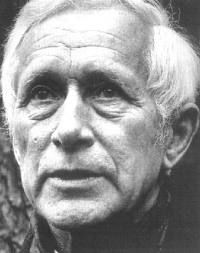
Ernst Jünger
Now where was I? Nooteboom told me he once met (or rather crept up on) Ernst Jünger in the Prado, and introduced himself, at which Jünger made a joke about his (Nooteboom’s) surname. The joke was in German though, and involved wordplay which I, as a non-German-speaking non-Dutch-speaker, did not understand. Such trifles do not concern Nooteboom however, who continued with his story regardless. If you speak six or more languages with apparent ease, as Nooteboom does, you tend to get flippant. Ernst Jünger: a truly fascinating character, who has a cameo role in both Roberto Bolaño’s By Night in Chile and Jonathan Littell’s The Kindly Ones, thus I have been reminded of his existence twice in recent times. Is that a sign? (Normally I would interpret that as a message that I need to look him up and read something by him, but since I am not reading novels right now will have to hang on, unless I want to read his essay ‘On Pain’, which I don’t fancy. Or perhaps I will, pain being quite a salient topic.) Needless to say his work is pitifully hard to find in English, considering he is rated as one of the most important German authors of the 20th century. Nearly all of his 52 books are available in French, but only five could I find in English translation. Apparently this is largely to do with the fact that Jünger – although not a member of the Nazi party, and peripherally involved in the plot to assassinate Hitler in 1944 – served as an officer in the German army, held strongly Nietzschean views promoting the model of an heroic masculinity, and was an anti-semite, at least during the 1930s. I’m not saying he was a good person; undoubtedly he had issues, don’t we all, but he was not half as bad as the Frenchman Louis-Ferdinand Céline, for example, an out-and-out Jew-hating fascist maniac, and yet Céline is held in high regard as a literary figure – by those who have read him – in both Britain and the USA, in spite of his despicable opinions, and much of his work is translated
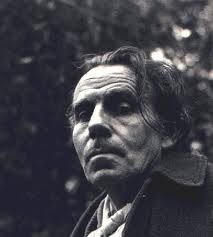
Louis-Ferdinand Céline
Céline was definitely a prize shit, and no doubt deserves our opprobrium, but less specifically I often wonder how come we are so ready to condemn how others behaved in times that we cannot begin to understand, when, as we have seen before on Blanco’s Blog, complicity is just another way of getting on with life, and avoiding persecution? We might perhaps take the trouble to ask ourselves just how we would have behaved. It is easy to bask in the safety of the present and cast aspersions on those who came before.
So, where were we? Is digression really such a good thing, when you lose your place so frequently, and so thoroughly? I was going to write about Nooteboom’s collection of stories. So here we go. He is superb at evoking the peculiar world of northern European expats (Dutch and British) living out their blinkered lives under the Spanish or Italian sun. He writes with an understated, poetic prose, that suits the topic which surfaces at some point in most or all of these stories, which is that of a lost and, at times barely remembered love. The theme is addressed in soft focus in nearly all these stories, and present through its absence in the longest one, ‘Heinz’, which accounts for a third of the pages in the book, and describes the slow alcoholic decrement of its eponymous protagonist. Heinz was once married to Arielle, whose flower-adorned grave the narrator discovers one day, four decades after her death. Apart from learning that Arielle died in 1962 at the age of 22, we know practically nothing about her, yet she inhabits the centre of the story with a stubborn grace, unavoidable in her absence. This is pretty masterfully achieved by Nooteboom, and I was impressed by the fluency of Ina Rilke’s translation, but nonetheless, despite the dictum that less is more and Hemingway’s iceberg theory, I couldn’t help feeling that I would have liked to get to know Arielle a bit, as she could not have been less interesting than the other members of the cast.
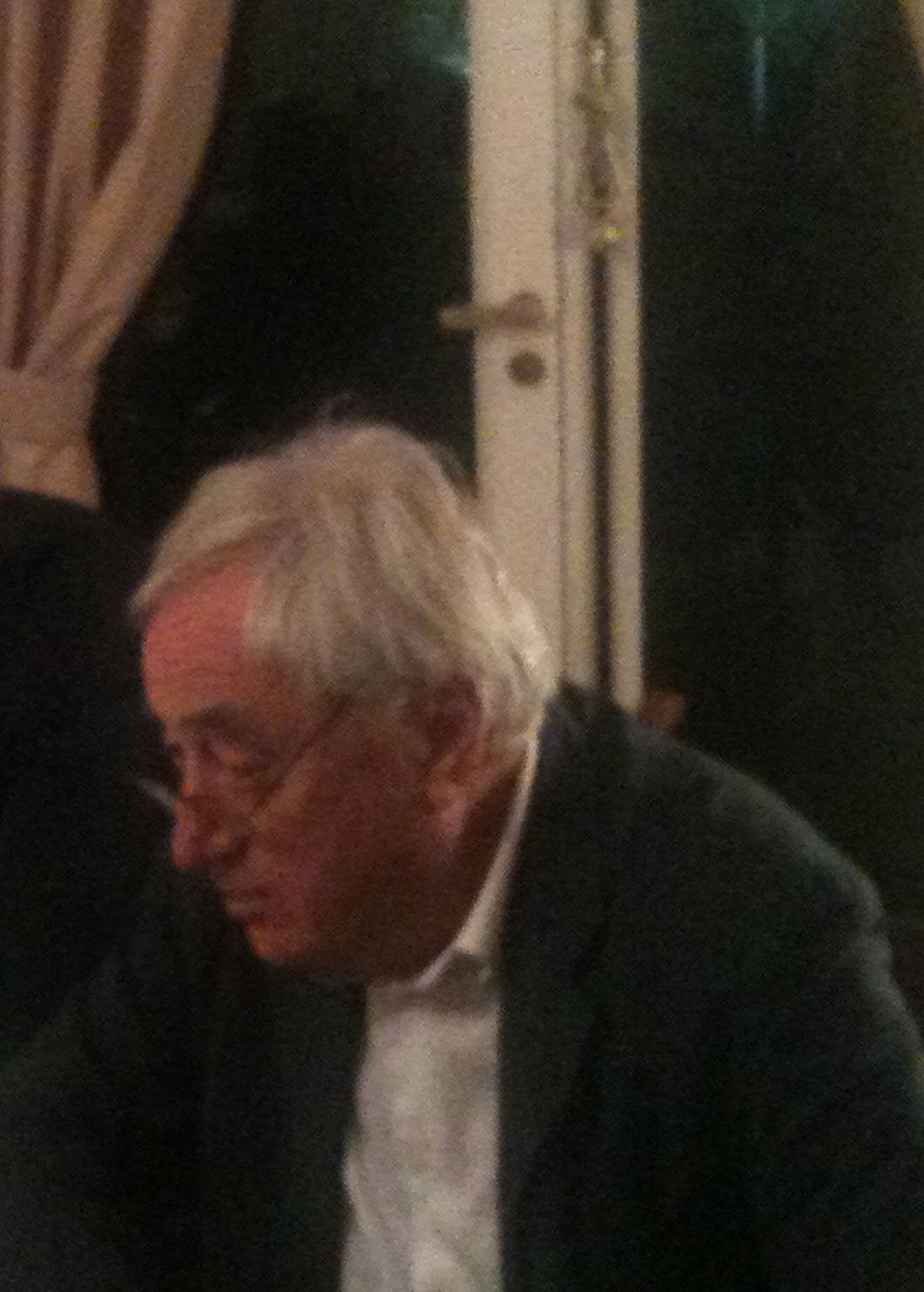
Nooteboom at the Dutch Embassy, Buenos Aires, September 2011
My two favourite stories were ‘Thunderstorm’, set on an out-of-season Spanish island (perhaps Menorca, as that is where Nooteboom lives), in which a couple are having a spectacular row in a café: the man walks out in a strop and is struck by lightning; and ‘Late September’ – another story set in a windswept rainy resort on a Spanish island – in which Suzy, a 79-year old British widow (smokes Dunhill, drives into town every day for the Daily Mail) has a desultory, what shall we call it, affair, with a 63 year old waiter, Luis, for whom she always leaves something out for him to ‘find’ on his nocturnal visits, except on this night, when:
All that remained was to wait for the creak of the door, the smell of whisky on his breath, those strange, halting grunts accompanied by sudden thrusts of astonishing vigour, which had more to do with rage and endemic disappointment than with anything else.
Christ. An afterthought. As life expectancy continues to grow, and third-age sex lives thrive, can we expect an upsurge in geriatric porn? Does it already exist? Do I want to find out?
The strange and displaced lives of Brits in exile under the sun has been explored in different ways by Graham Greene, J.G Ballard (in Cocaine Nights) and now Nooteboom, a non-Brit but most astute observer, makes a valid contribution. It is a world that no doubt contains untold fictional riches, but first, I guess, you have to do the fieldwork.
And Borges too
What makes a piece of critical writing ‘creative’? How do we distinguish between ‘creative’ and ‘critical’ writing? Does anyone care?
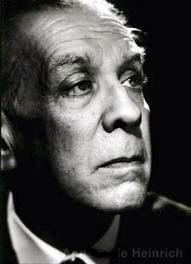 Is the literary world divided between ‘creative’ writers and ‘critics’ or is this a fantastically outdated model? Who writes the best criticism of fiction; literary critics or other fiction writers?
If you read Tuesday’s post about Roberto Bolaño and what he had to say about good, creative criticism being an integral part of literature, then I suggest you take a look at what Bolaño’s fairy godfather, Borges had to say on the same theme:
. . . as to Eliot, at first I thought of him as being a finer critic than a poet; now I think that sometimes he is a very fine poet, but as a critic I find that he’s too apt to be always drawing fine distinctions. If you take a great critic, let’s say, Emerson or Coleridge, you feel he has read a writer, and that his criticism comes from his personal experience of him, while in the case of Eliot you always think – at least I always feel – that he’s agreeing with some professor or slightly disagreeing with another. Consequently, he’s not creative. He’s an intelligent man who’s drawing fine distinctions, and I suppose he’s right; but at the same time after reading, to take a stock example, Coleridge on Shakespeare, especially on the character of Hamlet, a new Hamlet has been created for you, or after reading Emerson on Montaigne or whoever it may be. In Eliot there are no such acts of creation. You feel that he has read many books on the subject – he’s agreeing or disagreeing – sometimes making slightly nasty remarks, no?
(from The Paris Review Interviews, Vol 1 p. 137)
So when Borges says about a critic’s words needing to be based on a ‘personal experience’ of a writer, that is, as a reader, then we are on precisely the same ground as Bolaño saying that a critic needs to be a reader, and that if they do not assume themselves to be the reader, [they] are also throwing everything overboard.
Again, back to reading. I am a writer, that is to say, a reader who writes. Sometimes, the acts of reading and writing become contiguous, such as now, and I forget where the one ends and the other begins. But essentially I have learned this through the process of reading and writing, and what both Borges and Bolaño write only serves to confirm it: a good writer, a certain kind of good writer, always leaves me wanting to drop the book and start writing. A good critic, by which I mean a creative critic, almost always has the same effect. Bad writing, by contrast – either bad fiction or bad criticism – simply sucks energy from its reader, before the book is cast aside with a curse.


 Richard Gwyn