Richard Gwyn

Mexican history, pasties, & the fall of Europe

wall


crack in the wall

Perhaps nowhere on earth is the contiguity of past and present more strikingly evident than in Mexico. An ancient wall, cracked from an earthquake, stands before a pair of ascending high rise towers, from one of which emanates a constant hammering and pounding that echoes across the hot afternoon. Through the crack in the ancient wall modernity surges skyward, oblivious.

My last night in Mexico City I watch the Mexican cup final in a taqueria with some friends. The match is between Leon and Pachuca. The second of these is known as Pachuca la airosa (Pachuca the windy) and its football team has a curious history. It is the oldest club in Mexico, having been formed in 1901 by Cornish miners who had arrived in the area to work in mines owned byWilliam Blamey at the end of the nineteenth century. The team was augmented with locals who took to the game, and became one of the country’s leading clubs. It is in the Mexican Premier League and has won five championships as well as four CONCACAF Champions’ Cups, the 2007 SuperLiga and one Copa Sudamericana. One detail that truly impressed me was that the dish for which Pachuca cuisine is famed – harking back to those miners – is a variety of Cornish Pasty, known locally as pastes. On Thursday night, despite the howls of disapproval around me (I was evidently in a hotbed of Leon supporters), the pasties won 3-2.

Next day, at the airport bar in Mexico City a very besoffen German with a shaved head engages me in conversation in unstable English. Europe is finished, he tells me, thanks to the dictatorship of Brussels. Ve haf many dictators in Europ, ze last was Hitler, and before that ze Swedish Gustavus Adolphus and ze other was, er, er . . . – he seems in actual physical pain, struggling to remember another European dictator. Napoleon? I suggest. Ja, ja, Napoleon, he says, relieved at what is evidently a gargantuan struggle against alcohol’s tendency to obliterate memory. But now ve haf Brussels and all is finished.

The gist of his argument, as far as I can make out, is that Europe was better off as a collection of independent nation states with their own laws and their own currencies. So you are against any idea of a federal Europe? Ja, he says, nodding his shiny pate with extraordinary vigour. I want to point out that it was precisely because of the continual warmongering between these independent nation states – his own in particular – that the idea of a Federal Europe emerged, but I fear that his grasp of such a concept is imperilled by the dispatching in rapid succession of two more tequilas. What has he been doing in Mexico? I ask. I haf been doing my work, which I do, he tells me, helpfully. He explains that his plane to Geneva leaves at 9.00 pm and he likes to be the last on board, in order to make the others wait. This amuses him greatly and he guffaws into his empty glass. I leave to catch my own plane. I glance at the departures board on the way. There is no 9.00 pm flight to Geneva listed.


hat seller DF

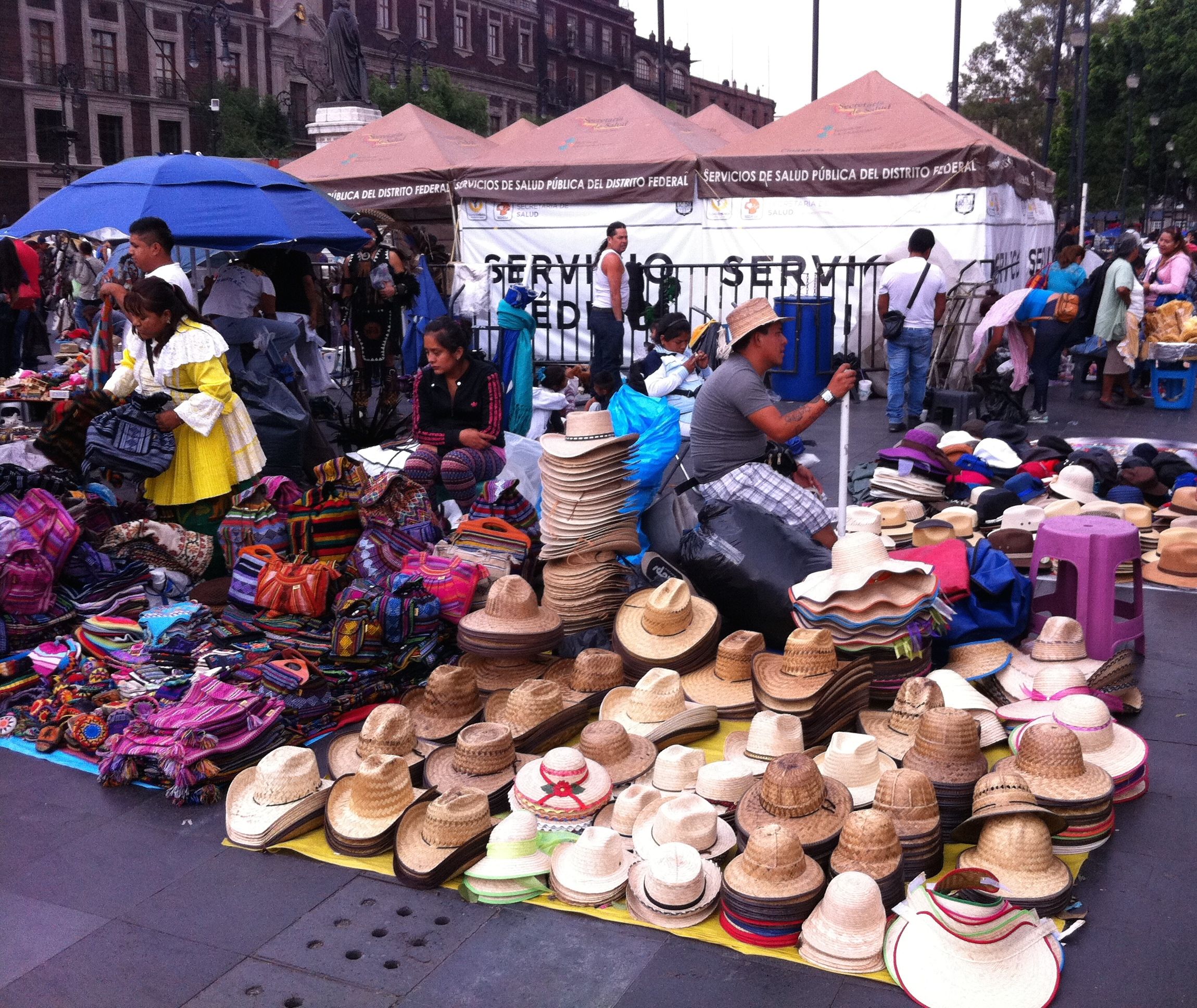
Hat-seller, Mexico City.


sleeping man Puebla

Man asleep, Puebla.


Snouts, gizzards, offal.

Snouts, gizzards, offal.


The things he saw one day in May

So, I’ll start with the serious stuff, and work downhill towards the frivolous.

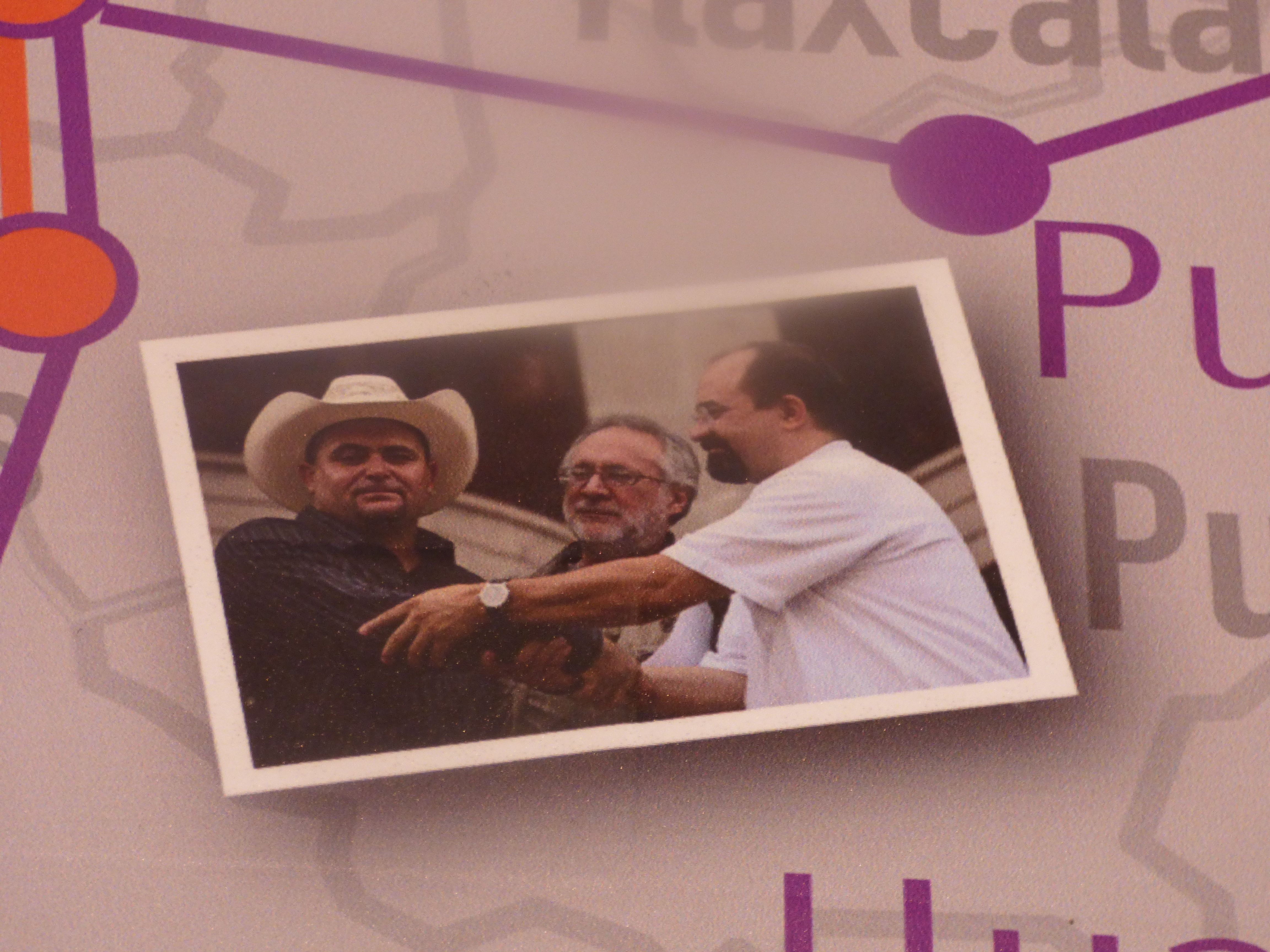
Yesterday I was taken by the poet (and translator of Seamus Heaney), Pura López Colomé to see an impressive and moving exhibition at the Museo Memoria y Tolerancia organised by the Movimiento por la paz con justicia y dignidad (Movement for peace with justice and dignity), whose motto is estamos a la madre meaning, approximately, ‘we have had enough’. This group was set up by the poet, writer, academic and activist Javier Sicilia, following the torture and murder of his son Juan Francisco, along with six others, by drug gang assassins in March 2011.

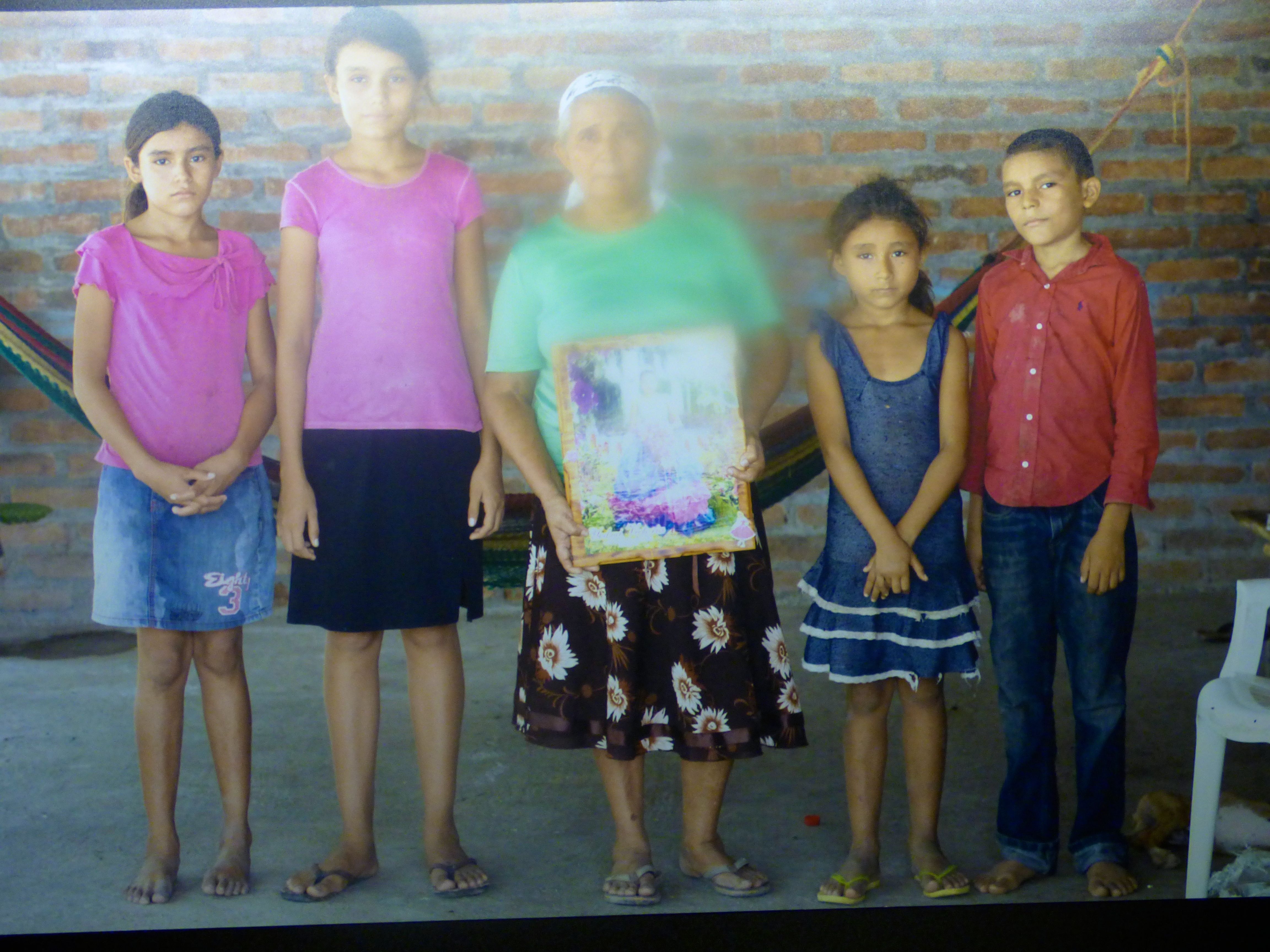
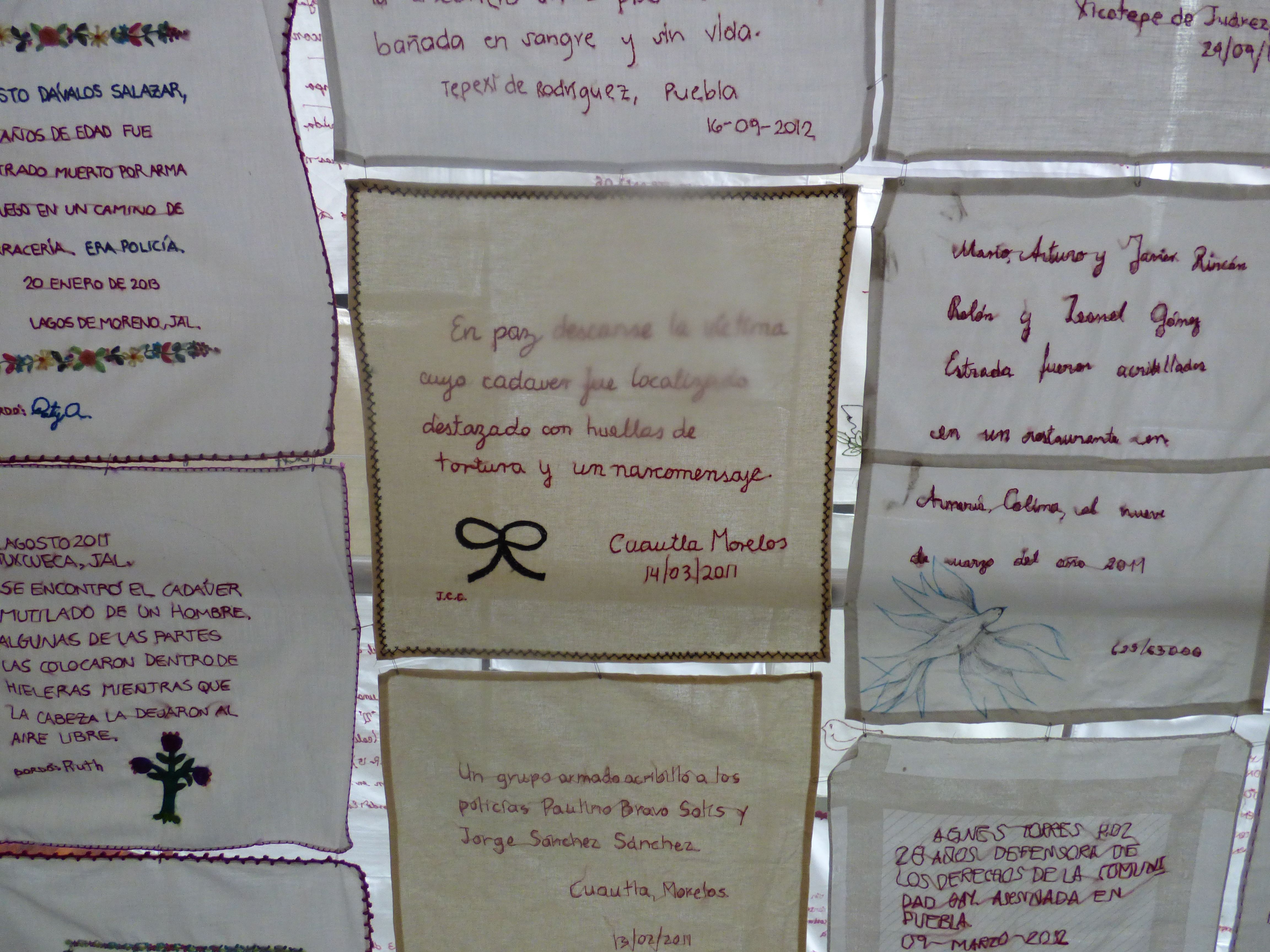
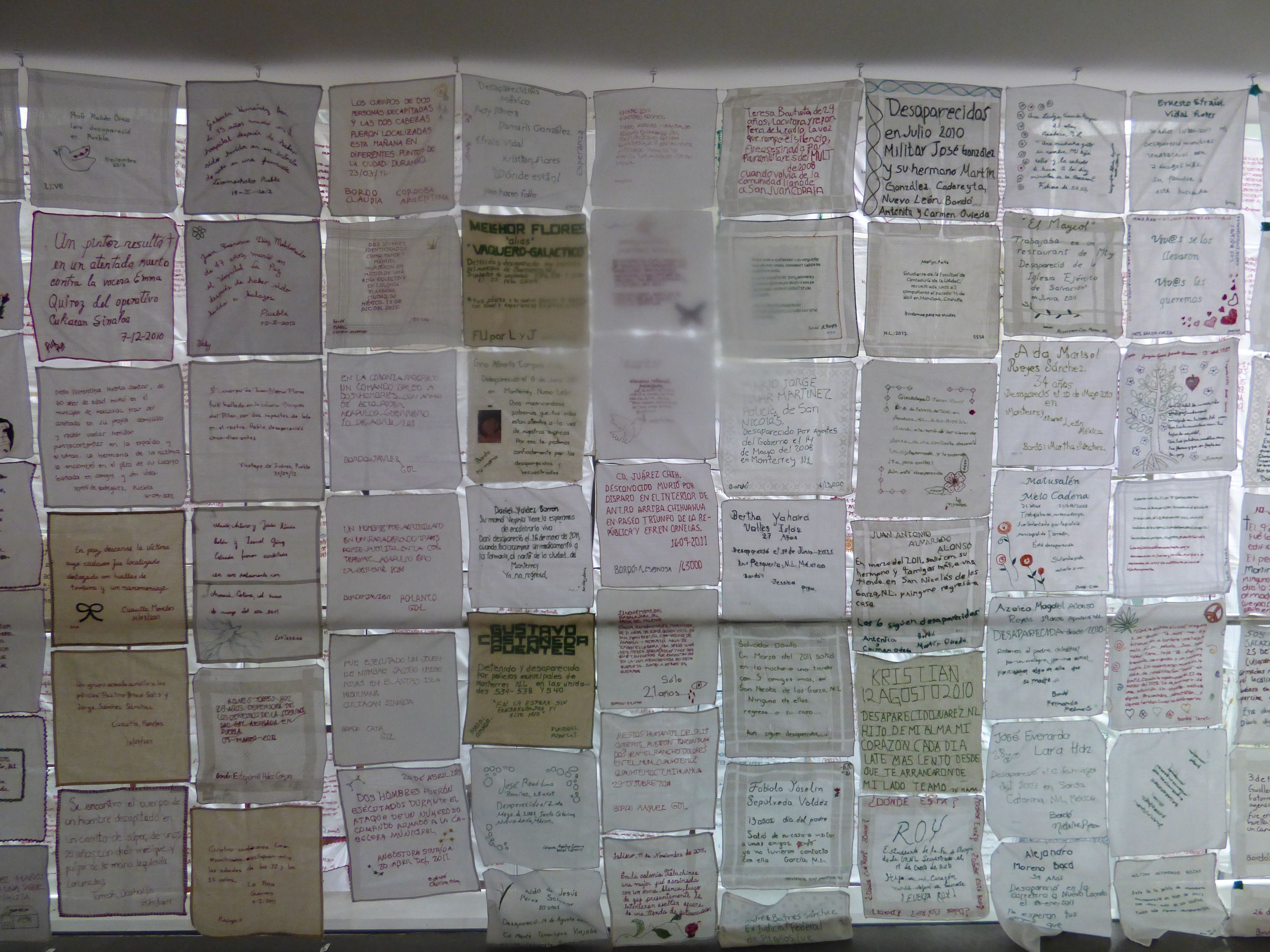
Following this, Sicilia has developed a formidable organisation that calls for an end to the drug wars, withdrawal of the military presence from the streets, the legalisation of drugs, and an end to political corruption. He has led demonstrations – at huge personal risk to himself – as well as marches across the whole of Mexico and much of the United States. In 2011 he was named Person of the Year by TIME magazine. His influence in starting up a popular, non-aligned movement directly confronting the perpetrators of violent crime and political corruption in Mexico represents an act of immense personal courage. His organisation has found followers in every walk of life, precisely because so many people have been affected by the drug wars – whether as victims themselves, or else as having lost family members to the violence. Furthermore, unlike the many ‘self-defence’ groups that have sprouted up across the country in opposition to the terror perpetrated by drug gangs – which simply promotes a never-ending cycle of violence met by more violence – Sicilia’s movement is based on entirely peaceful means of protest. I am posting a few images below from the exhibition, with apologies for the quality of the photographs, my camera having developed a mysterious and inexplicable blur on the lens over the past few days.

photo 1

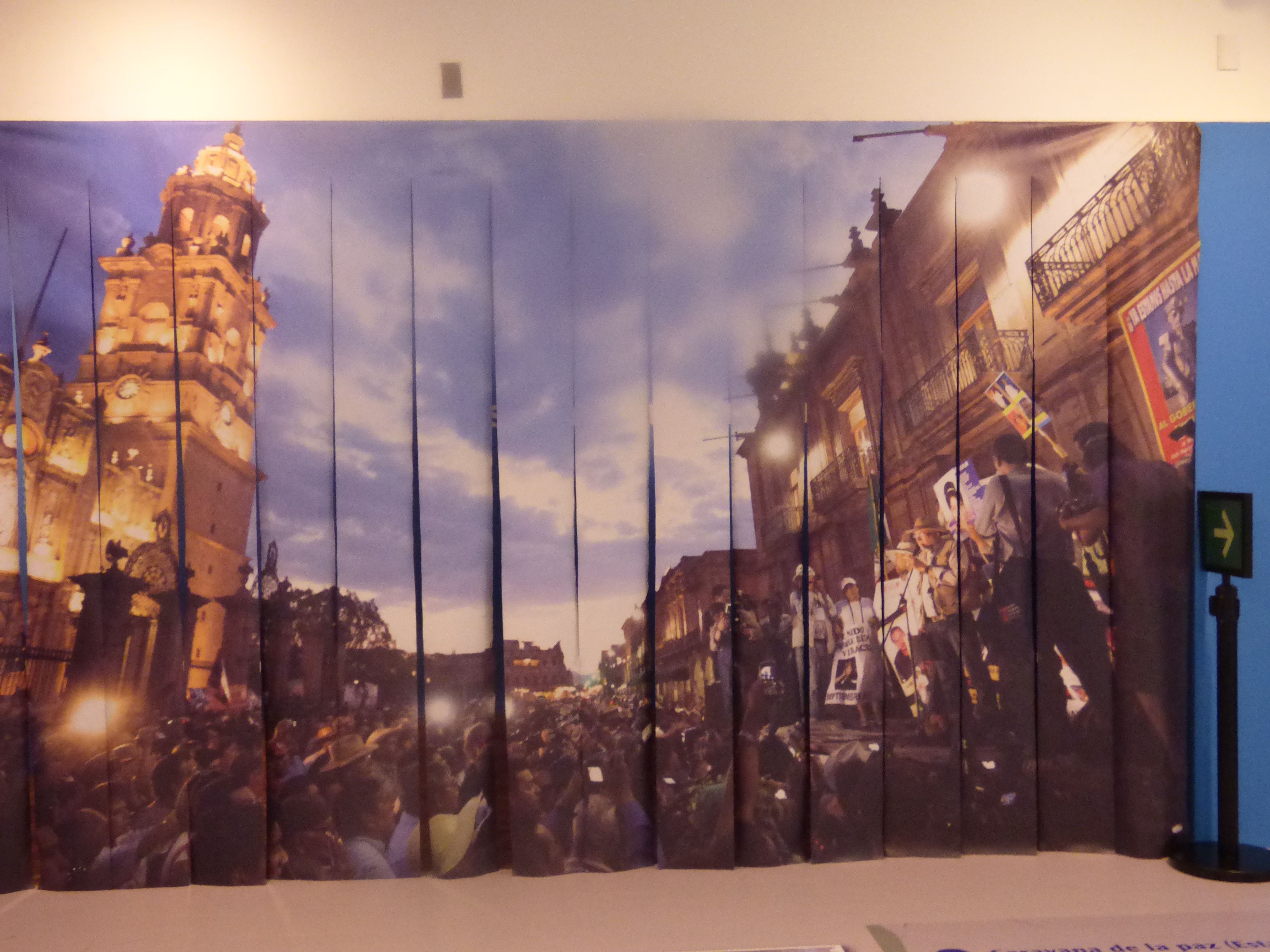
Screen design of protesters for peace, being addressed by Javier Sicilia.


photo 2

Javier Sicilia, on the left, superimposed on a map of one of his marches.


photo 6

Any family can find themselves a victim of the violence.


photo 3

Mementos of the disappeared, embroidered on handkerchiefs.


A 'wall' of such handkerchiefs

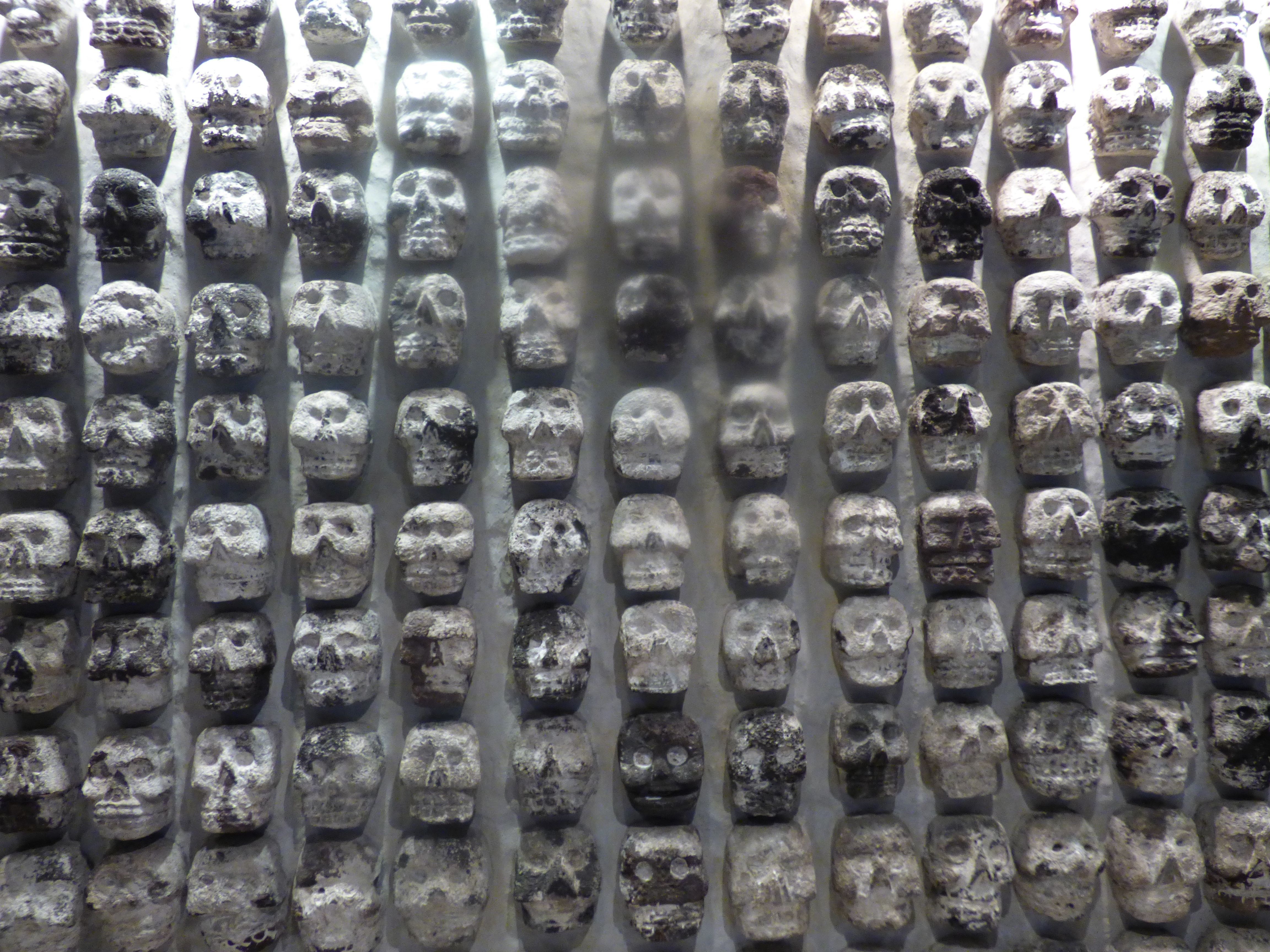
A ‘wall’ of such handkerchiefs: note the resemblance to the Aztec wall of skulls, below.

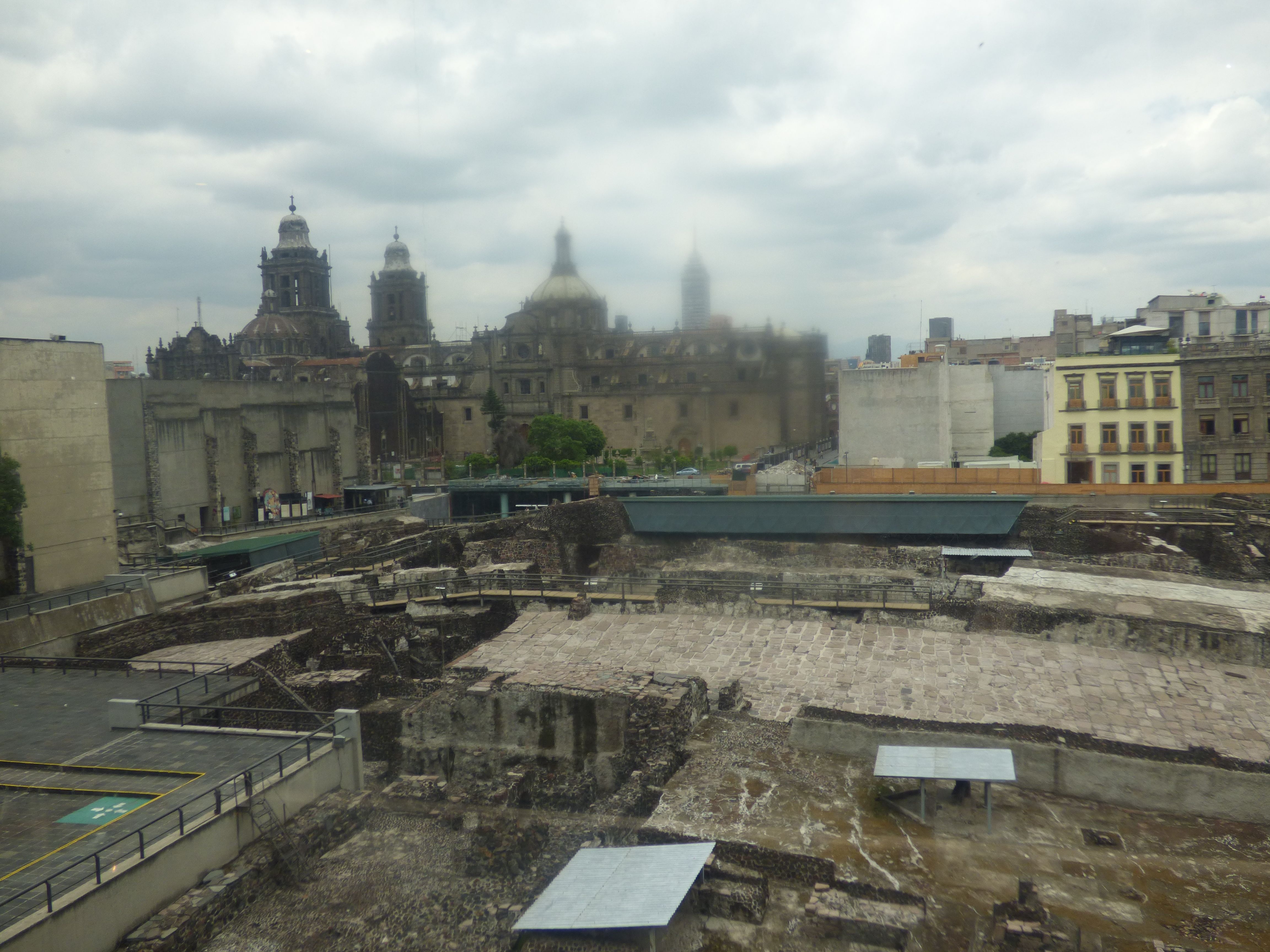
At a considerable remove from the foregoing, and my head filled with disturbing images, which I have not reproduced here, I bade farewell to Pura and wandered alone through the derelict remains of the Templo Mayor, the Aztec temple at the centre of the city of Tenochtitlan (Mexico City), destroyed by Cortés in 1521. Much of this area was entirely buried for centuries. The conquerors built a church over part of the precinct – the present cathedral – and other parts were used for housing and other civic buildings. I found it extraordinarily haunting to walk around this area, directly after witnessing the sufferings endured by present-day Mexicans, as if – and this is by no means an original thought – the cycle of violence, destruction and waste were part of some terrible continuum from which there can be no escape, only temporary respite.

Templo mayor, with cathedral behind.

Templo mayor, with cathedral behind.


Tzompantli, or wall of skulls.

Tzompantli, or wall of skulls.

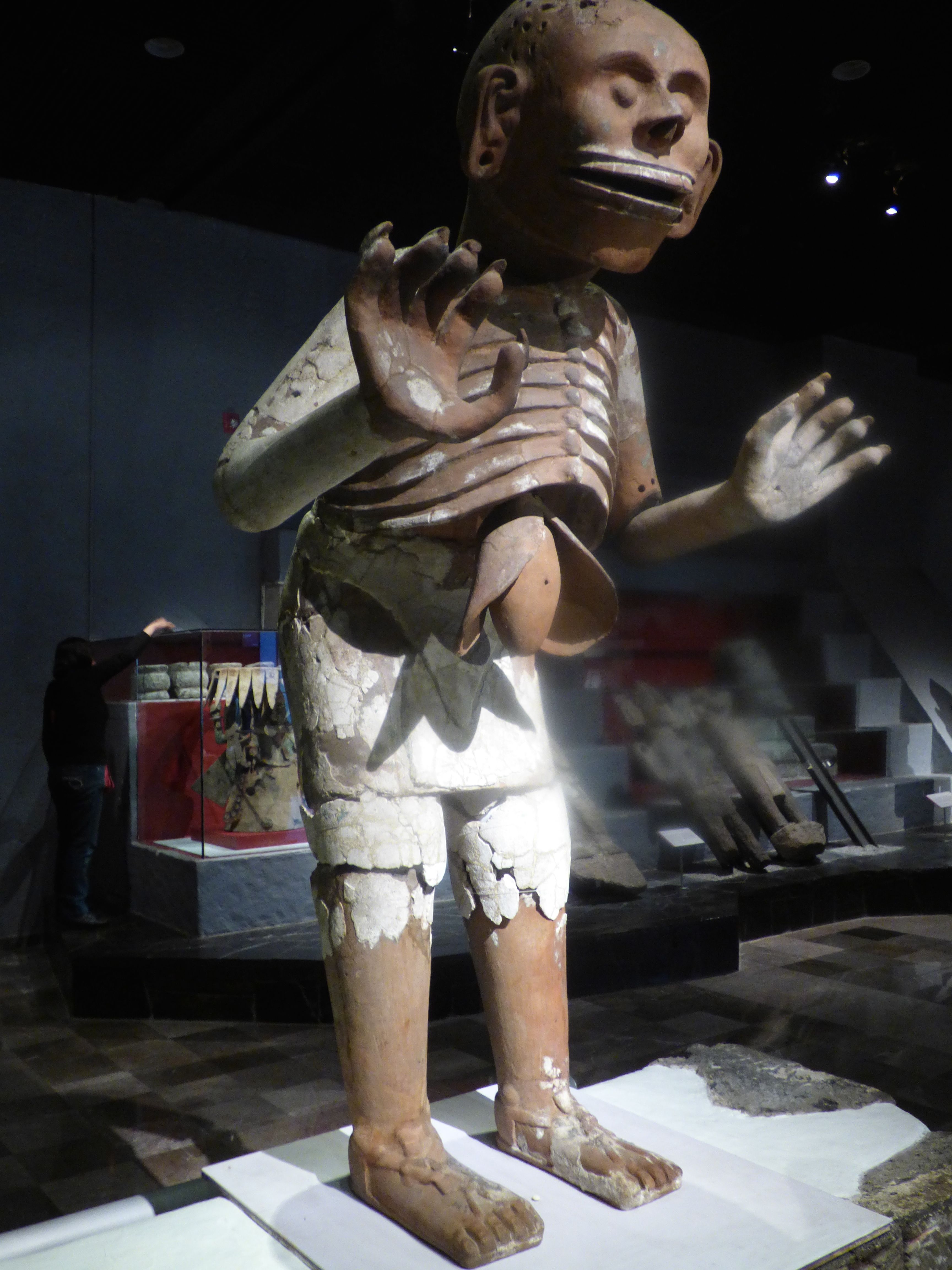
Inside the museum, having stood before the astonishing Tzompantli, or wall of skulls, I am confronted by a statue of Mictlantecuhtli, the Aztec god of the underworld and of death.


Mictlantecuhtli, Aztec god of the underworld.

Mictlantecuhtli, Aztec god of the underworld.

Unfortunately, he reminds me of the ogre in the first Harry Potter film, who was rather an inept type. Intertextuality gone awry. The museum’s English description below the statue is worth reproducing:

Mictlantecuhtli is conceived by the Aztecs as a half-gaunt being in a position of attack with claws and curly hair . . . The liver hangs out from his thorax because according to Aztec beliefs this organ was closely related to Mictlan or the underworld.

I’ll forever be on the look-out for half-gaunts from Mictlan, with their livers hanging out.

Which leads me – not through any direct path – to another sight witnessed  in the Zócalo, which had me confused for a minute: what appeared to be a bishop, protesting against child abuse in the Catholic church, and which transpired to be a person disguised as a bishop. Shame, really.

bishop


And from the tragic, via the bizarre, to the frivolous, as promised:


sign swing at your own risk

Swimming pool sign, advising the visitor to ‘Swing at your own risk’. Lowry would have used this, for sure.


urinal

Self-explanatory. But why the past tense? And how did it ‘contribute’? And what of the environment now?


Signs Richard

Blanco’s associate ‘Richard’ – having undergone an astonishing transformation, and currently resident at ‘The Woman’s Club’ in Mexico City.


Storms, eggs, everyday corruption, and the Consul’s approaching end

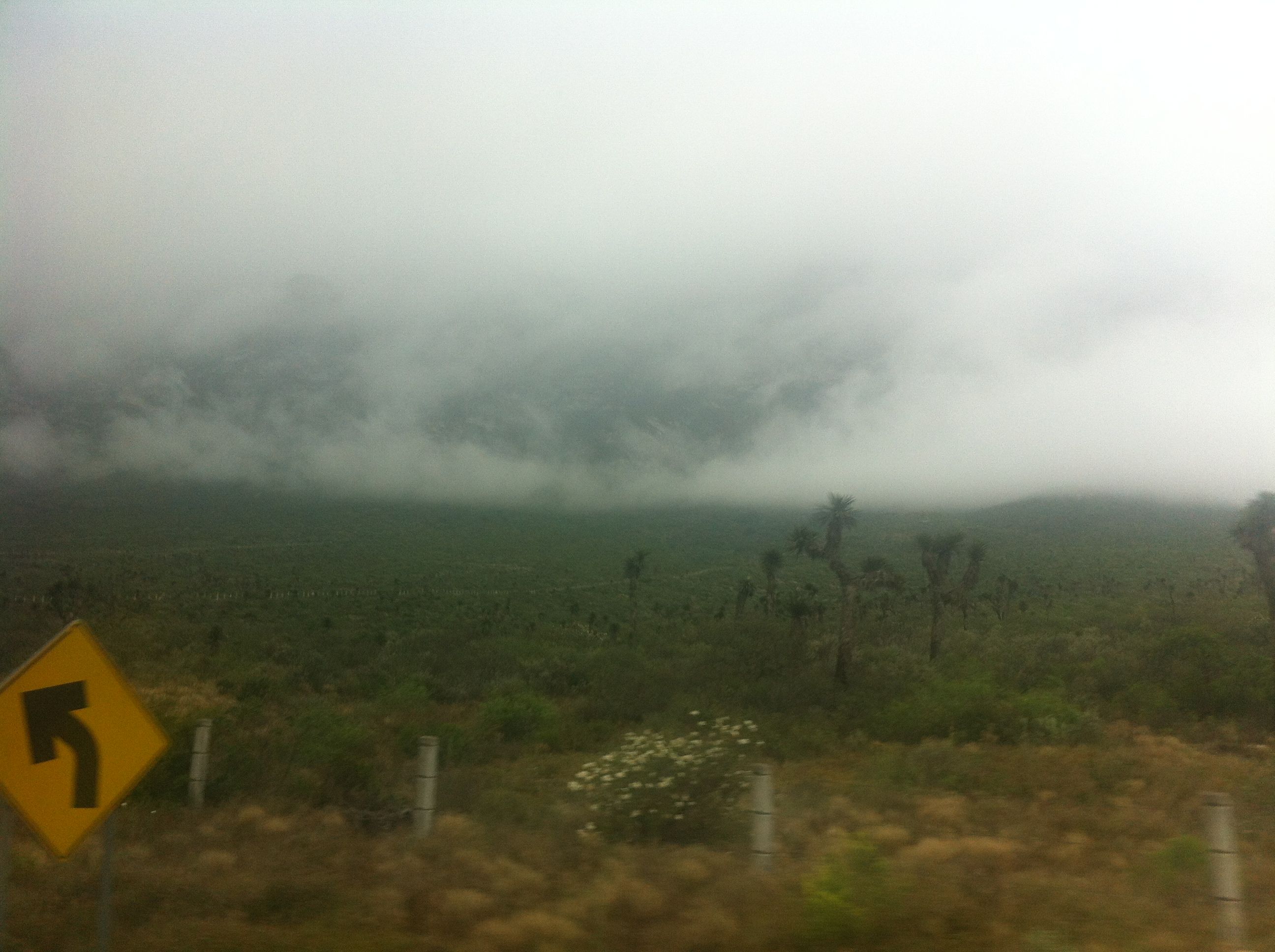
Another blurry picture taken from a bus and featuring mist and cactus, taken on the road from Saltillo to Monterrey.

Another blurry picture taken from a bus and featuring mist and cactus, on the road from Saltillo to Monterrey.


The airport in Saltillo closes because of the fog, so I miss my lunchtime flight back to Mexico City. Julián is laid low by a mystery bug and Mónica offers to drive me to the airport, after picking up little Leo from nursery. We exchange my plane ticket for another, from Monterrey airport, and then set off to the bus station for the two hour journey to Mexico’s third biggest city – and according to Wikipedia the ninth biggest city in the world. I don’t see much of it, however big the place is. The plane leaves at 6.20 pm and I am back into Under the Volcano, picking up with the hideous bull-baiting in Tomalín and the Consul’s vicious set-to with Hugh and Yvonne in the Salón Ofelia (todos contentos y yo también), owned by Señor Cervantes, who carries a black cockerel under his arm: “Nobody come here, only those who have nobody them with.”

Outside the plane passes through a good deal of disturbance as we approach Mexico City, a blood-red sun falling over the mountains and a big storm brooding close by to the north-west, the sky black there with jagged flashes of lightning. The pilot announces – I swear – “With the resounding egg, we make the descent to Mexico City” – and when we are leaving the plane another announcement reminds us: “Please ensure you take with you all your obsessions on leaving the plane.”

At ground level (of course Mexico City is nowhere near sea level, at 2,500 metres) I find a taxi easily enough and we drive through the hammering rain. As usual we overshoot the hotel: this happens all the time, not out of a desire to cheat the customer – the price is arranged beforehand – but because the layout of the streets in this area is pretty complicated and because no taxista can be expected to know his way around a metropolitan area containing twenty-five million inhabitants. So my driver, who is one of those very correct and well turned-out Mexican gentlemen of a certain age does a rather indiscrete U-turn at a big junction, and we are immediately pulled over by a pair of traffic cops, who were lurking under nearby trees.

The driver is asked to step out and negotiations begin. I can hear the young cop citing the precise name and number of the traffic regulation we have infringed, but I suspect that this is an irrelevance. After some discussion the driver returns inside the cab and reaches inside the glove compartment for money. How much? I ask him. One hundred and fifty, he replies (just under seven pounds sterling). Here, I say, take a hundred. After all, I am at least partly responsible for this, as I allowed him to take a wrong turning. He thanks me, pays the cop and gets back in the cab.

This is not a fine, but a pay-off. Most drivers pay the police rather than go through the rigmarole of following through with an infraction of a minor kind. The police officers’ argument goes like this: it’s easier for both of us if you just cough up. In fact I’m doing you a favour, because you’d have to pay more if we went through the proper process. When I ask the taxi driver if he ever refuses to pay a bribe he says something about the pervasiveness of corruption and shrugs. This is how the law works in this country, he says.

Back at the hotel and back into Lowry. Cervantes, the owner of the Ofelia is offering the Consul, Yvonne and Hugh some dinner – eggs is evidently a recurring theme of the evening: “ . . . You like eggs, señora? Stepped on eggs. Muy sabrosos. Divorced eggs? For fish, sliced of filet with peas. Vol-au-vent à la reine. Somersaults for the queen. Or you like poxy eggs, poxy in toast. Or veal liver tavernman? Pimesan chike chup? Or spectral chicken of the house? Youn’ pigeon. Red snappers with a fried tartar, you like?”

Hungry now, I borrow an umbrella and head for the nearest restaurant, El Califa, in Condesa, where the waiter, who seems to know me, greets me warmly. They are not serving spectral chicken, and nor do I order poxy eggs, but a bowl of broth and a couple of veal tacos. At the table in front of me two young people – he in a very shiny suit, she laughing too enthusiastically at everything he says – share a dessert, spooning ice cream into each others’ faces. On the way back the sky cracks with thunder and the heavens open once again. In El Califa they have given me some little sweets with my bill. I open the packet with difficulty and am confronted by some tiny things that resemble hundreds and thousands. I have not met with these before, so I give them a try. There is an explosion of sugar and chilli pepper inside my mouth, which is not at all agreeable. I throw the remaining sweets in a bin and head back to the hotel, prepared for the Consul’s disastrous denouement.


Edward Hopper in Saltillo

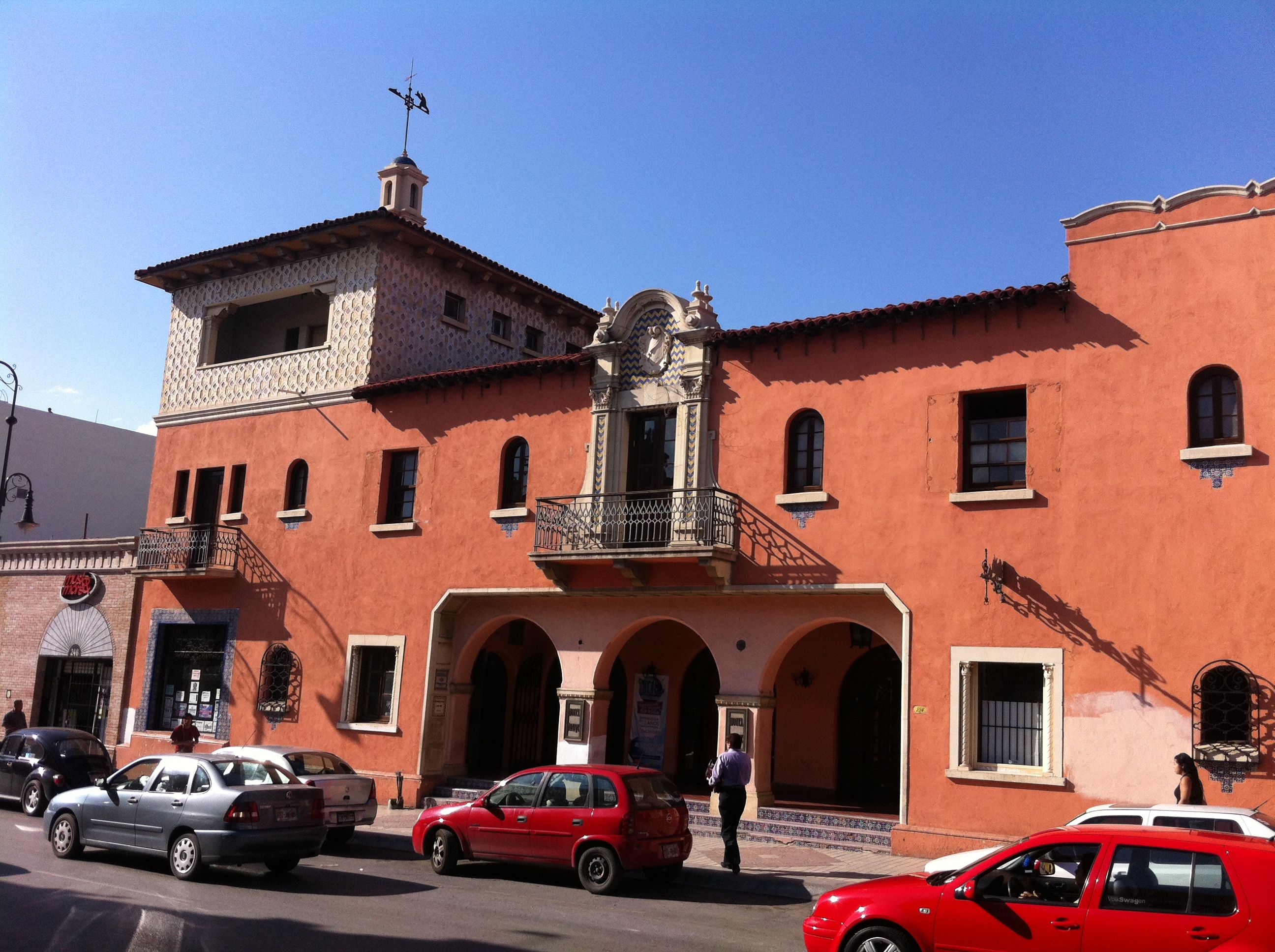
The former Hotel Arizpe Sáinz, where Edward Hopper stayed on his visits to Saltillo

The former Hotel Arizpe Sáinz today, where the painter Edward Hopper stayed on visits to Saltillo

After a hot weekend, the temperature drops by twenty degrees overnight and the morning brings a discernible chill and a fine rain. Saltillo has been the surprise of my Mexican trip, a kind of ugly, lovely town, as Dylan said of Swansea. However, the comparison is not to be taken seriously: Saltillo has a population of nearly 800,000, and serves as the capital of the desert state of Coahuila, which stretches all the way to the US border. Yesterday, after doing a radio interview, I walk around the historic centre with Julián and Mercedes, and pass a rather striking building of Colonial aspect, which Julián informs me was once the Hotel Arizpe Sáinz – now defunct – the favoured residence of Edward Hopper, during his visits to Saltillo in the 1940s. Attracted by the desert and the extraordinary light, Hopper made three visits, painting watercolours from the roof of the hotel. According to testimonies from ex-employees of the Cine Palacio, and others who knew Hopper during this period, he developed a love-hate relationship with the northern Mexican city, admiring the architecture, but not the climate or certain aspects of the ‘local character’ or city life, which he found noisy and congested. In fact, it sounds as though he didn’t really like the place much at all, and complained about the walls and towers and electric signs that obstructed the views. Nor could he find the right sort of blue-green oil paint for the mountains, which must have been a bummer. In fact this is the reason he settled on watercolours.

Having become disillusioned with Saltillo, Hopper abandoned the place, returning however for a final visit in 1951, although apparently not producing any new work.


Saltillo Rooftops: a view from the hotel roof, apparently available now as an iphone cover.

Saltillo Rooftops: a view from the hotel roof, available now as an iphone cover (!).


Saltillo: El Palacio

Saltillo: El Palacio


Church of San Esteban

Church of San Esteban


Saltillo Mansion

Saltillo Mansion


The Pig of Babel


El Cerdo de Babel, some letters having dropped off.

El Cerdo de Babel, some letters having dropped off.

Saltillo has proved the most hospitable and generous city I have visited in Mexico. It seems to be filled with people who love books and actually read them, in spite of being the centre for Mexico’s automobile industry. Yesterday the temperature soared to 38 degrees by midday and my hosts Monica and Julián put on an asado – the Latin version of a barbecue – and many of the people who attended our reading on Saturday night at the wonderfully named Cerdo de Babel (Pig of Babel) turned up. The Pig of Babel, incidentally, for anyone who intends travelling in northern Mexico, is officially Blanco’s favourite bar, seamlessly marrying the themes of Pork and Borges, and taking over from Nick Davidson’s now defunct Promised Land as the most congenial hostelry in the Western Hemisphere (although I realise such a term is entirely relative and depends on where you are standing at any given moment).


Blanco with Julián Herbert

Blanco with Julián Herbert in the Cerdo de Babel

The culture section for the state of Coahuila produced a beautifully designed pamphlet of five of my poems, for which I have to thank Jorge and Miquel. I would also like to offer my thanks Mercedes Luna Fuentes, who read the Spanish versions of my poems in Jorge Fondebrider’s fine translation, and Monica and Julián for the use of their and Lourdes’ home – especially since Julián had to endure my garbled Spanish explanation of the rules of Rugby Union last night, which may well have been a bewildering experience for a Mexican poet, but which I considered an essential duty of a Welsh creative ambassador.

On a different theme entirely, the fifth issue of that very fine magazine The Harlequin is now online, and it contains three new poems by my alias, Richard Gwyn, including this one, reflecting on an entirely different – but inevitably similar – journey to the one currently being undertaking.


From Naxos to Paros

Of the journey from Naxos to Paros
all he could remember
were the lights of one harbour
disappearing into the black sea
and the lights of another
emerging from the same black sea
and he thought for a moment
that all journeys were like this
but that many were longer.


Popocatépetl

Popcatapetl

Yesterday I came back into Mexico City from Puebla, the massive form of Popocatépetl (5,426 metres) to my left – caught fuzzily on my phone camera – passing the misty woodlands and broad meadows that gather around its base. It impressed on me the extraordinary diversity of the Mexican landscape, that within a few hours one can pass through prairie, forest and the high sierra. The only constant is the truly terrible music being played full volume wherever you go, including on this bus.

On Monday night in Puebla, as I was walking back to my hotel, an indigenous woman, utterly bedraggled, with long grey hair and in filthy clothes came running past me, apparently chasing after a big 4×4, crying out, at volume and with some distress ‘Don Roberto, Don Roberto . . .’ She carried on at pace up the street (Don Robé . . . Don Robé . . . ) for an entire block, and I could see the vehicle turning at the next set of lights. When I got to the junction, she had stopped, and was resting, hands on knees, her crevassed face fallen into a kind of resigned torment. She seemed elderly, although poverty and struggle probably accounted for an additional twenty years. I can hardly imagine what her story was – or the cruel, uncaring Don Roberto’s – but it was timeless, and seemed to sum up, more than any social analysis, the discrepancy between want and privilege, the honorific ‘Don’, gasped out as her spindly legs carried her in desperate pursuit at once implying his status and her subjugation. The image has stayed with me.

I returned to the city yesterday evening to attend a tertulia, a cross between a poetry discussion group and a workshop organised by the poet and short story writer Fabio Morábito and friends, where I was invited to read. Afterwards I visited the barrio of Mixcoac with Pedro Serrano and Carlos López Beltrán, passing by Octavio Paz’s family home, before returning to the more familiar confines of Condesa and supper at Luigi’s.

But today, back on the bus, the perennial Mexican bus. The clock at the front says 7.05. It is 12.50, but who cares? We pass through the sprawling shanty outskirts of southern Mexico City and back into the mist. Daily travel awakens in the traveller a kind of constant dislocation, which is not surprising considering the word means just that – a state of being displaced, an absence of locus. I never believed, as some of my generation seemed to, that travelling of itself was a kind of means of discovering oneself. I have absolutely no interest in discovering myself, nor anybody else for that matter. But I am drawn to Cuernavaca, not only for its alleged beauty, for the fact that it lies Under the Volcano and is the setting for Malcolm Lowry’s magnificent novel of that name, but in part at least because my late friend, Petros Prasinaki, aka Igbar Zoff, aka Peter Green came here sometime in the mid to late 197os in order to spend his inheritance, search for Lowry’s ghost and drink mescal, an example I will not be following. But I have a copy of Under the Volcano with me, just in case.


The Zapatistas’ breakfast

Zapatistas

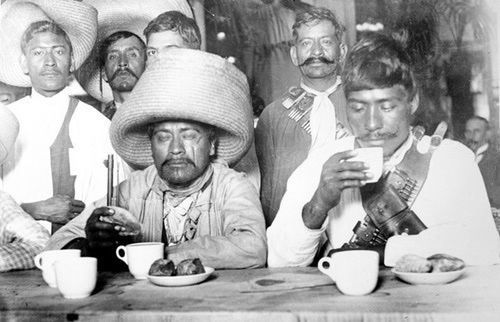
Last night, in the city of Puebla – the setting for the first battle of the the 1910 Revolution – I stopped off at a street corner kiosk and recognised, among the picture postcards, a famous image that had caught my attention on a visit to the same restaurant in which the photograph was taken, in Mexico City.

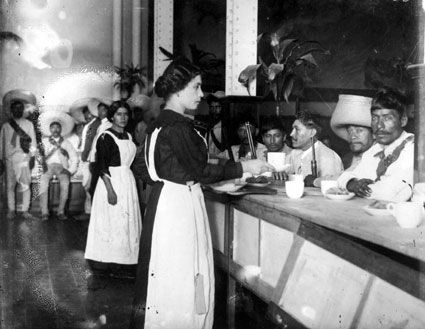
The gentlemen are Mexican revolutionary soldiers, snapped having breakfast in the exclusive Sanborns coffee house, Mexico City, apparently on the 12th of May, 1914, when Zapata brought his army to town for a meeting with Pancho Villa, who had been leading the revolution in the north of the country. A google search identifies them as the Generals Feliciano Polanco Araujo y Teodoro Rodriguez, and they are enjoying hot chocolate. I had not imagined for one second that they might be officers of such elevated rank, but appearances can indeed be deceptive. Their inscrutable expressions hypnotize the onlooker, at a distance of one hundred years, but how must they have appeared to the waitresses serving them, accustomed as they were to a rather more sophisticated, urban clientele? The waitress in the foreground seems to be keeping her distance, and wears a stony expression, perhaps evincing curiosity as well as understandable fear. The rabble of soldiers around and behind the generals in the top picture seem to be enjoying themselves just a little: perhaps the ceremony of the photograph amuses them.


Zapatistas and waitresses


Will Self and the ghouls of literature


Like most people with an interest in the subject, I read Will Self’s article in last Saturday’s Guardian on the Death of the Novel  with a strong sense of déja vu. The novel has ‘died’ so many times already it must be truly sick and tired of being dead. Following the Washington Post’s recent revelation that poetry is dead also, should we be concerned?

Readers of Blanco’s Blog will be familiar with the writer’s various tussles with the novel, not simply the discomfort imposed on the reader by having to wade through so much baggy stuff in order to consume the kernel, so to speak – if there is one – but also the demands made on the author in struggling to keep the damn thing fresh and alive, when it should just lie down and die.

Will Self’s argument, fluently expressed – although, as usual, not only hyperbolic, but perhaps a tad Thesaurus-retentive (e.g. Most of it is at once Panglossian and melioristic) – moves towards its expected conclusion with unerring certitude: the novel is dead; long live the novel:

The form should have been laid to rest at about the time of Finnegans Wake, but in fact it has continued to stalk the corridors of our minds for a further three-quarters of a century. Many fine novels have been written during this period, but I would contend that these were, taking the long view, zombie novels, instances of an undead art form that yet wouldn’t lie down.

Insistence on the death of the novel (never mind of its author) was once answered quite superbly by a character in Don Delillo’s The Names (my favourite of his), who expresses the idea of the novel’s zombiehood thus, and I cannot think of a greater or more delicious challenge to any would-be novelist:

“If were a writer,” Owen said, “how I would enjoy being told the novel is dead. How liberating, to work in the margins, outside a central perception. You are the ghoul of literature. Lovely.”


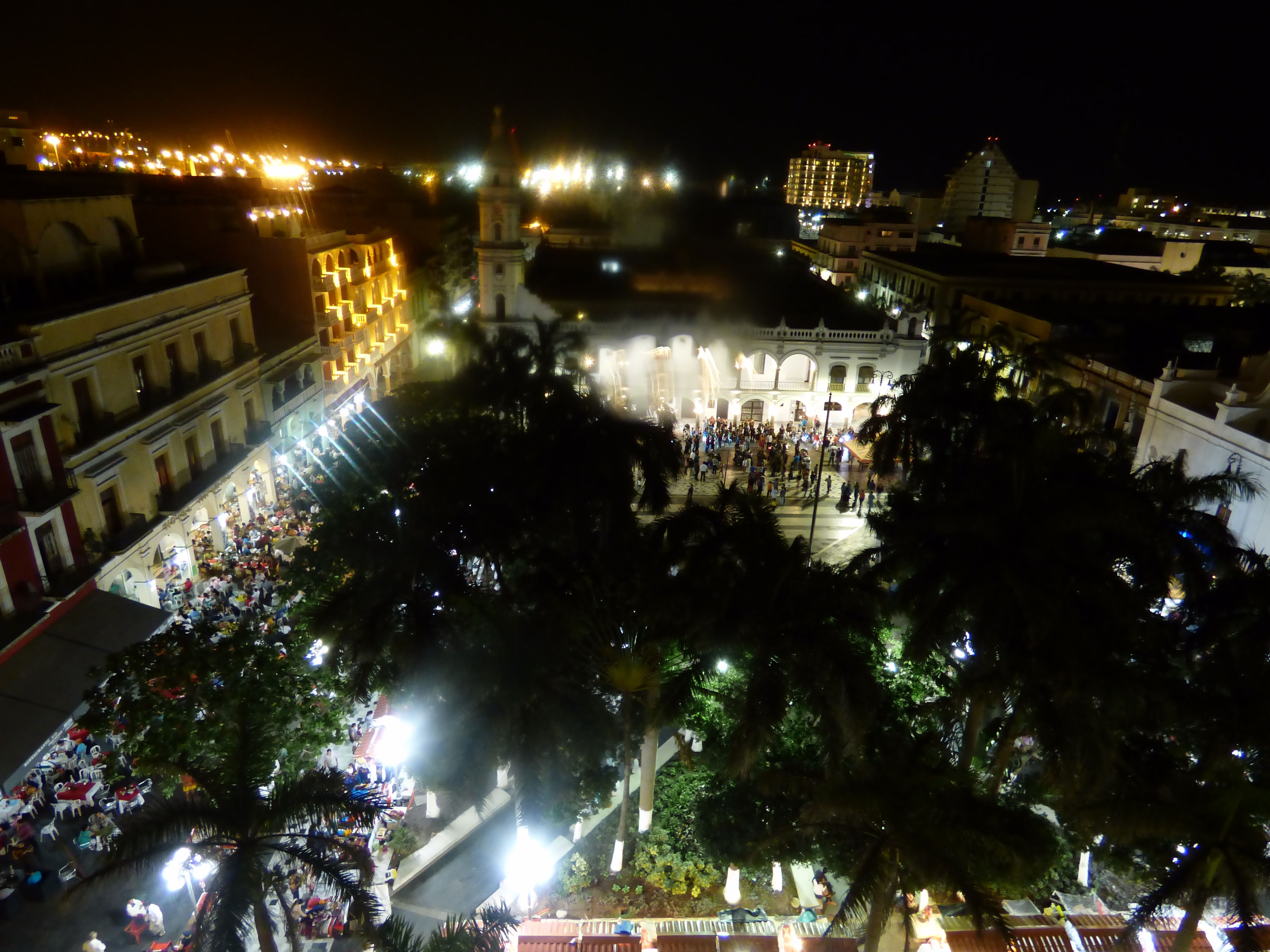
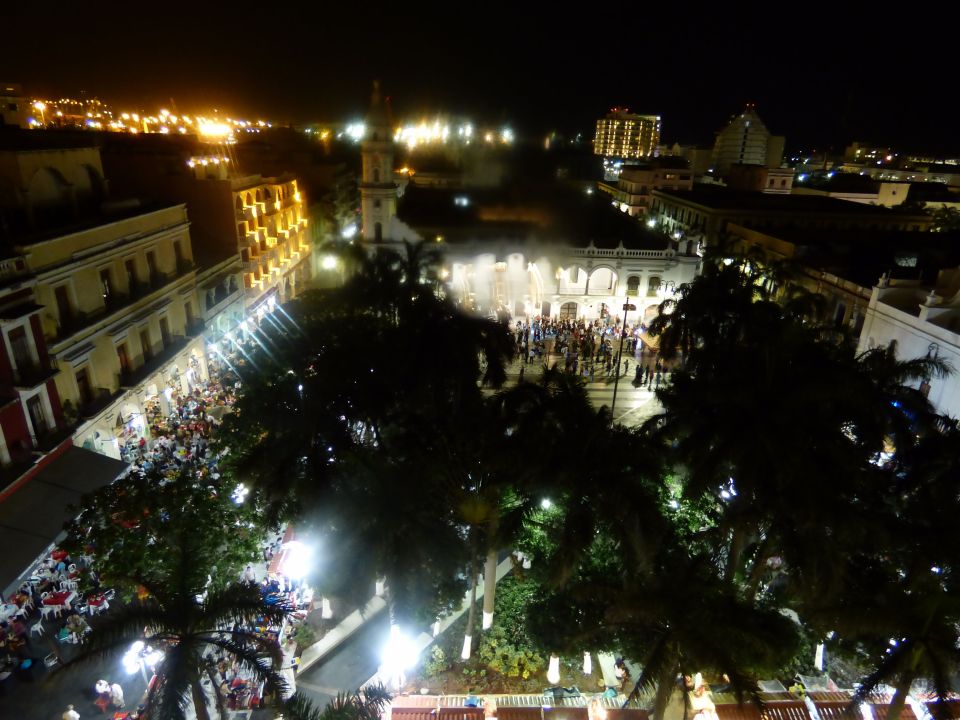
Veracruz by night


Veracruz night

Leaning over the balcony of my room in Veracruz on a Saturday night. It is hot and the air is dense, the sky laden with clouds that have not broken all day, suggesting, to me at least, some faintly tragic element– as if a foreboding – to the festive sounds emanating at full blast five floors down. Why foreboding? Because this much noise must be a cover for something, full-blooded defiance of some kind. The son band has started up, and couples are dancing in the Zócalo, moving with slow steps, a synchronised animal of multi-hued and diverse features. And all of a sudden I turn around, almost certain someone has entered the room behind me. Of course, there is no one there. The door is locked. But I am in a strange hotel, in this noisy, sweaty city, after the relative quiet and familiarity of the coffee-growing uplands in Coatepec and Xalapa. I venture downstairs and sit outside the bar attached to my hotel.

When I say the band has started, I am not being strictly accurate, as if implying there is only one band. There are currently several bands playing in the square, which, to use a common analogy, is the size of a couple of football pitches. In addition there is a group of bikers from San Luis de Potosí, who have parked their machines in the southwest corner of the square and planted massive speakers alongside them, from which blasts heavy metal at a volume which overrides most of the other sources of sound, the throbbing bass lines producing a physical response in the pit of the belly. As in the UK the bikers are predominantly middle-aged men wearing inscribed black t-shirts barely covering bulging bellies. They rev the engines of their Harleys, sending out a direct challenge to the mariachi band playing closest to their patch. There are at least four other mariachi bands playing, and a larger band for the dancers. To add to the cacophony hundreds of birds, occupying the many trees around the plaza maintain a shrill and manic chirping, flitting frantically from perch to perch, sometimes singly, other times en masse, dislodging a rival group from a neighbouring tree, who fly away squawking to find another haven. Police sirens and an unremitting blasting of horns from the bumper-to-bumper traffic add to the great noise. A fresh contingent of mariachi trumpeters arrives to my right, offering a more local assault to the eardrums.

This is, quite simply, the noisiest place I have ever been, its orchestral totality rendering the Plaza Castillo in Pamplona on the opening night of the San Fermines into sedate chamber music by comparison. But here there is no fiesta, it’s just a normal Saturday night in Veracruz.

I was told to expect a lot of noise, but nothing could have prepared me for this aural onslaught. It is beyond sound, it is a dense, geological layering of noise upon noise, of massive dimensions.

Outside in the street, a big red Ford truck pulls up, and six very fat men pile in. I look around to see if anyone else has noticed this strange occurrence, but perhaps in Veracruz this kind of thing happens all the time. At the table in front of me, a smartly dressed man with European features is writing in an A4 pad. What is he writing? Amid all this noisome, somewhat seedy racket, could there be a second scribe, a cover version of Blanco, doing exactly what Blanco does? Could he, at this very moment, be describing how there is this person seated behind him, who is a cover version of his own alter-ego?

There is always the other one, doing exactly what you are doing, thinking your thoughts, writing your story, singing your song.

At the table to my right sits a small, slight gringo who bears a certain resemblance to Stan Laurel and wears a forlorn moustache and camouflage cargo shorts and a t-shirt with an inscription that I can’t quite make out without standing in front of him and peering, which I have no intention of doing. He is talking to his Mexican friend, in English. The Mexican begins every other sentence with the words ‘one day’. One day I this one day I that. Esto y esto y esto. The other tables are filled with Mexican holiday-makers or weekenders.

My other gets up to leave. He reaches down and fetches from the floor a hard hat, of the kind worn on building sites. I see. He is probably a surveyor or building site manager, and he was filling out a report. Never mind.

The Mexican who is sitting with the gringo is doing most of the talking. He says, or I think he says, ‘one day you will see where went the elephant’. Then he says, I think, ‘one day you want talk up the history of conscious memory’ – but that cannot possibly be right. Then he says, especially loudly: ‘One day she will say I work every day every day every day. Shit! Some days I don’t give passion. Shit!’

The bikers amble by in a group. They are wearing a uniform: sky blue shirts and black leather waistcoats, or vests as they say in the U.S. In the square itself I can see jugglers and clowns and drag artists and con artists and little stalls selling cigars and wooden toys and junk of every possible description.

A very young woman, attractive and haunted-looking, with a sweet child in a sling on her back comes by selling knick-knacks made from woven thread. The pair to my right, who are both quite drunk by now, each give her a twenty peso note (about £1), the gringo pointing to the child insistently as he hands it to her, as if to say, it’s because of her, your child, that I am bestowing such munificence on you. Alcohol-driven largesse. The woman in the group directly in front of me hisses loudly to catch the waiter’s attention. He ignores her. She tries calling ‘Joven!’ (Young Man!) instead, which works, and he half-turns, careful not to dislodge any of the bottles and glasses he carries on a tray high above head-level. The light on the black wooden surface of my table is refracted by the revolving overhead fan above me, turning the shiny table-top into a swirling vortex, inviting me in. I realise at this instant – with the gratification that accompanies every minor epiphany – that I don’t truly know anything, and probably never will. But at least I have the salvation of continuity, and the exquisite tension of the unfinished journey.

The gringo and his friend leave. When I get up to pay, I notice that the gringo has left his small backpack leaning against the wall beside his table. I tell the waiter, so he can keep it behind the bar for when the poor fellow realises he has left it somewhere.

I take a last turn around the square. An old man with no shoes, extremely drunk, takes a slim bottle of cane rum from his back pocket, swigs the remaining dregs and slings the plastic bottle away with an angry gesture. He is so drunk that he is taking part in one of those hallucinatory boxing matches that certain drunks get into, and he staggers on, fighting his imaginary enemy.

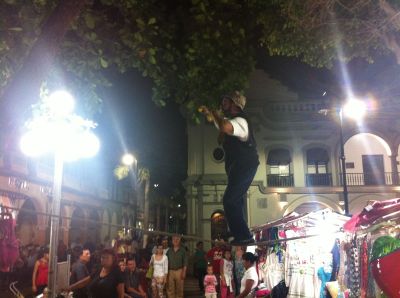
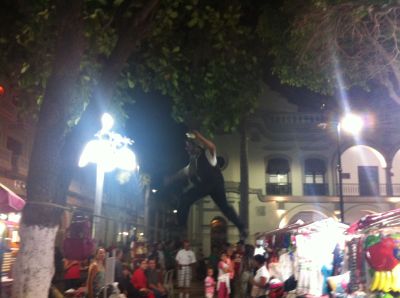
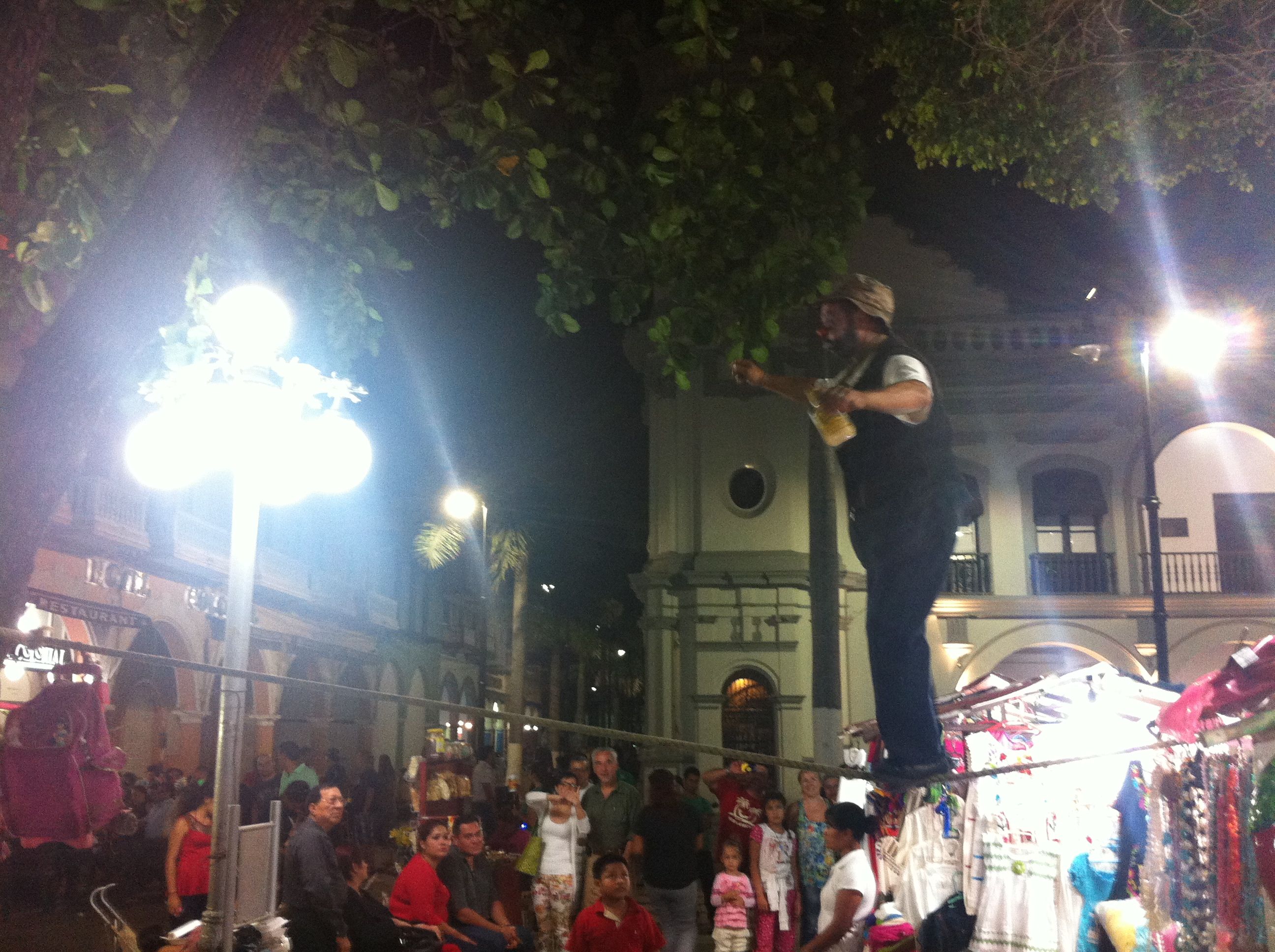
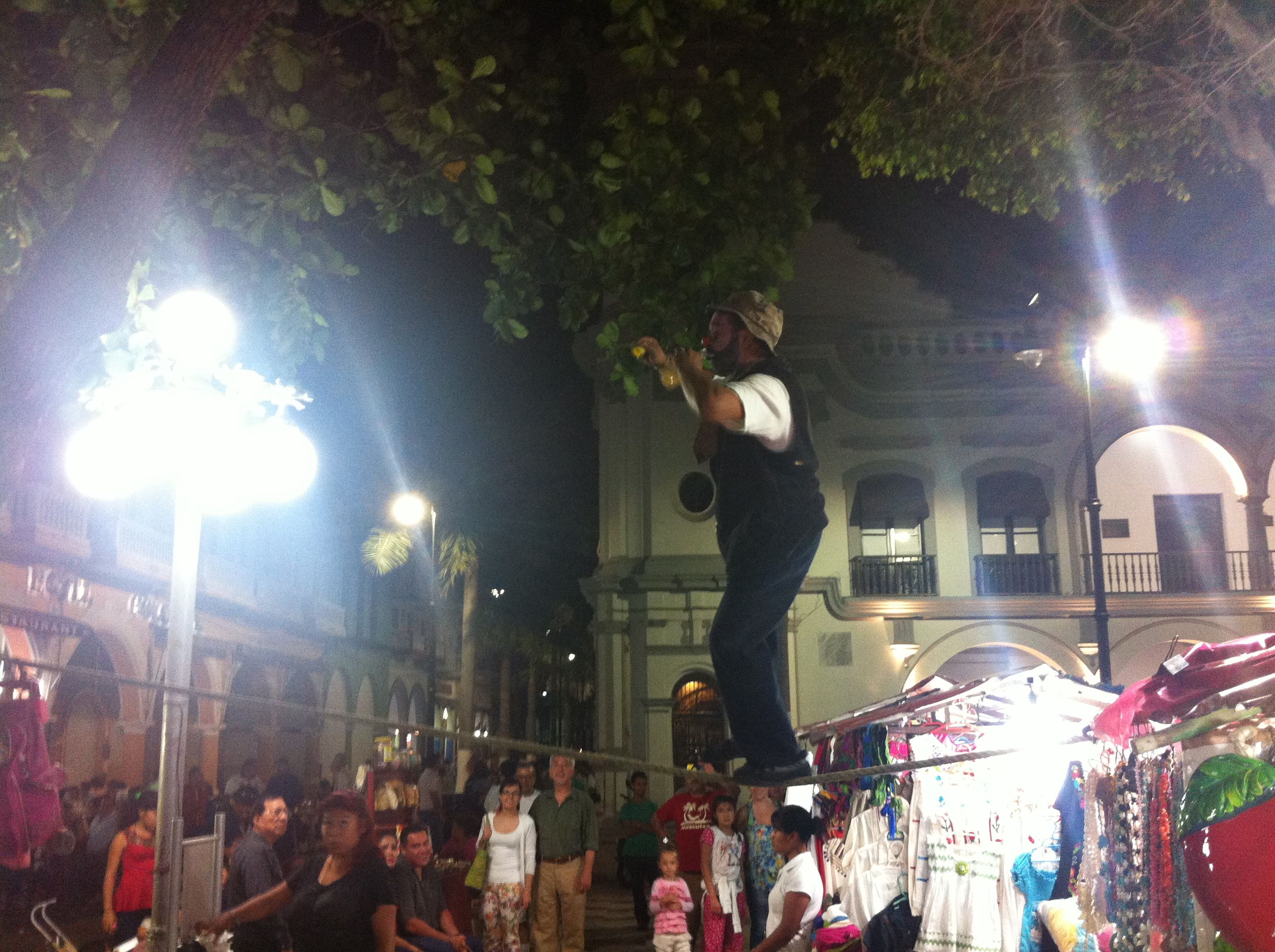
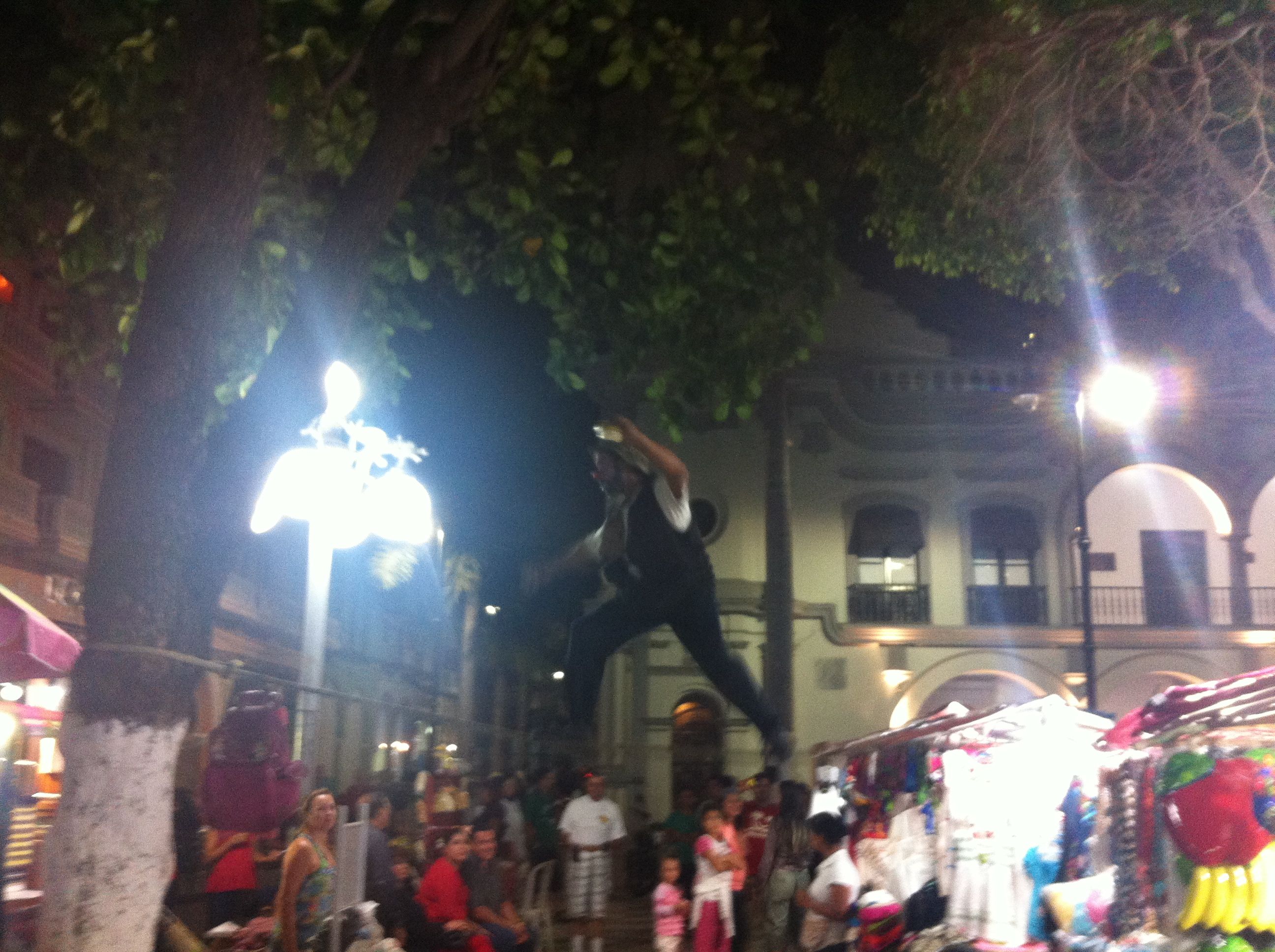
One of the last performances of the night – it is after 3.a.m. by now – is underway: a tight-rope walker, who has planted his rope between a tree and a lamp-post. He is pretending to be drunk, and is supping from an identical bottle of cane rum to the one the man with no shoes just threw away. The man with no shoes abruptly stops his shadow-boxing, and stares in evident confusion at the tight-rope walker for a few seconds, before letting loose a string of profanities, and stumbles on his way across the square.
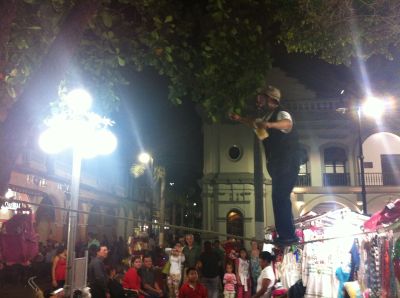
tight rope 0
 

tight rope 1


tight rope 2


Jaguars, snakes, rabbits

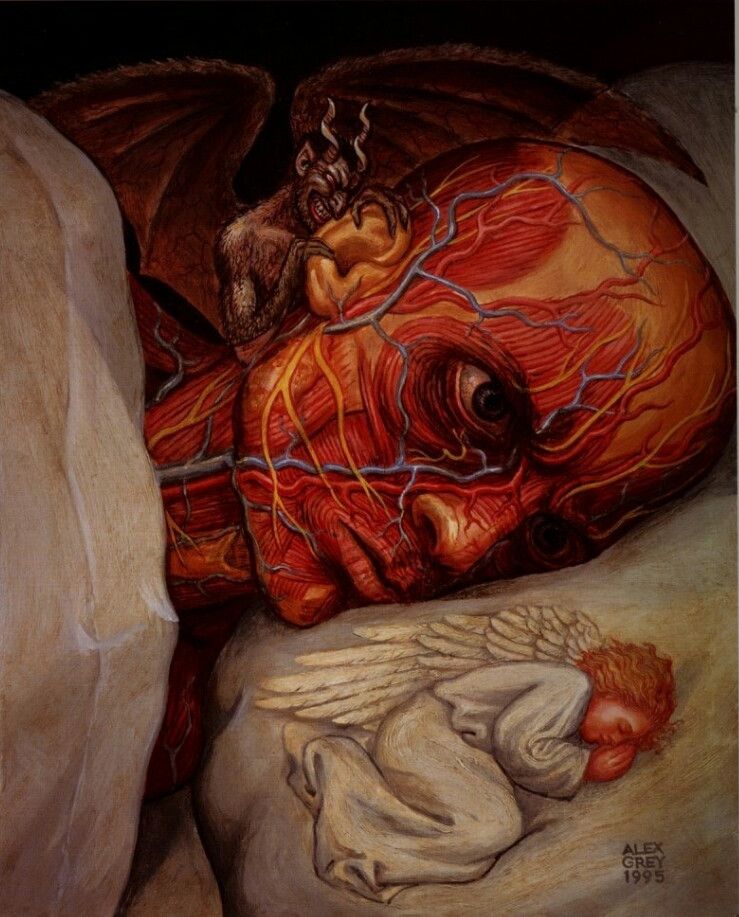
Jaguar duality

Jaguar duality

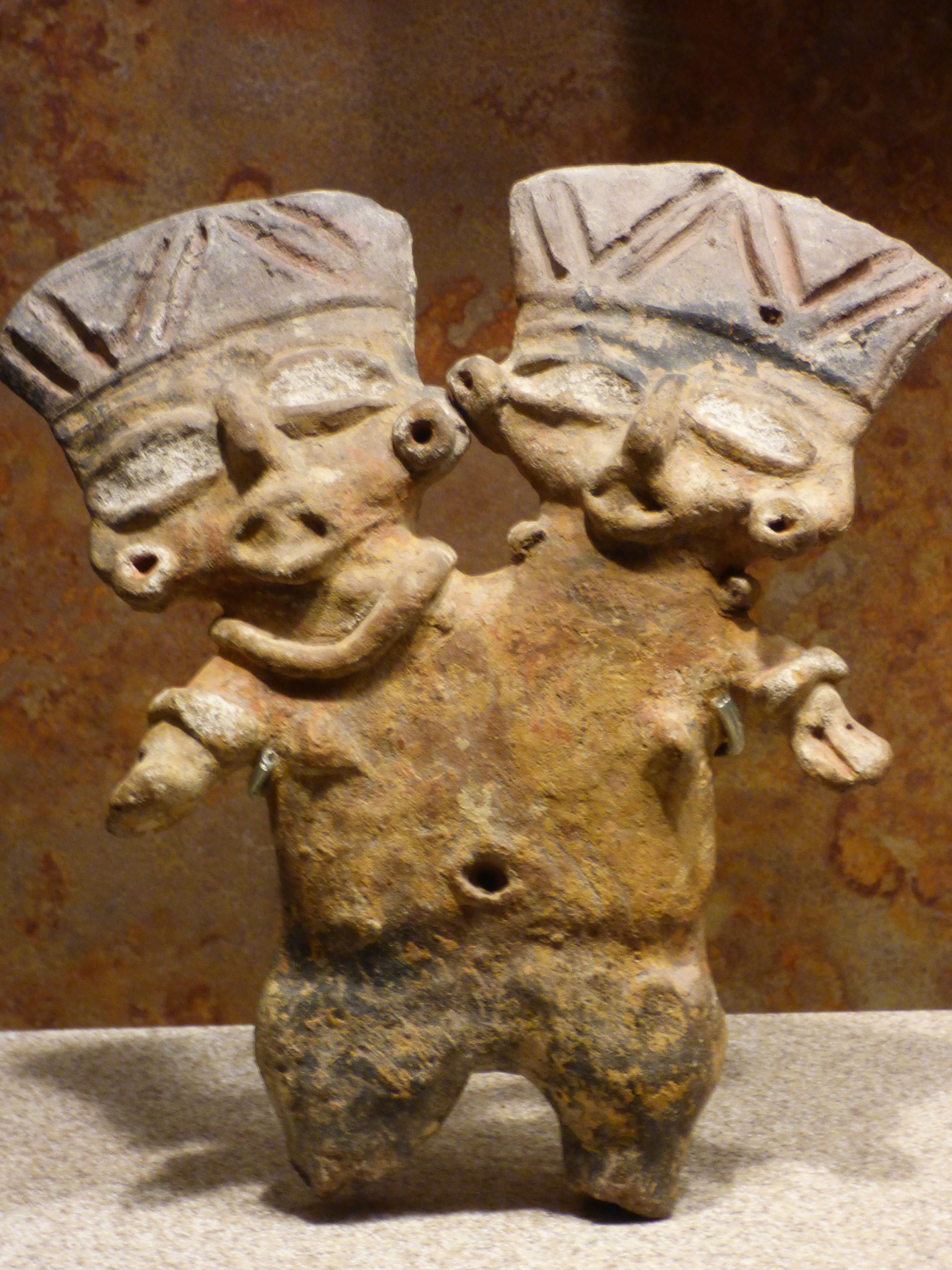
If you travel, Blanco thinks, if you just travel, go from place to place, walk around, you should never get bored and you should never lack for things to do or write about, if this happens to be your thing. At least that is the theory. Blanco has a minor epiphany: he must go to Coatepec (the accent is on the at): it fulfils the single major criterion he has always employed when deciding whether or not to visit a place: he likes the sound of it; it carries the resonance of something remote – in time and culture – and yet somehow reassuring. He is walking down the hill from the Xalapa museum of anthropology, and after an entire morning within its confines he has become saturated with Olmec images of human figures and jaguars and serpents, and he flags down a taxi driven by a man with stupendously fleshy earlobes; earlobes that remind him of small whoopee cushions or rolled dough or moulded plasticine. The taxi driver chats about corruption in Mexican politics. It is raining. It has been raining all morning and all last night, and throughout the previous evening, and as far as we know it has never not been raining. Outside of Xalapa there is a roadblock. The young policeman carries an automatic rifle and wears black body armour, leg armour, the works. He inspects the taxi-driver’s I.D. and stares at Blanco for several seconds. It continues to rain.

More duality

More duality

We arrive in Coataepec and get stuck in a traffic jam. Nothing moves. The taxi driver asks directions, but that doesn’t help the traffic move. Blanco spots an interesting-looking restaurant, pays the taxista, and gets out. The restaurant has a nice inner patio with a garden area, and tables around it, out of the rain. In the garden there are roses and other flowers. A large family group are finishing their meal and then spend at least twenty minutes taking photos of each other in every possible combination of individuals, so that no one has not been photographed with everybody else. They have commandeered the only waiter in order to help them in this task. Every time Blanco thinks they are about to leave and release the waiter they reconvene for a new set of photos. One of the men (a Mexican) has very little hair but a long grey ponytail, which cannot be right. One of the women – I suspect Ponytail’s sister – is married to a gringo, it would seem. He has long hair also, but not arranged in a ponytail. He speaks Spanish well, with a gringo accent. Blanco orders tortilla soup and starts leafing through a magazine he bought at the anthropology museum. His phone makes a noise that tells him he has received a message. It informs him, in Spanish: Health: Adults who sleep too little or too much in middle age are at risk of suffering memory loss, according to a recent study. He looks at the message in consternation. Too little or too much? So, hey– you’re bolloxed either way. Who sends this stuff? The screen says 2225. Then another one: Japanese fans of Godzilla were very upset with the news trailer of this film to find that Godzilla is very big and fat: read more! 3788. Then a link. Blanco shakes his head sadly.

Coatepec is full of interesting buildings with courtyards. Blanco heads down to the Posada de Coatepec, a nice hotel in the colonial style, and goes in for a coffee. A slim man with fine features, a neat little moustache, dressed in polo gear, greets him in a friendly fashion, and Blanco greets him back, once again under the impression that he has been mistaken for someone he is not. A blonde woman, also in white jodhpurs, follows the man. There must have been a polo match. How strange. The hotel offers a nice shady patio, but we don’t need shade, we just need to be out of the rain. Blanco sits on the terrace outside the hotel cafe and writes in his notebook. Before long, the man who was in riding gear comes and sits on the terrace also. Immediately three waiters attend him, bowing and scraping, one of them is even rubbing his hands together in anticipatory glee at the opportunity to serve this evidently Very Important Person. Mr Important takes off his sleeveless jacket, his gilet, and immediately one of the waiters – like a magician with a bunny – produces what appears to be a hat-stand for midgets, but is, presumably a coat-stand. Clearly the Important Person cannot do anything as vulgar as sling his coat over the back of a chair. Another waiter opens a can of diet coke at a very safe distance, and only then brings it to the table, along with a glass filled with ice. He is bending almost double, as if to ensure that his body doesn’t come into too close and offensive a proximity to the Important Person. It is one of the most extraordinary displays of deference I have witnessed in my life. Then all three waiters – the one who brought the coat-stand, the one with the coke, and the one who was rubbing his hands, a kind of maître d’ – vanish inside like happily whipped dogs. Left alone, the Important Person makes a phone call in a loud voice. He is barking instructions to some underling. He is clearly someone who is used to being obeyed, like an old school Caudillo. Must be a politician. When he has finished his call, he looks around and gets up to go inside the restaurant, where his company – family and friends, I guess – are seated. He walks inside with his drink, and within seconds one of the waiters appears out of nowhere, grabs the coat-stand, and follows him in with it.

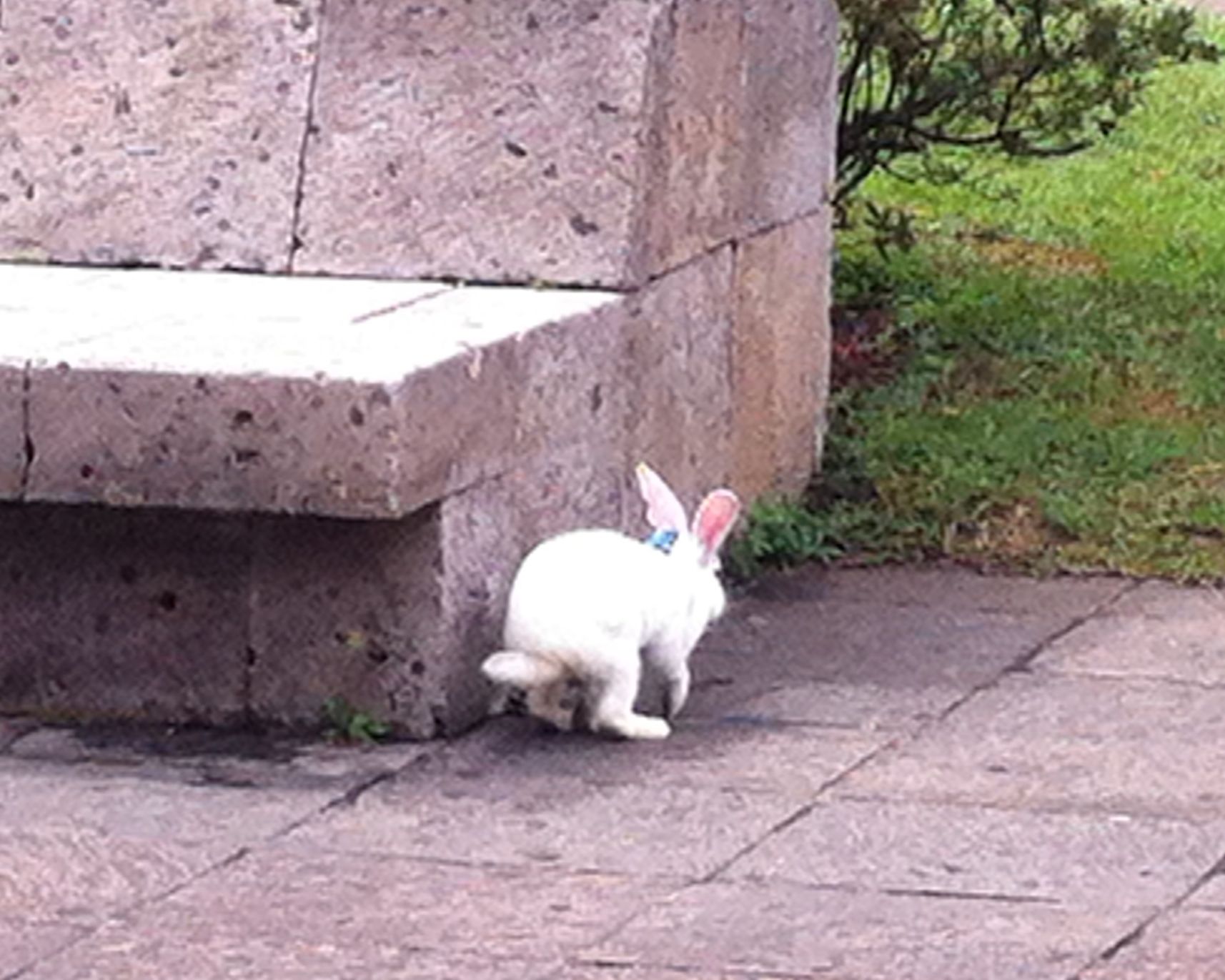
A White Rabbit

A white rabbit


A white rabbit taking his leave

A white rabbit taking his leave


We have to go. I have arranged to meet a poet back in Xalapa and discuss literary matters. He is called José Luis Rivas and has translated T.S. Eliot and Derek Walcott into Spanish.


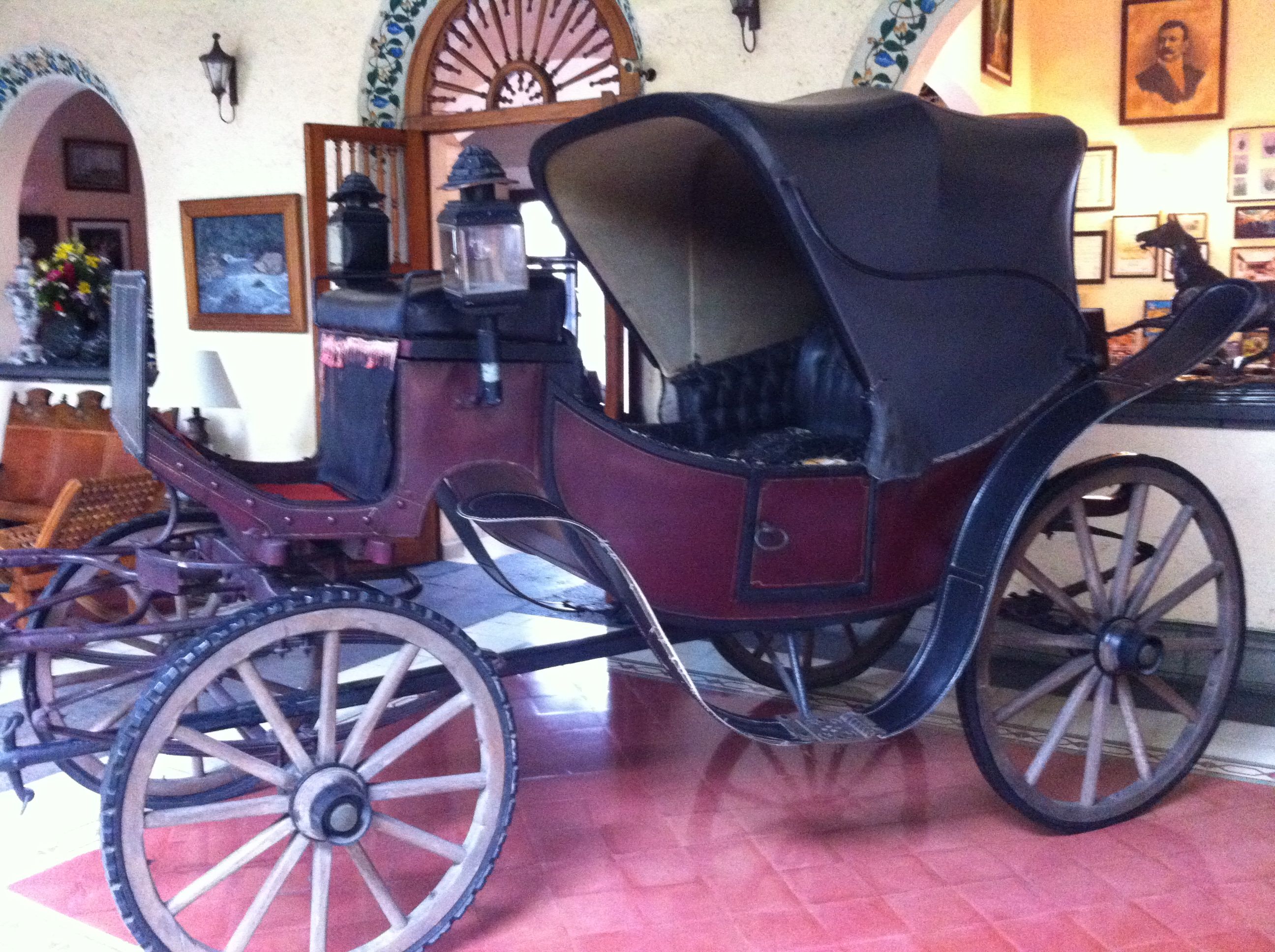
Carriage in foyer of the Posada de Coatepec, used by formerly Important People.

Carriage in foyer of the Posada de Coatepec, used by formerly Important People.


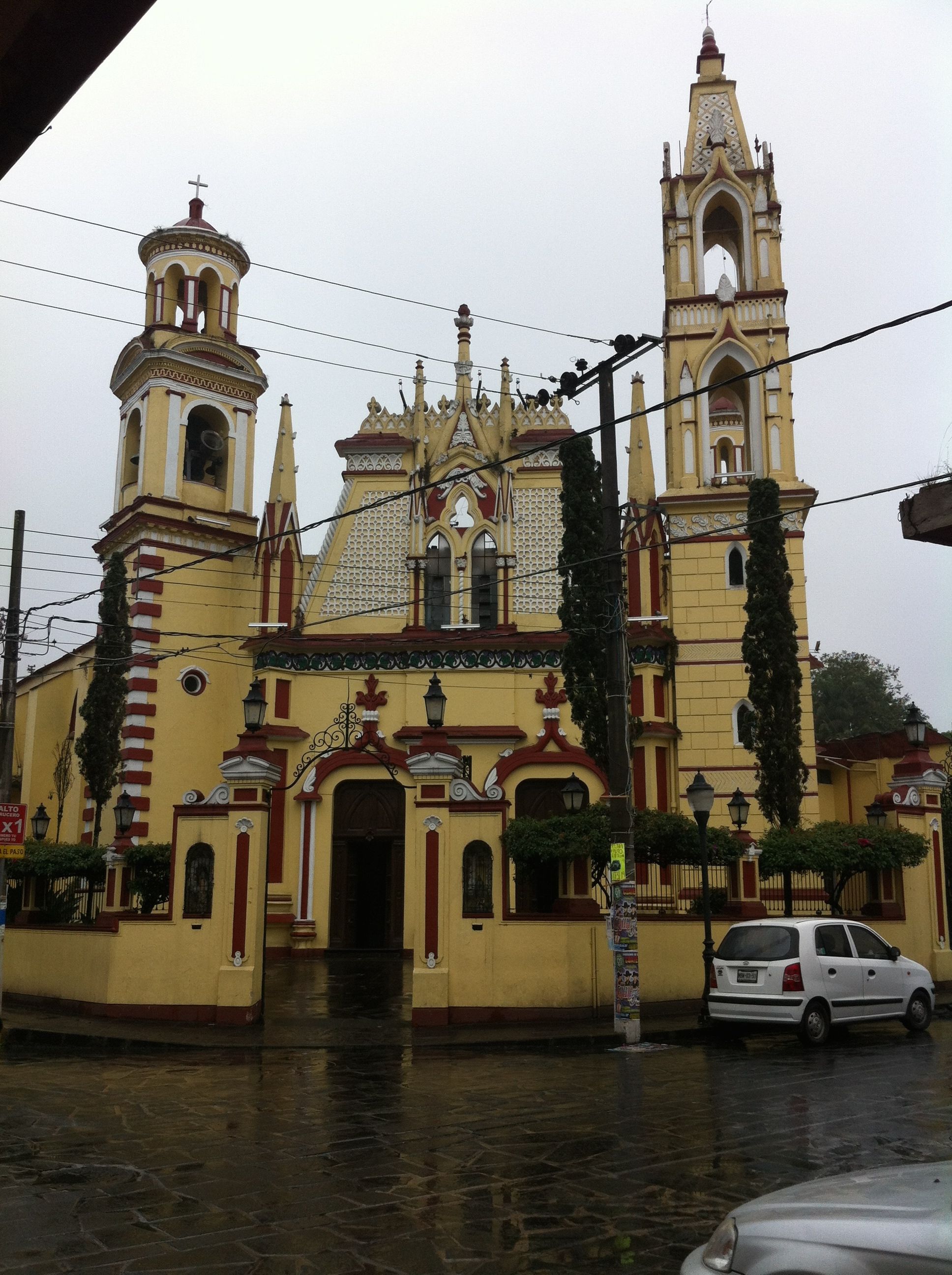
Coatepec Church

Coatepec Church.


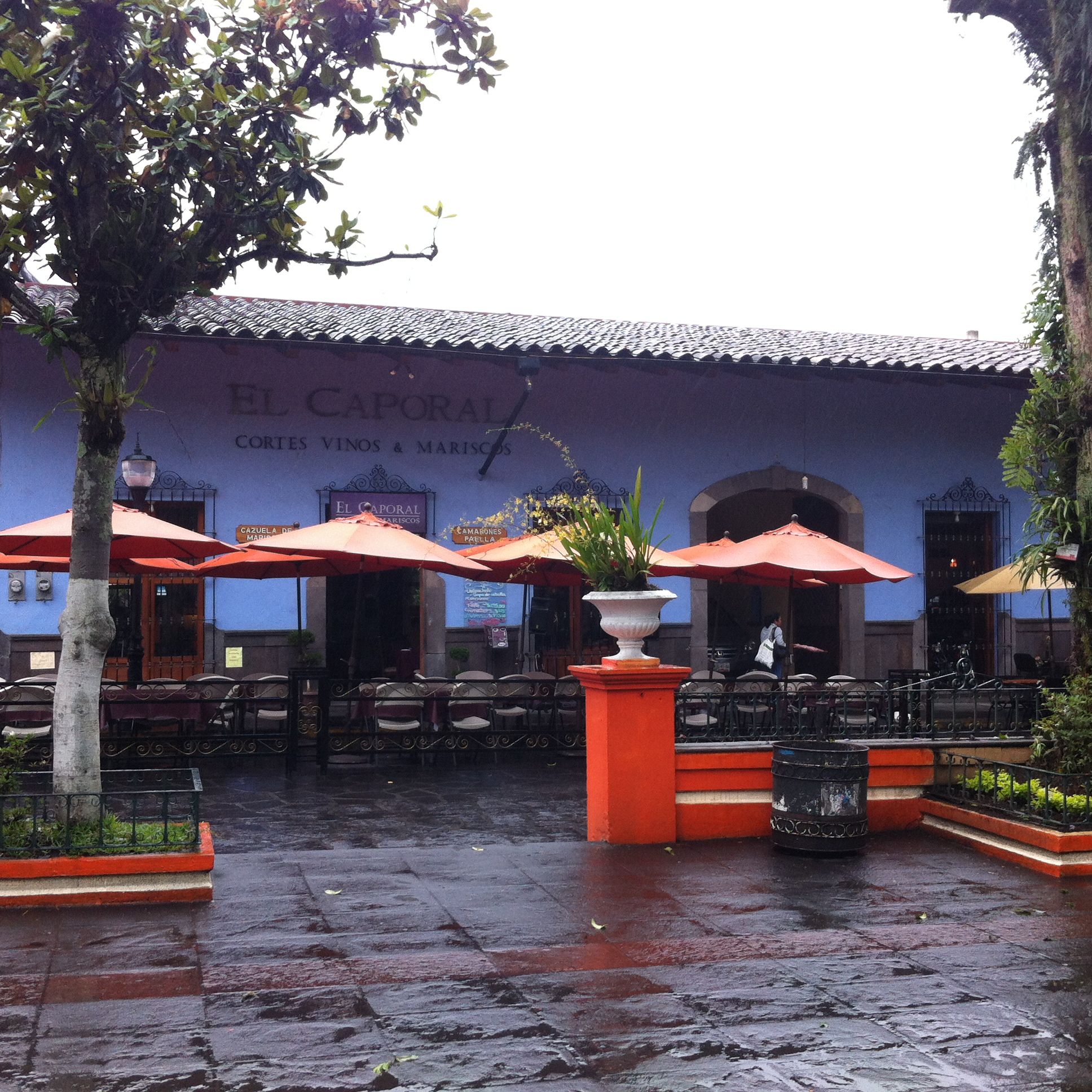
El Caporal, Coatepec.

El Caporal, Coatepec.


In Xalapa

cactus road

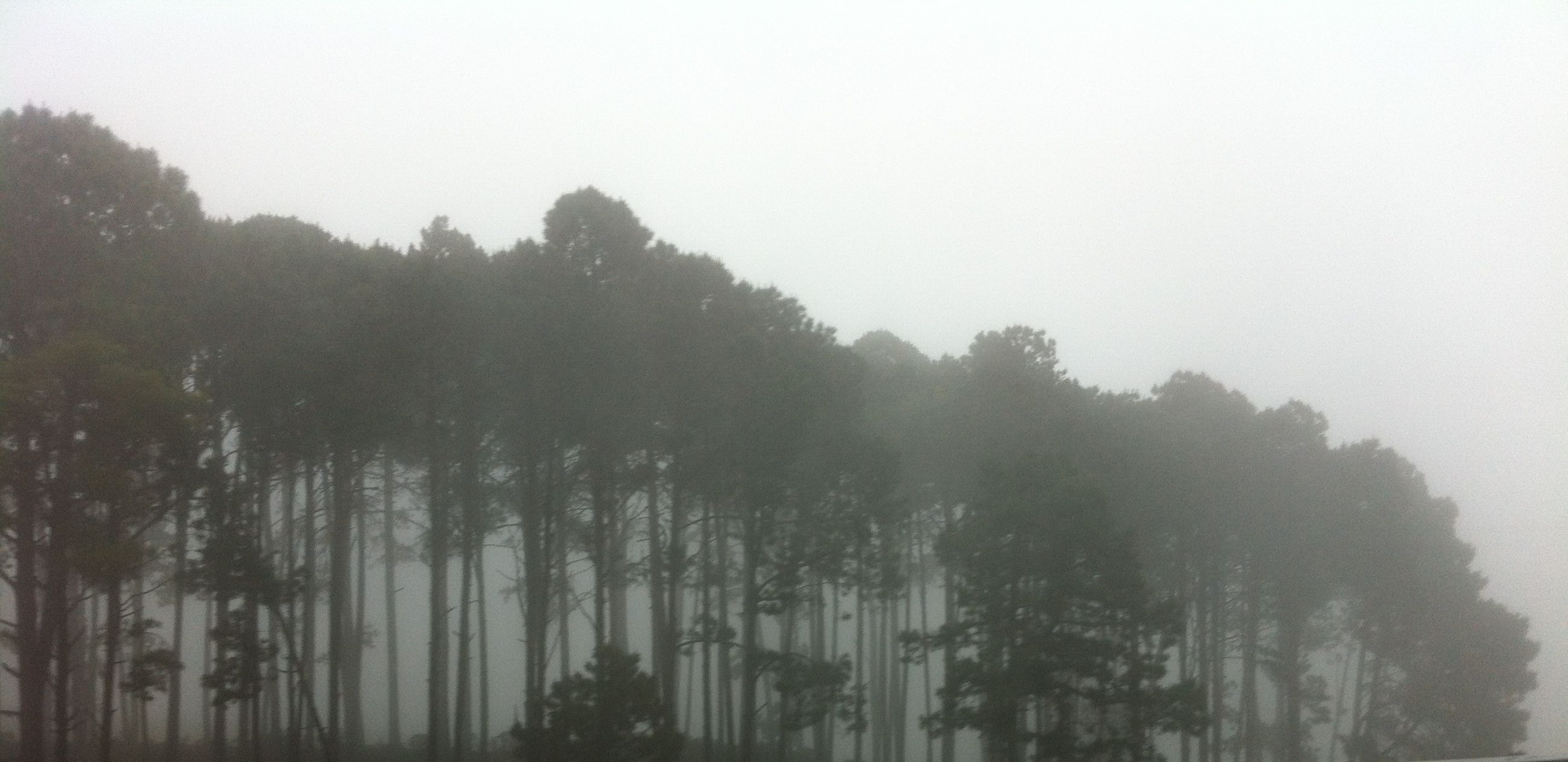
Leaving behind the poets of the monstrous metropolis that is Mexico City, Blanco catches a bus and crosses the wide plain strewn with cacti upon which perch enormous dark birds. Did he actually see them, those birds? It is so hard to distinguish at times between the things we see and the things we remember and the things we think we remember and the things we never saw but read about and the things we wish we had seen and so retrospectively invent, and the things we will never see but have experienced vicariously in a story recounted by someone else, a friend, or possibly a stranger. And then a mist falls upon the plain and the next time he looks there is a forest, barely visible through the thick cloak of fog, and the windows of the bus have steamed up with the change in temperature.

trees in mist


He arrives at Xalapa in the rain, catches a taxi, and finds that the route across town is cordoned off for a Mayday demonstration. The taxi driver curses, finds a way around, drops him off. He is hungry and sets out up the street, finds the Callejon Diamante, though it has been renamed, and enters La Sopa canteen. An older man with a white moustache, white shirt and white cowboy hat is playing the harp. Blanco clocks the harpist clocking him. He heads towards the back of the cantina and orders food; chickpea soup, pork in salsa verde with pasta, and a beer. The food arrives, along with tortillas wrapped in a cloth. The cowboy harpist stops playing the harp and makes his way down to the washroom. When he passes Blanco’s table he nods and says buenas tardes, as though he has known him for years. This is not so strange, thinks Blanco, a friendly old fellow who plays the harp in a cowboy hat. He finishes the chickpea soup and awaits the arrival of the second course. The harpist comes out of the men’s room, stops by Blanco’s table and says in Spanish, ‘Around here they call me the ambassador.’ Now this Blanco does find odd, as he is under the impression that he, Blanco, is the Ambassador, or at the very least a variety or version or improvisation upon the theme of Ambassadorship. Perhaps ‘The Ambassador’ is the harpist’s stage name, he thinks. Or perhaps he is a retired drug baron  nicknamed ‘The Ambassador’ for his talent in negotiating his associates’ passage to the next life, and who has since mended his ways and taken up playing the harp in Xalapa cantinas, where no one knows of his sinister past and his reputation for dealing out summary justice. Nonsense, I reply, he is a nice old man who plays the harp. Don’t be fooled, says Blanco. He has dangerous contacts, just consider those birds perched on the cacti, back on the plain. Who do you think you’re kidding?

When we leave the cantina it is still raining.


Episodic Insomnia

Insomnia

Every night for a month he wakes at a fixed time between the hours of three and four, perplexed by the routes he took around the eastern Mediterranean years ago, following sea-tracks or mountain paths or those alleyways between tall decrepit buildings that hide or reveal a dome or minaret, glimpsing moments of a half-remembered journey. Or else he is mistaken, and it is not the journey that wakes him but the need to write about it, and his alarum is this hypnopompic camel, trotting over memory’s garbage tip: intransigent, determined. How is it that we reach that state in which the thing remembered merges with its remembering, the act of writing with the object of that need to tell and tell? And so he wakes again at a quarter to four, another dream-journey nudging him tetchily into wakefulness like a creature in search of its soul, and this time he is peering from a terrace on the milky heights at Gálata, or else gazing eastward from the battlements at Rhodes, and wondering whether he has always confused the journey with the writing of it, whether the two things have finally become one.