
Richard Gwyn

Poets who translate

Dome of Aghia Sophia


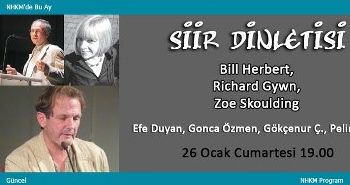
It is our last day in Istanbul, and the rain continues, as it has done since Friday evening, shrouding the Bosphorous in grey mist. Before catching a taxi to the airport we snatch a visit to Aghia Sophia, that magnificent evocation of the implausible. The days of translation, of this particular kind of translation, have drawn to an end. Yesterday evening WN (‘Bill’) Herbert, Zoë Skoulding and a certain Richard Gywn, along with our respective translators, Gökçenur Ç, Gonca Özmen and Efe Duyan read our work at the Nazim Hikmet Centre in Kadikö on the Asian side. We went by ferry through the soft rain, a rain almost as comforting as the sahlep we slurped, that peculiar sweet beverage of orchid root, milk and cinnamon, the liquid polyfilla of the Levant, as Bill calls it.
 

Istanbul reading


We had an early dinner at Çiya, one of Istanbul’s most successful new restaurants, whose owners have set out to collect recipes from lost corners of Turkey and recreate them in a modest but harmonious three-storey building. I should really say they have translated recipes found on research trips, dug up from family notebooks, dictated by aunts and grandmothers, and have brought them to an Istanbul all too well known for its predictable variations on ratatouille and lamb combinations as a reminder of the glorious culinary past of Anatolia. These recipes have been translated from a time and place distinct from our own, rejecting the universalist culture in which the staple has become ever more dull and tasteless.

It is easy to forget that translation is something we are engaged in, without option and at all times, from the very start of life.  It is an activity that is by no means confined to those who term themselves ‘translators’.

Early childhood is the acute phase of translation, and of being translated. Those moments in which every gaze, every enraged instinct on the part of the infant meets with either incomprehension or else with a tentative, and then a more assured translation. Maybe we don’t change that much in this respect, as we continue to translate others, and ourselves, in and throughout the course of a lifetime, with varying degrees of success. The fact that we exist as part of a functioning element within society (family, school, member of this or that group or organisation) consigns us necessarily to different modes of translation.

Literary translation concretizes and makes specific acts of translation that otherwise exist in our everyday lives. Poets who also translate join a community of international poet-translators who are enabled, through a process of collaboration, to sharing their respective poetry with new audiences. Many lasting friendships are made in the process, as well as dialogues being opened between cultures in essential and surprising ways.

This is what the organization Literature across Frontiers – under its indefatigable director Alexandra Büchler – manages to such good effect. In meetings across Europe practitioners use a ‘bridge’ language, so that poets who have different first languages but share another language in common (English, most commonly, but any language will do) can combine forces with a native speaker of the bridge language to make new versions of their work. It sounds complicated but it can be a very stimulating process, and it must be said that a lot depends on the individuals gathered together on these occasions, and whether or not they gel as a team. Working as a small unit has other benefits – there are always at least two perspectives – indeed, as many as four or five– on a single poem, and this multiplexity of approach can lead to small epiphanies in the act of translation. Translation is not only a linear and logical progression of a text from one language to another; it is also a process of revelation, an uncovering, de-layering: a transmutation of materials, an act of linguistic alchemy.

Sometimes, needless to say, translation goes all wrong. I have written about this before, in relation to restaurant menus, a constant source of entertainment for anyone who travels. But in the last few days, Istanbul has coughed a few examples of translation weirdness that are equally diverting. I post a selection below.


 

Dried Nute

 As Class

TITIZ

The other side of the other

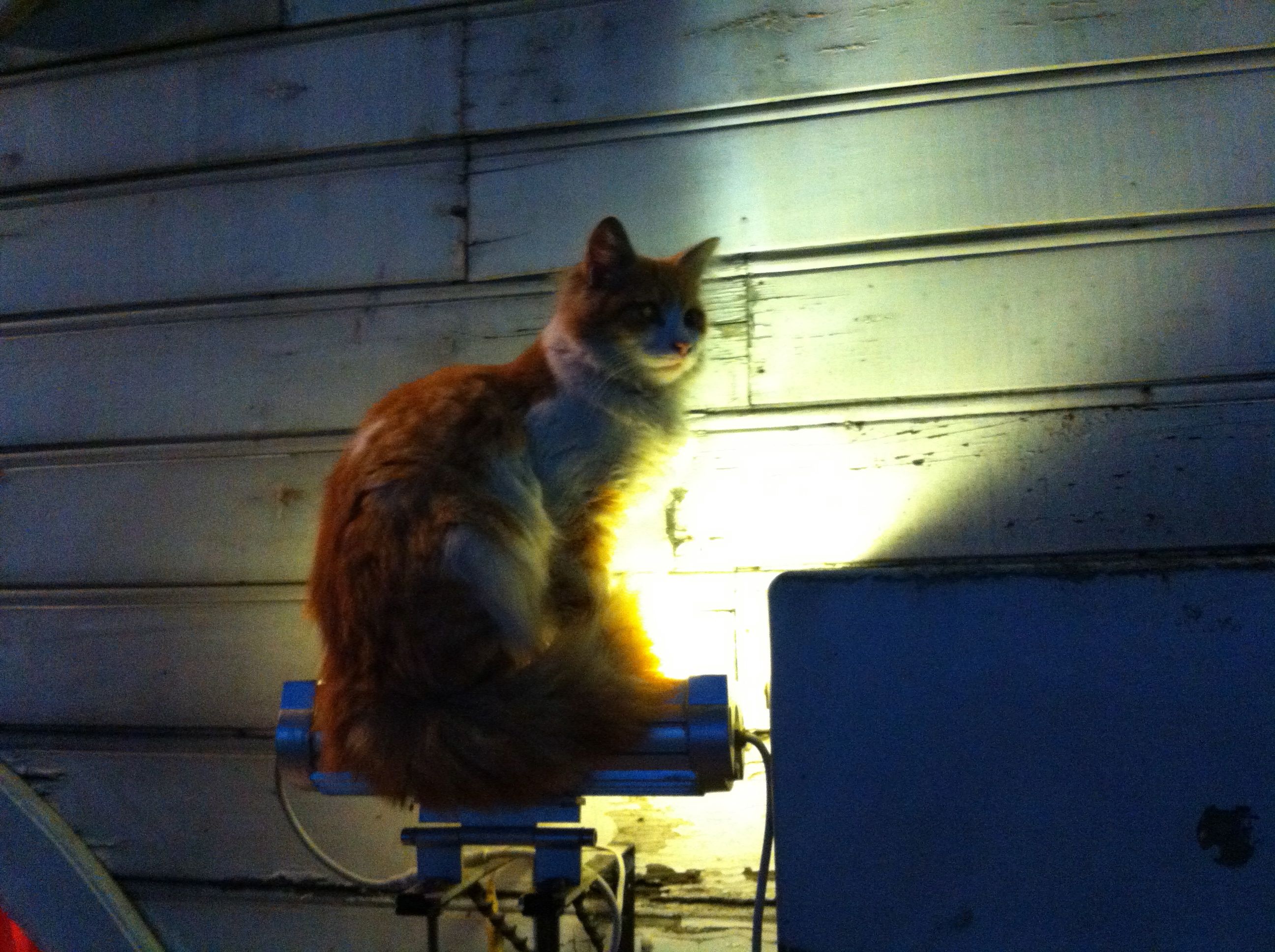
Cat in Sultanahmet

Cat in Sultanahmet


In my last post I mentioned that perennial companion and source of consternation, the other, the doppelganger, the one who walks beside us, both ourselves and not ourselves.

I cited the introduction from Orhan Pamuk’s memoir of Istanbul, but cut the quotation short. I did this on purpose, because Pamuk leads off into the dark side of the other, to the fear of replication that beset him when he once came to grips with the awfulness of one’s own doubling:

On winter evenings, walking through the streets of the city, I would gaze into other people’s houses through the pale orange light of home and dream of happy, peaceful families living comfortable lives. Then I would shudder, thinking that the other Orhan might be living in one of these houses. As I grew older, the ghost became a fantasy and the fantasy a recurrent nightmare. In some dreams I would greet this Orhan – always in another house – with shrieks of horror; in others the two of us would stare each other down in eerie, merciless silence.

‘As I grew older’. There’s the rub. Just as all literature leads us back to children’s stories, as Borges notes, so, in an inverse sense, stories that begin as childhood diversions, of daydreaming and harmless fantasy, with time become the stuff of nightmares. The prospect of possessing (or being in the possession of, possessed by) a double, a version of oneself both intimate and foreign, both known and unknowable, intrudes into consciousness with the stealth of a thief, come to steal our bones, come to steal our soul.

After reading my last post, The one who walks alongside us, a friend commented that in Freud’s essay ‘The Uncanny’, he refers to the terror implicit in the concept of the double, the creeping horror of replicating something long known to us, once very familiar, but which has now become terrifying. What could be more familiar to us – and therefore possess the greatest potential for horror – than ourselves?

In literature, notably in the works of Edgar Allen Poe, Guy de Maupassant, Alfred de Musset, Fyodor Dostoevsky, Joseph Conrad, Jorge Luis Borges and Thomas Bernhard, we frequently encounter something approaching a paranoid state revolving around the persecution of the ego by its double. Otto Rank, Freud’s precursor in the study of the double, compares these imaginary creations to their authors’ symptoms, through which the theme of the double reveals a psychopathological dimension. Well . . . you might see it that way, you might even, as Freud suggests, see the expression of the double as a symptom of the ego’s inability to outgrow the narcissistic phase of early childhood, but that would be to pathologize a great number of writers, and I don’t for one moment believe in the notion that you have to be mentally ill to be intrigued by the notion of a double, or to write effectively on this theme, or to be encouraged to think there may be some profound connection between an awareness of one’s own otherness (expressed in many ‘traditional’ cultures as an animistic belief in immortality) – or to believe that after a certain age it should be regarded as an unhealthy or pathological condition.

We all possess the ability to imagine ourselves as other, and this imagining, or daydreaming, is the beginning of all literature. How appropriate then, that when a writer sets out to put down an account of his or her own life, they seem best able to do this by imaging their story as one that happened to someone else. It seems to be the core paradox that confronts anyone who writes a memoir, and has certainly been my own experience.

Pamuk too, apparently: “I’d have liked to write my entire story this way – as if my life were something that happened to someone else, as if it were a dream in which I felt my voice fading and my will succumbing to enchantment.”

More to follow. Written either by me, or the other bloke.


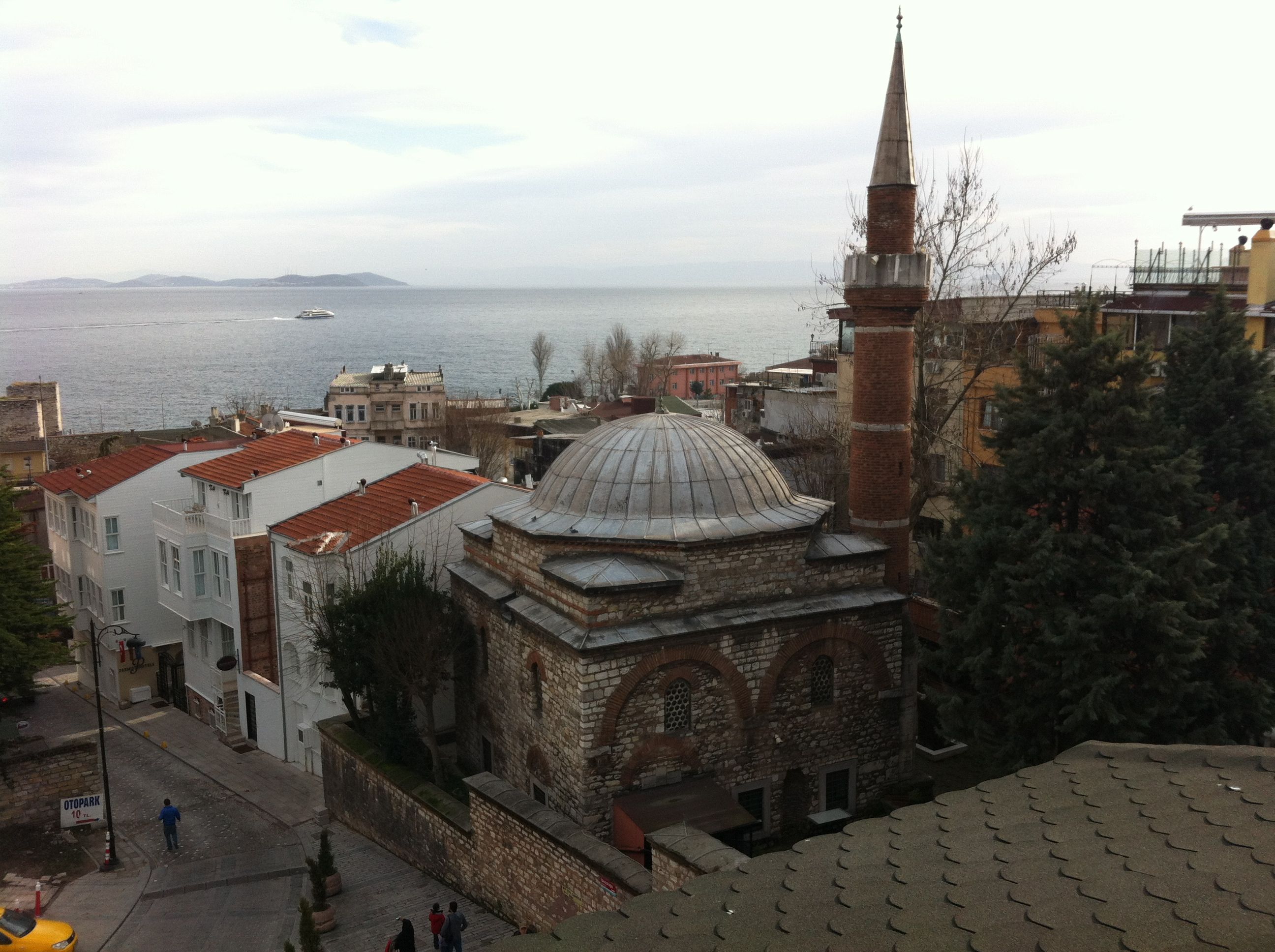
View from Megara Palace


Sultanahmet shack


Flying carpet


The other who walks alongside us

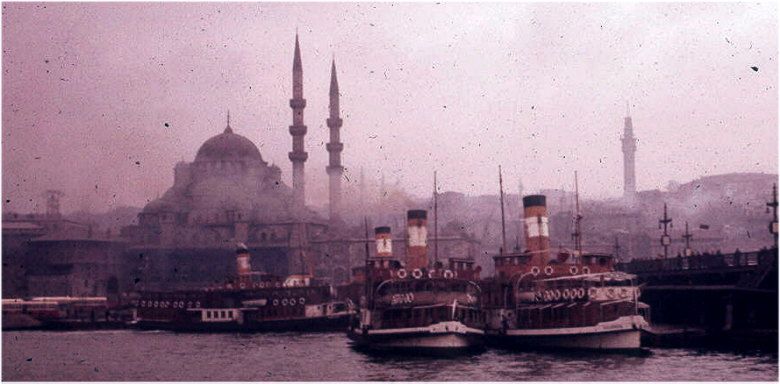
Istanbul waterfront


On the radio this morning the Turkish writer Elif Shafak prepares me for a journey. I am listening to Istanbul, she says, and we share the sounds of the city, which dissolve, eventually into water. ‘Everything in Istanbul,’ she says, ‘is fluid.’ And there are two different kinds of fluidity, the elements of oil and water. It is a liquid city, a city that never stops becoming.

Istanbul’s fluidity, its sense of becoming, of becoming another, even at the same time as becoming itself, reminds me of the opening of another work by a contemporary Turkish writer. Orhan Pamuk begins his love poem to his home city: Istanbul: Memories and the City, as follows:

From a very young age, I suspected there was more to my world than I could see: somewhere in the streets of Istanbul, in a house resembling ours, there lived another Orhan so much like me that he could pass for my twin, even my double. I can’t remember where I got this idea or how it came to me. It must have emerged from a web of rumours, misunderstandings, illusions and fears . .  . But the ghost of the other Orhan in another house somewhere in Istanbul never left me.

How many of us must share this notion of a double, breathing our air, thinking our thoughts, eating our food, dreaming our dreams; but also at a remove, always elsewhere, always and inevitably engaged in being someone other than ourselves.


How to write a novel

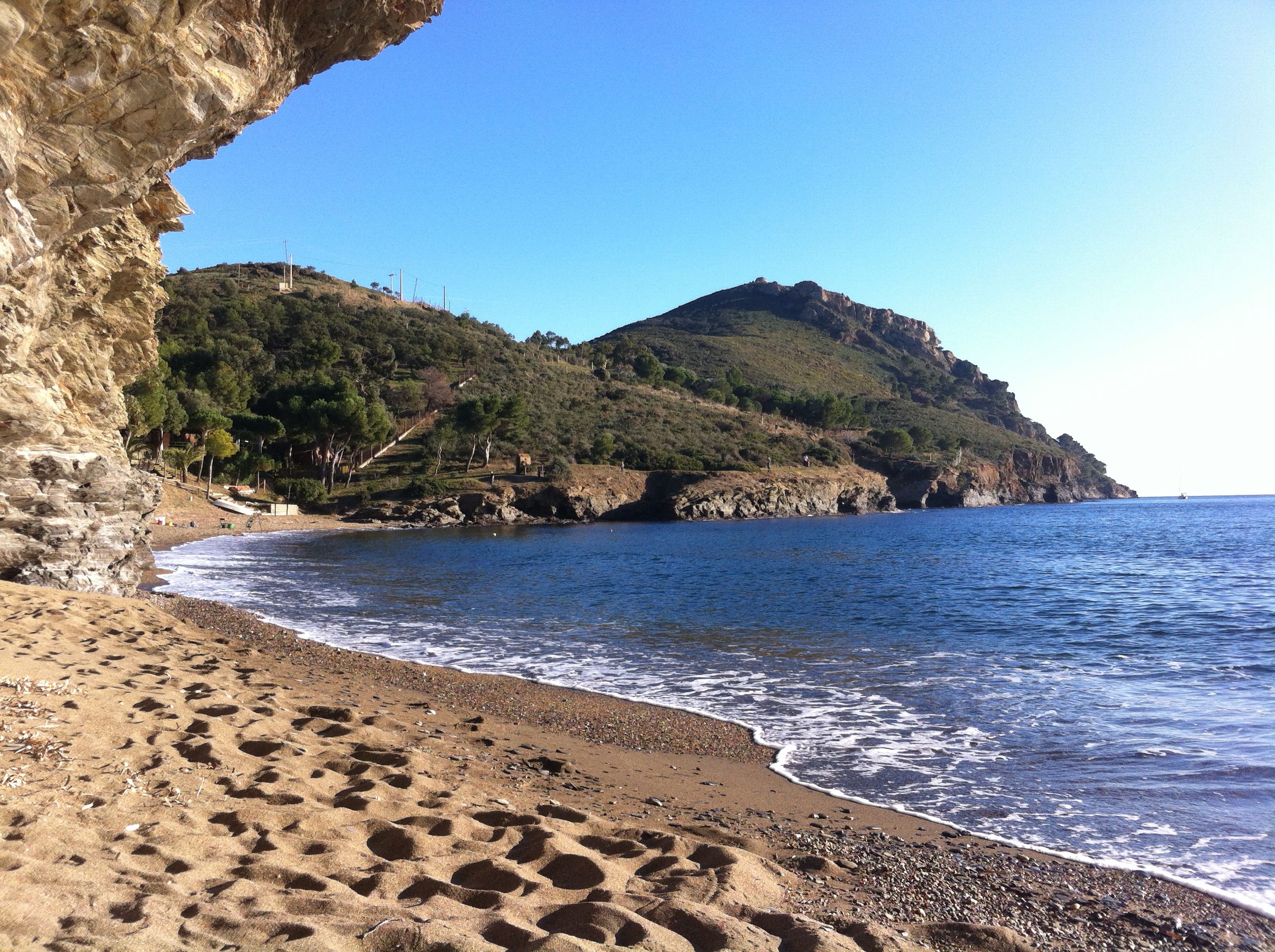
cala pelosa 7 jan 2013


What to do when you are writing a book and one of your characters won’t behave, won’t toe the line, won’t stay on the page?

You go for a little lie down in the afternoon sun. Sleep a while. It’s 25 degrees centigrade in January, for heaven’s sake. You can always write later. On waking you will hear the murmur of a sea so placid, so translucent, that you can just make out the octopi telling jokes. (They spend most of their time telling jokes and playing eight handed cribbage).

Octopi (or octopuses) are gravely misunderstood creatures, as any watcher of nature programmes can attest. Here is a short video of a BBC diver getting snogged by a very big octopus.


The itch

scratching


Wikipedia’s entry on itching goes as follows:

Itch is a sensation that causes the desire or reflex to scratch. Itch has resisted many attempts to classify it as any one type of sensory experience. Modern science has shown that itch has many similarities to pain, and while both are unpleasant sensory experiences, their behavioral response patterns are different. Pain creates a withdrawal reflex while itch leads to a scratch reflex.

My own scratch reflex has been horribly over-employed these last two nights. I wonder if it has anything to do with a change of climate, being currently in a temperate dry place rather than the cold wet place where I normally reside? I came here to do some work, and while I have managed to do a fair bit of writing, I have probably done just as much scratching, often in the more personal or inaccessible zones of the body. I haven’t scratched like this since having scabies a long time ago.

The doctor back home told me it might be a side-effect of the medication I am on (great, I thought, another side effect to go with the fatigue, loss of appetite, anaemia, depression and rage). He also told me – get this – to try not to scratch.

Well, as you can imagine, I laughed like a cretin, since the very essence of having an itch is – as the Wikipedia entry makes clear – to activate the scratch reflex. You think, I’ll just give it a little scratch, and the next thing you are at it like a monkey. When you use your fingernail to scratch the spot where the irritant is, you not only remove the irritant but you irritate a whole shedload of other nerve endings. This means your itch itches more, hurts more, and you consequently scratch more. So my doctor’s advice was actually very helpful, if only I was able to heed it.

All I could do last night was take a valium and keep my hands clenched together under the pillow, in an attempt to exercise the kind of self-control that would do credit to a monk dedicated to obliterating the demands of the flesh.

There is, I suspect, a literary aspect to this scratching business. In fact the whole thing reeks of metaphor, if only because writing itself at times resembles an act of scratching. Initially one writes in order to relieve an itch. However once the process has begun, the initial itch is replaced by something quite monstrous. Then we find it impossible to stop scratching. I wonder if this has anything to do with being on the seventeenth draft of a novel?


How to remain creative when the shitstorm strikes

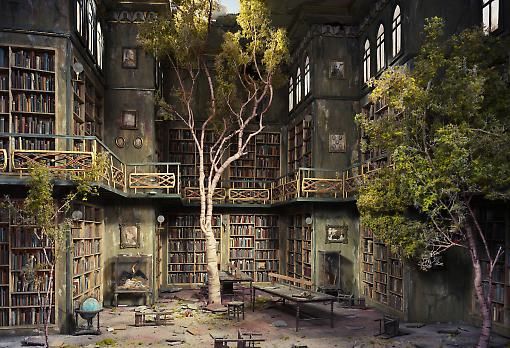
library in ruins

First of all I would like to wish a Happy New Year to all readers of Blanco’s Blog, albeit a day late. Secondly, I’d like to thank all of you for the more than 30,000 visits to the blog made during 2012.

Third of all, I was wondering today: How do people manage to be creative, when they are assailed on all sides by the mad onslaught of the day-to-day? The hurricanes of shit that come flying at us from all directions via our jobs, from a permanent state of information overload, from our family commitments, financial responsibilities, and from trying to cope with the humiliating nightmare of still having our lives run by the very bankers who stuffed us in the first place – all, in other words, of the aforementioned shitstorm, and still, still, to reserve some time of the day in which to carry out so-called creative work. I say so-called because I am of the belief that everything one does can be creative, but am here talking strictly about those of us who have a commitment to a specific artistic medium, be it writing, painting, sculpture, music, mosaic, dance or theatre, photography or whatever . . . even baking. But not banking. No. Banking might well involve creativity too, but it is all the wrong kind, most definitely.

One of the most difficult things for me personally, as a chronic re-drafter of my texts (though not of these posts, which I tend to write straight off, often perhaps to their literary or stylistic detriment) is to gauge exactly how much time I should spend on trying to resolve a problem. A video recording of a talk by John Cleese informs us that Donald MacKinnon, the psychologist and researcher into creativity, found that the most successful creative professionals always played with a problem for much longer than their less successful peers. They tolerated, put up with, the discomfort, the nervous tension and anxiety; all the stuff that we experience when we need to solve a creative problem under pressure. And most of us will take a decision earlier than necessary, not because it is the best one, but because it makes us feel better by having taken it. The most successful creative people tolerate the uncertainty much longer, even thrive in the uncertainty. They are able to defer decision-taking till the time it suits them (the eleventh hour, often) in order to give themselves maximum pondering time.

Maybe this is a bit like breaking through the pain barrier for athletes, but I wouldn’t really know.

Anyhow, I will stick the John Cleese video up here, in case others who are not familiar with his rather useful thoughts on this subject should care to watch.


Surely to goodness

'Surely to goodness you will not be my pub wanting from me', cried Llewelyn to the foreign gentleman.

‘Surely to goodness you will not my pub be taking from me’, cried Llewelyn to the foreign gentleman.


As an afterthought to yesterday’s post, I was distressed to hear the foot soldiers in Tietjens’ regiment, the Glamorganshires, speaking a hammy stage Welsh. Their speech abounded with arcane and weird phrases such as ‘surely to goodness’ – indeed one poor fellow could say little else. I have leafed through the Madox Ford novel but have not tracked down the offending passage: could it be Tom Stoppard’s intervention, or does this extraordinary language represent how a certain breed of English person thinks the Welsh peasantry actually speak? ‘Surely to goodness; indeed to goodness; a good man he is; on the table the tea is; it is his beer he’ll be wanting.’ Do these phrases actually exist outside the heads of English writers trying to “do Welsh”?

The problem of transcribing the language of people who are speaking a second language is a recurrent problem for the novelist.  It is related to, though not the same as, attempts made at rendering the syntax and word order of another language, but transcribed as though they were speaking English: Hemingway provides some hilarious examples of this in The Sun Also Rises and For Whom the Bell Tolls, with Spanish. For example, opening a page of the latter book at random, we find:

“Fernando,” Pilar said quietly . . . “take this stew please in all formality and fill thy mouth with it and talk no more. We are in possession of thy opinion.”

I am sure we could open this into a fascinating discussion, but I merely intended,  in the first instance, to make a note that it would be very weird, in 2012, to hear a ‘typical Welshman’ saying things like ‘Surely to goodness’. The truth is that never, but never, have I heard a Welsh person say any such thing. And while I can speak about the Welsh with some authority, I must also confess that I have never heard a Yorkshireman say ‘Ee bah gum’, or a Irishman say ‘Begorrah’, (although this does not necessarily mean that these things never get said and so leads us into speculation).  Representations of the other always have to be accompanied by some linguistic marker of ‘foreignness’. Welsh is a VSO (Verb-Subject-Object) language but this does not appear to have filtered into the English transcription of first language Welsh speakers attempting to communicate in English.

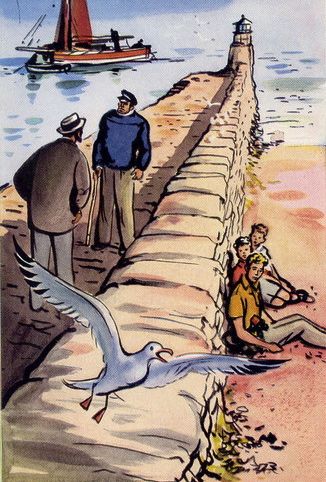
So, to return to Enid Blyton, and the seventeenth adventure of the Famous Five: Five get into a Fix. The kids go off to a place called Magga Glen and stay with a little grey haired old Welsh lady who speaks in the peculiar fashion I have described. She is, in many ways, a replica of another Mrs Jones (all Welsh people are called Jones, after all, and all their children run around barefoot, dressed in rags, stealing cheese). This other Mrs Jones runs the Inn in The Ragamuffin Mystery, another, lesser-known Welsh-set adventure by Blyton. There is an evil ornithologist (ornithologist was Blyton’s favourite long word, and she manages to get it into her stories with improbable frequency), and the lady of the Inn makes pronouncements such as: “He’s not bad is my Llewellyn, not wicked at all. It was those men, with their lies and their promises. They tempted my poor Llewellyn, they lent him money to buy the inn.” Note: in Blyton adventures ‘bad men’ are of two varieties: members of the ‘lower class’ and ‘foreigners’ (of indeterminate breed, but invariably unshaven and speaking ‘with an accent’).

And there’s the moral. Never borrow money from bad men, especially foreigner bad men, in order to buy a pub. Surely to goodness no.


Noblesse oblige, my arse

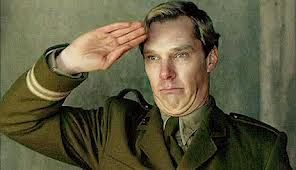
Benedict Cumberbatch

In the old days the notion of noblesse oblige demanded that the privileged and powerful act responsibly toward their underlings. In theory, at least. In practice things were not quite so sweet. Watching Tom Stoppard’s adaptation of Ford Madox Ford’s Parade’s End, I am reminded of these finer sentiments by the character of Christopher Tietjens, played with a superbly quivering lower lip by the actor Benedict Cumberbatch. A landowner or other employer, says Tietjens (more or less), must treat his staff fairly, and if he doesn’t – if he abuses them or cheats them – he should be sent to prison. It strikes me as a wonderfully anachronistic point of view, and in the story – which at this point is just prior to World War One – Tietjens admits as such. He knows he is an anachronism, but that doesn’t stop him believing what he believes.

How we have moved on. The triumph of capital in the face of worldwide wage slavery, of base greed over pride in one’s work, of mass-produced baubles over craftsmanship, the love of filthy lucre over all other considerations, finally exploded in an orgy of fervor in the Thatcher-Reagan years, and has never looked back, even after the so-called financial crisis of 2008. Well, it took a short break, but many of its worst practitioners simply saw the crisis as an opportunity, and nothing of any significance has changed. The poor have got poorer and the same politicians and gangsters are in place, the same pigs spoiling for the best spot at the trough.

However flawed the society mourned by Christopher Tietjens in Madox Ford’s great novel, and the recent TV series, it sustained the quaint notion that power comes with a responsibility towards others. The grab-it-all, get-rich-quick free-for-all that got properly underway in that awful decade, the 1980s, shows no sign of abating. You do well, therefore everyone else can go to hell. Watching  TV’s Made in Chelsea the other night alerts me to the likelihood that none of these  young millionaires seems to have any concerns other than his or her own self-promotion or self-interest. None display any concern about the plight of people less privileged or less lucky than themselves, or even to mix with such types, unless they are servants. I guess they have been brought up that way. Or perhaps it just makes better television if they are displayed, almost unvaryingly, to be selfish, preening fuckwits. Who knows. Who, indeed, cares.

All of which I am thinking, abstractly, while reading in bed, when I come across a passage in an essay (on another theme entirely) by Phillip Lopate: “The least we can do . . . is to register the expectation that people in a stronger position be kind and not cruel to those in a weaker one, knowing all the while that we will probably be disappointed.” I guess that is the least, the very least, we can do.


I set out on a journey

I set out on a journey


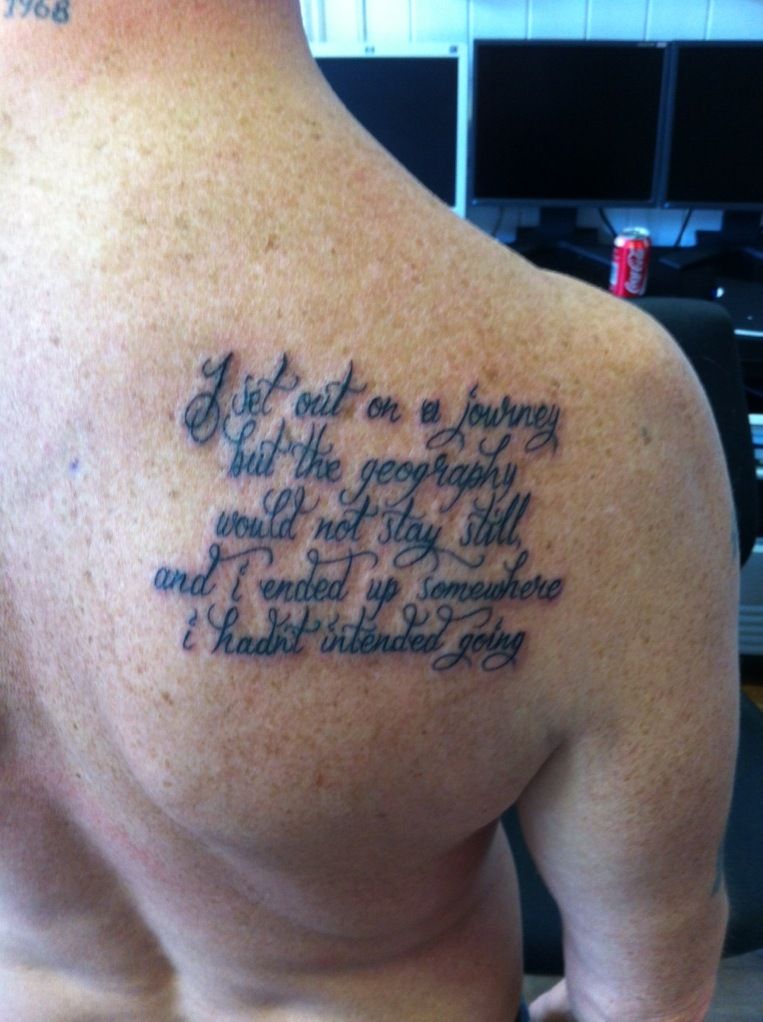
Imagine my surprise (horror/fascination/wonder) on receiving a photo on my iphone a couple of months ago, displaying the shoulder of a regular at The Promised Land (a charming fellow and good acquaintance: I do not know him well enough to claim him as a friend) who had had tattooed upon himself a short poem of mine, in its entirety. The poem is called ‘Restless Geography’, and, in case it is difficult to make out the words in the picture, it goes like this:

I set out on a journey, but the geography would not

stay still, and I ended up somewhere I hadn’t intended

going.

I wanted to use this as the title of a collection of prose poems, but the publishers said it was too long, and I would have to cut it down, which I didn’t want to do. So we called the book Sad Giraffe Café instead.

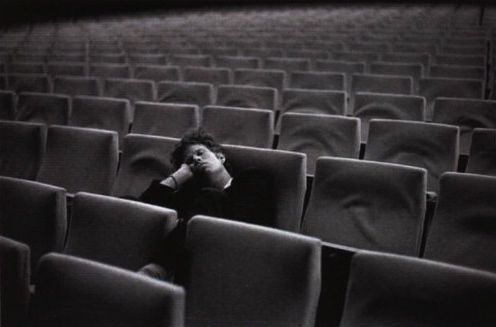
The night before last, the house having being borrowed by daughters, who were entertaining friends, I put down the book of poems I was reading, and Mrs Blanco and I set off under Scary Bridge, and across the road into the Vue cinema and fitness complex. The long haul up the escalators presented a panorama of the huge gym on the first floor. The place was almost empty, just a few Wednesday night loners pumping iron and a solitary immobile cyclist. All three of them were young men. There was something tragic in this display of righteous pumping and pedalling in the perennial pursuit for a well-toned physique and bulging biceps under the blinding glare of strip-lighting. All I could see, as we glided past them on our upward journey, was a dreadful torpor. All I could see – as Beckett might have said, actually did say – was ashes. This set the tone for the rest of the evening. The chatty girl in the empty ticket hall (a dozen cinemas, no visible customers) told us we were the only people to have bought tickets for Seven Psychopaths, the new film by Martin McDonagh, and starring Colin Farrell, Woody Harrelson, Sam Rockwell, Christopher Walken and Tom Waits (pictured, here, in an empty cinema).

Tom Waite in empty cinema


So Mrs Blanco and I chose our seats, two thirds of the way back, next to the aisle, and had the place to ourselves. This is a strange sensation. A private viewing in a full-size cinema. The seats are very comfortable at Vue, and there is plenty of space, but even so it is a luxury to lounge in abandoned fashion, and lounge we did. It is a pleasure to be able to loudly curse the fools who populate the ads and the trailers, as practically every film that Hollywood chucks at places like the Vue franchise are complete tripe. Trivial meaningless drivel circling around a half dozen well-worn and clichéd themes, all of them dire and depressing.

But the empty cinema inspires melancholy, rather than depression. The film is entertaining, even if it adheres to many of the post-modern meta-fictional tropes made fashionable by Tarantino. Nevertheless it made me laugh like a loon, which is never a bad thing. Laughed myself almost into a stupor at various points in the movie, in fact.

We came home around midnight, and the party was breaking up. The young were setting off for Clwb Ifor Bach or some other Cardiff nightspot.

Earlier in the evening, when I had been reading through the Selected Poems of Roger Garfitt, two short lines from his poem ‘The Journey’ had stood out:

I had to go on

without me

And I realised these lines evoked the precise emotion that had (paradoxically) accompanied me earlier that evening, as I passed the young men pumping iron in the empty gym, on our way up the escalator to the empty cinema. I realised also that if I had not been accompanied by Mrs Blanco, my evening would have been unutterably desolate and solitary (in a bad way). Company helps divert us, temporarily, from our essential and terrifying aloneness, allows us to go on, even if ‘without oneself’, who is unaccountably absent, then at least sharing the emptiness with a warm and sentient human partner.

Afterwards, I lay awake, and the words of Garfitt’s poem stayed with me long into the night.


What reality, where?

Moments after seeing nothing at all, failing to see what was beyond their conceptual grasp, the native people began to see figures recognizable, perhaps, as men.


For as long as I can remember I have wondered at the stupid commonplace representation of what an alien might look like. You know the kind of thing; the eggheaded bug-eyed ET figure, the slimy green tentacled version, or the ectoplasmic ooze version. Why would an alien ‘look like’ anything, at least like anything that is familiar to our way of seeing, or that can be grasped by our cognitive filters and interpreted as a recognizable visual image.

So it was interesting to read the following in Eduardo Halfon’s fabulous collection of interlinked stories, The Polish Boxer:

And I suddenly remembered a legend Lía had told me, studious and devoted to quantum physics as she was. The legend says that as Columbus’s fleet was approaching the shores of America, the native Indians didn’t see it because they couldn’t see it, they literally couldn’t see it, since the concept of galleons in full sail was so alien to them, so unimaginable, that it didn’t enter their version of reality, and as such, their minds simply decided not to register it. There’s nothing there, I remember Lía saying to me, with her hand on my forehead, as though she was watching the horizon. I construct my reality solely on the basis of what I know, she said. Or something like that.

And on the subject of aliens, I couldn’t resist posting this delightful rendition of William Shatner and the crew of Star Trek doing a cover of Pulp’s ‘Common People’. Look out for the alien playing the lyre.


Knowing how not to swim


I have just picked up (and put down) a fat novel by a leading British novelist. It doesn’t matter which one. It was shortlisted for the Man Booker a few years ago. It’s meant to be a cracker. But I can’t be bothered to read it. I know it’s supposed to be oh so very good and all that: ‘well-written’, ‘unputdownable’; ‘a masterpiece’ even, but can I be arsed to invest the amount of time needed to complete it, when essentially, I know what is going to happen from Page One, and also how it will be told, by glancing over the first few pages? Probably not.

There are two ways of looking at the world, and they lie behind two ways of doing literature. The first way, to quote Roberto Bolaño, consists of stories that are “easy to understand”. They imply a linear narrative, a degree of suspense, a beginning, a middle and an end – preferably in that order. As Bolaño wrote, these books “sell and are popular with the readers because their stories can be understood. I mean” – he goes on to say – “because the readers, as consumers . . . understand perfectly (these writers’) novels or their stories.”

Which brings me to an article I read over the summer in a newspaper by the novelist Enrique Vila-Matas. For those who read Spanish, it’s available here.

There are two groups of people, writes Vila-Matas – more or less, as I am paraphrasing. One lot insists that things are the way they are, that life is simply thus, and it’s not worth worrying your socks off about it. The other group, of whom V-M is perhaps a particular offender, believe that they don’t quite belong on this planet, that they are restlessly in pursuit of another place, which might be called death, but quite possibly has some other definition entirely . . . V-M likens the distinction between these two types of person to those whose literary predilections lie in the direction of a simple story, well told – the kind disparaged by Bolaño – and those others who are enthralled “by complexity and by the labyrinth”, and who will always find ways of constructing stories in a different and more complex manner, and will always try to see more. (In ordinary life, this latter group are often compulsive liars, or fantasists, or are confined to institutions of one kind or another.)

Put another way, in the lounges of those conservative writers who adhere to some kiss-and-tell narrative linearity based on the novels (and to an extent, the ideology) of the nineteenth century, the world is described as ‘given’. Whereas in the slums and squats occupied by these more complicated types, a kind of negativity is evoked which, suggests V-M, might find an allegory in this quotation from Kafka:

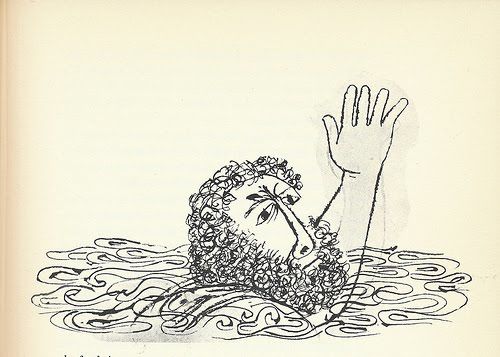
I know how to swim like the others, but I have a better memory than they do and I have not forgotten my old inability to swim. And as I have not forgotten it, the ‘knowing how to swim’ part isn’t of much use to me, and so, in consequence, I don’t know how to swim.

Perhaps then, some of us, although we have learned to swim, sometimes practise drowning, just to remember what it feels like.

So it is, too, that some writers, even though they know how to write in a certain linear way, to write a certain kind of story, that ‘can be understood’, elect not to, and opt instead for the labyrinth, or head for the deep forest. Perhaps they find it more of a challenge that way, more fun.


Writing in bed

Mark Twain writing in bed


I suppose it’s inevitable that we return to the same themes again and again in the course of a writing career, particularly – as is inevitably the case – the same damn things keep cropping up.

Take illness, for example. From an early age, I linked illness with storytelling. My father was a GP, my mother had been a nurse throughout World War Two, both in London during the Blitz and in what was then called ‘The East’. I grew up listening to medical stories. In the village I would hear people talking about their illnesses. Sometimes I would hear their views (when they didn’t notice I was there) on my father, of what a fine gentleman and doctor he undoubtedly was, but of how they ‘wished sometimes he would take a firmer hand with people and tell them what was what’. I, as his son, had evolved a somewhat contrary impression, but that, of course, is to be expected.

Walter Benjamin speculates somewhere about the possible relationship that exists between the art of storytelling and the healing of illness. I know what he means, and have been circling around it, on and off, all my life, much of the second half of which, thus far, I have spend as a chronic, or recidivist patient.

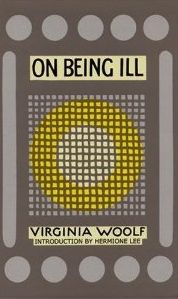
Many, or most of my favourite writers, have been consistently and wretchedly ill, or bed-ridden, or rather, have spent long tracts of time in bed. Coleridge, De Quincey, Stevenson, Proust . . . I am well aware that, like myself, this list (which could be greatly extended) includes those who are termed to have ‘self-inflicted’ illnesses brought on by their vices or addictions. But until last week I had never read Virginia Woolf’s wonderful little essay ‘On Being Ill’. If indeed it can be called an essay, rather than a series of digressions on a theme. I found a very attractive edition, published on nice paper, by The Paris Press in 2002, with an Introduction by Hermione Lee, which I can recommend.

The essay was first published by TS Eliot in his New Criterion magazine in January 1926, despite his unenthusiastic response to it. The essay was, we learn from Woolf’s later correspondence, written in bed, never a bad place to write, I find personally. But Woolf was concerned: “I was afraid that, writing in bed, and forced to write quickly by the inexorable Tom Eliot I had used too many words.”

“Writing in bed” continues Hermione Lee in her Intro, “has produced an idiosyncratic, prolix, recumbent literature – the opposite of “inexorable” – at once romantic and modern, with a point of view derived from gazing up at the clouds and looking sideways on to the world” – and here I am reminded of E.M. Forster’s memory of Cavafy, as of a man ‘standing [or lying] absolutely motionless, at a slight angle to the universe.’ “Illness and writing are netted together from the very start of the essay.”

But is writing in bed for everyone? How about novelists, the novelists of Big Books? Can you imagine Balzac, for instance, writing in bed? Certainly not: he would rather be charging apoplectic up and down the drawing room, tearing down the curtains and writhing on the floor chewing the carpet.

No, Virginia, has strong views on the ill-wisdom of composing entire novels in bed:

“Indeed it is to the poets that we turn. Illness makes us disinclined for the long campaigns that prose extracts. We cannot command all our faculties and keep our reason and our judgment and our memory at attention while chapter swings on top of chapter, and, as one settles into place, we must be on the watch for the coming of the next, until the whole structure – arches, towers, and battlements – stands firm on its foundation.”

Monsieur Proust, however, might have been inclined to disagree.

If you google ‘writing in bed’ a surprising number of articles appear, including one from a blog by Chris Bell (from whom I borrowed the image of Mark Twain) and by Robert McCrum, about whom I have many reservations, but am open-minded enough to leave this link.