Richard Gwyn

Good things about being Welsh: No. 6 – beating Germany at football, meeting Ian Rush (and becoming a father).

Ian Rush and Blanco


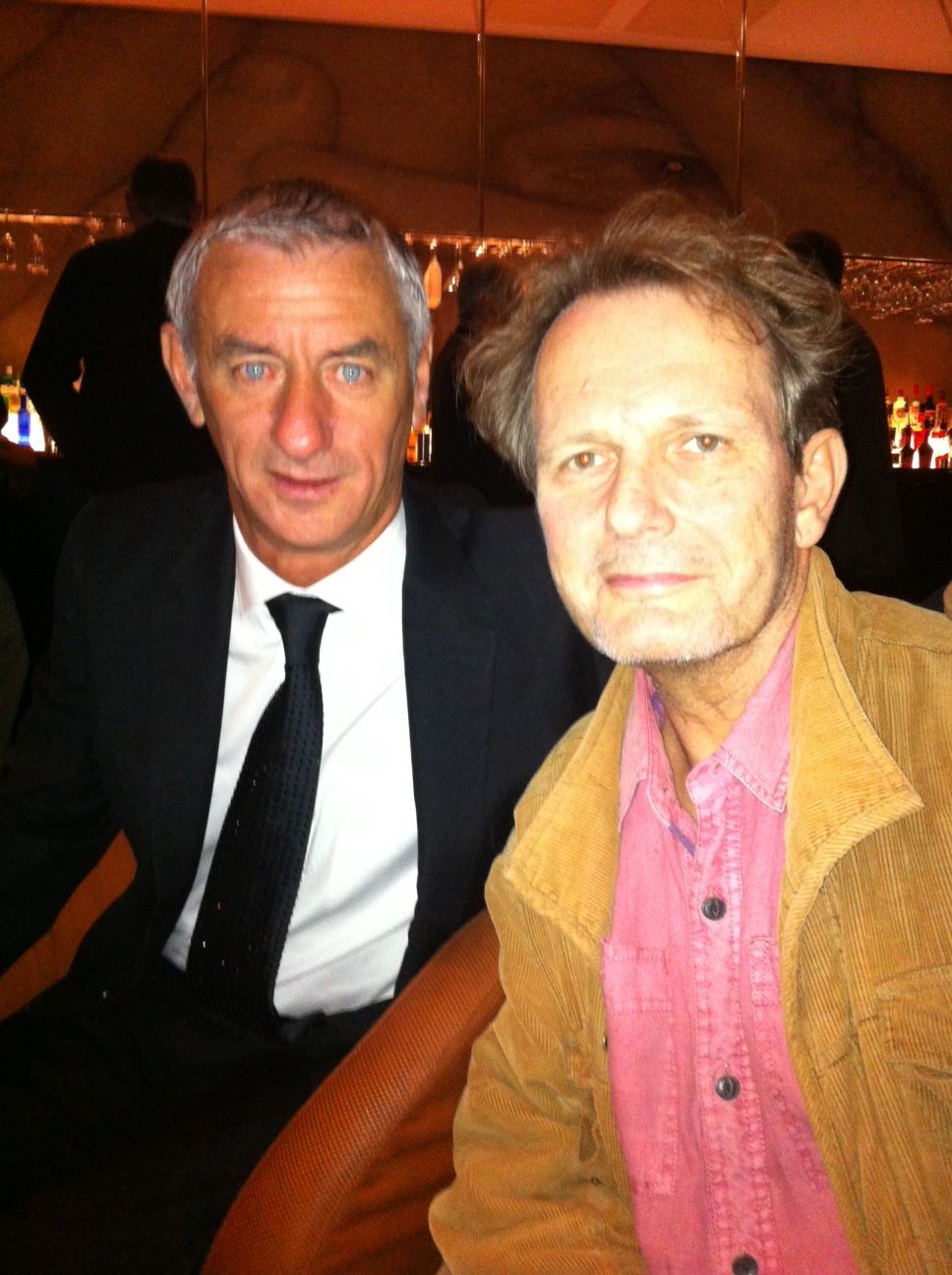
Blanco, not renowned as a great footballing fan, more of a rugby man, must confess to having had a little thrill last night meeting and having a drink with Ian Rush, Liverpool and Wales footballing legend. We were introduced by mutual friend, owner of The Promised Land and general good chap Nick Davidson at the Park Plaza Hotel in Cardiff. (Rushy’s hand is actually on my left shoulder, which means we are kind of mates, no?)

Among his many achievements, Rushy scored the winner in Wales’ 1991 defeat of reigning World Champions Germany in a European Championship qualifying match played at Cardiff Arms Park on the evening of 5 June, the only occasion, as far as I know, on which Wales have beaten Germany at anything. I happen to remember the date particularly well as it was the night our first child, Sioned Maria, was born. In fact – as I let Mr Rush know last night – it was because of his goal that the obstetrician was late arriving on the ward, coming into the room in which Mrs Blanco was at the closing stages of a difficult 10-hour labour. The doctor burst in proclaiming ‘Rush has scored’. ‘What’s he on about? mumbled Mrs Blanco, in a slightly medicated drawl, ‘and who the hell is Rush?’ Well, his spectacular goal, shown below, provides the answer to that one.


We won, Sioned was borned (yes, borned) and Cardiff went bonkers. Dazed, I wandered into the hospital car park at 2.00 a.m. and could not remember where I’d put the car. A security guard approached me, and when I said I couldn’t remember where the car was, for some reason assumed I was inebriated, and asked whether I was sure I should be driving. I wasn’t drunk, but driving through the city centre – very carefully, due to the inconsiderate presence of so many citizens – to get back home, most of the rest of the city was in a state of great exuberance. Truly, amigos, a night to remember, and one to bore the grandchildren with when I start repeating myself incessantly. When I start repeating myself, incessantly.


The many uses of freedom


Listening to Zadie Smith on the radio the last week I discovered the existence of an app called Freedom, which enables one to disconnect from the internet for a set period, say, two hours, and to write, without (in my case) trundling down, and then up, two flights of stairs to disconnect the modem or router, thereby pissing off anyone else in the house who wants to use the internet.

But how interesting that the app Freedom should be so called, when the internet prides itself on, and became the phenomenon that it is, by providing the ‘freedom’ to travel in cyberpace, that is, the freedom to access, within a split second, information on a scale and of a variety never before imaginable.

How interesting that now ‘freedom’ can also be sold, for ten dollars, as the ability to evade that other, all-engrossing, all-pervasive freedom, the one that takes away our own integral freedom to sit in solitude and write.

But it works. Simply knowing that I cannot access the internet on my laptop paradoxically saves me from having to wonder whether or not to consult it; saves me, in those lacunae of imaginative activity, from checking to see whether anyone has sent me a crucial email – one that clearly cannot wait 120 minutes to answer (120 minutes is my preferred setting: any longer and I might be tempted to dawdle, any less and I won’t get enough done. I have also calculated that when I am focused, I can manage just over 1000 words in two hours, and that is enough for first-draft fiction-writing. Much more and I am in danger of overstretching my resources and will have less in the tank for the next day).

So, thanks for the tip, Zadie. It really works. Of course, I could just throw out the computer, and write with pen and paper. But I fear it’s too late for that. So utterly have I been enslaved by writing directly onto a keyboard that it is only with difficulty that I can read my own handwriting.


The Arabian Nights and Franz Kafka


I would hate to give the impression that I do not enjoy reading novels. It is just that in the normal course of my work I read an awful lot of fiction and sometimes I like to take a break, and prefer to read other things. Last month, for instance – and this is not unusual – I read a good deal of poetry, and especially enjoyed re-acquainting myself with the wonder that is Federico García Lorca.

Also, as some followers of this blog might recall, I entered the weird realm of Stranger Magic, Marina Warner’s absorbing study, subtitled ‘Charmed States and the Arabian Nights’. The many handwritten footnotes, exclamation marks and marginalia in my copy will no doubt draw me back to the book over and again during the years ahead. Borges comes up for special attention in Ms Warner’s book, not least for his essay ‘The Translators of The Thousand and One Nights’, in which he argues, according to Warner, that “every reader can be, and should be, creative; that you can make up the stories as you please. In the process, the translator is being translated.” What a wonderfully liberating notion! One of those ideas that makes you realise that yes, that is how reading goes, when it is going at its best, which is what makes it more of a pleasure than writing (a view, incidentally, expressed by Zadie Smith on a Radio Four interview yesterday afternoon, causing me to nod my head sagely while juicing a vile concoction of raw beetroot and spinach).

But it is the huge scope and influence of the stories that Shahrazad (or Scheherazade) weaves for the murderous Sultan to stave off her own (and her sister Dunyazad’s) execution that most preoccupy Marina Warner; that and the labyrinthine cultural mythologies that attach to tales with which almost everyone feels familiar, either – at the posh end of the market – through the exhaustive and archaic translation of the Victorian explorer, swordsman, linguist and pornographer Sir Richard Burton, or else, more likely, via the mock-heroic exertions of Aladdin, either in the town hall pantomime or Walt Disney Productions. Take your pick. Personally I would dearly love to own a leather-bound first edition set of Burton’s Nights.

What most interests me, however, are the ways in which, at a profound level, the feats described in The Thousand and One Nights – all those jinns (or genies) and magic carpets and animal transmutations – together create a pervasive magical sensibility that has cast its influence on many aspects of world literature, from early science fiction, through Victorian Gothic fantasy to Latin American and eastern European so-called magic realism. Warner also spends some time with Kafka, claiming that his:

“style, its careful accountancy of detail and its measured verisimilitude, performs a sleight-of-hand to obscure the symbolic, allegorical and fairytale character of his tales. Gregor’s metamorphosis is presented as an event that has taken place, and it involves a complete hypostatic change: species and substance into the real presence of a monstrous bug. No agents of the change are invoked, unlike the mythological tales by Ovid which Kafka echoes in the his story’s title, or the jinn who change men into beasts in the Nights, because this new, modernist supernatural does not presuppose a hierarchy of beings, higher and lower, divine or diabolical: the daimon occupies a here and now, curled up in the word that brings the thing – the bug – into being on the page for us, the readers.”

Although four stories by Franz Kafka are referenced in Stranger Magic, one that seems to have slipped through Warner’s fastidious net is ‘The Bucket Rider’, a short piece written when Kafka had escaped Prague, to spend a terrible, freezing winter in Berlin with Dora Diamant. The story begins:

Coal all spent; the bucket empty; the shovel useless; the stove breathing our cold; the room freezing; the trees outside the window rigid, covered with rime; the sky a silver shield against anyone who looks for help from it. I must have coal; I cannot freeze to death; behind me is the pitiless stove, before me the pitiless sky, so I must ride out between them and on my journey seek aid from the coal dealer . . .

            . . . My mode of arrival must decide the matter; so I ride off on the [coal] bucket. Seated on the bucket, my hands on the handle, the simplest kind of bridle, I propel myself with difficulty down the stairs, but once downstairs my bucket ascends, superbly, superbly; camels humbly squatting on the ground do not rise with more dignity, shaking themselves under the sticks of their drivers . . .

Needless to say, the story ends badly, with the coal dealer and his wicked wife refusing to give even a shovelful of coal on credit, and the bucket-rider flying off into oblivion: “And with that I ascend into the regions of the ice mountains and am lost forever.”

I mention the story only in passing, having been reminded of it in this week’s TLS, in an article about Kafka by Gabriel Josipovici, titled ‘It must end in the inexplicable’ (TLS, 7 September 2012). The main point of the reference in the article is to dismantle an interpretation of the story by another critic, June Leavitt. But for me the central trope of the story is sufficient to link it to The Thousand and One Nights, whatever the interpretative differences we may entertain about Kafka’s intentions – which in any case is not a discussion that much interests me.

How else, we may wonder – other than through the universalism of the Arabian Nights stories – did the damned camels get into a story set in the icy Berlin winter?


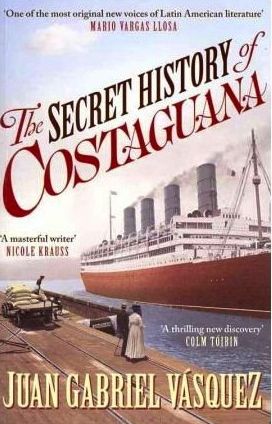
The Secret History of Costaguana


A few months ago I gave up reading novels, but over the summer I cheated and devoured two, both of them very slowly, my preferred mode of literary consumption. The first was Flaubert’s Sentimental Education, which I read for reasons which I now forget, but which seemed good enough at the time. I won’t review it here, as the book has been around for a while.

The other, which I have just finished, was the second of Colombian Juan Gabriel Vásquez’s novels to be translated into English, and is called The Secret History of Costaguana (the first was The Informers, shortlisted for The Independent Foreign Fiction Prize in 2009).The newer book was published by Bloomsbury two years ago, and so it’s taken a while to get to the top of my pile, even the very slow-moving pile of a reluctant novel-reader (re-reading that last line sounds ominously intestinal).

I am not an easy reader to please, but am happy to report that Vásquez has helped restore my faith – not in humanity: his novel is too dark and despairing for that – but in the genre of the novel, itself a faith that needs frequent, though not frantic, restoration. From the start of The Secret History we know we are in the hands of a consummate maker of stories, led inventively through the emerging narrative of a place and a people whose identity is continuously under threat, of internecine dispute, of civil war, of colonialization – the city itself is, after all, called Colón – and whose surprising directions and narrative angles keep the reader in a state of interested anticipation throughout.

You can enjoy The Secret History of Costaguana even if you care nothing for Conrad or his Nostromo, around which the narrator circles like a nervous cat. However, if you carry a deep affection for Conrad, and for Nostromo in particular, then you will enjoy it even more. Vásquez’s story, or a version of it related by one José Altamirano, was made famous by Conrad (but stolen by the great novelist, according to the narrator, during a long night’s conversation in which Altamirano describes the coup by which Panama was, in a way that reflects the theft of the story, stolen from Colombia).

One of the most powerful moments in the book occurs towards the end, when Altamirano, on the point of leaving his beloved daughter Eloísa, considers the difference between the two of them: himself rootless and lacking in any sense of belonging, and she of quite a different mettle:

I realised that you were also flesh of the flesh of your land. I realized that you belonged to this country the way an animal belongs to its particular landscape (made for certain colours, certain temperatures, certain fruit or prey). You were Colónian as I never was . . . Each of your movements said to me: I am from here.

The Secret History of Costaguana is beautifully translated from the Spanish, as was The Informers, by Anne McLean.


The chattering mind


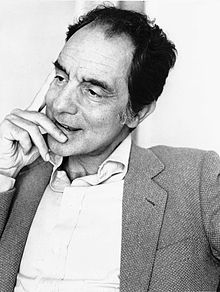
The modern novel obsesses about itself. For many writers of novels, and of short stories, the act of narration itself becomes the topic of storytelling. I was culpable of this myself in my first foray into novel-writing, The Colour of a Dog Running Away, which is (and which always set out to be) a study in the art of storytelling, and in which the nature of the story being told is itself always and forever under scrutiny. I was, in those days – and in many ways remain – a disciple of Italo Calvino in this respect.

But how much of this reflexivity can we all take? I am currently reading Marina Warner’s ‘Stranger Magic: Charmed States and The Arabian Nightsand am again struck, as I was in my childhood, by the sheer joy of storytelling in these archetypal and magical tales. I am reminded of Borges’ comment that all great literature becomes children’s literature, about which Warner comments: “he was thinking of The Odyssey, Don Quixote, Gulliver’s Travels and Robinson Crusoe as well as Tales of A Thousand and One Nights, but his paradox depends on the deep universal pleasures of storytelling for young and old: stories like those in the Arabian Nights place the audience in the position of a child, at the mercy of the future, of life and its plots, just as the protagonists of the Nights are subject to unknown fates, both terrible and marvellous.”

How far, then, is this mode of ‘simple’ storytelling from the convoluted twistings of what Tim Parks, in a recent article in The New York Review of Books, calls ‘the chattering mind’. Parks identifies this state of terminal parodic self-observation as the status quo of contemporary literary fiction (and presumably includes himself as an exemplar within this category). ‘Mental chatter’ (which several critics appeared to dislike about my Dog) can be seen as the single defining characteristic of this mindset:

Butor, Sarraute, Robbe-Grillet, Thomas Bernhard, Phillip Roth, Updike, David Foster Wallace, James Kelman, Alison Kennedy, Will Self, Sandro Veronesi, and scores upon scores of others all find new ways of exasperating and savouring this mental chatter: minds crawling through mud in the dark, minds trapped in lattices of light and shade, minds dividing into many voices, minds talking to themselves in second person, minds enthralled in sexual obsession, minds inflaming themselves with every kind of intoxicant, minds searching for oblivion, but not finding it, fearing they may not find it even in death.

Perhaps the challenge for novelists now is to find simplicity without being simplistic, to tap into the root of an intuitively convincing, spellbinding narrative that engages the reader at different levels (but without seeming pretentious on this score) and which, while allowing the chattering mind its share of the spoils, does not allow this bullying King Baby total dominance of the reading experience.

Otherwise we keep treading the endless spiral explored by Beckett, curator of the chattering mind school of literature, which, absorbing as it is, leads only to where one began, in endless repetition.

I realize now, in my middle fifties, what a huge, and in many ways, destructive influence Beckett wielded on so many of us growing up in the Godot generation (it was first performed three years before I was born); as much, say, as the influence that Joyce held over Beckett, and  which he spent so long attempting to shed.

Tim Parks again:

Beckett exposes the spiral whereby the more the mind circles around its impasse, taking pride in its resources of observation, so the deeper the impasse becomes, the sharper the pain, the greater the need to find a shred of self-respect in the ability at least to describe one’s downfall. And so on. But understanding the trap, and the perversity of the consolation that confirms the trap, doesn’t mean you’ve found a way out of it; to have seen through literary consolation is just another source of consolation: at least I’ve understood and brilliantly dramatized the futility of my brilliant exploration of my utter impotence.

I will, however –  no, therefore – continue in my quest to find the hidden passageways that connect A Thousand and One Nights with Endgame.


Custard Trolley with llama

Are other people as astonished as I am by this kind of thing, found on any social networking site any day of the year?

Fabulous news! My haiku ‘The last dollop’ has been accepted by poetry mag ‘Custard Trolley’ special haiku edition. I am so thrilled, you can’t possibly imagine! Custard Trolley is one of the most prestigious and longstanding poetry mags of its kind: vibrant, innovative, and welcoming to unpublished or little known writers such as myself. What’s more they charge only $20 per submission, so it’s a bargain! Thanks to all my friends and family who have encouraged me to carry on writing despite so many rejections over the years, my recent nervous breakdown, and the loss of our cat, Tibby. I couldn’t have done it without you all!

This garbage will usually be followed by fifty ‘likes’ and a score of encouraging remarks such as ‘keep on writing, Gerry!’; ‘Always knew you had it in you’; ‘Next the Nobel!’

Why? Why does anyone care? Not specifically about Gerry’s haiku, but about such things at large? Why such a torrent of praise and encouragement? Is there not too much stuff in the world, especially dodgy stuff, bad poetry being amongst the dodgiest stuff around? Am I being a killjoy? Does it matter? Should anyone get worked up about this? Why do I look at Facebook anyway?

Good question. There must be something in me that feels that I am like Gerry, that I am, in fact,  a version of him,  and he of me. This is all so awful I think I should probably be condemned to death, probably by stoning. Better still, should never open Facebook again.

On a lighter note, I find this among my files, though I have no idea from whence it comes. A small delight, reflecting perfectly my own attitude to reading.

Much as we should love to grasp things with a complete understanding, invariably we cannot bring ourselves to pay the high cost of doing so. From books all we seek is to give ourselves unlaboured pleasure: or if we do study, pursue only those branches of learning which deal with self-knowledge and which teach us how to live. This is the winning post towards which your sweating nag should canter. Never bite your nails or use the whip when you come across difficult passages in your reading: after making a charge or two, let them be. Nothing worthwhile is done without some gaiety: persistence and too much intensity dazzle the judgement, making it sad and weary.


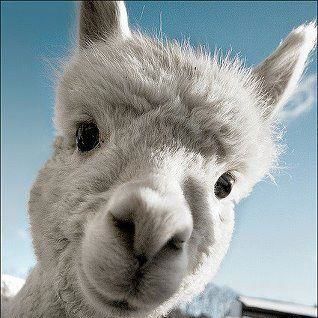
(with thanks to Eugene Dubnov for the llama)


Self-knowledge is blue

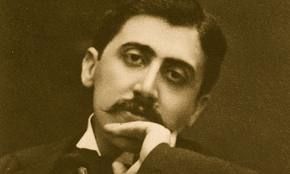
Marcel Proust


I like it when very distinct sources come up with the same material. One of the pleasure of writing a blog lies in sharing this kind of weird shit with my readers.

What to make of this?

Marcel Proust, in the last volume of A la recherché du temps perdu, having lost his footing on an uneven paving-stone, is reminded of an instance in Venice when, similarly, he had lost his footing, and through a process of accumulated memories of this kind attempts to measure the definitive instance of recall, the moment in which the whole process of revelatory recollection comes together. And his moment of revelation arrives in the colour blue, or azure:

The happiness that I had just experienced was indeed just like that I had felt when eating the madeleine, and the cause of which I had at that time put off seeking. The difference, purely material, was in the images each evoked; a deep azure intoxicated my eyes, impressions of coolness and dazzling light swirled around me and, in my desire to grasp them, without daring to move any more than when I had tasted the madeleine and I was trying to bring back to my memory what it reminded me of, I continued . . . to stagger, as I had done a moment before, one foot on the raised paving-stone, the other foot on the lower one.

It would seem that this swimming about in the blue, as an image of self-awareness, or imminent revelation, was something familiar to the ancient alchemists. Lindy Abraham, in A Dictionary of Alchemical Imagery writes:

[T]he mercurial water and alchemical quintessence are frequently described as being sky blue or azure. Paraclesus introduced the symbol of the sapphire from the Cabbala into alchemy, where it came to signify the arcane substance. Thomas Vaughan described the tincture as having the colour of a certain inexpressible Azure like the Body of Heaven in a clear Day.’ He called the Stone ‘an azure Heaven.’ Elsewhere Vaughan wrote that the water of the sages was a ‘deep Blew Tincture’. To clothe in an azure shirt or garment means to make projection of the tincture on molten metal in order to convert it into silver or gold.

And finally Thomas Vaughan himself,  alchemist and brother of the great poet Henry Vaughan writes in his Aula Lucis:

Hence you may gather some infallible signs, whereby you may direct yourselves in the knowledge of the Matter and in the operation itself, when the Matter is known. For if you have the true sperm and know withal how to prepare it – which cannot be without our secret fire – you shall find that the matter no sooner feels the philosophical heat but the white light will lift himself above the water, and there will he swim in his glorious blue vestment like the heavens.

If you have the true sperm and know withal how to prepare it . . . prepare, dear reader, to swim into the livelong blue.


Random fragments

Italo Calvino


In El País, Javier Cercas writes on the qualities of silence. He tells a story about a meeting between Borges and the famously reserved Italian novelist Italo Calvino in Seville in 1984, at a conference they were attending. Calvino’s wife, Chichita was an Argentinian, and an old friend of Borges, who was, by this time, completely blind. The two of them, like true porteños, dived straight into conversation, and it was a while before Chichita mentioned to Borges that her husband, Italo, was also present.  Yes, replied Borges, I know. But how, said Chichita, when he hasn’t said a single word? I recognized him by his silence, said Borges.

I read this last month, while spending a few days in Spain, where I visited the beach near Llança quite late most afternoons. At this time of year, mid-June, most of the beachgoers are locals, and I was alarmed to notice the numbers of obese Spanish children and teenagers. Whereas, living in Britain, we have become accustomed to this, and have lived with it continuously since the nineties at least (if not from the days of Billy Bunter) in Spain it has been a radical and a rapid transformation. When I first visited Spain in 1959 (where I spent my third birthday at the house of the Langdon-Davies’s in Palamós) it was still in the cycle of post civil-war poverty, before the influx of mass tourism. Then there was the transition, after 1975, and the hedonistic explosion of social life in the cities; then the property boom, and the rocketing of house prices. When I returned to Spain in the mid 1990s every other car was a BMW or a 4 x 4, and everyone was up the gunnels with debt (as they still are) and now, inevitably, the country has reached the final and definitive stage in the establishment of a global economy: the children are fat.

So, as I read the newspaper, I cannot avoid the sight of a group of pudgy 11 year olds, munching Pringles and gobbling Magnum ice creams, all washed down with cans of Red Bull. How depressing this sight is. Ten years ago, when we lived here and my children went to the local school, these same kids would have been content with a ham or cheese sandwich, an orange and a bottle of water. I acknowledge there is a massive tendency for people to overrate the benefits of the past, but this is no exaggeration. The change towards childhood obesity is visible and has been incredibly swift. I cannot see the Spanish footballers of the future emulating Xavi, Iniesta et al, if they follow a diet of this kind.

Yesterday was the last day my younger daughter Rhiannon spent as a teenager. She and I went shopping at the supermarket together and she chose a few items, which she kept separately, in her own basket. As she went to pay I saw that in it were two cartons of Pringles, half a bottle of Gordon’s gin (a birthday present for her best mate) and two packets of Jelly Tots. Could the paradoxical state of being a teenager ever be more eloquently expressed, caught between the comforts of childhood and the terrors of adulthood?

Jelly Tots candy packaging

Jelly Tots candy packaging (Photo credit: Wikipedia)


Rommel’s tailor and my father

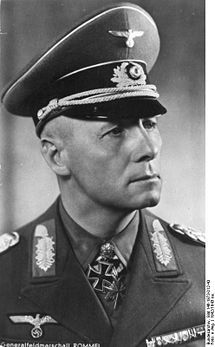
Well-turned out: Erwin Johannes Eugen Rommel


If ever you are trapped in a hotel or hospital room and feel too ill-disposed or lethargic to read or write or engage in profound conversation with visitors (if anyone is foolish enough to visit you), you may wish to tune into one of several channels available to TV viewers  that dish up potted histories of the twentieth century and are aimed, no doubt, at pensioners, or those of us who are infirm or bedridden or terminally idle, and who grew up in the shadow, even the distant shadow, of World War Two. Given that the Brits in general are morbidly obsessed with their performance in said war (I don’t think the Russians, for example, are so confused about their actual contribution), and given that it was the last occasion in which the citizens of these islands ‘pulled together’ as my mother was fond of reminding us, I personally have no difficulty in enduring hour upon hour of such documentary, especially those that delve deeply within the dark underworld of the Nazi party and its extraordinarily mediocre and sinister leadership. Perhaps this paradox is what most intrigues us. A favourite topic of these programmes seems to be ‘the plot to assassinate Hitler’, and the various theories about the involvement in such activities of the Desert Fox, General Erwin Rommel, who was ‘urged’ to commit suicide by Adolf Hitler, in order to avoid the negative publicity that would doubtless have redounded on the leadership if it were known that  a war hero of Rommel’s stature were involved in the assassination attempt.

The other day, watching a programme about German POWs in England at the end of the war, I was reminded of an anecdote of my father’s. He was, for a while, medical officer at the POW camp based in Dover Castle. One morning, during surgery, a German soldier asked, through the interpreter, whether my father thought the state of his uniform befitted an officer of His Britannic Majesty’s Forces. My father, for whom sartorial matters were never of paramount importance, was rather taken aback by the audacity of the question, and asked the soldier why he thought it appropriate to comment on his state of dress. The soldier replied that he was simply trying to be of service, that he had served as personal tailor to Field Marshal Rommel, and was willing to make the Herr Doktor the most presentable officer in the British army, for the price of only two packs of cigarettes. My father, who didn’t smoke, reckoned this was a good deal, and handed over his uniform to the man, who duly returned it, immaculately re-tailored. He was so pleased with the result that he remained, for the duration of his stay at Dover, in the care of Rommel’s tailor for all matters of couture.


Eternal Return


What, if some day or night a demon were to steal after you into your loneliest loneliness and say to you: ‘This life as you now live it and have lived it, you will have to live once more and innumerable times more’ … Would you not throw yourself down and gnash your teeth and curse the demon who spoke thus? Or have you once experienced a tremendous moment when you would have answered him: ‘You are a god and never have I heard anything more divine.’          

Nietzsche, The Gay Science.


What is it about Nietzsche and his infatuation with eternal return, an infatuation I seem to have acquired also?

I began this blog last July, having written myself into a hole with the novel I was working on. Writing the blog occupied the space I had dedicated to the writing of the novel, but with very different results. Thus it was that Blanco’s blog began as a displacement behaviour and quickly developed into a daily ritual. During the first few months I kept up a good pace, posting most days, and then in the new year the number of posts began to decline, although, reassuringly, the number of visitors did not drop in any substantial way.

Now almost a year has passed and I need to return to the novel that I abandoned when I started blogging. It is a case of the eternal return. Not a simple case (these things are never that simple), but definitely we have been here before. I need to pick up my tools and begin again the task I left off, as in a fairy tale.

Not that I intend breaking off from the blog altogether: no, I will continue to post, but perhaps at a less frenetic pace than when I first started out.


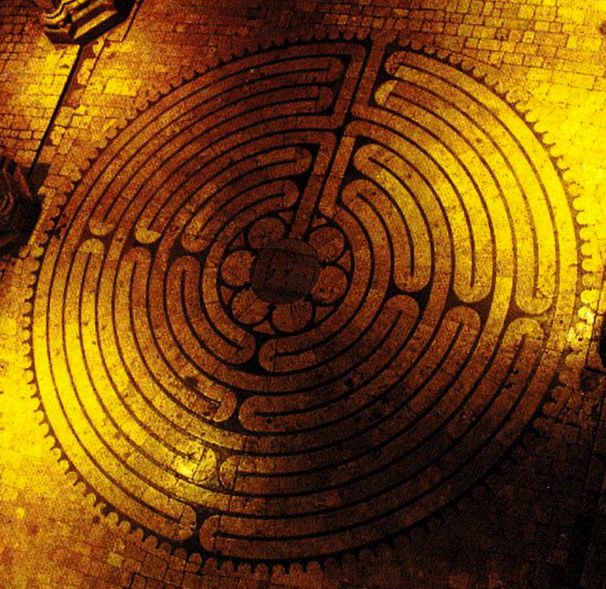
The blog goes on, and like everything else in nature, returns again and again to its starting place. Like Ariadne leaving her thread in the Cretan adventure, I follow the trail to the exit, finding only a sign that says ‘EXIT TO THE LABYRINTH’ (which is also the entrance to the labyrinth). The novel, the blog, the story, the labyrinth: it is all the same thing, and we keep returning here. If you wish to keep reading Blanco’s blog, you will find that this is all true.


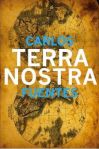
‘Terra Nostra’ by Carlos Fuentes

Incredible the first animal that dreamed of another animal. Monstrous the first vertebrate that succeeded in standing on two feet and thus spread terror among the beasts still normally and happily crawling close to the ground through the slime of creation. Astounding the first telephone call, the first boiling water, the first song, the first loincloth.

Carlos Fuentes, who died this week, wrote a great number of novels and stories, as well as some exceptionally fine essays. He was, along with Julio Cortázar, Gabriel García Márquez, Alejo Carpentier and Octavio Paz, representative of a generation of Latin American authors who took the world by storm in the 1960s and 70s.

My first and most lasting encounter with Fuentes took place when I was 22 years old and recovering from an accident, when I read the fabulous and hallucinatory Terra Nostra, the opening lines of which are reproduced above. In spite of the far greater success of his other novels, such as The Death of Artemio Cruz, Change of Skin and The Old Gringo (made into a movie with Gregory Peck), for me it is Terra Nostra, a sprawling, futuristic epic, concerned with the beginnings of Europe’s occupation of America, the phantom marriage of Elizabeth, Queen of England, with Phillip II of Spain, and dark investigations into medieval Paris, all tied up and shaken (as far as I can remember) with lashing of surrealist humour and a good deal of neo-baroque terror, that will summarize  Fuentes’ achievement.

Funnily enough, Andrés Neuman’s description of his own novel, Traveller of the Century, as ‘a futuristic novel that happens in the past’ comes to mind as an entirely appropriate description of Fuentes’ antecedent.

In his Introduction to the Dalkey Archive edition, Jorge Volpi writes: “Terra Nostra is not a simple novel. It is a malfunctioning time tunnel; the entrance to a labyrinth of mirrors; a hell – or a purgatory – in which all memories and echoes intermingle; the gigantic rotting place of history; a jig-saw puzzle put together incorrectly or Chinese boxes that become deeper every moment . . . the underwater tunnel that joins Europe and America; the black hole that connects past, present and future . . .”

I have Terra Nostra in front of me now, the 2003 edition, with an afterword by Milan Kundera. Nearly 800 pages of it, and the pages are big. I wonder if re-reading can ever re-capture the excitement and hunger of reading a great book the first time round? Maybe the pleasure of re-reading are entirely distinct from those of first-time discovery. Maybe I’ll just be disappointed. Maybe I’ll just peek inside, flick through the pages, see what leaps out . . .  perhaps this is a preferable way to revisit old favourite books and places.

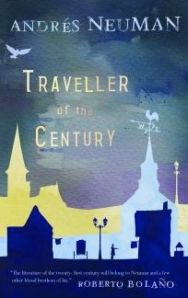
Traveller of the Century


Many of my readers will know that I am a fan of Andrés Neuman’s writing, and have translated some of his poetry and several of his short stories over the past two years, including for the ‘Best of young Spanish language novelists’ issue for GRANTA, and two for the innovative new mag The Coffin Factory. Having read this novel when it came out in Spanish, I was aware that there was quite a challenge in store for whoever took on the task of translating this big book, with its sweeping philosophical themes, for readers of English. Nick Caistor and Lorenza García have made a grand success of the task and talk about their translation here

I was asked to write about the book for the New Welsh Review and The Independent, so I did two different reviews. I would really have preferred to do one long one, and could have got more said. The NWR version will be available at the end of May, but the following, for The Indie, will give an idea. It is a wonderful novel, and Pushkin Press have done a great job with presentation and cover design. The edition also includes, as a kind of Preface, an article written by Roberto Bolaño about the young Neuman after the publication of his first novel, back in 1999 (but first collected in book form in 2004, a year after Bolaño died). And below is a youtube interview with Andrés, talking about the novel in London a couple of months ago:


One cold winter’s night, Hans, a traveller and translator, arrives by coach in the fictional German city of Wandenburg, intending to break his journey en route to somewhere that actually exists on the map. With him he carries a mighty trunk, packed with books. “What have you got in there, a dead body?” asks the coachman. “Not one dead body,” answers Hans, “several” – an answer that the novel proceeds to unpack.

Our hero takes lodgings in an inn, and the next day, walking around the town, befriends a mendicant organ grinder, who takes him to his cave in the idyllic countryside outside the city. Hans sups with the organ grinder and his dog, enjoying the sort of bucolic reverie familiar to poets of the early Romantic period. Returning to the town, he stays a second night and begins, almost by accident, to be drawn into its comfortable and bourgeois circle of socialites and intellectuals, and falling in love with Sophie Gottlieb, the daughter of a local merchant. Alas, Sophie is betrothed to Rudi Wilderhaus, a local aristocrat and scion of the ancien régime. Those readers with even a fleeting knowledge of Schubert’s song cycle Die Winterreise will already have cottoned on, and it might be of more than passing interest that Andrés Neuman, the novel’s Argentinian author, has translated Wilhelm Müller, author of the Winterreise poems, into Spanish.

But these hints towards a reconstruction of the beginnings of the Romantic movement, and of the challenges presented to Hans in his exploration of the city are misleading. Although set in post-Napoleonic Germany, Traveller of the Century is by no means an historical novel. Its author has described it as a “futuristic novel that happens in the past, as science fiction rewound.” It is, among other things, a romance, an adventure story, a survey of literature and politics in the 1820s, a pseudo-historical study of feminism, and a brilliant (although largely allegorical) analysis of Europe at the start of the 21st century. Over the course of the book’s 584 pages, we partake in magisterial synopses of entire swathes of literature and philosophy, and enjoy sparkling dialogues with the denizens of Wandenburg, a sleepy and conservative version of Fortress Europe, and a place in which the geography will not stay still, even the architecture given to fleeting, shifting behaviour, the church steeple “slanting perceptibly . . . as though it were about to topple forward.”

Sometimes something stirs and shifts in the substrata of world literature:  a book appears which has the potential to change what will follow. Sometimes it just so happens that people pick up on the ideas and emotions generated by that book and it becomes a classic and sometimes it becomes instead a cult book enjoyed, or even revered, by a few, but never catching on with the many. Traveller of the Century has already achieved impressive things for its young author in Spain and elsewhere, but this by no means guarantees its success in the litmus test of the English-speaking world, famously resistant to literature in translation. We cannot predict how this book will be received in the months and years to come, but there is little doubt in my mind that it deserves its place in the sun, a work of true beauty and scintillating intelligence by a writer of prodigious talents. On the evidence of Traveller of the Century we might well be convinced by Bolaño’s much-vaunted prediction that the literature of the twenty-first century will belong to Neuman and a handful of his blood brothers. Whatever one’s opinion of such elevated claims, books as stimulating, erudite and humane as this do not come along very often.


This review was first published in The Independent on 20 April 2012.