Richard Gwyn

LSD and literature

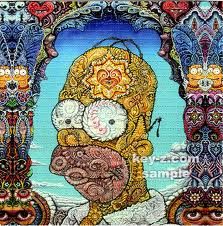
Homer Simpson on acid


“While it’s true that later on I read quite a lot and my literary knowledge was strengthened, it’s also true that LSD, by opening up my visual field, was not at the time by any means an insignificant source of inspiration. Besides, some of these perceptions of a distinct reality have lasted firmly and still today carry a highly remarkable energy, and are the reason I can laugh at realist writers, for example, who duplicate reality and so impoverish it.” (Enrique Vila-Matas, from Never any end to Paris).


At Swim-Two-Birds and an absence of frantic sorrow


My favourite novel when I was nineteen years of age and had just moved to London was At-Swim-Two-Birds by Flann O’Brien and it was with some pleasure that I dipped into an article by Colm Tóibín in the London Review of Books last week entitled ‘Flann O’Brien’s lies’. The essay weaves a fascinating connecting thread between O’Brien’s Dublin, Borges’s Buenos Aires and Pessoa’s Lisbon, and considers these three writers as sharing a fundamental sense of marginality, living in these sea-facing cities, all three of them writing fictions in which ‘they invented further personae and indeed further worlds’ –  all three of them writing under alternative identities.

‘An oasis will not appear in a fertile plain. It is impossible to write fiction filled with choices and chances and continuities in a society where these things are thinly spread. In a society where there is no body of readers, it is not easy to write with a reader in mind, a reader who wants a story in which time is represented in a straight line and in which characters are filled with feelings and longings, and in which plot satisfies some large set of rules which insist on completion, and in which words represent what the dictionary states they represent, and in which language is natural and part of a shared culture. It is much easier to make a story or a novel in which the reader is already built-in and which wrong-foots or even usurps the idea of reading. While novelists who wrote in formed, settled and multi-layered societies held a mirror up to those societies in all their variety or to the vicissitudes of the human heart, Borges and O’Brien and Pessoa held instead a mirage up to an oasis, the strange place they came from which gave them their first taste of thirst.’

Thirst was certainly a passion of O’Brien’s, and it eventually killed him, though this, of course, is not what Tóibín means, strictly speaking.

I have always thought At Swim-Two-Birds was O’Brien’s best book. Although people generally go on about The Third Policeman, I was never such a fan. The Poor Mouth – his own translation of his Gaelic novel An Beal Bocht –  was hilarious, although I daresay I missed a lot of the nuances. The rest of his work, notably The Hard Life and The Dalkey Archive are derivative or cannibalistic of his earlier stuff. The newspaper column in The Irish Times was fabulous. But with his first book, O’Brien achieved something he would never quite manage again.

‘The aim of At Swim-Two-Birds was to lose control, to take the pieces and refuse to reconcile them, to insist that it was too late for such trickery. O’Brien refused to believe that the writer recreates the world, but instead he set out to show that the world re-creates the writer, and that both the writer and the world are, or might be, a set of illusions, highly implausible, not even worth mistrusting, and that all we have fully to mistrust are pages and the words on them.’

The article also quotes an extract from Henry James, which indicates precisely the kind of novelist James despaired of, and precisely the kind of writer O’Brien was: one who had not the remotest interest in earnestly capturing a particular quality of truth that pretends or claims to be lodged in reality, and who thereby recognizes that ‘realism’ is itself only a particular, stylised mode of representation. For O’Brien, and others like him, the point of fiction lies elsewhere, and largely, though not exclusively, in the telling itself.

Finally, Tóibín cites an absolute gem from Pessoa’s The Book of Disquiet:

‘Why should I care that no one reads what I write? I write to forget about life, and I publish because that is one of the rules of the game. If tomorrow all my writings were lost, I’d be sorry, but I doubt I’d be violently and frantically sorry.’


Seasonal Affective Disorder


Having gone out at the beginning of Christmas week and bought a box of a dozen (yes, 12) Krispy Kreme doughnuts and eaten seven (7) of them myself, I feel some changes are overdue.

Blanco actually has several New Year’s resolutions for a change but isn’t telling because clearly if you tell then you can be found lacking, whereas if you don’t tell no one is the wiser and you can still breathe the rarefied air that comes with being good. In any case, Blanco is fleeing the grey skies of Cardiff early tomorrow morning in order to spend ten days in a place far distant from the-land-where-the-sky-is-too-close-to-the-ground and although it will not be warm, there is a good chance of blueness in the heavenly vaults. And blue skies help Blanco to think, whereas the endless grey and drizzle of the-land-where-the-sky-is-too-close-to-the-ground only gives rise to a kind of anti-thought, a condition exacerbated by a constant need for potatoes and doughnuts and dumplings and chocolate and cake and biscuits and other stuff to feed the gap where thought might seep in if given half a chance or a modicum of sunlight.

Ah sunlight! I know we don’t have much to complain about compared with those poor bastards who live up near the North Pole, the Siberians and Norwegians and Finns and the Elfenfolk and so forth, but this isn’t a competition, I just need sunlight otherwise I start going bonkers and am liable to bite people, or even bite dogs, a habit I try to curb, but which flares up in an instant whenever my supply of potatoes/dumplings/doughnuts/chocolate dwindles and I feel the mordant urge creeping over me.  But neither do I wish to complain, it is always better to NOT complain.

So, on the brink of this new year I should announce that if there are no posts forthcoming in the next ten days or so it is because I am immersed in my work and because the house where I am going has no legal internet access, and neither is there mobile phone coverage. Which, all things considered, makes it a perfect place to go and write, or to read – or even to sleep. Or simply to disengage from the tweeting, gibbering world of nonstop noise for just a while and recuperate the forces that lie within.

And, to celebrate the wonderful Xmas gift I received from Mrs Blanco, the Mariachi El Bronx CD, here is a clip of the boys singing ‘Cell Mates’.


Death is Not the End

I cannot vouch for the accuracy of this statement, which reminds me briefly (of course) of a novel I read a while ago, Eternity is Temporary, which started well, but fizzled out by exploding the sexual tension too quickly. Is that an allegory for something? Is that what eternity is really like? Very exciting for the first half hour or so and then immensely tedious? Or should we go along with Bob Dylan, who no doubt wrote the song Death is Not the End in one of the religious phases that have speckled his career, thereby launching a host of cover versions. Another sly allegory.

The version here is performed by Nick Cave, with guests Kylie Minogue, Shane MacGowan and a chap with a very fetching accent. I recall driving around Europe with this on the car CD player a decade or more ago, the young Blanco daughters singing along merrily in the back seat. How pungently ironic. The mind begins to boggle at the prospect of an eternity spent with the motley crewage of miscreants and addicts assembled in this video  But then again, the performance has a unique charm, and serves as Blanco’s contribution to the end of year festivities.


Unsolved murder mystery

One of the benefits of being a late starter (or re-starter) in the field of literary studies, is that I sometimes dip into standard works and pick up on items that made little sense to me on first reading. Take, for example, Roland Barthes’ Mythologies, which must have first come to my attention as an undergraduate student of anthropology, many years ago. I took it to bed with me the other evening and flicked through, landing on ‘Dominici, or the Triumph of Literature’, an item that leads to one of those chain reaction searches through Google until I land up with Jean Giono, who is a favourite of mine, and who wrote on the Dominici affair at the time it hit the news in 1952.


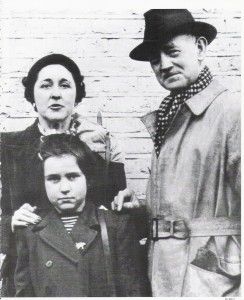
Sir Jack Drummond, wife Ann and daughter Elizabeth


The brief version of what happened:

On August 5, 1952, a family of English campers – Sir Jack Drummond, his wife, Lady Ann, and their ten-year-old daughter, Elizabeth – were found murdered at the side of Route 96 near Lurs, in the Alpes-Haute Provence department. A few yards from the scene of the crime stood a farmhouse that belonged to a formidable old character, Gaston Dominici, aged 75. The man had his own peculiar grandeur, a mixture of illiteracy, severity, and violence. The case attracted much attention and risked pushing France (which was undergoing a bloodletting in Indochina) back through the years to the traumatic divisions of the Dreyfus affair.

Sir Jack, a well-known nutritionist, who classified vitamins in the way they are recognized today, and helped devise UK rationing in World War Two had been in the British Intelligence Service during the war.

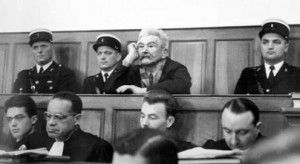
In the attack both Drummond and his wife suffered multiple gunshot wounds. Their daughter Elizabeth’s head had been crushed by the butt of the rifle that had been used to shoot her parents. Two of Dominici’s sons accused their father of the triple murder; the accused in turn suspected one of the sons and a grandson. On November 17, 1954, a few days after the start of the rebellion in Algeria, the trial of Gaston Dominici began; it ended ten days later when he was sentenced to death. The Court of Assizes in Digne was crowded with European journalists, including Jean Giono. Paul Morand, Roland Barthes, and Orson Welles were all present or wrote about it. Many people had the immediate impression that everything was a fix-up. When the truth seemed close to emerging during the trial, the chief judge was quick to interrupt or divert attention.

Gaston Dominici, a farmer and shepherd born in 1877, had lived all his life, apart from his military service in the Chasseurs des Alpes, more among animals than among men. He was practically illiterate and did not understand the elegant French of the chief judge and the state attorney. He hesitated at their questions, confused the meanings of words, and these facts were falsely taken for symptoms of guilt. His lawyer seemed unable to organize a logical line of defense, but after the sentence even the minister of justice had doubts and ordered a useless supplementary investigation. It was necessary to safeguard against risks, however, and therefore the death sentence was commuted to life imprisonment. In 1960 General de Gaulle granted his release, but not a pardon. Protesting his innocence to the end, Dominici died on April 4, 1965, in a hospice in Digne, after his farm had fallen prey to creditors. His modest grave is not far from the place of rest of the three Drummonds.

Gaston Dominici in court

Speculation has since mounted about the real cause for the murders, and the possible explanations include (a) that since Drummond was an SOE operative during World War Two, the murder was a settling of scores from the period of the Nazi occupation; (b) that Drummond and his family was the victim of a Soviet KGB hit-squad; (c) that as a senior government adviser and research scientist, Drummond was either engaged in, or else was the victim of industrial espionage, and (d) the family was murdered in a random assault by a German-based criminal gang en route to rob a jewellery store in Marseilles. This last theory seems to me the most compelling for a number of reasons, and a full account appears here.

A BBC East Midlands documentary came to its own conclusions, but makes no mention of the German gang. If, as seemed likely at the time, Drummond did fall victim to a KGB hit-squad, and the French government then in power knew this, Dominici appears precisely in the light in which he presented himself: as the sacrificial lamb on the altar of the state. Paris could not, in the middle of the Cold War and at the height of the Indochina crisis, admit that the Soviets could have assailed some foreign citizens in the very heart of France. But this seems a far less likely explanation than the one involving the criminal gang on their way to a job, who happen upon the family and think there might be additional spoils for the taking. Against the background of all this speculation stood a primitive shepherd who, as Jean Giono noted, seemed to have stepped out of one of Virgil’s bucolic odes.

Whatever the eventual resolution, if there is one, for now – and possibly forever – the Dominici case remains unresolved.


It’s a pier, that’s what it’s for: Blanco on politics, George Osborne and Jeremy Clarkson

George Osborne. What can I say?

So as the year comes to an end we move inexorably towards a future that sees Great Britain isolated from Europe, estranged from the USA (who quite frankly never gave a damn anyway), reneging on promises to be the ‘greenest government ever’ as George Osborne, that most grotesque of Tory self-parodies – if he didn’t exist someone would have invented him – as the liberties of common people are eroded palpably and cynically by a government that is now setting out plans to shoot demonstrators, should the need arise, a plea already put forward by Jeremy Clarkson in respect of strikers.  And as a sad afternote, rather than reprimanding their star boy racer (apparently Clarkson’s boyish frolics in motor cars are so remunerative that the BBC considers him an asset of greater importance to them than their own integrity) he was let off the hook completely, as he was, after all, ‘joking’ about shooting people in front of their families. Actually Clarkson and Osborne represent for me two examples of manhood that will do very nicely for today’s blog, two facets of the hideous tragedy of our culture at the start of the second decade of the new millennium.


Jeremy Clarkson driving a car jolly fast


But fear not. “Potentially the use of firearms” will be justified at demos, but only “as a last resort”. The use of firearms with live ammunition could be justified against arsonists when life is being endangered given the “immediacy of the risk and the gravity of the consequences” as the legal annexe to the police riots report phrases it.

All of this connects in my mind with the talk that Helena Kennedy delivered at Cardiff University last month, in which she spoke articulately and without sensationalism about the gradual erosion of democracy in our society and the shadowy forces that continue to underpin politics in the UK.

But none of this should come as any surprise. Needless to say the British government has extensive practice at shooting its own citizens. We executed 306 ‘cowards’ in World War One, shot 13 in Derry on Bloody Sunday, and if I had time and was not about to visit Grandpa I’m sure I could furnish a much fuller list, so the odd ‘demonstrator’ (or striker) isn’t going to count for much. Though it does raise the question of how precisely police are going to identify and isolate a single dangerous individual in a crowd of demonstrators and ‘neutralise’ him when, on current form they cannot identify and isolate a single ‘terrorist suspect’ correctly, as evidenced by the unlawful killing (shamefully recorded as an ‘open verdict’) in 2005 of the Brazilian, Jean Charles de Menezes.

Again, Clarkson provides rather a good spokesperson for the Big Society espoused by the Old Etonians in charge of us now. A man-child, who, along with his two sidekicks, like to strike a quasi-macho front as they engage in feats of motorised derring-do (how close we came to death on that escapade, chaps) while remaining a reactionary in the traditional mould, one of whose defining characteristics is the notion (shared by the worst aspect of the ruling classes, along with venture capitalists and psychopaths) that a chap should be allowed to do what he wants, and anyone who decides to stop him is a sissy. How Big is that?

Clarkson is an obnoxious boor, but the butt of my greatest loathing remains, and will remain, George Osborne. Having been forced to attend an English Public School in my early teens, I know this kind of fuckwit very well. I carry an indelible memory of the type around with me, which reminds me of everything I most despise about Britain; its odious class system, its hideous hierarchies, its smarmy and pervasive xenophobia and, clambering onto its upper crusts, phalanxes of snooty locker-room bully-boys with daddies in the city. Osborne’s disdainful behaviour – surely indicative of the kind of government he stands for, and indeed the kind of social attitudes which the electorate sanctioned, more or less, in last year’s elections – is perhaps best encapsulated by this story, written by Candida Jones and published in The Guardian newspaper – not, incidentally my favourite read – which describes Osborne’s behaviour on holiday in Corfu in the summer of 2008, when the Tories were still in opposition:


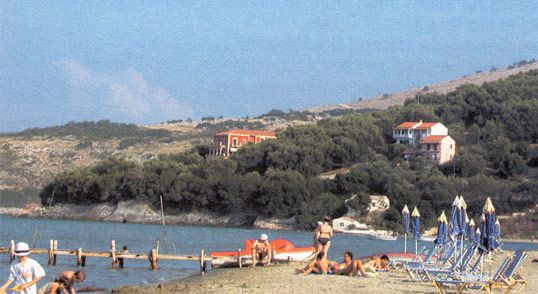
Kalamaki beach, Corfu


How George Osborne ruined my day at the beach in Corfu

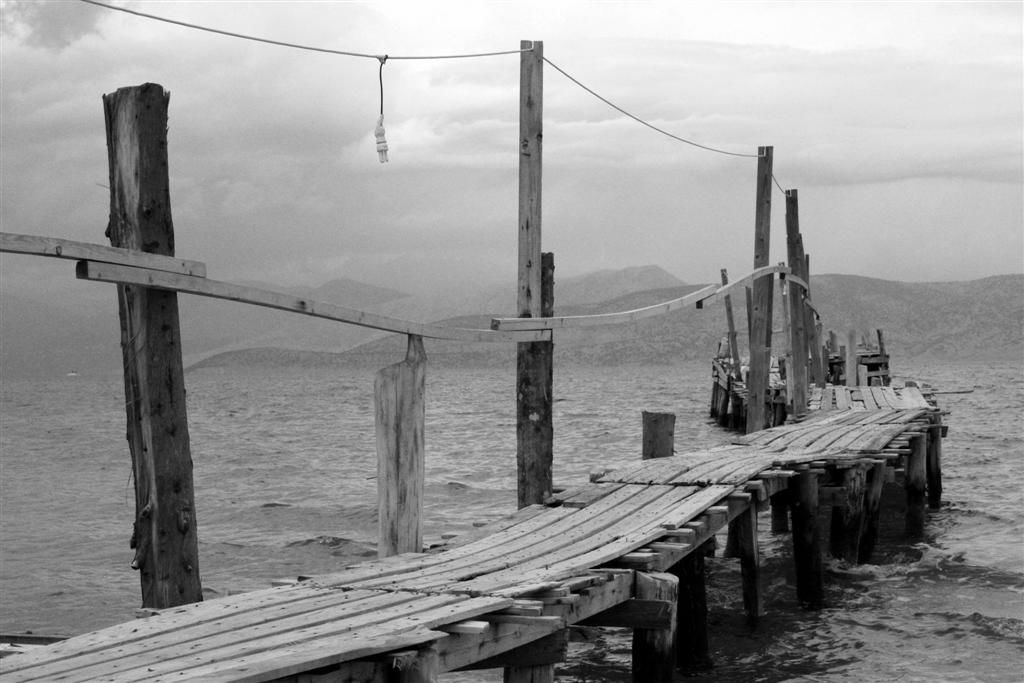
It was mid-afternoon on August 14 and we were on Kalamaki beach – a glorious bay on the north-east coast of Corfu where the intensely blue sea was so still it resembled oil rather than water. Barely a wave lapped the shore as I relaxed with my husband, brother and children. There were families throwing balls, people chatting in warm, shallow water and children with snorkels dragging small fishing nets. The scene was idyllic. The focus for most of those playing in the sea was a long, rickety, wooden pier. Children were jumping from it, dangling their feet in the water and playing tag. My three-year-old daughter was learning how to dive off the end when a motor boat appeared.

I was alarmed by the speed at which it approached. Parents stopped and watched, and I began to collect our little ones around me as I could sense danger. The boat kept coming and I began to worry. Surely no one would drive a boat through crowded water and, anyway, where was it going? Couldn’t those on board see that there was nowhere to moor as the pier was packed with children playing? Several parents, in several languages, complained loudly that this was an inappropriate place to bring a motorboat. It carried on without any apology from those on board and the bathers made way – the diving games stopped and children were hurriedly helped down from the pier and sent to the beach to play.

A very smartly dressed family disembarked and marched towards the shore. Leading the way was a man in blue shorts and white polo shirt, wearing deck shoes, which he clearly didn’t intend to get wet, followed by a couple of children, also dressed smartly and not for the beach, a woman, whom we assumed was their mother and was carrying a picnic basket, and a nanny, who brought up the rear and was carrying the bulk of the bags. I could tell immediately these people were English, by the way they were dressed and their seemingly superior manner. I felt embarrassed that a typically informal, relaxed and inclusive Greek afternoon was being so rudely interrupted by one small, well-turned-out, organised, English family.

I recognised George Osborne as he led the way. Shouts continued from the parents, which made the Osborne family hurry, but none of them looked back or exuded the air of bashful apology one would expect. Osborne, hearing the protests, simply said, addressing everyone, “It’s a pier, that’s what it’s for.” He said it loudly, angrily, without looking at any of those whose afternoon he had spoiled.

Of course he was right. It was a pier, and that is what they are for, but that day it was full of families having fun and the boat brought the fun to an end. But what galled people most – lots of us discussed it afterwards – was the way it had happened. No backwards glance, no apology, no hint of embarrassment. It wasn’t very Greek at all; indeed it was extremely English in that old imperial way. The Osbornes had to be somewhere, quickly. Perhaps Oleg Deripaska was waiting to talk about money?

The pier at Kalamaki beach


Poets are liars

So says Björk, in this fascinating interview from 1988, which kind of suggests they – poets – wouldn’t be much good at robbing banks together.


Bank-robber poets

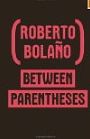
I am currently enjoying the pleasures of the essay and the short ‘occasional piece’, browsing through Roberto Bolaño’s Between Parentheses.What delights await you, gentle reader, between the covers of this excellent collection, if you are unfamiliar with the prose style of this fine writer. But be warned: here you will find speculation of the most dubious kind:

If I had to hold up the most heavily fortified bank in America, I’d take a gang of poets. The attempt would probably end in disaster, but it would be beautiful. (Bolaño, ‘The best gang’).

If I were to rob a bank the last people on earth I would recruit would be poets. They are generally indecisive, opinionated, and almost universally passive aggressive in relation to other poets, and they would therefore certainly take issue with some aspect of poetic discourse (meter, rhyme, assonance, metaphor, what have you) that took precedence over the planning and execution of the job in hand: indeed, once these theoretical differences gained a foothold, there would be no stopping some of them. They would move from poetics to defamatory statements of the most brutal kind, and from there to physical violence. I can assure you, dear reader, that the fiercest disputes occur between individuals when the stakes are really low: academics and poets are prone to the most vitriolic and bloodthirsty of vendettas precisely because the outcome is of practically no interest to anyone else.

This is true, I have hung around with poets and academics for years now, and I’m not sure which group is more inflated in their sense of self-importance, but it’s a close-run thing.

I’m not talking about all poets, of course, or even all academics, and I do hate generalising; but generalisations, like stereotypes, would not exist if there were not a ‘kernel of truth’ to the person, creature or object being generalised or stereotyped. Even if you disagree with the kernel of truth hypothesis on an intellectual level, you almost certainly – if unwittingly – subscribe to it in some aspect of your opinion-forming and decision-making.

But the type of poet or academic I am excusing from this general rule is actually a very small minority. Most of us, whatever we do, and however much we resist the idea, are a part of the herd. And although no one willingly considers himself or herself as part of the herd, the fact is that seen in retrospect, seen from the perspective of a hundred years hence, great swathes of poets (and other writers and artists) will be banded together indiscriminately and one or two exceptions, probably people who are lesser known now, will be isolated as exceptions and therefore bestowed with genius. The typical thinking goes like this: no one wants to think of him or herself as just one of the herd, and everyone thinks that is how it is going to be for everyone else.

We are certain of our uniqueness and individuality, and this would be the first and insuperable problem for Bolaño’s gang of poet-bank robbers, or bank-robber poets: lack of organisational discipline. I may be wrong, but don’t suppose there are many poets in the ranks of the SAS, nor, for that matter have I read any poems by any bank-robber poets. In fact, with all due respect to Roberto, I feel that poets are better suited to working a bank job solo, and probably not planning the job at all, but leaving it all down to fluke and happenstance. In other words, the only way a poet might successfully rob a bank would be alone, and by mistake.


Christopher Hitchens and the uncertainty principle

English: Christopher Hitchens at a party at th...

Image via Wikipedia

Deaths of Vaclav Havel and Christopher Hitchens. Hitchens I don’t know much about as he rose to prominence in the 1980s, a decade that largely passed me by unawares. Havel I was aware of in the late 70s and read a couple of his plays, and then later, at the time of the Velvet Revolution, but not much since. Both seem to have had a character of rumbustious contrariness that I normally admire, even though I am certain Hitchens and I would have numerous areas of intense disagreement.

But how is it that the loonies come out of the woodwork whenever someone’s death hits the news? Following a link to the youtube clip of Hitchens on Death, in the long list of viewers’ comments I find one by ‘ravenelvenlady’:

Rest in Peace Mr. Hitchens. You probably know for yourself now that we continue on, disembodied, and that this is all death really is.

WHAT?????????@****!!!!!

Raven Elven Lady (to break down her moniker a bit) is clearly something of an expert on the beyond (perhaps she got an Arts and Humanities Research grant to take a fact-finding tour of the hereafter, or is dead herself and therefore writing from the other side: if not I am fascinated that she writes about the state of being dead with such carefree authority).

What is it that incites certain individuals to quack on about the afterlife as if they were in possession of secret information which no one in the history of human endeavour has ever been able to prove – in spite of the millions of efforts that have been made, from cranks with crow’s intestines to Ouija boards to Christ raising Lazarus from the tomb? You would have thought if there were an afterlife of any kind at all that there might be some way of getting a message back that laid all doubt to rest, but this has never happened, not once in thousands of years of recorded history.

So just why are the loonies out there, cheering on (or blasting to damnation) Hitchens’ eternal soul? Probably because Hitch himself can’t answer them back now.

What he does say in his interview is: “My strongest allegiance is to a group of people whose main interest is in the uncertainty principle.”

I think I know what he means, but he isn’t talking about Heisenberg, strictly speaking, rather a more generous application of uncertainty, on behalf of those of us who don’t know what exactly is going on in the universe, and can live with that, rather than having to impose infantile explanatory models onto life – one’s own and everyone else’s.

Anyhow, I think I’ll read his book. It isn’t a novel so I’m not cheating.


The Vagabond’s Breakfast: a perfect stocking filler (wash thoroughly after use)


Thanks to Scott Pack for his mention of The Vagabond’s Breakfast and selecting it as runner-up in his top ten ‘Books of the Year.’

Scott says:

The fact that it (The Vagabond’s Breakfast) has been totally ignored by the mainstream literary press – it managed one review in the Morning Star – is bloody annoying but not all that surprising. I don’t think literary editors go looking for great books any more, they are content to wait for them to fall into their laps. Although they still miss them when that happens.

The VB also made it into the hallowed pages of Times Literary Supplement, featuring in its ‘Books of the Year’, as one of the choices of Patrick McGuinness, so perhaps I’d better quote that too:

Richard Gwyn began The Vagabond’s Breakfast while recovering from a liver transplant. A memoir of the nine years of drink, drugs and vagrancy that did for his first liver, it’s a jagged tale gracefully told. Full of humane surreality, there’s something whole, even holistic, about the brokenness of the life it pieces (back) together. Like many books about illness, it’s also about health: Gwyn is a citizen of both realms, describing life with “two passports.”

It is still not too late for you to buy a copy of The Vagabond’s Breakfast as a yuletide gift for your beloved or for a friend or deserving relative, through The Book Depository (£7.23 plus free worldwide delivery), Abebooks (various prices) or even Amazon (£6.99 plus free UK delivery).

Such shameless self-promotion would be scandalous were this not being written at arm’s length for me by my amigo, accomplice, intermediary and sometime translator, Señor Ricardo Blanco.


Nicanor Parra at ninety-seven

Two weeks ago the Cervantes prize, Spain’s loftiest literary honour, was bestowed on the Chilean poet Nicanor Parra.

Parra, at ninety-seven years of age, is without doubt the most influential of living South American poets. His career as an eminent physicist (he has been a visiting professor at Oxford and Yale) provided him with a livelihood and immunised him to some extent from the worst abuses of the Pinochet regime. A near-contemporary of Neruda, he considered his more famous compatriot’s poetry to be too flowery, too close for comfort to romantic egotism, and his own ‘antipoetry’ – a term that requires some unpacking – presents a “bleaker vision, prosier rhythms, and starker, surrealist deadpan humor”.  By the 1930s Parra was already asserting that what was needed was a vernacular poetry that related to ordinary life and which was accessible to the general public. These ideas, as manifested in Poesia y antipoesia (1954) had a huge impact on poets of a younger generation, especially those who were caught up in the politics of resistance. Parra began writing ‘antipoetry’ because, in his words “poetry wasn’t really working”; there was “a distance between poetry and life”. In a gracious twist, Neruda himself confessed to Parra’s influence on his own later work. It has been claimed, not unreasonably, that Parra’s method derived from his mathematical, relativist background, where he used minimal language and avoided metaphors and tropes in order to address his readers directly. However such assertions almost always sound reductive or cockeyed to me.

Parra’s later work is often a mesh of word association games, intentional cliché and spectacularly straightforward rants about the environment, inequality and corporate corruption. He is a ludic poet, while remaining a poet of intense seriousness. It may well be that his influence will be more lasting than either Neruda or his fellow Nobel laureate, the Mexican Octavio Paz.

Here are a few translations of his work:


OUR FATHER

Our father who art in heaven

Laden with problems of every kind

Your brow knotted

Like any common ordinary man

Don’t worry about us any more.

We understand that you suffer

Because you cannot set your house in order.

We know the Evil One doesn’t leave you in peace

Unmaking everything you make.

He laughs at you

But we weep with you:

Don’t be troubled by his diabolical laughter.

Our father who art where thou art

Surrounded by treacherous angels

Truly: do not suffer any more on our account

You must recognize

That the gods are not infallible.

And that we forgive everything.


(From ‘Bío Bío’)

XXII


CAPITALISM AND SOCIALISM


Nineteenth-century economicrapology

Years before the Principle of Finitude

Neither capitalist nor socialist

But quite the contrary Mr Director:

Intransigent ecologist

We understand by ecology

A socioeconomic movement

Based on the idea of harmony

Of the human species with its environment

Which fights for a ludic life

Creative

egalitarian

                          pluralist

free of exploitation

And based on communication

And collaboration

Between the big guys & the little guys


MEMORIES OF YOUTH

What’s certain is that I kept going to and fro,

Sometimes bumping into trees,

Bumping into beggars,

I found my way through a forest of chairs and tables,

With my soul on a thread I watched big leaves fall.

But it was all in vain,

I gradually sank deeper into a kind of jelly;

People laughed at my rages,

They started in their armchairs like seaweed carried by the waves

And women looked at me with loathing

Dragging me up, dragging me down,

Making me cry and laugh against my will.

All this provoked in me a feeling of disgust,

Provoked a tempest of incoherent sentences,

Threats, insults, inconsequential curses,

Provoked some exhausting hip movements,

Those funereal dances

That left me breathless

And unable to raise my head for days

For nights.

I was going to and fro, it’s true,

My soul drifted through the streets

Begging for help, begging for a little tenderness;

With a sheet of paper and a pencil I went into cemeteries

Determined not to be tricked.

I kept on at the same matter, around and around

I observed everything close up

Or in an attack of fury I tore out my hair.

In this fashion I began my career as a teacher.

Like a man with a bullet wound I dragged myself around literary events.

I crossed the threshold of private houses,

With my razor tongue I tried to communicate with the audience;

They went on reading their newspapers

Or disappeared behind a taxi.

Where was I to go?

At that hour the shops were shut;

I thought of a slice of onion I had seen during dinner

And of the abyss that separates us from the other abysses.


THE CHRIST OF ELQUI RANTS AT SHAMELESS BOSSES

The bosses don’t have a clue

they want us all to work for nothing

they never put themselves in the shoes of a worker

chop me some wood kiddo

when are you going to kill those rats?

last night I couldn’t sleep again

make water gush from that rock for me

the wife has to go to the gala dance

go find me a handful of pearls

from the bottom of the sea

if you please

then there are others who are

even bigger wankers

iron me this shirt shitface

go find me a tree from the forest fuckwit

on your knees asshole

. . . go check those fuses

and what if I get electrocuted?

and what if a stone lands on my head?

and what if I meet a lion in the forest?

aw hell!

that is of no concern to us

that doesn’t matter in the least

the really important thing

is that the gentleman can read his newspaper in peace

can yawn just when he pleases

can listen to his classical music to his heart’s content

who gives a shit if the worker cracks his skull

if he takes a tumble

while soldering a steel girder

nothing to get worked up about

these half-breeds are a waste of space

let him go fuck himself

and afterwards it’s

I don’t know what happened

you can’t imagine how bad I feel Señora

give her a couple of pats on the back

and the life of a widow and her seven chicks ruined


FROM ‘NEW SERMONS AND TEACHINGS OF THE CHRIST OF ELQUI’


XXXII


Those who are my friends

the sick

the weak

the dispirited

those who don’t have a place to lie down and die

the old

the children

the single mothers

– the students, not because they are troublemakers –

the peasants because they are humble

the fishermen

because they remind me

of the holy apostles of Christ

those who did not know their father

those who, like me, lost their mother

those condemned to a perpetual queue

in so-called public offices

those humiliated by their own children

those abused by their own spouses

the Araucanian Indians

those who have been overlooked at some time or other

those who can’t even sign their names

the bakers

the gravediggers

my friends are

the dreamers, the idealists who

like Him

surrendered their lives

to the holocaust

for a better world


ROLLER COASTER

For half a century

Poetry was the paradise

Of the solemn fool.

Until I came along

And set up my roller coaster.

Go on up, if you want.

It’s not my fault if you come down

Bleeding from your mouth and nose.


Translations by Richard Gwyn, first published in Poetry Wales, Vol 46, No 3 Winter 2010-11.



Advice to aspiring writers, and smoking by the riverside

The question – the recurrent question – asked at those events (after a reading, say, or at a literary festival) when the author is expected to wax lyrical and wise on all manner of subjects is ‘what advice would you give to a writer who is just starting out?’ I asked it myself last Monday of Peter Finch, and he gave a damn good answer – the same answer I always give – which is to read more.

Andrés Neuman. According to Roberto Bolaño "The literature of the 21st century will belong to Neuman and a handful of his blood brothers."

On his blog, Argentinian poet and prizewinning novelist Andrés Neuman (whose fabulous novel, Traveller of the Century will be available in English from February next year) says he was recently asked by a magazine to give six items of advice to beginners, and his perplexed reply was, in my loose translation, as follows:

1. Don’t conform to the patronising attitudes of older writers. They were also young, and in all probability more clueless.

2. Tradition doesn’t weigh on us, but invites us in. We write as we read: writing is a supreme form of re-reading.

3. Try, make mistakes and try again. A bad manuscript is worth far more than a supposed genius who abstains from writing, just to be on the safe side.

4. Keep correcting, to the limits of your patience.

5. Remember that we are all beginners: writing is an inaugural art and lacks experts.

6. Don’t accept six pieces of advice from anyone. One is already too many.

Otherwise – and this is completely unrelated, I was flicking through the cyberworld yesterday, and I discovered that Joseph Hill of the reggae band Culture died five years ago already, when I wasn’t looking. At the risk of going on like an old fart I remember going to see Culture at the 100 Club in Oxford Street, must have been 1977, and being knocked for six, unless that was just from inhaling the fumes from all the people who had been consorting with Mr Bong and Mr Spliff. Anyway, here is a song to remember him by.