Richard Gwyn

Etymology of vagabondage

Leatherman

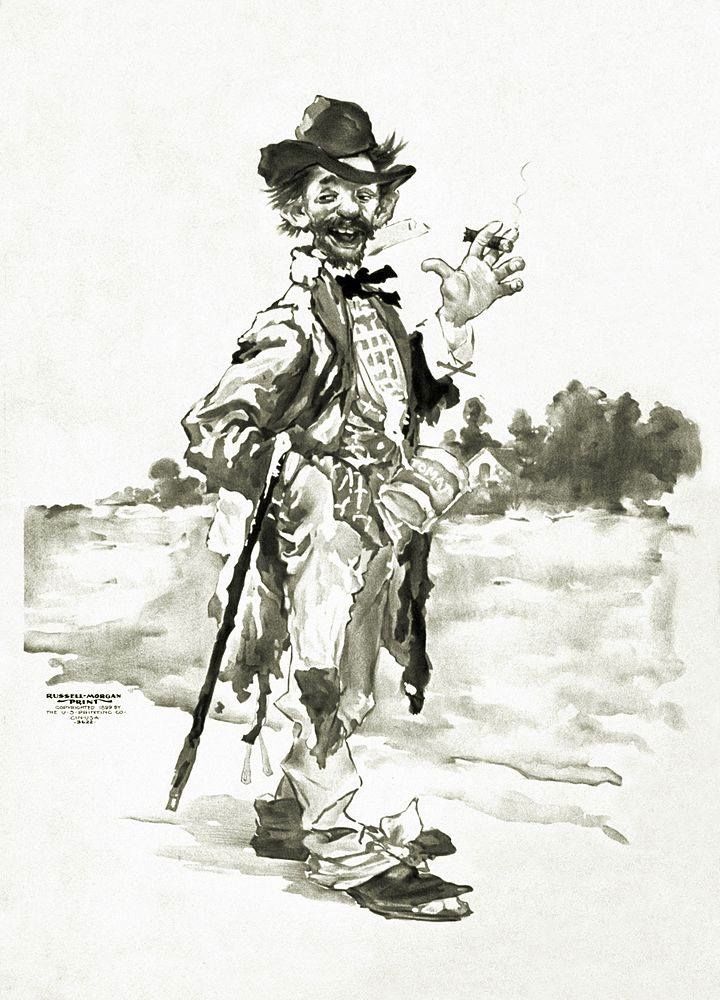
The Leatherman (ca. 1839–1889) was a vagabond famous for his handmade leather suit of clothes, who traveled a circuit between the Connecticut River and the Hudson River, roughly from 1856 to 1889.

Taken to task by a reader over the complicated etymology of vagabondage, I realise the need for another post on the subject.

In an earlier post I referred to the cirujas of Buenos Aires, otherwise known as cartoneros, those nocturnal seekers-out of trash bins, whose primary task is to find materials for recycling (plastic, cardboard, paper etc). Cartoneros are a sub-category of ciruja, a professional scavenger of all types of object for which a use or purpose can be made. That is why I likened the ciruja to a kind of street alchemist, seeking out base metal to transmute into gold. But I can see, as I was chided, that there is nothing especially poetic about this.

Whereas with the linyeras, there is. The definition of linyera given in my dictionary of  lunfardo (Buenos Aires slang) is: “Persona vagbunda, abandonada y ociosa (idle), que vive de variados recursos (living off a variety of resources).” The word originally comes from the Piedmontese linger, which meant “a posse of tramps”. These fit the more romanticized notion of the classical vagabond, moving around the country (or the globe) without direction or purpose, usually associated in North America with the hobo, whose preferred means of travel was jumping trains, an occupation which was until not so long ago manageable in Europe also, but which has now become as obsolete as hitchhiking.

One still sees a posse of tramps drinking from bottles or flagons in any French town or city. These, of course, are clochards. A clochard or clocharde is a person “without fixed domicile, living from public charity and handouts.” The term clochard allegedly means ‘one who limps’ from the Late Latin cloppus (lame), but I have also heard that the term comes from the ringing of a bell (cloche) which in earlier times – when most cities in France were fortified – signalled that it was time for the indigent and poor, who could not afford lodging in town, to leave the city and go sleep in a field or a barn. To my mind, a clochard is somewhat different from a vagabond. A clochard might not venture from a known neighbourhood, while for a vagabond, the world is his lobster (sic).

According to French Wikipedia “Des vagabonds célèbres ont existé, par exemple GandhiNietzscheLanza Del Vasto, et d’innombrables philosophes-vagabonds.”

To be continued. Any contributions welcome.


Plus ça change

Selfservatives


I don’t usually post about politics, but I spotted this on Facebook, and thought it worth sharing.

As we hear more every week about waves of parasitic immigrants and social security scroungers who ride on the back of ‘hardworking families’ et cetera, it is nice to be reminded that these are not the only ones to play the system.

On a related theme, I came across a letter in The Independent the other morning, in which Barry Richards of Cardiff took the Tories to task for not paying interns. Apparently the Conservative Party is “trying to be a responsible employer”. As Mr Richards remarks in his letter:

A “responsible employer” would show care for its employees and ensure that they receive a fair wage capable of supporting a decent standard of living. But then the Tory ethos, from the aristocracy and landed gentry through to today’s stockbroking, City elite has always been to build wealth and power off the backs of other people’s work at the lowest cost possible.

Plus ça change, plus c’est la meme chose . . .


Three things I learned from Cavafy

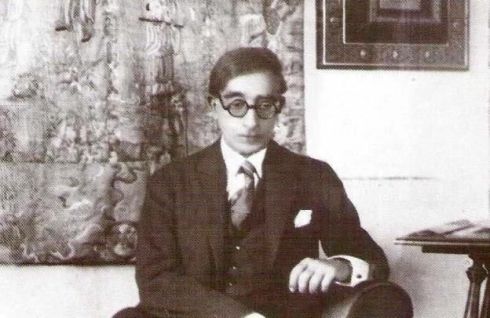
Cavafy

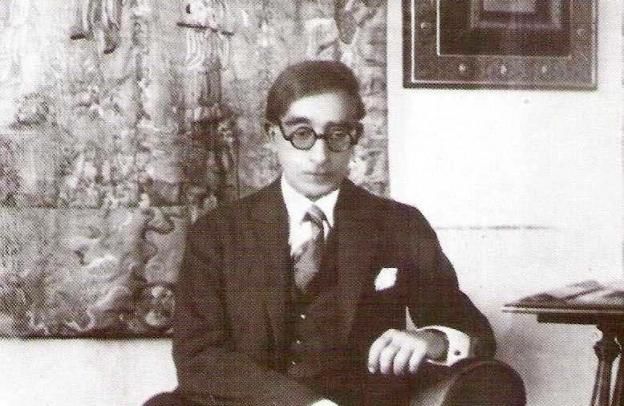
C.P. Cavafy (from the Cavafy archive)

For a long time, while I was tramping around southern Europe, escaping the collective embarrassment that was Britain in the 1980s, I carried with me the poems of CP Cavafy. Other books I picked up and discarded along the way, but Cavafy, in one edition or another, stayed with me for much of the decade. I forget the precise circumstances that led to me making this choice, but most likely it was not a choice at all; I suspect the book was dropped into my bag by a passing sprite, concerned for the welfare of an ephebe like myself, setting out into solitary exile to learn, among other things, the road of excess and the skills of guile and trickery. It would suit my story if this were the case, but the truth is I had been reading Cavafy since I was sixteen, and once he had become a staple of my travels, I didn’t feel properly equipped without him. A slim volume, joined during those early years by Borges’ Fictions and Calvino’s Invisible Cities. These three books had three things in common: they were all small-scale and dense; they all subverted familiar stylistic mannerisms; and they were all conceived in the element of mercury. One thing I didn’t know then was that forty years later I would still be reading Cavafy, with more curiosity than ever.

If we are lucky, we get the writers we deserve, and at the right time of life. Reading Cavafy at a young age nurtured in me the then enthralling (but now merely fashionable) notion that time is not a linear construct, but rather resembles a shifting, mutable state in which past and present might be accessed simultaneously. Cavafy’s poetry, as Patrick Leigh Fermor once wrote, skilfully interweaves time and myth and reality, allowing for a particular kind of mutability, an ability to flit between perceptive modes that, once grasped, will stay with the reader always. If that sounds grandiose, I would like to clarify: there is no distinction in these poems – I would like to say in life, also – between what is imagined and the literal or mechanistic world of everyday understanding, and we must appreciate that this is essential to a proper appraisal of Cavafy. There is no point in conceding to the sordid demand for what ‘really happened’, claiming that any other version is a fantasy or a dream, and that reality is ‘out there’, the other side of the window, any more than one can discern, in Cavafy’s work, between the literal Alexandria and the one held in his imagination. In Cavafy’s poetic world the two are one and they merge, diverge and re-converge continually.

When I was eighteen I spent a summer living in an abandoned shepherd’s hut on a hillside overlooking the Libyan sea in southern Crete, near the tiny village of Keratokambos. Reading outside one evening, I heard an exchange of voices. In the near distance, some way above me, a man and a woman were calling to each other, each voice lifting with a strange and powerful vibrancy across the gorge that lay between one flank of the mountain and the next. Only the nearer figure, the man, was visible, and his voice seemed to rebound off the wall of a chasm, half a mile away. The woman remained out of sight, but her voice likewise drifted across the gorge, with crystalline clarity. There were perhaps a dozen exchanges: and then silence. I listened, spellbound. And that brief exchange, that shouted conversation, with its strange sounds, the tension between the voices, the exhalations and long vowels echoing off the sides of the mountain, would haunt me for years, haunts me still. They seemed to me to be speaking across time, that man and woman. Their ancestors, or possibly they themselves, had been having that conversation, exchanging those same sounds, for millennia. It was, for me, a lesson in the durability of human culture and at the same time, the incredible fragility of our lives; the conversation, the calling across the chasm, represented our ultimately solitary and unique chance at communication with a presence beyond ourselves. It was the vocal correlative of a strange sensation that I had experienced since first arriving in Crete: everywhere I went I was walking on bones, walking on the bones of the dead; and now I was hearing the echo of their voices as well.

In ‘Ionic’, translated more recently by Daniel Mendelsohn as ‘Song of Ionia’, Cavafy sums up an exemplary moment, suggesting that despite the destruction of their monuments and statues, the old gods still dart among the hills on the coast of Ionia (today’s western Anatolia), and it concludes with the lines:


When an August morning dawns over you,

your atmosphere is potent with their life,

and sometimes a young ethereal figure

indistinct, in rapid flight,

wings across your hills.


Here, the ‘young ethereal figure’ is surely Hermes. He is, after all, the winged god, and the god of transition and boundaries, and therefore more than likely to be seen at dawn, in the breach between night and day. Perhaps the Hermes association is personal, owing to the fact that in my experience, Hermes, god of travellers, was almost always the one who came to sort out the mess after Dionysos had wreaked his havoc. It seems likely, according to Daniel Mendelsohn’s wonderfully thorough notes that Cavafy, too, was thinking of Hermes, although I did not know this when I first read the poem.

That the past cohabits eternally with the present is a specifically Cavafian notion, and this subversion of linear time was the first thing I learned from his poetry. The second was his unique conceptualisation of place, in relation to the city with which his name has become ineluctably associated, Alexandria. As Edmund Keeley points out, Cavafy was the first of his contemporaries (woh included Yeats, Pound, Joyce and Eliot in the English-speaking world) to ‘project a coherent poetic image of the mythical city that shaped his vision’. His poetic vision – even when concerned with matters of erotic desire, which it often is – involves a constant pursuit of ‘the hidden metaphoric possibilities, the mysterious invisible processions, of the reality one sees in the literal city outside one’s window’. Cavafy takes the idea of the city and expands upon it so that it carries mythic significance. The poem he chose to begin his first pamphlet of work, distributed among friends, is, significantly, ‘The City’. The poem is addressed to one whose life is bound by literal time and literal thought while, by contrast, the poet-narrator lives according to other parameters, which are timeless. Like other great poets Cavafy mythologises a personal landscape so that it becomes universal:


You won’t find a new country, won’t find another shore.

This city will always pursue you.

You’ll walk the same streets, grow old

in the same neighbourhoods, turn grey in these same houses.

You’ll always end up in this city. Don’t hope for things elsewhere:

there’s no ship for you, there’s no road.

Now that you’ve wasted your life here, in this small corner,

you’ve destroyed it everywhere else in the world.


The poet’s difficulties over the composition of ‘The City’ – fifteen years lapsing between the first draft in 1894 and publication – are perhaps a reflection of Cavafy’s uncertainty over whether or not he wanted to settle permanently in Alexandria, or himself ‘find some other city’, like the protagonist of his poem. ‘What trouble, what a burden small cities are’, the forty-four year-old poet complained in an unpublished note, dated 1907. He apparently made up his mind to stay by 1910, the year that ‘The City’ was published. It would seem that around this time he experienced an epiphany or at least a shift in his trajectory as a writer, deciding that his destiny lay with Alexandria, and that he would probably never leave. The choice of ‘The City’ as the lead poem in published selections of his work is as intentional as, say, Wallace Stevens’ insistence on ‘Earthy Anecdote’ opening all collected editions of his poetry.       Alexandria became, from that point on, the principle vehicle for his poetic imagination. Conscious of this, he again addresses the theme of leaving the city – actually of being abandoned by the personified city – in ‘The God Abandons Anthony’, when the speaker admonishes the Roman general, who was closely associated with the god Dionysos, at the moment of departure:


When suddenly, at midnight, you hear

an invisible procession going by

with exquisite music, voices,

don’t mourn your luck that’s failing now,

work gone wrong, your plans

all proving deceptive – don’t mourn them uselessly:

as one long prepared, and full of courage,

say goodbye to her, to Alexandria who is leaving.

Above all, don’t fool yourself, don’t say

it was a dream, your ears deceived you:

don’t degrade yourself with empty hopes like these . . .


It is this self-degradation with false hopes, this yearning for the sacred centre, the object of desire that can never be attained, the love that will never be requited, which makes of all of us an Anthony. Whenever one thinks one has arrived at one’s destination, then will be the time to move on. There is no way of making peace with any objective, real or imagined, until one has first made peace with oneself, and the process is self-perpetuating, and the cities mount up. ‘The more you travel’ as the Turkish poet Adnan Özer writes, ‘the more cities you will find within yourself’.

So, the second thing I learned from Cavafy was that the city is a cypher for the self, reflecting our fragmented or multiple selves. We know that Cavafy is speaking of Alexandria, but we also know that the city is a state of mind – one’s personal predicament, and the human predicament also – from which we can never be free.

The third thing I learned from Cavafy is that we are always at risk of misreading the signs and portents that surround us: arrogance and self-satisfaction dim our vision and make us ridiculous. It is a favourite theme of Cavafy’s, most often delivered with a profound sense of irony. Let us consider the poem ‘Nero’s deadline’:


Nero wasn’t worried at all when he heard

what the Delphic Oracle had to say:

“Beware the age of seventy-three.”

Plenty of time to enjoy himself.

He’s thirty. The deadline

the god has given him is quite enough

to cope with future dangers.

Now, a little tired, he’ll return to Rome –

but wonderfully tired from that journey

devoted entirely to pleasure:

theatres, garden-parties, stadiums . . .

evenings in the cities of Achaia . . .

and, above all, the delight of naked bodies . . .

So much for Nero. And in Spain Galba

secretly musters and drills his army –

Galba, now in his seventy-third year.


At a superficial reading, the conceited, megalomaniac Nero, cosseted by the apparently safe verdict of the oracle, is undone by his comprehensive misunderstanding of its hidden message. But as Mendelssohn points out, the poem does more than make fun of Nero’s self-satisfied complacency, it puts forward Galba as the avenging hero, come from obscurity in his old age to save Rome. However, Galba, in turn, was a disaster for Rome, his greed and lack of judgement causing him to be murdered seven months after his accession as Emperor, on the orders of Marcus Salvius Otho, a fellow-conspirator against Nero. (Otho, incidentally, lasted only three months as Emperor before stabbing himself in the heart). ‘Nero’s deadline’ offers a cinematic vignette of power’s corrupting influence. And by omitting Galba’s own downfall – assuming, as he so often does, that the interested reader, if curious enough, will find out – Cavafy adds a layer of hidden significance to a piece that already works as a denunciation of grandiosity and hubris. The poem reveals betrayal lying beneath betrayal, all of it stemming from overreaching and a smug belief in one’s own achievements, only for each incumbent to meet with a grisly end.

I wanted to write this essay in order to find out why Cavafy has held such a longstanding fascination for me as a reader (and therefore as a writer, since the two activities are composite: we read, at least in part, in order to learn, or to steal). I have discussed three things that are particularly important in my own understanding of his work. But there is something else, greater than the sum of its parts, which asserts this man’s comprehensive poetic vision. Cavafy was a poet who, throughout his life, was – in Seferis’ words – “constantly discovering things that are new and very valuable”. It may be that this capacity for discovery, a reflexivity regarding his personal as well as a collective Hellenic past, his subtly revelatory intelligence, are somehow transmitted onward, and we, as readers, are infected by his own enthusiasms. “He left us with the bitter curiosity that we feel about a man who has been lost to us in the prime of life,” wrote Seferis. This is not simply on account of his relatively small output, but because of its seeming unity of construction and purpose, its sense of unfulfilled possibility, and the poet’s curiosity at being in a world in which past and present merge in an invisible procession.

Translations from the Greek are by Edmund Keeley & Philip Sherrard in C.P. Cavafy: Collected Poems, Chatto & Windus, 1990. The references to Daniel Mendelssohn concern the notes to his own translations in C.P. Cavafy: Complete Poems, Harper Press, 2013.

First published  as ‘An Invisible Procession: How reading Cavafy changed my life’, in Poetry Review, 103:3   Autumn 2013.


Facts about Things


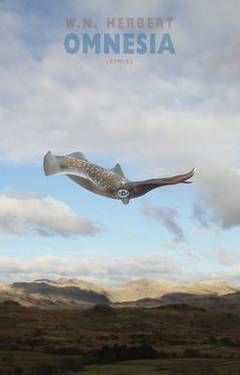
omnesia-remixOmnesia, W.N. Herbert’s new collection of poetry, comes in two volumes, subversively titled Alternative Text and Remix, so as to disabuse the reader of any notion of an ‘original’. The word ‘omnesia’ is a conflation of omniscience and amnesia, the latter quality bringing into question the actuality of everything we know – especially, perhaps, our omniscience.

Herbert’s oeuvre is already varied and profuse, and this new collection is expansive in every way. The two volumes mirror and reflect upon each other, so that the airborne squid on the cover of ‘Alternative Text’ is flying towards the reader while the one on ‘Remix’ travels laterally – just as the author in the photo gazes amusedly to the right on the one book, and bemusedly to the left on the other. As an epigraph from Juan Calzadilla, tells us: ‘I have transformed myself into another / and the role is going well for me’. The concept of non-identical twin texts embodies, as the poet reminds us in his Preface, a rejection of ‘or’ in favour of ‘and’. A core of poems appears in both volumes, and the title poem opens ‘Alternative Text’ and closes ‘Remix’. But this sequencing does not signify a preferred reading order. Instead, we are warned off any kind of systemic coherence in the poem’s opening lines: ‘I left my bunnet on a train / Glenmorangie upon the plane, / I dropped my notebook down a drain; /I failed to try or to explain, / I lost my gang but kept your chain – / say, shall these summers come again, / Omnesia?’

Almost anything is a cue to Herbert, setting him off on one of his preferred riffs, especially our inescapable doubleness, exemplified by the two books – themselves containing other books which scurry off at tangents – and the frequent collusion of the narrative ‘I’ with other selves. In ‘Paskha’, the narrator sees a dead scorpion ‘in silhouetted crux’ and is ‘troubled by the brain’s chimeric quoins / its both-at-onceness, how the memory’s / assembled with our present self for parts . . .’ And it is this very both-at-onceness that has me riffling through the pages of ‘Alternative Text’ while reading ‘Remix’, following the demands of a connectivity which the poet’s Preface planted at the outset.

The poems take place in and meditate upon the poet’s journeys from Crete to the north of Britain, from Mongolia to Albania, from Finland to Israel, from Venezuela to Siberia, and among the poet’s several antecedents I was pleased to meet the shadow of Byron, especially in the ‘Pilgrim’ sequence. There is also a fine selection of poems in Scots.omnesia-alt-text

The choice of epigraph usually serves as a pointer towards the poet’s intended direction. We are warned, in a quotation from Patricia Storace, that ‘In Greece, when you hear a story, you must expect to hear its shadow, the simultaneous counterstory.’ And not just in Greece. In ‘News from Hargeisa’, for instance, the counterstory of Somalia’s troubled history lies beneath every line, evoking local parable in the story of a lion, a hyena and a fox (animal imagery predominates in many of Herbert’s poems), as well as in the poet’s mourning of his friend Maxamed Xaasi Dhamac, known as ‘Gaarriye’, the late great Somali poet to whom both volumes are dedicated.

I am sure I missed subtle allusions and even whole thematic directions, and yet still enjoyed the poems I didn’t get. I did wonder how many people – outside of those who have lived on Crete – would ‘get’ ‘The Palikari Scale of Cretan Driving Scales’, a poem in which the driver’s recklessness is measured in direct relation to the magnificence of his moustache.

One might complain that there is simply too much in these books: not in the sense that they are lacking in editorial discretion, but that they demand a readerly imagination as febrile as Herbert’s in order to keep up. Is W.N. Herbert one person? I suspect not: and in any case he seems quite comfortable swapping costumes with his multiple others. I suspect also that Omnesia is a work one needs to live with for a while before appreciating all the shifts and mirrorings, puns and doublings, but even on a first acquaintance it offers richly rewarding reading.

Review published in Poetry Wales, Summer 2013 49 vol 1.

And nearly a year having passed since writing the above review, I can assure you that Omnesia repays revisiting. In so many ways.


Facts about Things

Things are tired.

Things like to lie down.

Things are happiest when,

for no reason, they collapse.


That French plastic bottle, still half-full,

that soft-back book, just leaning on

another book, drowsily:

soon they will want to go outside,


soon you will find them in the grass

with the empty bleaching cans and that part

of an estate agent’s sign

that’s covered in a fine grime like mascara.


That plastic bag you’ve folded up

feels constrained by you and wants

to hang from bushes, looking like a spirit,

sprawled and thumbing a lift.


Things are bums, tramps, transitories:

they prefer it when it’s raining.

Lightbulbs like to lie in that same

long, uncut, casual grass


and watch the funnel effect: the way

on looking up the rain all seems

to bend towards you,

the way the rain seems to like you.


Things which do not decay

like it best in shrubbery, they like

to be partly buried.

They like the coolness of the grass.


Most of all, they like it

when it rains.


A Vagabond

vagabundo

The gentleman depicted here is a vagabond, from the Latin vagari, to wander.

In English the term has almost disappeared in its original sense, although a quick internet search identifies the popularity of the term to help sell niche products, for example: a wine shop in London’s West End; a Swedish shoe manufacturer; an chic boutique in Philadelphia.

A Spanish Wikipedia entry on the word vagabundo (vagabond) begins like this:

“A vagabond is a lazy or idle person who wanders from one place to another, having neither a job, nor income, nor a fixed address. It is a type familiar from Castilian literature, which contains many examples of vagabond pícaros . . .

In the dialect of Lunfardo, which originated in the late 19th and early 20th centuries among the lower classes of Buenos Aires, the term ciruja is applied to vagabonds who collect rubbish and sort through it in search of something useful. The term derives from the word for a surgeon, cirujano. Popular wisdom has it that these vagabonds were compared to surgeons because of the way in which they carefully sought out objects of interest, picking them from trash containers and municipal tips, rather than from inside a human body. This last attribute – the meticulous extraction of some unexpected treasure from amid the rejected dross of the everyday – seems rather fitting.

In French chanson, vagabonds are typically depicted as materially impoverished characters possessed of an irresistible allure. The singer Lucienne Delyle (1917-62), one of the most popular French singers of the 1950s (her greatest hit was Mon amant de Saint-Jean) also had a song called Chanson vagabonde, which can be heard here.


Rabbah bar bar Hannah

At the end of an article by Jonathan Bate in this week’s Times Literary Supplement, I am stunned and rendered desolate by the closing sentence, summarising a story copied into Ted Hughes’ notebook, following Hughes’ regret at having put Sylvia Plath’s journals into the public domain – “Maybe the stupidest thing I ever did”:

“Rabbah bar bar Hannah . . . having undergone a series of fantastic adventures through the desert and across the seas, set down his life upon a rock and slept. When he awoke, the rock had gone and he was on a precipice, staring into the abyss.”

This is terrible. That is to say, I sat up in bed for a full five minutes in a state of terror.

This is what we do: we have our adventures, full of joy and pain and sorrow, set down our story upon a rock, and sleep. Except our rock is not even a rock. It is a virtual space, a digitalised abyss.

I google Rabbah bar bar Hannah and on Wikipedia discover that he was a Jewish Talmudist who lived in Babylonia, and that he was an Amora of the second generation (3rd Century AD). He was apparently not held in very high regard by his fellow Talmudists. I find part of the story cited by Bate, along with this, also from Rabbah’s writings:

“Once, while on a ship, we came to a gigantic fish at rest, which we supposed to be an island, since there was sand on its back, in which grass was growing. We therefore landed, made a fire, and cooked our meal. But when the fish felt the heat he rolled over, and we would have drowned had not the ship been near”.

As a purveyor of tall tales, Rabbah was sanguine as to how his fictions were received: “All Rabbahs are asses and all bar bar Hanas fools”, went a contemporary review. Or, as I have maintained elsewhere on this blog (quoting Björk): “Poets are liars.”

But that moment, of waking in the face of the abyss, seems terribly familiar, as though it were, somehow, an inevitable consequence, an ineluctable truth.


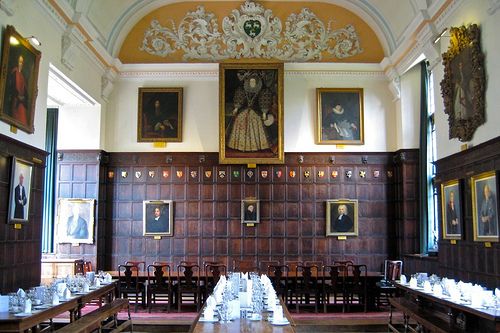
High Table

jesusdininghallqe1tablesset4x626sep09o

“These suppers take place once a week in the vast refectories of each of the different colleges. The table at which the diners and their guests sit is raised up on a platform and thus presides over the other tables (where the students dine with suspicious haste, fleeing as soon as they have finished, gradually abandoning the elevated guests and thus avoiding the spectacle the latter end up making of themselves) and it is for this reason rather than because of any unusually high standard of cuisine or conversation that they are designated “high tables”. The suppers are formal (in the Oxonian sense) and for members of the congregation the wearing of gowns in obligatory. The suppers do begin very formally, but the sheer length of the meal allows for the appearance and subsequent development of a serious deterioration in the manners, vocabulary, diction, expositional fluency, composure, sobriety, attire, courtesy and general behaviour of the guests, of whom there are usually about twenty.”

From Javier Marías, All Souls. 

Thus begins one of the most hilarious and painful accounts of a certain kind of Englishness in all contemporary fiction, written, not surprisingly by a foreigner.


Cities and Memories

Variations on a theme by Calvino

When a man drives a long time through wild regions, his imagination begins to wander. No, that’s not right. Try again. When a man drives across the last continent at night, from south to north, he must pass the mountain plateau of Omalos. Oh please, not that. Once more? When a man drives a long time across the dry plains of Thrace, he begins to wonder at the migrations that have marked this wretched zone. Turks, Bulgarians and Greeks, with varieties of cruelty and facial hair, wielding curved swords at one another’s throats for centuries. Forced expulsions, exterminations, and the underlying terror that who you are, or who they say you are, is all a terrible mistake, merely circumstantial. And why, for that matter, are you not someone else? If only – you conjecture – I were someone else, and belonged to a different tribe, had a different shaped moustache or nose, the smallest detail of appearance and accent that matters beyond the value of a life. The Levant’s legacy, never yet resolved: Greek, Turk, Arab, Jew. I want to be friends with everyone, and yet know I must have enemies too, if only in order to maintain my friendships. What kind of crazy thinking is that? Salonika, Smyrna, Alexandria, Beirut. We edge into new territories, in which boundaries are differently conceived and yet still intact. How do we progress from here, to the next point, the next dubious epiphany? I feel at once as though we have been witness to a slow disembowelling, over many centuries.


First published in Poetry Review, Summer 2013.

© Richard Gwyn


Dubious categories

In Agota Kristof’s wonderful novel The Third Lie, Claus – or is it Lucas, his anagrammatic twin (the two central characters are indissoluble, or aspects of one and the same person) – spends his nights writing in a notebook. One day, his landlady asks:

“What I want to know is whether you write things that are true or things that are made up.”

I answer that I try to write true stories but at a given point the story becomes unbearable because of its very truth, and then I have to change it. I tell her that I try to tell my story but all of a sudden I can’t – I don’t have the courage, it hurts too much. And so I embellish everything and describe things not as they happened but the way I wish they had happened.

After writing a book of creative nonfiction (I love the way a genre is defined by what it is not – as though ‘fiction’ were somehow the default mode of prose writing), one rather smug person of my acquaintance informed me that he had enjoyed the memoir, but had not been so taken by the fictional parts.

Were there fictional parts? I asked. Oh yes, this keen critic observed, of course there were.

Needless to say, this got me wondering. I could have retorted by quoting Joan Didion, who once wrote:

“Not only have I always had trouble distinguishing between what happened and what might have happened, but I remain unconvinced that the distinction, for my purposes, matters.”

Or I might have cited Gabriel García Márquez:

“Life is not what one lived, but what one remembers and how one remembers it in order to recount it.”

The point is, there is a fine distinction between the literalism of ‘what really happened’ – which is in any case not provable – and the way in which I happen to remember, conjecture and write. Does it simply boil down to a distinction between ‘true things’ and ‘things that are made up’? That seems horribly reductive. What about all the stuff that happens in between?

In the documentary film Patience, Christopher MacLehose tells an anecdote about the publication of Max Sebald’s Rings of Saturn. Sebald was required to state what category of work the book should be shelved under – a standard requirement made by booksellers, and he was dismayed that he had to choose a category: did he want the book filed under biography, history, apocalypse studies, memoir, travel or fiction? – All of them, he said, all of them.


Flying Pigs

Dame Carcas

Pursuing the porcine theme, I recall a couple of weeks spent slumming it in the city of Carcassonne, and being much amused by the legend of Dame Carcas, which goes something like this: In 760, Pepin the Short (love those medieval sobriquets), King of the Franks, re-conquered most of southern France from the Saracen invader. But Carcassonne held out. There was a long siege. The enterprising Dame Carcas, widow of the Lord of the castle, devised a strategy to save the city. She fed the last remaining pig with the last remaining sack of grain and had the unfortunate beast tossed from the ramparts, to indicate to the besieging army that food was plentiful within the city walls. According to the Carcassone city council’s tourist office pamphlet: “the astonished assailants concluded that the inhabitants still had enough food in stock to stave off famine and weren’t about to surrender any time soon. And so they gave up and quickly lifted the siege. Dame Carcas rang all the bells of the city all day long to celebrate the victory. Legend has it that Dame “Carcas sonne” (Dame “Carcas rings”) is where the name of the city came from.”

The only other incident I know relating to an airborne pig takes place in Graham Greene’s short story ‘A shocking accident’, in which an English schoolboy, Jerome, is summonsed to the study of his housemaster, Mr Wordsworth, to be told that his father has had a terrible accident. Assuming, wrongly, that his father has been shot – Jerome worships his father and has fantasised a life for him in the British Secret Services – he is disappointed to discover that he met with a rather more exotic end:

‘Did they shoot him through the heart?’

‘I beg your pardon. What did you say, Jerome?’

‘Did they shoot him through the heart?’

‘Nobody shot him, Jerome. A pig fell on him.’ An inexplicable convulsion took place in the nerves of Mr Wordsworth’s face; it really looked for a moment as though he were going to laugh. He closed his eyes, composed his features and said rapidly as though it were necessary to expel the story as rapidly as possible. ‘Your father was walking along a street in Naples when a pig fell on him. A shocking accident. Apparently in the poorer quarters of Naples they keep pigs on their balconies. This one was on the fifth floor. It had grown too fat. The balcony broke. The pig fell on your father.’

Mr Wordsworth left his desk rapidly and went to the window, turning his back on Jerome. He shook a little with emotion.

Jerome said, ‘What happened to the pig?’

I am sure there must be third airborne pig, somewhere in history or legend or literature, but cannot bring it to mind. If anyone knows what it is, please do post.


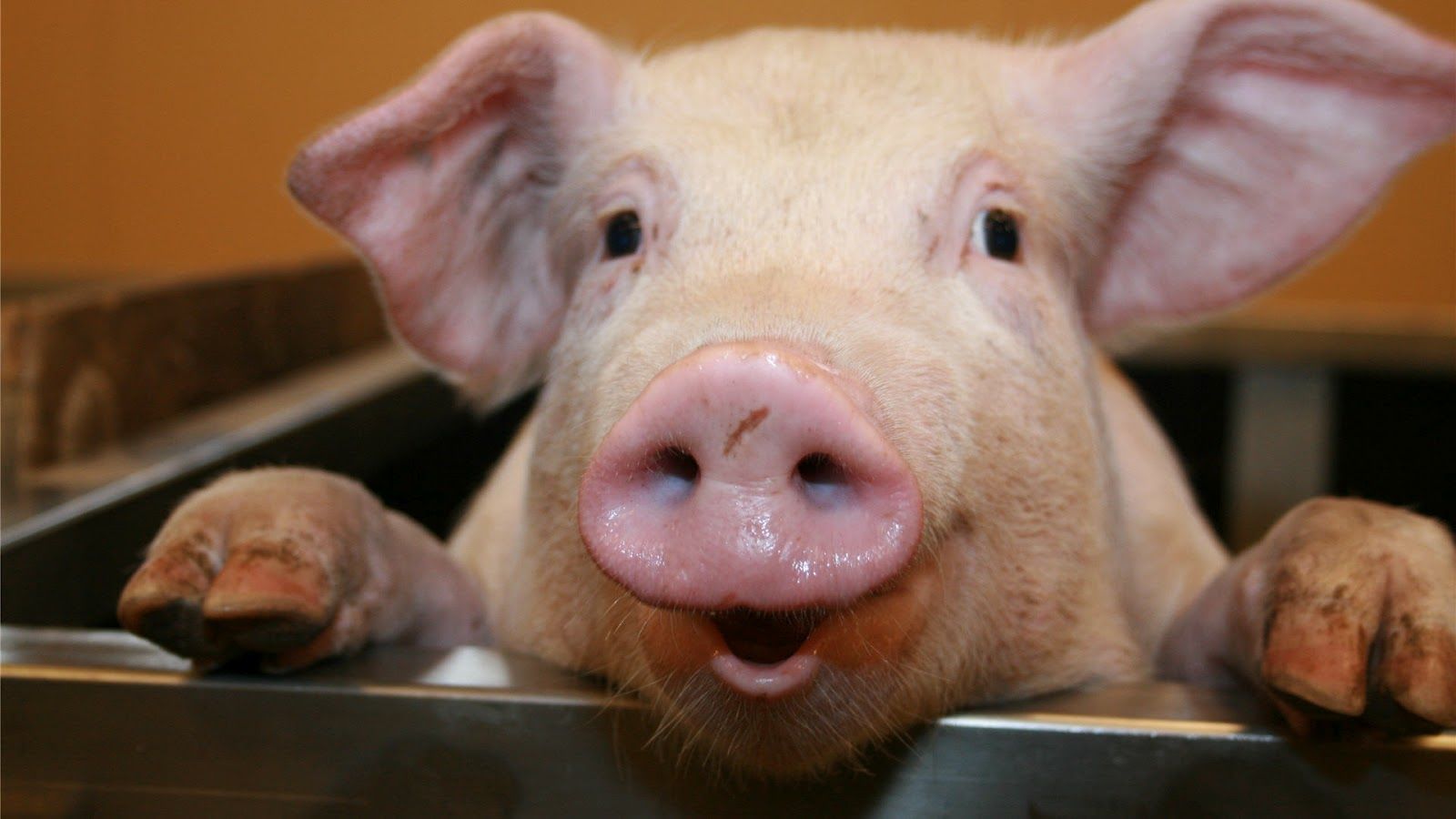
Thinking Pig

Pig

Stories of animal transformation abound in myths and folktales across the world. The theme is one that pervades Greek and Celtic mythologies, to take just two examples, and traditionally takes two forms: the ability of a god or sorcerer or shaman to wilfully transform him/herself into an animal; and the punitive transformation of people into animals for some misdeed or crime.

In a reading of Kafka’s Metamorphosis we might argue – as Nabokov does in his lecture notes on the book – that before the actual transformation, Gregor Samsa already lived like an insect, always scuttling about and kowtowing to greater pressures such as familial guilt and responsibility as well as a servile sense of duty to his job. Just as bugs mooch about, busying themselves yet at the same time achieving nothing, Gregor scuttles through his day, occasionally running across another insect and eating morsels as he finds them.

But what of the broader, mythical background to the notion of metamorphosis? In The Odyssey we encounter Proteus and Circe. Proteus changes forms several times throughout the poem: lion, serpent, leopard and pig, and ultimately is the character responsible for guiding Odysseus home. Circe’s ability to transform Odysseus’ crew into pigs might be regarded as the forerunner of countless tales of human-animal metamorphosis.

A powerful motif running though both Irish and Welsh mythic literature is that of shape-shifting  . . . In the Welsh narratives, shape-shifting is generally presented as punitive rather than voluntary: a few episodes revolve around the transformation of people into animals because of some misdemeanour. Thus in ‘Culhwch and Olwen’, Twrch Trwyth – an enchanted boar – is the object of one of Culhwch’s quests to win the hand of Olwen. When questioned as to the origin of his misfortune, Trwch Trwyth replied that God blighted him with boar-shape as punishment for his evil ways. In the Fourth Branch of the Mabinogi, Gwydion and his brother Gilfaethwy are turned into three successive pairs of beasts (deer, wolves and swine) because of their conspiracy to rape King Math’s virgin footholder Goewin (Math needs a footholder – obviously – because he will die if his feet are not held in the lap of a virgin).

The pig seems a popular incarnation for errant humans. In Christian symbology they represent venality and the sins of the flesh. But there is more. In Edmund Leach’s famous paper on animal categories and verbal abuse, we are reminded that what we eat is often analogous to whom we are normally expected to sleep with: for instance we don’t – in British culture – tend to eat dogs, and – analogously, according to Leach – we disapprove of incest. We do however eat domestic farm animals (pigs, sheep, chickens etc), which are bred for human consumption, a class of animal that Leach correlates to an intermediate rank of sociability: people whom one might meet socially, within a circle of acquaintances, and who serve as potential sexual partners. By extension, claims Leach, we don’t, as a rule, sleep with complete strangers (questionable, but let’s stick with the theory for a minute) – and accordingly we do not habitually eat exotic animals such as lions and crocodiles and elephants and emus (availability is an issue there, which kind of upsets the theory, but let’s not be pernickety). Leach’s thesis could be summarised in less scholarly terms as the edibility : fuckability theory.

Having just read Marie Darriussecq’s Pig Tales, the English translation of a book originally published in French in 1996 as Truismes, I will concede that pigs are not regarded favourably. The protagonist of this excellent short novel has the misfortune to find herself metamorphosing into a sow and there is little she can do about it. She puts on weight in all the wrong places, her skin turns tough and bristles of hair sprout abundantly. She starts eating flowers and develops a love of raw potatoes. She grows a third nipple, then a full set of six teats. She grunts and squeals uncontrollably and eventually finds it more comfortable to go about on all fours. Darriuessecq’s book is hilarious and filthy and thought-provoking, tackling big themes such as consciousness, gender roles and the objectification of the female body, but it would be a shame to encumber it with too much interpretation. Sometimes a novel can be read like a dream (or a nightmare) and just taken for what it is: a woman morphing into a pig (just as her lover morphs into a wolf). The concept itself is enough to travel with: just think pig. Relax. Lie back in your sty. Make a bacon sandwich. Read a book, why don’t you.


Juan Rulfo and the terror of the blank page

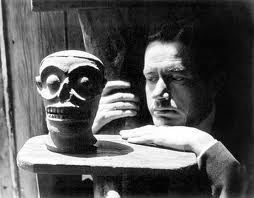
 Juan Rulfo and accomplice

Juan Rulfo and accomplice.

This morning, after a restless night, I spent a couple of hours picking up books from the shelves around my room, almost at random, dipping into them, dropping them on the floor, where I will find them later and replace them, equally randomly, between new and often unsuitable neighbours. Sometimes I stop and write down a line or two in a notebook, then move on. When I look at the notebook some days from now, I will be curious to know what the point of all this is.

Following a recent discussion about writers who stop writing, and of writers who kill their darlings (see last post, 1 Jan), I start thinking about the Mexican writer and photographer Juan Rulfo, and return, in my grazing, to Pedro Páramo, a brilliant and perplexing short novel, which, on its appearance in 1955 made such a profound impression on the Hispanic literary world, from Borges to Asturias to García Márquez. (Readers of Spanish can find the latter’s account of his discovery of Rulfo’s book here).

I read Pedro Páramo some years ago and return to it now with curiosity, because my memory of it, I discover, is as vague and dreamlike as the book itself.

According to Susan Sontag, in her introduction to the English translation, by Margaret Sayers Peden:

Rulfo has said that he carried Pedro Páramo inside him for many years before he knew how to write it. Rather, he was writing hundreds of pages and then discarding them. He once called the novel an exercise in elimination.

“The practice of writing the short story disciplined me,” he said, “and made me see the need to disappear and to leave my characters the freedom to talk at will, which provoked, it would seem, a lack of structure. Yes, there is a structure in Pedro Páramo, but it is a structure made of silences, of hanging threads, of cut scenes, where everything occurs in a simultaneous time which is a no-time.”

Rulfo’s life, as well as his book, has become legendary. He left behind only around 300 pages of writing; but those pages, according to García Márquez, are as important to us as the 300 or so extant pages of Sophocles – an extraordinary claim, you might think. Rulfo published his books in early middle age (there is a collection of short stories, translated as The Burning Plain, and another short novel, Ell gallo de oro), but for the next 30 years he did not publish anything, although he had taken up photography in the 1940s and continued taking (and occasionally publishing) pictures throughout his life. He was an inveterate traveller, and drinker. He destroyed the long awaited second novel, La Cordillera, a few years before his death at the age of 68 in 1986. Since his death his widow has overseen the publication of his notebooks, and fragments from the unfinished novel, although, as she confesses in her introduction to the notebooks, Rulfo would not have approved, and that she felt she might be doing “something awful” in publishing them.

Juan Rulfo explained his long literary silence in an interview as follows: “Writing causes me to undergo tremendous anxiety. The empty white page is a terrible thing.”