Richard Gwyn

Just see where it takes you
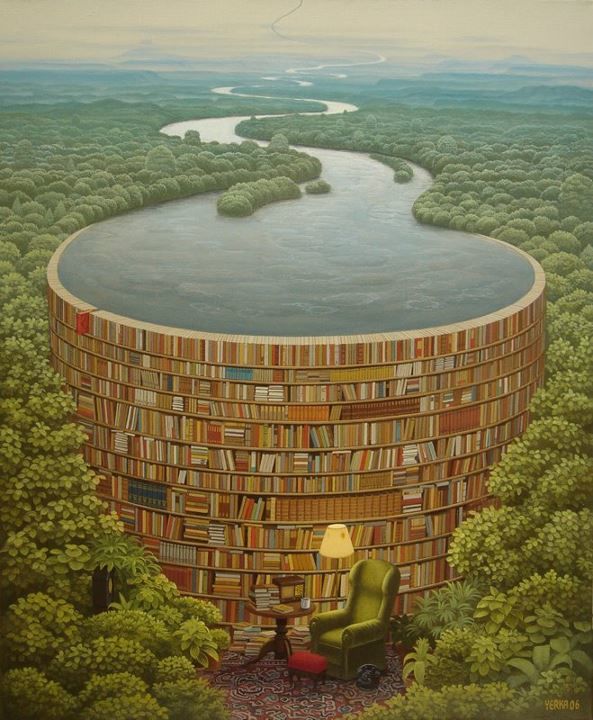
Bible Dam by Jacek Yerka


Here at the end of things, a big drop, endless forest. Things fall away.

Here at the end of things where the forest is the world. A book falls on my head and I start into wakefulness. Never could I understand the cruel logic of beginnings.

Whoever might have predicted that I would wake up here?

Many years ago, I read a book by Ursula Le Guin called The Word for World is Forest. I can’t remember anything about the book, other than liking its title. It is a science fiction story with ecological leanings, that much I remember, and was apparently the inspiration behind the film Avatar. I probably wouldn’t read such a book now, my tastes have changed. In those days I read whatever was around. There is, as far as I know, no library in that book. Here, though, the library is the world. There are probably no dogs, but I can’t be sure of that.


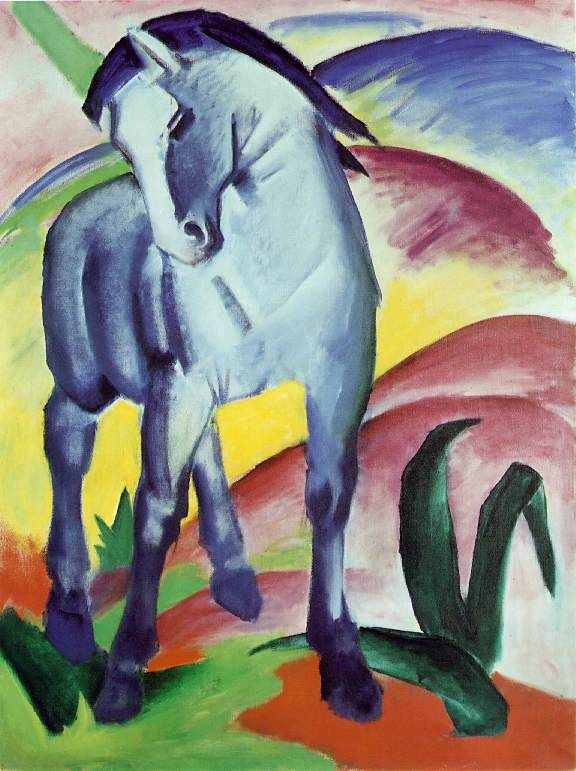
Here are two pictures of dogs by Franz Marc, the German expressionist painter.
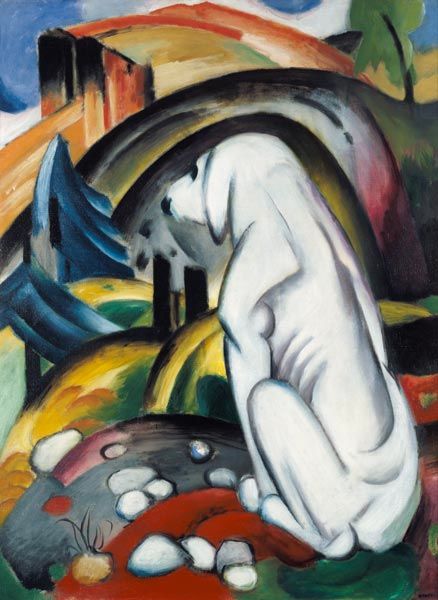
Hund Weiss by Franz Marc


We know that Franz Marc had a dog, but not whether this is it, in the painting titled White Dog, or another, Dog in the Snow, in which the animal appears to have a yellow or a tawny coat, perhaps in contrast to the snow in which it lies.
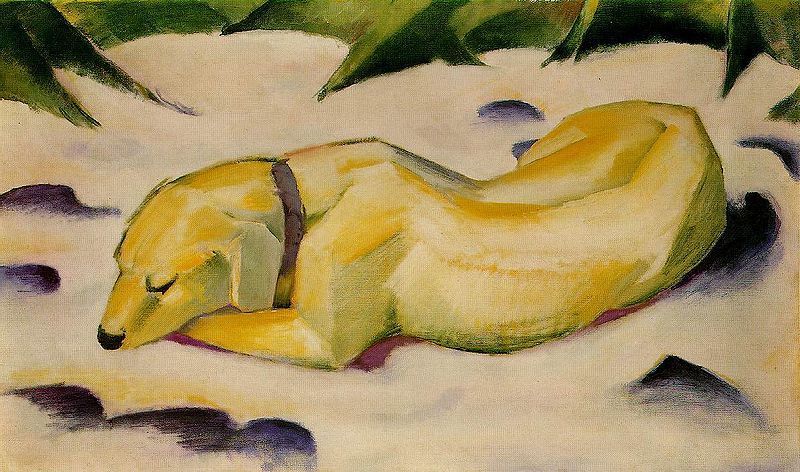
 

Dog lying in the snow


I suspect that the pictures are of one and the same dog, Marc’s companion, with whom he took long walks in the Bavarian hills.  So the story goes, at least.

I rely on a mix of biographical snippets, picked up in some art book, many years ago, remembering only the detail that Marc took long strides (he was a large man) and that his dog resembled his master in distinctive ways, the two of them sharing a strength of character and mildness of disposition as noted by the unknown, possibly fictitious memoirist.

And now I take this memory for granted, have even placed the reference to character and disposition in italics, because I have convinced myself.

The story cries out for authentication. The dog, in two portraits, offers something that approaches evidence.
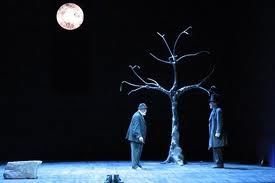
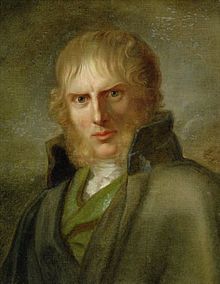


Waiting for Godot and Caspar David Friedrich


How wonderful the little connections that pile up in the day to day. Blanco has long had an interest in the German expressionist painters of the early twentieth century, and was interested to learn, while reading about them the other day that Caspar David Friedrich, the great Romantic painter of lonely figures cast against majestic landscapes, was resurrected by the expressionists after falling into obscurity during the latter part of his life (when he was deemed ‘half-mad’) and after his death in 1840. (Friedrich was also taken up by the Nazis, as embodying the concept of heroic individualism, but he can hardly be blamed for that, and would, in any case – had he lived in the 1930s and 40s –have been incarcerated by them as a madman.)


Caspar David Friedrich, who died “half mad” in 1840


Samuel Beckett had a great love for the visual arts, and – largely as a consequence of a love affair – during the 1920s and 1930s made several trips to Germany, followed by a longer trip in 1936-7, in which his diaries detail extensive visits to art galleries.

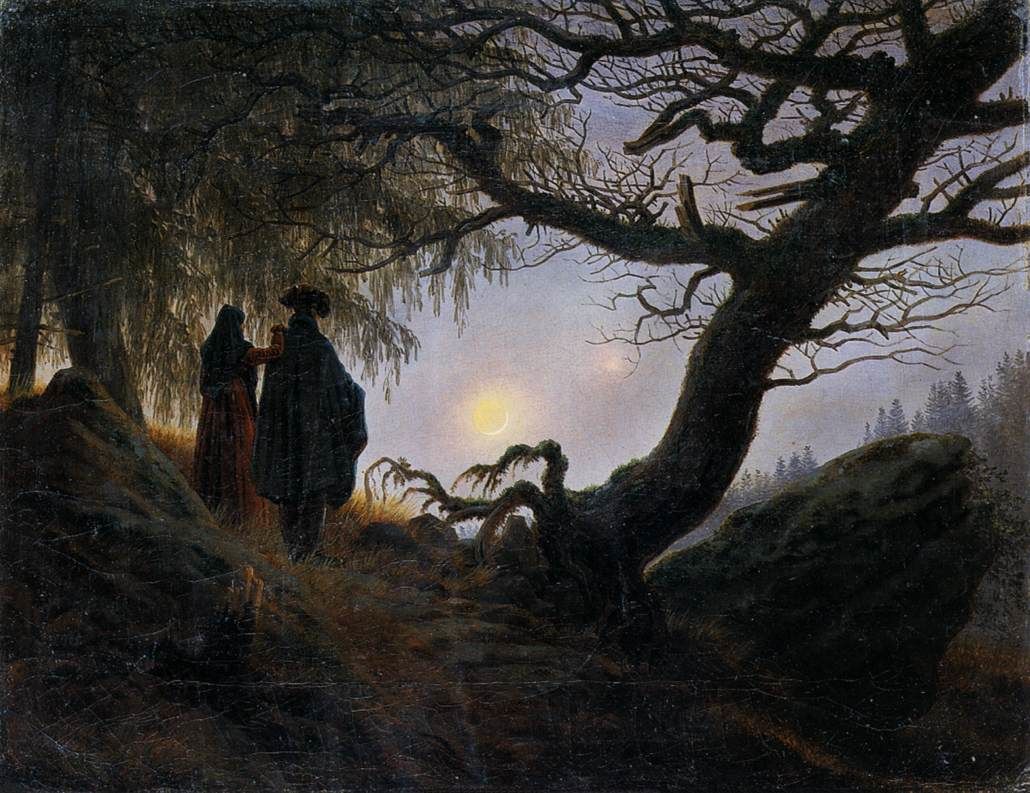
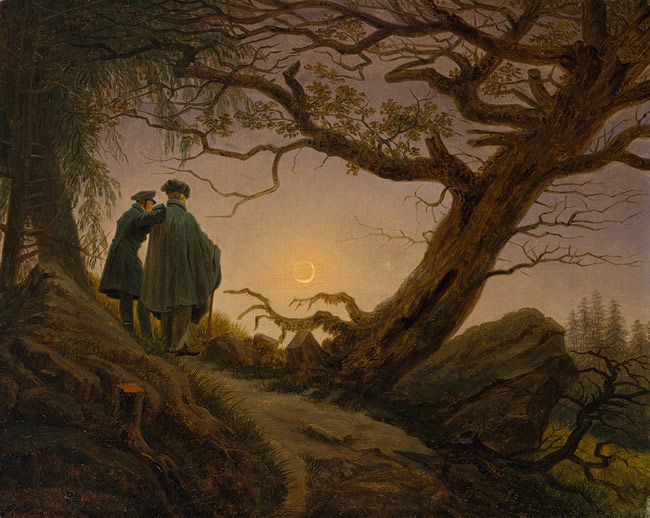
It is interesting therefore, to learn that the author of Waiting for Godot, considered by many to exemplify the most profoundly pessimistic vision of humanity in Western literature, and the absurd insignificance of mankind, should have identified a work by Caspar David Friedrich as the inspiration for his play. According to his biographer, James Knowlson (whose work is based on extensive interviews with Beckett himself) the writer told his friend, theatre critic Ruby Cohn, while looking at the 1824 painting Mann und Frau den Mond betrachend (Man and Woman observing the Moon) in Berlin: “this was the source of Waiting for Godot, you know.


However things are rarely as simple as they appear. Beckett, it seems, might have been confusing two paintings, according to Knowlson, because “at other times he drew attention of friends to Zwei Männer betrachten den Mond (Two men contemplating the Moon) from 1819.” As you can see, the two pictures are not wildly different (and there are various versions of both, it seems).


The point is, the image of the two tramps, Estragon and Valdimir gazing out over an alien landscape, makes a lot of sense in relation to these paintings.

But there is more.

Caspar David Friedrich is regarded as representing the apogee of the Romantic movement in the visual arts, setting down images of the Byronic hero, manfully facing down the forces of nature, the unknown, the abyss. Romanticism is precisely this: it arose at a period when the idea of God was being translated into the idea of nature. Poets set out on hikes into nature (Wordsworth and Coleridge tramping through Wales and the Lake District, Byron in the Alps writing Manfred . . . and with Shelley in Italy). Posh chaps didn’t walk in the countryside until then – no one did except the peasant farmer and the humble shepherd – and suddenly ‘Nature’ was opened up as this vast, wild, unexplored terrain (which in turn informs an understanding of the Romantic Imagination).

According to the art critic Robert Hughes, in an article on Friedrich,

‘If there is one word for the mood of Friedrich’s pictures it is “longing”: the desire, never satisfied, to escape from the secular conditions of life into union with a distant nature, to be absorbed in it, to become one with the Great Other, whether that other is a mountain crag, an ancient but enduring tree, the calm of a horizontal sea, or the stillness of a cloud.’

How does this lead back to Beckett? Is Waiting for Godot, in essence, a play about longing? Longing for union with the godhead, with a distant nature, absorption with the Great Other, as conceived by a Romantic painter such as Friedrich?

Blanco can’t say, in fact is rather bowled over by all this and in need of a lie down. Any comments welcome.


According to . . .


According to

Tiffany Atkinson.


Once, about the time you start to notice trees

and he found out his wife was not his wife

in any sense but name, Elijah took the dog,

two apples from the sideboard, and went out.


Not long afterwards, he came upon an old friend

bent beneath the bonnet of his car, cursing

every sprocket of combustion engines. What

do you suppose the point is? asked Elijah.


And the friend replied, I have to be there.

Throw your spanners down and come with me,

Elijah said. And so the friend did. And his name

was Tomos, after whom he never thought to ask.


And Elijah was amazed. Next there was a daughter

which, close up, they didn’t know. But Tomos said

she looked a lot like his girl would’ve had she lived.

He split one apple threeways, and the girl laughed.


And her laugh was as a pocketful of loose change,

as the moment when you down your pint and dance.

Her name was Manon. She was heading to the clinic.

Then she got her mobile phone out. Mam? she said.


So from there they went north, telling stories. Till

they came upon a farmer, bitter drunk, for all his fields

had failed. They listened, picking fruit seeds from their teeth,

and where those fell sprang cider-presses, booming.


Soon a crowd came out to see what had been happening.

I killed a man, said one man, looking thin. Shit happens,

said Elijah. Sell your house, give all the money to his folks

and walk with us. The man did. He gave nobody his name.


Meanwhile the crowds grew till there wasn’t room

to slide a slice of toast between them. Tomos asked,

what’s this about then? And Elijah said, just as you

left your hurtful car to walk with me, so this lot feel.


Look at the rhododendrons! They don’t give a toss

about the funding cuts, the polar bears. They do

their own thing. Throw your keys into that hedge,

ignore the cameras. Be your own true kicking self.


So Tomos did. He was a simple man, and able

to draw truth like tears from anyone. Elijah said,

you know the way that pressure-regulating valves

secure the rear-brake lines for heavy braking?


Tomos nodded. Well, Elijah said, you see, that’s you.

At this the grief beat out like crows, and Tomos felt

a hatching, in the space, of light. Elijah felt it too. And

where they left a third, unheard-of apple, grew a hamlet,


grew a village, grew a town, where people started over hope

fuller than all the Born Again Virgins of America.

These are the words of Manon, set down with the baby

on her knee. Elijah Tomos, he’ll be. All this happened.


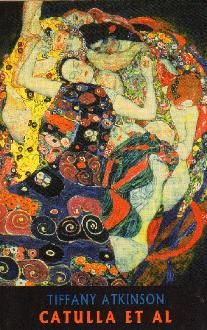
From Catulla, Bloodaxe, 2011. For a review of this book, click here.


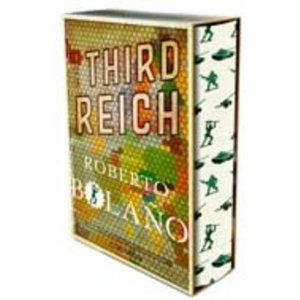
The Third Reich, by Roberto Bolaño


In La Universidad Desconocida, the collected poems that Roberto Bolaño’s widow, Carolina López, brought together after her husband’s death in 2003, she includes in the foreword an unpublished piece called ‘My Literary Career’ that Bolaño had scribbled in anguish after receiving serial rejections from all the publishers of Spain, which he lists fastidiously, and then: “under the bridge, while it rains, a golden opportunity / to see myself for who I am: / like a snake at the North Pole, but writing. / Writing poetry in the land of imbeciles.” Clearly Bolaño was under no illusions as to the readiness of the literary world to embrace his work. The poem is dated 1990, a year after The Third Reich was written, in longhand. We do not know what plans Bolaño might have had for the manuscript, which by the time of his death he had begun to type out and tinker with: it may well have come into print in a completely different form. Or not at all.

Udo, a German board-games champion, takes his girlfriend, Ingeborg, on holiday to the same hotel he last visited with his parents ten years earlier, as a fifteen-year old. They meet another German couple, Hanna and Charly, and with the help of a couple of local no-good-boyos called the Lamb and the Wolf, they do the nightclubs and bars of the resort by night and lie on the beach by day. Charly turns out to be a bit of a liability, and following a mysterious incident in which he appears to have assaulted his girlfriend, he takes his surfboard out to sea and does not return. Hanna and Ingeborg go back to Germany but Ido, a loner and a nerd, stays on in the resort, ostensibly to wait for Charly’s body to be washed up, but actually to carry out a forlorn pursuit of the hotel owner, Frau Else. At this point the narrative wavers, becoming repetitive and somewhat listless, and although there are hints towards a darker centre, there is nothing particularly threatening about the local lowlife, not even El Quemado, the disfigured South American who rents out pedal boats, and whom Ido adopts as his opponent in the marathon board game that gives the book its title. There are vague allusions towards a deeper connection with Nazi themes – notably with Frau Else’s husband, a tall, moribund character who seems oddly prescient of the writer Archimboldi in 2666 – but they only lead to dead ends.

As it is, The Third Reich, despite the promise of the opening half, is a strange and ultimately unsatisfying book. It feels incomplete, but that is not the problem: what this novel lacks is that paradoxical sense of intentional incompleteness, the unwillingness or refusal to tie up loose ends (perhaps because they retain more intensity for being left hanging) that is a marker of Bolaño’s mature style.

Ignore the cover blurb’s suggestion that this is the perfect place to begin reading Bolaño: it is not, and anyone unfamiliar with his work would be much better off reading By Night in Chile or The Skating Rink, another novel modelled on the seaside town of Blanes, where Bolaño settled in the 1980s. If it were not for the fact that it is an early work by a highly marketable author The Third Reich would probably not have been published. But for Bolaño’s many fans it displays, in emergent form, some of the themes and tropes that would be more abundantly explored in The Savage Detectives or 2666. Like those two great works, it is beautifully translated by Natasha Wimmer.


This review first appeared in The Independent, on 1 March 2012.


The ‘very special place of love’: Roberto Bolaño, V.S. Naipaul, and sodomy.

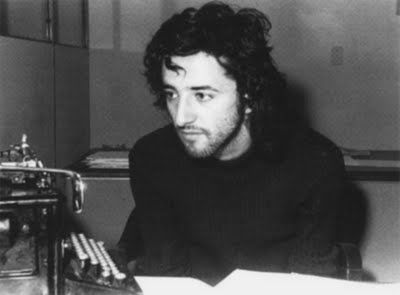
The young Roberto Bolaño


A new addition to the mass of Bolaño miscellanea being published in English appears on the New York Review of Books blog. In an entertaining essay, Scholars of Sodom, Bolaño takes a delightful swipe at V.S. Naipaul’s absurd and arrogant attack on Argentina, in which the choleric Trinidadian decided that Argentina’s woes, political and cultural, stem from a typically macho predilection for buggery.

Luckily, the NYRB blog allows the reader to link to Naipaul’s original essayArgentina: The Brothels Behind the Graveyard, as well as two others; The Corpse at the Iron Gate and Comprehending Borges. Best to focus on the first of these, as this is where he first lays down his extraordinary theory. Naipaul starts from the premise that Argentina is a land founded on the principle of plunder – of the Indians, of the land itself – a theme which he establishes early on and which he develops, after a tortuous route, towards a startling conclusion. Considering the macho attitudes that dominate Argentinian society at the time of writing (the essay was published in 1974), and the prevalence of bordellos, Naipaul warns that “Every schoolgirl knows the brothels; from an early age she understands that she might have to go there one day to find love, among the colored lights and mirrors.” And then, his coup de grace:

The act of straight sex, easily bought, is of no great moment to the macho. His conquest of a woman is complete only when he has buggered her. This is what the woman has it in her power to deny; this is what the brothel game is about, the passionless Latin adventure that begins with talk of amor. La tuve en el culo, I’ve had her in the arse: this is how the macho reports victory to his circle, or dismisses a desertion. Contemporary sexologists give a general dispensation to buggery. But the buggering of women is of special significance in Argentina and other Latin American countries. The Church considers it a heavy sin, and prostitutes hold it in horror. By imposing on her what prostitutes reject, and what he knows to be a kind of sexual black mass, the Argentine macho, in the main of Spanish or Italian peasant ancestry, consciously dishonors his victim. So diminished men, turning to machismo, diminish themselves further, replacing even sex by a parody.

Armed with this knowledge, Naipaul feels he has finally understood the Argentinians, with “their violence, their peasant cruelty, their belief in magic, and their fascination with death, celebrated every day in the newspapers with pictures of murdered people, often guerrilla victims, lying in their coffins.”

No holds barred here then. As Bolaño put it, in his imaginative response to the article, “Naipaul’s vision of Argentina could hardly have been less flattering. As the days went by, he came to find not only the city [Buenos Aires] but the country as a whole insufferably aggravating. His uneasy feeling about the place seemed to be intensified by every visit, every new acquaintance he made.”


A recent photo of VS Naipaul


Bolaño takes up the thread of Naipaul’s argument, and extemporises on the theme:

I remember, he writes, that when I read the paragraph in which Naipaul explains what he takes to be the origin of the Argentinean habit of sodomy, I was somewhat taken aback. As well as being logically flawed, the explanation has no basis in historical or social facts. What did Naipaul know about the sexual customs of Spanish and Italian rural laborers from 1850 to 1925? Maybe, while touring the bars on Corrientes late one night, he heard a sportswriter recounting the sexual exploits of his grandfather or great-grandfather, who, when night fell over Sicily or Asturias, used to go fuck the sheep. Maybe.  In my story, Naipaul closes his eyes and imagines a Mediterranean shepherd boy fucking a sheep or a goat. Then the shepherd boy caresses the goat and falls asleep. The shepherd boy dreams in the moonlight: he sees himself many years later, many pounds heavier, many inches taller, in possession of a large mustache, married, with numerous children, the boys working on the farm, tending the flock that has multiplied (or dwindled), the girls busy in the house or the garden, subjected to his molestations or to those of their brothers, and finally his wife, queen and slave, sodomized nightly, taken up the ass—a picturesque vignette that owes more to the erotico-bucolic desires of a nineteenth-century French pornographer than to harsh reality, which has the face of a castrated dog. I’m not saying that the good peasant couples of Sicily and Valencia never practiced sodomy, but surely not with the regularity of a custom destined to flourish beyond the seas.

The danger in theorising outward from a single sexual act (one which seems to fill Naipaul with unspeakable horror) is that it creates a rather lopsided (and ultimately hilarious) simplification of Argentinian culture. It is a long time since I read Naipaul, and reading this quite demented essay, and Bolaño’s intelligent and witty response to it, reminded me why.

How interesting then, to read Ian Buruma’s review of Naipaul’s authorized  biography (by Patrick French), also available on the NYRB website, and to discover that – when not beating her up – sodomising his Anglo-Argentinian mistress was Naipaul’s preferred occupation of an evening, while the cockatoos sang and the sun went down. Here is the passage summarizing their longstanding relationship, and the very special role of sodomy within it:

In Buenos Aires, at the apartment of Borges’s translator, Naipaul met Margaret Murray, a vivacious Anglo-Argentinian:

I wished to possess her as soon as I saw her…. I loved her eyes. I loved her mouth. I loved everything about her and I have never stopped loving her, actually. What a panic it was for me to win her because I had no seducing talent at all. And somehow the need was so great that I did do it.

Margaret left her husband and children, and for the next twenty years would be at the beck and call of her master, who was finally able to do all the things that had horrified and fascinated him before . . .The more Naipaul abused Margaret, the more she came back for more. She wrote him letters, paraphrased by French, about worshiping at the shrine of the master’s penis, about “Vido” as a horrible black man with hideous powers over her. Her letters were often left unopened, and certainly unanswered, adding to her sense of submission. According to Naipaul, he beat her so severely on one occasion that his hand hurt, and her face was so badly disfigured that she couldn’t appear in public (the hurt hand seems to have been of greater concern). But Naipaul said, “She didn’t mind at all. She thought of it in terms of my passion for her.” And then there was the mutual passion for anal sex, or as Margaret put it (paraphrased by French), “visiting the very special place of love.”

Funny the way things come round.


Beckett, Ritsos and stones


I am reading James Knowlson’s Damned to Fame: A Life of Samuel Beckett, which seems to be everything a literary biography should aspire to, and discover two passages that demand to be shared; the first of these is young Sam’s love of stones, which he would collect from the beach and bring home “in order to protect them from the wearing away of the waves or the vagaries of the weather. He would lay them gently into the branches of trees in the garden to keep them safe from harm. Later in life he came to rationalise this concern as the manifestation of an early fascination with the mineral, with things dying and decaying, with petrification. He linked this interest with Sigmund Freud’s view that human beings have a prebirth nostalgia to return to the mineral state.”

But never find Papa Sigmund, I am immediately reminded of the Greek poet Yannis Ritsos’ fascination with stones. Ritsos, who spent many years as a political prisoner, collected and painted stones throughout his life. According to a recent exhibition at the Museum of Cycladic Art:

The poet’s pictorial approach is evident in his solitary preoccupation with the natural contours of objects, such as roots, bones, and above all stones and pebbles, which are found in abundance in the arid islands of Greece, perhaps as a result of the universal “urge of expression against decay and loneliness”. Stones and pebbles: these were the materials that Yannis Ritsos used, the “plentiful raw material on which one could mark or underline by felt tip pen or Indian ink what the stone itself dictated”.

On the stones of Yannis Ritsos are depicted solitary figures or large groups of people, frontal, in conversation, or sensual couples – archaic figures enduring in time. It is as if these figures spring out of his poems in order to meet characters from myth . . . characters incessantly fusing with later ones, never ceasing to exist in collective memory.


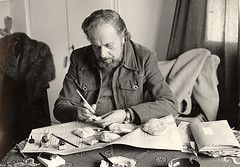
Yannis Ritsos painting his stones


Back with Beckett – whose grandparents, I learn, were named Beckett and Robinson, as were mine on my mother’s side – I come across an extract from a letter by the publisher T.M Ragg at Routledge, which strikes me as an example of something you would never hear from a major publisher’s office nowadays.

Beckett’s novel Murphy was rejected by countless publishers on both sides of the Atlantic, Beckett “keeping a list, as reports came in, in his ‘Whoroscope’  notebook of the publishers whom he knew had rejected it. He almost lost count.” Eventually the book was recommended to Routledge by the painter-writer Jack B. Yeats, and one of the editors, Mr Ragg, read it in a single day while ill with gastric flu. All the miseries of his complaint were forgotten in his enthusiasm, he wrote, in his letter to Yeats, and he added:

I want to publish it, and I am seeing Reavey (Beckett’s agent) tomorrow to talk the matter over with him. I am afraid there is no doubt it is far too good to be a big popular or commercial success. On the other hand it, like your own book, will bring great joy to the few. Thank you very much for introducing it to me.

When I read that I had a brief fantasy of ever receiving such a letter from a major publisher in this day and age. Absolutely unthinkable. Imagine Random House or HarperCollins employing the loony criterion of ‘bringing great joy to the few’.

So thank the stars there are still small publishers like CB Editions, who produce lovely books for discerning readers, on precisely the criterion employed by Mr Ragg when he published Beckett’s Murphy. Their list may be small, but the range and quality of the books they produce is never less than excellent.


Horses


Blanco is somewhat anaemic these days, as a consequence of drug therapy whose other side effects are listed as lethargy, fatigue, depression, anxiety, and . . . rage. That’s right, Le rage. So, to save the venting of my swollen spleen, allow me to regale you instead with a quite uncharacteristically mellow poem from the collection I am currently translating by Joaquín O. Giannuzzi, an Argentinian poet of wonderfully dark and understated talents, which will be published in the autumn by CB Editions.


HORSES  


Horses put up with

the weight of history

until the invention of

the internal combustion engine.

Now, whenever they are born

they stumble and tarry before the light

believing they have burst in

on the wrong world.


The Question

THE QUESTION

 by Tom Pow

How do people live?

He was standing two in front of me

in W. H. Smith’s and what

he wanted to know was,

How do people live? He asked

the question as if someone

had given it to him as a gift –

his eyes shone with the wonder of it.

How do people live? He looked around

at us all, knowing the question to be

unanswerable, knowing that no one

had an option but to shake their heads

or to look down at their hands,

holding Heat magazine

or the day’s trivia or greeting cards

which laid claim to the most minor

matters concerning how people live.

Yet he must keep on asking the question –

though a couple of girls giggle,

a boy exhales testily

and a child begins to cry –

for it was never the same question

twice. Each time there was

a subtle difference to it.

How do people live? implied

something substantially different

to How do people live? It was

a question of weighting: one

suggested method, the other

a question of will. Clearly,

to him, it was all a mystery

and a miracle. And who was not

in the queue that morning

who did not feel something stir,

as that man, with the worn trench-coat

and the unkempt grey hair, asked

and asked again, How do people live?

How do people live nowadays?

This new inflection brought the question

close. How could it not, when each day

we saw the world burn, flags on fire,

hatred woven through the air? This question

had a smell. It was acrid –

gunpowder, dying seas, a last

sour gasp. The sound

was of languages falling silent;

children crying, a mother’s despair.

Then, like a ringmaster, he cracked

the whip of that first question again,

as if he had cleared the decks

of the clogging world and we heard

with a new clarity: How do people live?

The question deepened now.

He was rowing us out to the centre

of a loch, where the waters were so dark

as to be impenetrable. But it was the only question

worth asking, though asking it made life

seem chancy. How do people live?

Where was the next breath

coming from? We were climbers

on a cliff of blue ice. We’d slip.

Nothing surer. The space was terrifying.

We watched a lottery ticket float into it,

as worthless as everything, now

that all we wanted was to hold an answer

to us – it was all that could save us.

How do people live? There was no

David Attenborough to tell us

how to make huts, to invent fire,

to carve a hole in the ice. We were far out.

Unreachable. How do people live? What more

could he have done but ask the question –

though asking it gave no relief?

He nodded slightly in his shabby coat, then left us,

to invent fire, to carve a hole for himself in the ice.

From The Poem Goes To Prison – Poems chosen by readers at HMP Barlinnie, edited by Kate Hendry (Scottish Poetry Library 2010).

Fiction Fiesta


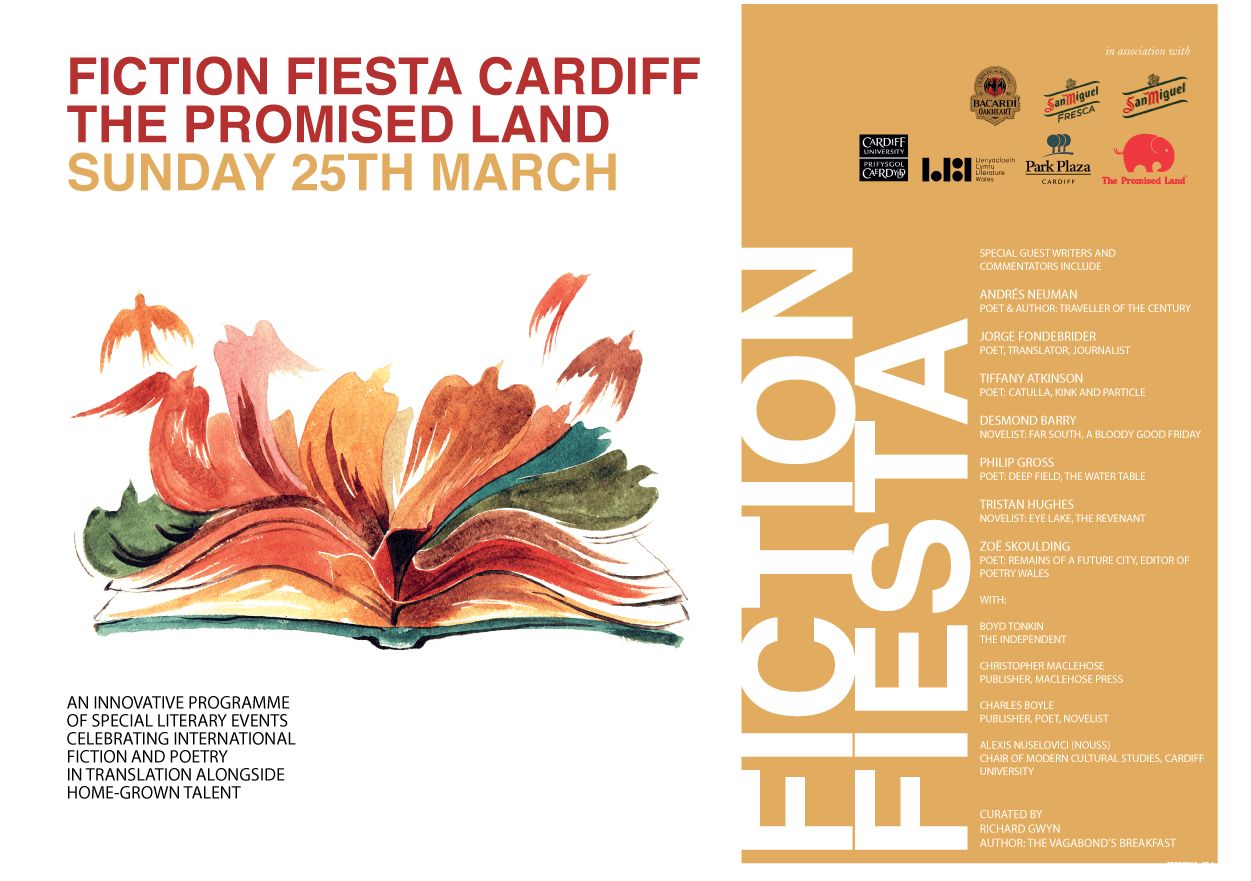
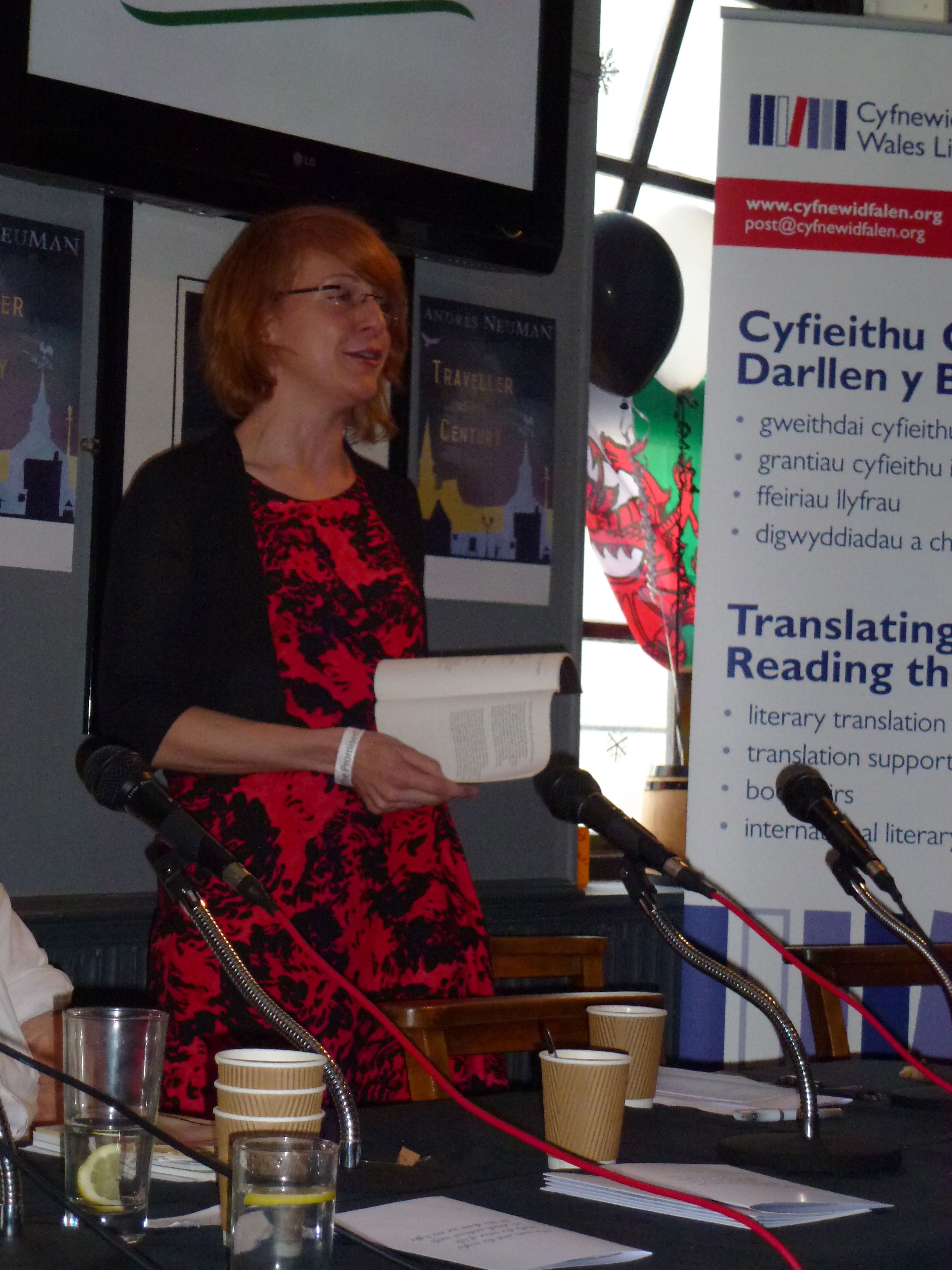
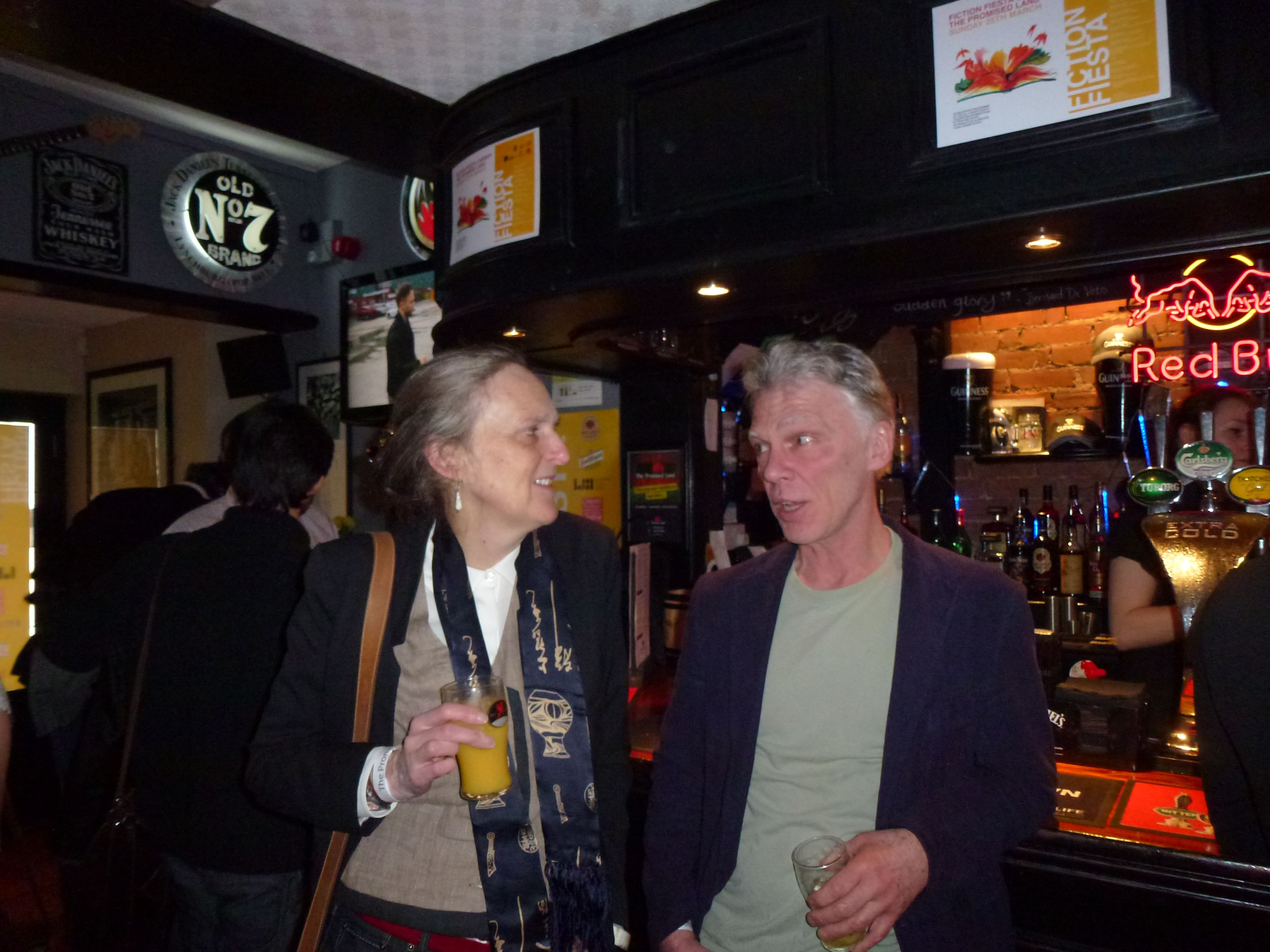
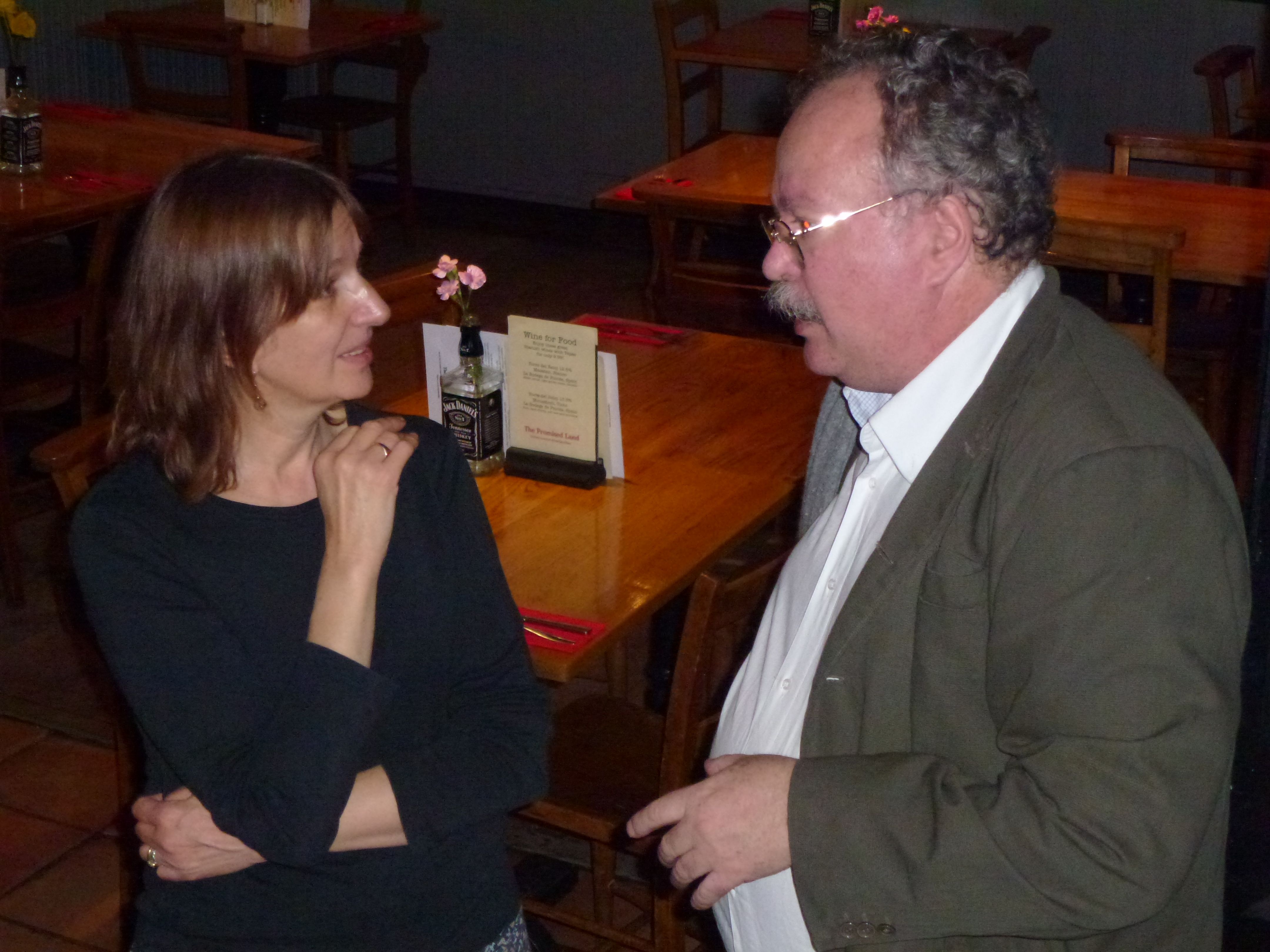
We met up in Nick’s bar, The Promised Land, to discuss literature in translation with some friends, editors, writers and such luminaries from the field of literary translation as Christopher MacLehose and Boyd Tonkin, chaired by the erudite and perennially entertaining Charles Boyle. By the end of the day I had the impression that we had achieved what we set out to do: we had talked about interesting stuff in good company; we had provided a forum for our guests to listen to and discuss literature in translation, and we had introduced to a Cardiff audience – for the first time but definitely not for the last – the prodigiously talented Argentinian novelist and poet, Andrés Neuman. More than that, most of us seemed to have enjoyed ourselves.

The day began with a reading and discussion with Andrés, who led us on a merry dance through Russian Jewish migration of the early 20th century, German Romanticism, the music of Franz Schubert, European identity in the 21st Century, an hilarious impersonation of Jorge Luis Borges, and an account of a chess game with Roberto Bolaño, in which the Chilean author plied his young admirer with whisky while playing Mexican heavy metal at full volume as a way of gaining tactical advantage.

There followed a delightful reading by the poets Jorge Fondebrider and Tiffany Atkinson, their lines bouncing off the walls with a playful (and sometimes darker) exchange of ironies.

The Fiesta was made by its participants, especially our Argentinian guests, and the fine writers who made the afternoon come alive: Des Barry, Zoe Skoulding, Tristan Hughes and the superb Philip Gross.

In the end it all went swimmingly, although  afterwards I wondered – rather like a medieval adventurer returning from the Forest of Enchantments – whether it had all been a mysterious dream. But that was probably just the lack of sleep.


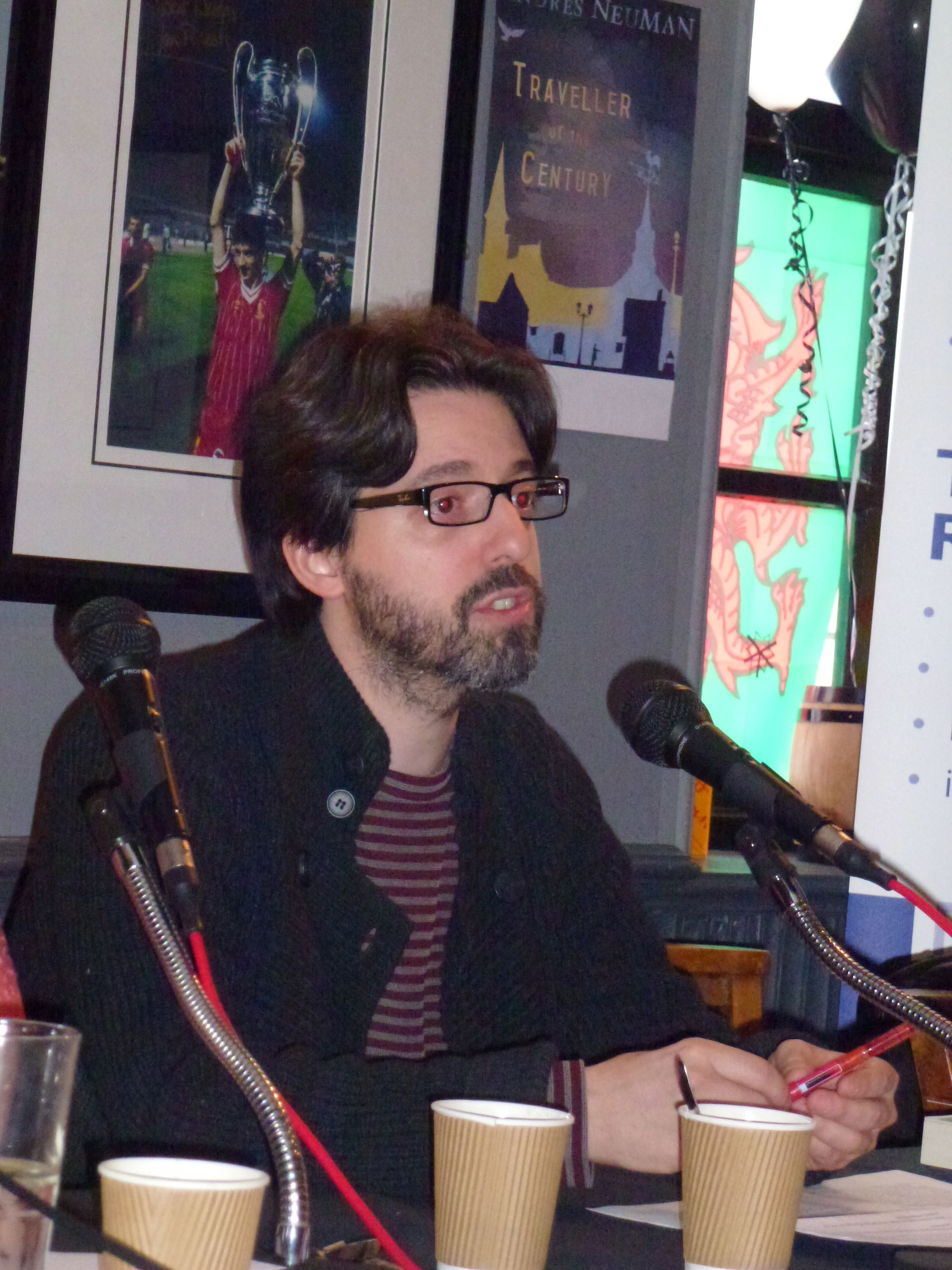
Andrés Neuman


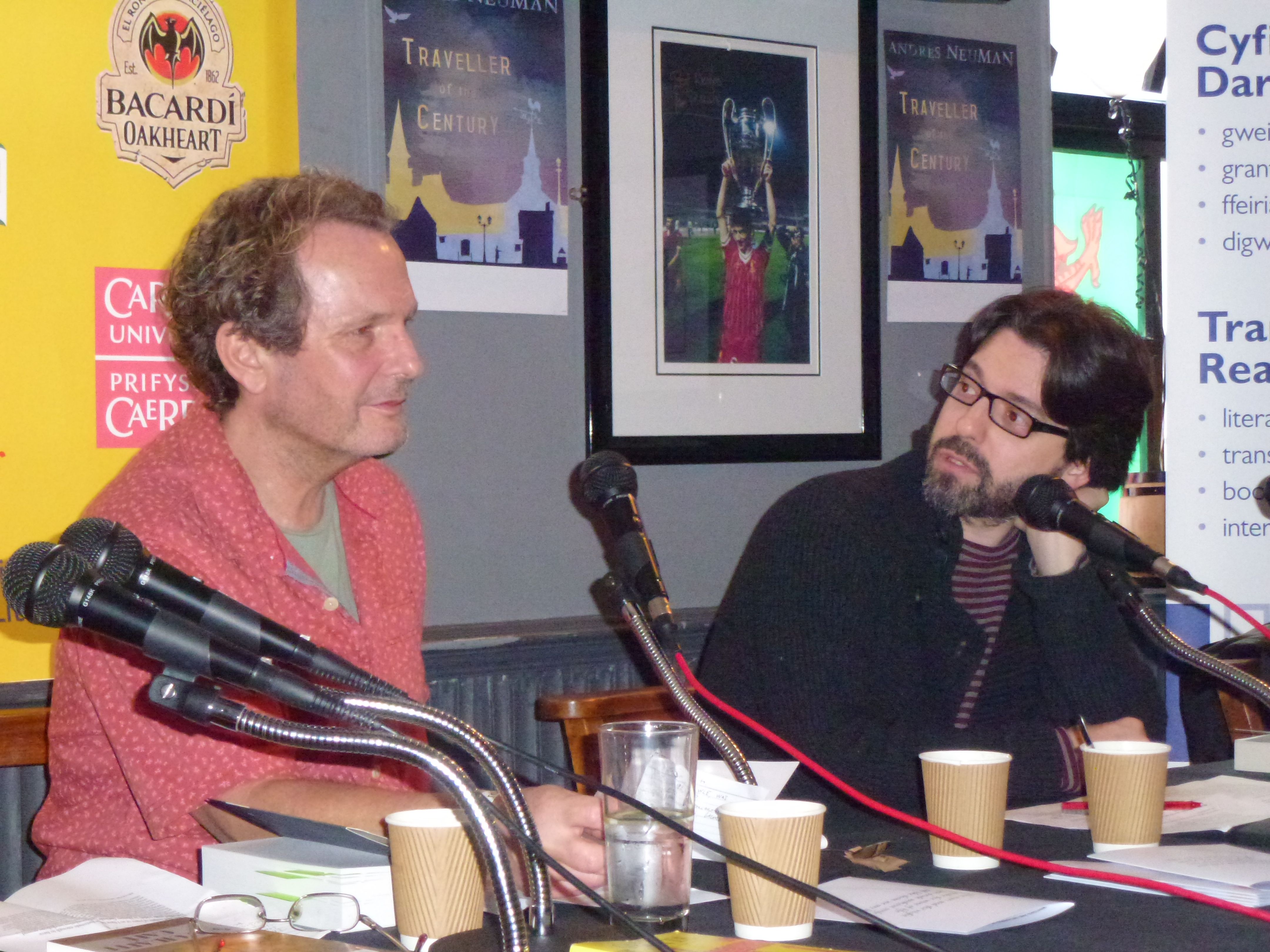
. . . in conversation with Blanco


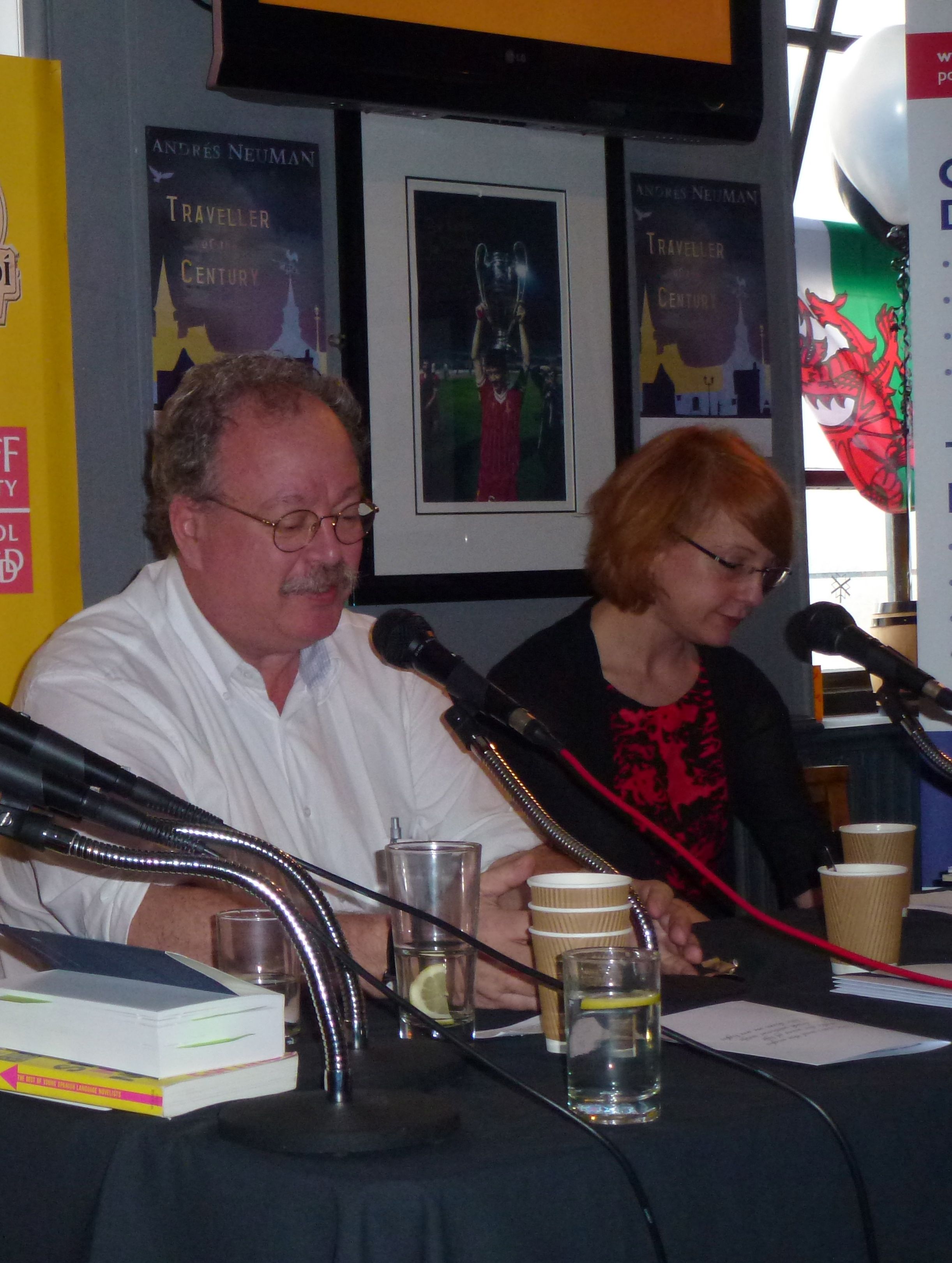
Jorge Fondebrider and Tiffany Atkinson


Tiffany Atkinson


Tess and Charles take a break


Jorge explains a crucial point


Los tres amigos


The whole sick crew? - Barry, Boyle, Neuman, Fondebrider, Blanco, Mulcahy, Hughes.


How do people live?

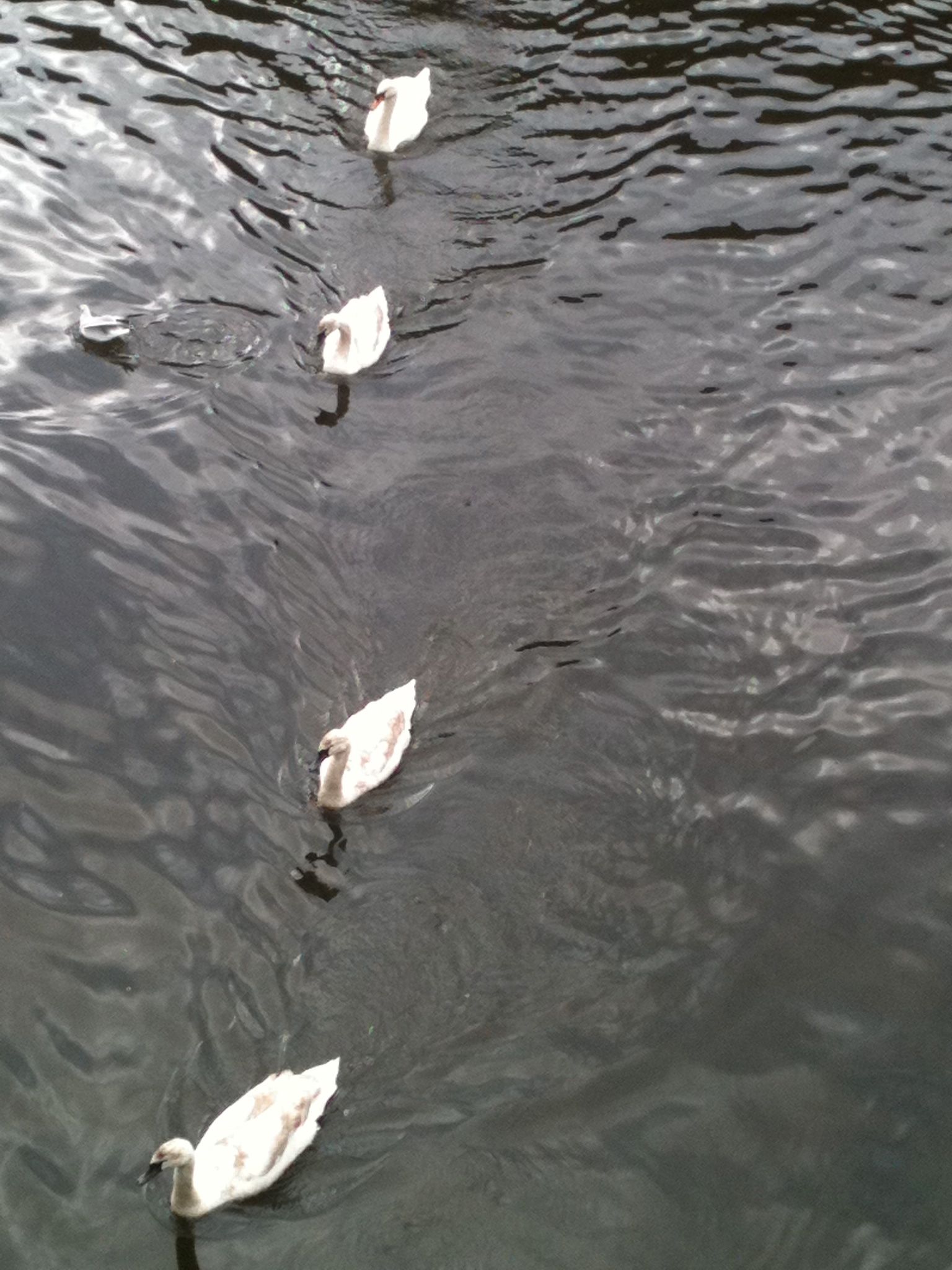
Swans on the Taff, Cardiff.


How do we construct a life as we go along? The things we do and say, the actions that make us who we are? Sometimes all of this is bewildering. I look for clues everywhere, including under the bed. I find a few empty boxes, some crayons, a broken hunter watch belonging to Taid (my grandfather) which saw out four years in the trenches in World War One but was not able to resist my two-year old daughter swinging a toy hammer. Bits and pieces.

Tom Pow, the Scottish poet, told me the other week that he had been working in a prison and a disturbed long-term inmate had started declaiming, to the world at large, How do people live? – a question perhaps more appropriate, and less taken-for-granted than might at first appear.

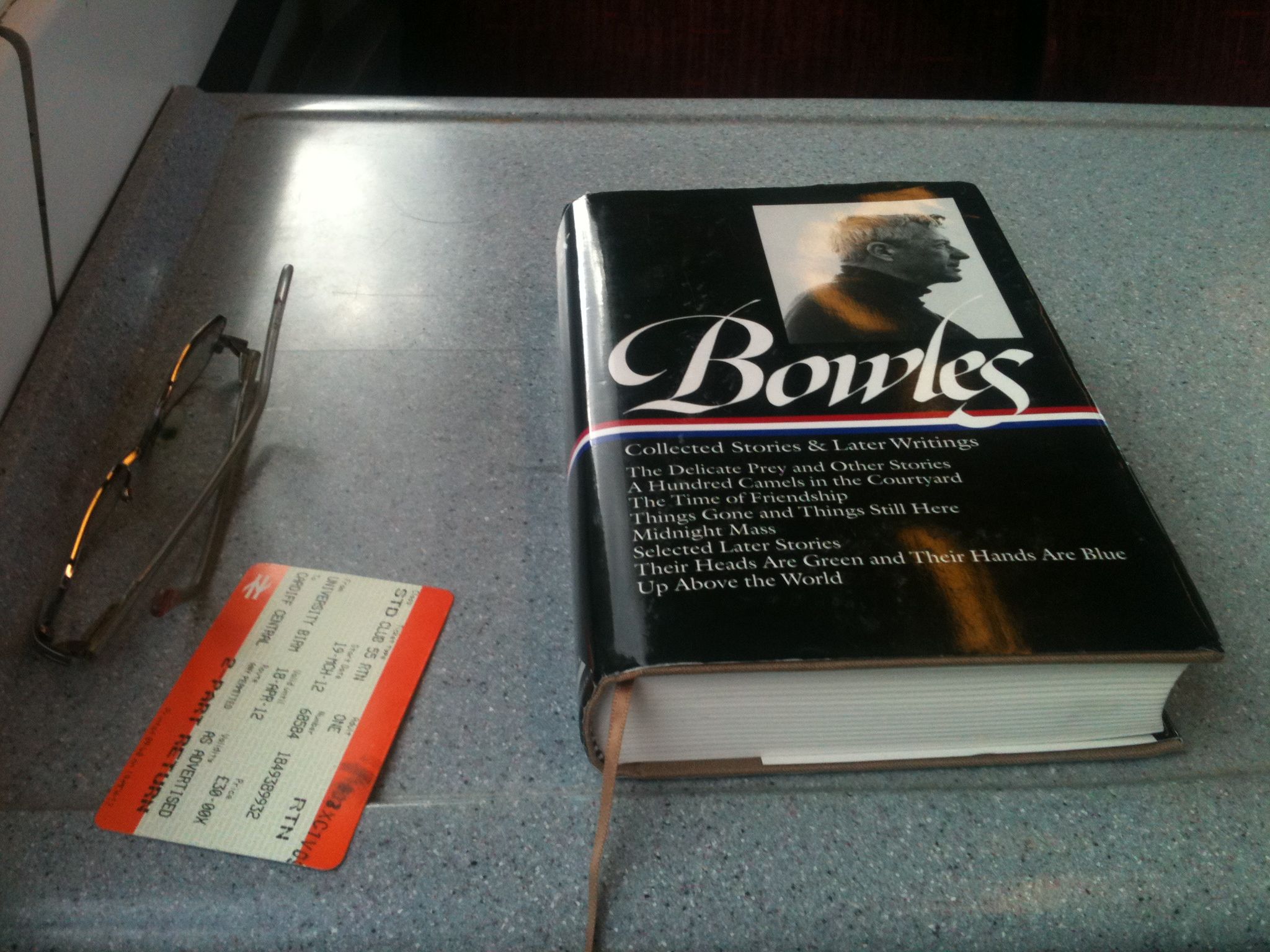
Part of the aim of this blog is to reflect on the mutable universe, and the roles that we play within it. One of the delights of having a camera app on your mobile phone is that you can snap things at random, which taken together in the course of a day can cast a peculiar light on that very general plea, made by the prisoner of how do people live, at a very unspectacular level.  It is something I will never grasp entirely, but which can be illuminated by these fragmented moments, taken at intervals with no plan or purpose, amounting to a broken narrative of what passes by. With no plan or purpose, but always stalked by memory.


Warning sign, near Cwrt-y-gollen army camp.


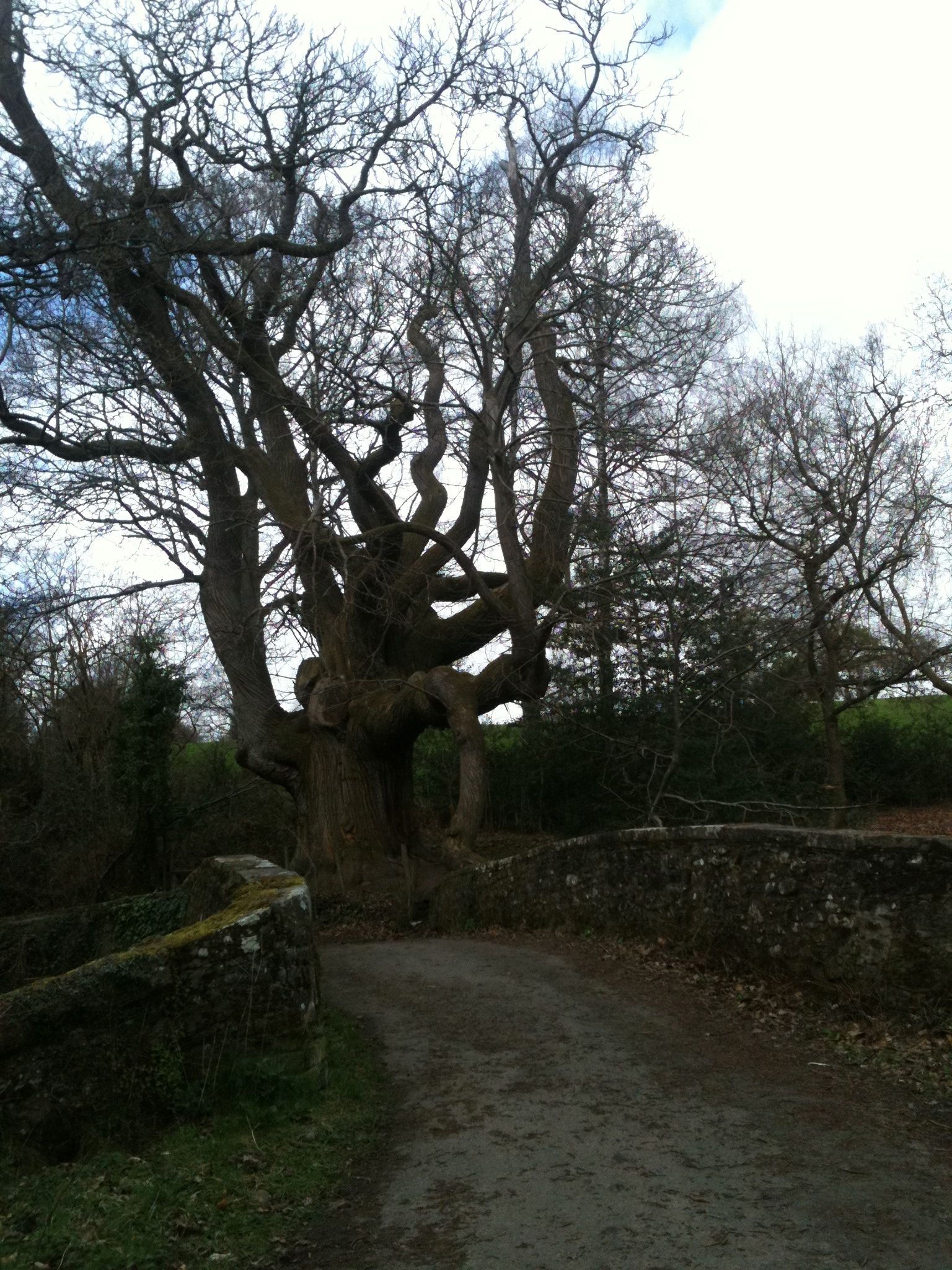
Ancient tree at the bottom of Gypsy Lane, Llangenny. When I was a kid it blew my mind to learn that this tree was here when the Normans arrived.


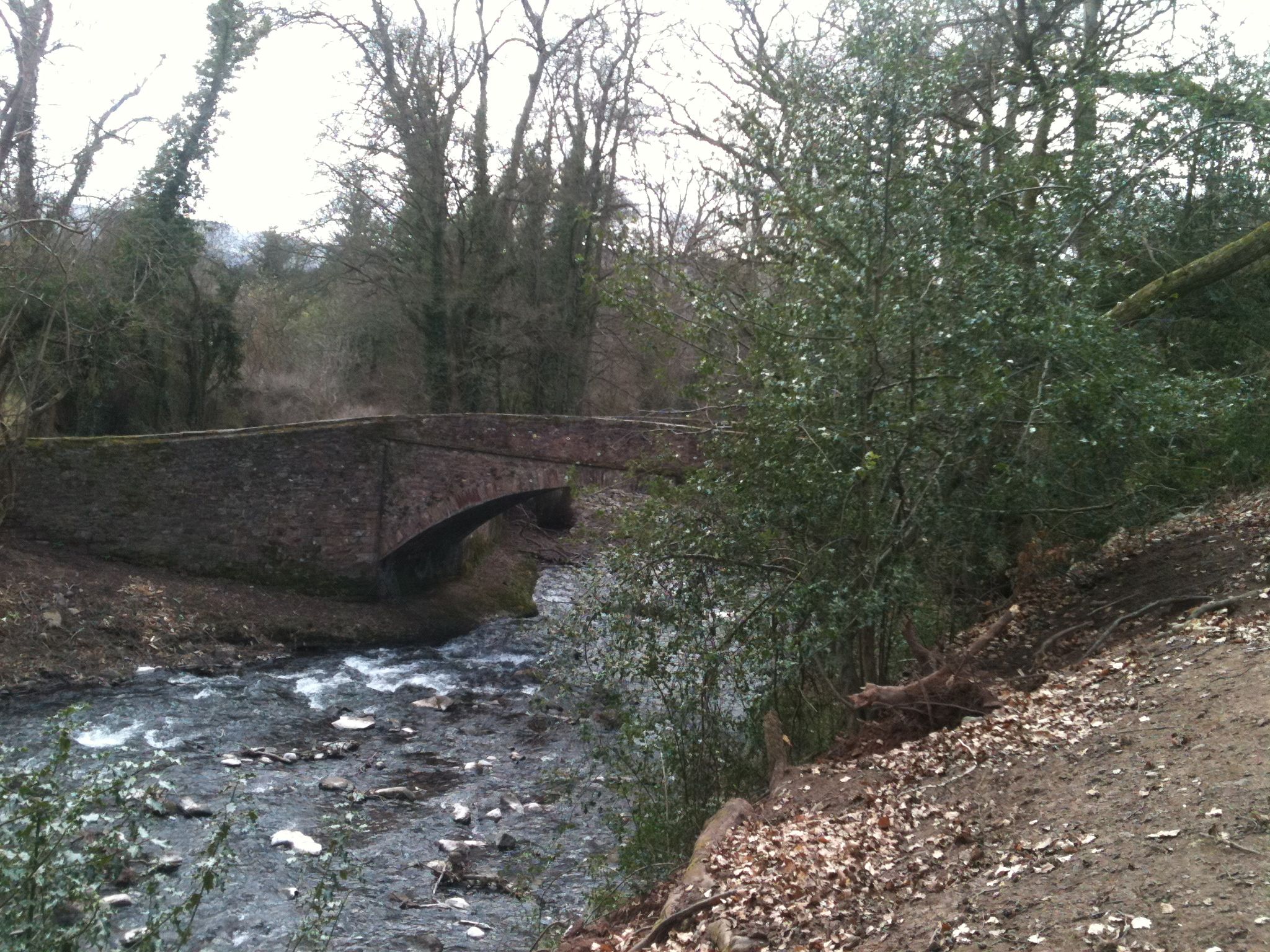
Bridge where I once played.


Where do we go from here?


Good things about being Welsh: No. 5


a) Grand Slam.

b) Singing and shouting like a loon.

c) Soaking it up afterwards.


I liked this post form Panfilocastaldi so much that I am re-blogging it. (At least I think I am, not having tried this before). Watch out especially for the Yanko Tsvetkov maps. Hope you enjoy it as much as I did.

Warwick Mihaly's avatarPanfilo


Peters World Map

What are they?

During Season 2 of Aaron Sorkin’s heroic television show, The West Wing, a nerdy but quietly zealous group called the Organisation of Cartographers for Social Equality introduce the Whitehouse staff to the Peters World Map, an equal-area map where 1 square centimetre of map equals the same number of square kilometres anywhere in the world.

Despite this map being proportionately accurate, the staff are shocked by the inconsistencies between it and the more familiar, but deliberately distorted, Mercator projection. Invented in 1569 to rationalise the lines of nautical travel, the Mercator map shows Australia to be roughly the same size as Greenland, despite it in fact being more than three and a half times larger.

The cartographers insist that the way a map is drawn reveals a great deal about the worldview of its creators: for instance, the centre has greater perceived…

View original post 269 more words