Richard Gwyn

The people of Teotihuacán
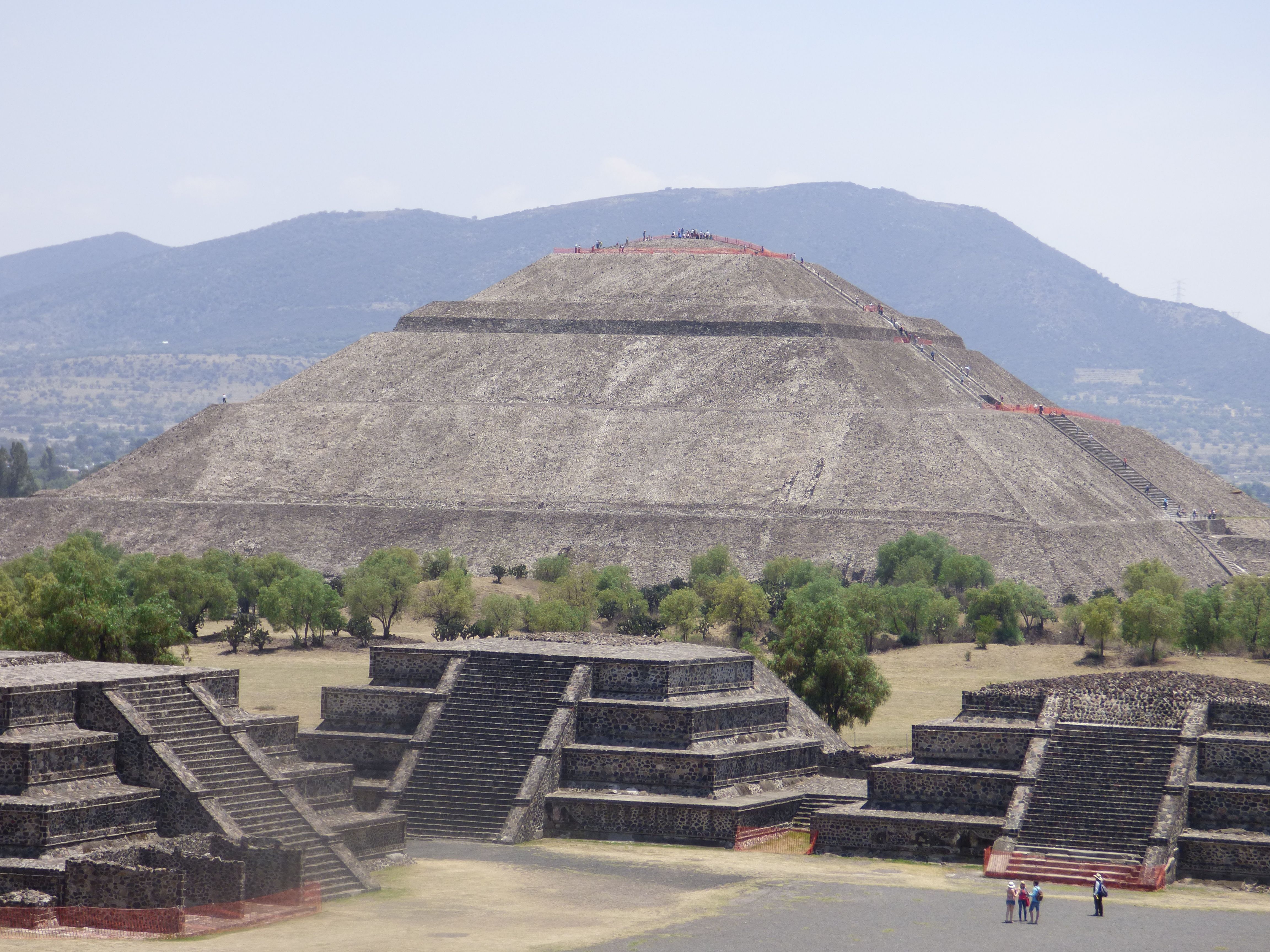
 

Temple of the Sun, Teotihuacán

Temple of the Sun, Teotihuacán

It is not known who built and occupied Teotihuacán (pronounced tay-oh-tee-wah-kahn): the Totonac, Otomi or Nahua peoples have all been put forward. The site was established before 100 B.C and building of the vast pyramids continued until around 250 A.D. The city reached its zenith over the next three centuries, with a population in excess of 125,000, making it one of the largest cities in the world at the time. It was sacked and burned in the middle of the 6th century and was abandoned by 700 A.D. The fortunes and whereabouts of the people who built and occupied this city vanish alongside numerous Mesoamerican cultures with the rise of the Azteca-Mexica people, but we know that evidence of Teotihuacano influence can be seen at sites in the Veracruz area. And it was here, in 1519, that Hernán Cortés made his first inroads towards the Aztec capital Tenochtitlan (modern day Mexcio City), a city which he effectively destroyed two years later.
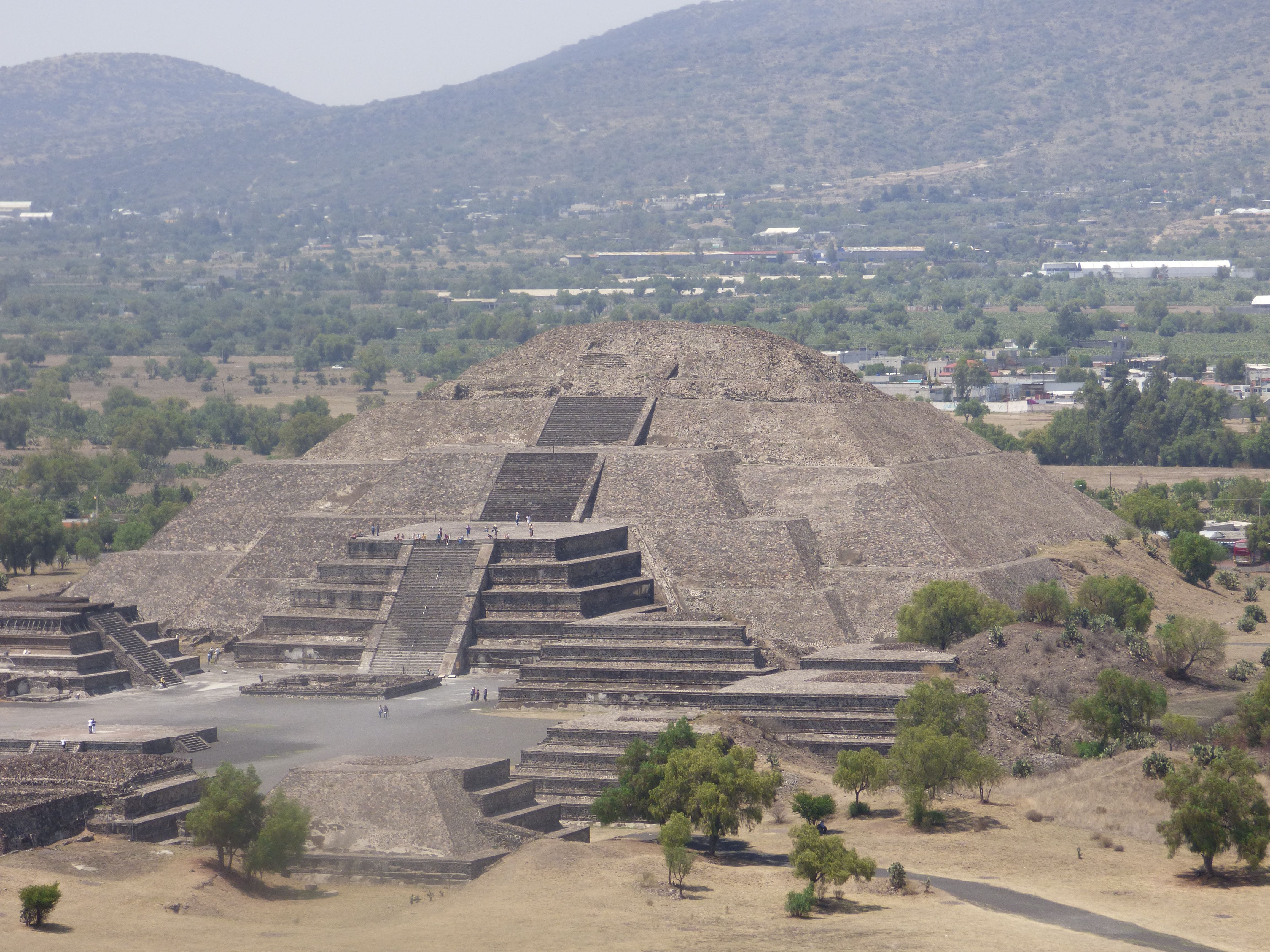
Temple of the Moon
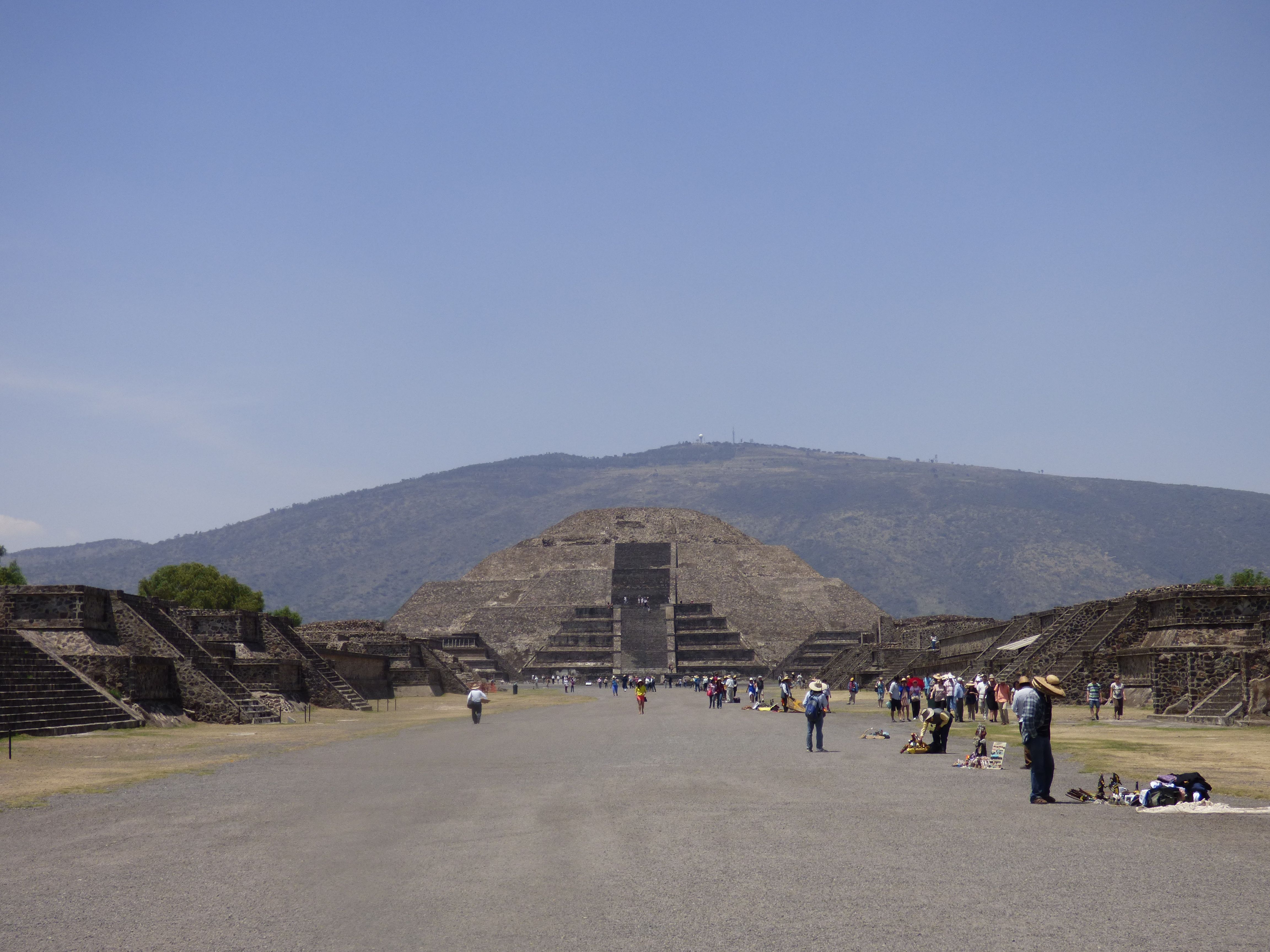
Temple of the Moon


Temple of the Moon, as seen from Avenue of the Dead

Temple of the Moon, as seen from Avenue of the Dead

The site at Teotihuacán covers a huge area, of which only about a quarter has been excavated. The principle monuments, the Temples of the Sun and Moon, and the Temple of Quetzalcóatl, are joined by the Avenue of the Dead. The configuration of these building has been subject to intense speculation, ranging from the more scientific to New Age Bonkers (while I was at the top of the Temple of the Sun a European-looking woman, dressed in flowing gowns, opened her arms to the sun and started chanting some gobbledygook which she obviously believed was connecting her to something or other). In the 1970s heyday of New Age enthusiasts, a survey was carried out by Hugh Harleston Junior, who found that the main structures lined up along the Avenue of the Dead formed a precise scale model of the solar system, including Uranus, Neptune and Pluto (not discovered until 1787, 1846 and 1930 respectively). There is plenty more of this kind of stuff around, and every Spring Equinox morning thousands of people climb the Temple of the Sun with arms outstretched facing the sun on the eastern horizon. According to the Wikipedia article on this phenomenon:

Some New Age sources claim that at the point of the equinox, man is at a unique place in the cosmos, when portals of energy open. Climbing the 360 stairs to the top of the Pyramid of the Sun is claimed to allow participants to be closer to this “energy”.

Although recent research suggests that Teotihuacán was a multi-ethnic state, we do know that the Totonac people, who may have lived there, later bore a mighty grudge against their conquerors, the Aztecs, who regularly took tribute from them of slaves, many if not all of whom would be sacrificed. But the people who lived in Teotihuacán certainly practised human sacrifice also. I don’t know how far the New Agers go along with that kind of thing, but who knows, perhaps they secretly want to be sacrificed.

As part of my background reading into Mexican history I am currently immersed in the 19th century Hispanist William F. Prescott’s fascinating account The Conquest of Mexico (published in 1843). I know there are more up-to-date and scientific studies of the period, but none are as entertaining (and Prescott’s study can be downloaded onto a Kindle for only 99 pence). It is written in a style that wavers between the deferential and the ornate, which was no doubt intended to convey the maximum sense of verisimilitude, but which to a modern reader– and possibly, who knows, to the Victorians also – seems almost to verge into parody. Here is Prescott on Cortés’ arbitrary method of convincing the Totonacs that their religious and dietary preferences (i.e. worshipping wooden idols and eating people) were wrong, and they would be much better off serving the True Cross):

‘Fifty soldiers, at a signal from [Cortés], sprang up the great stairway of the temple [at Cempoala], entered the building on the summit, the walls of which were black with human gore, tore down the huge wooden symbols from their foundations, and dragged then to the edge of the terrace. Their fantastic forms and features, conveying a symbolic meaning, which was lost on the Spaniards, seemed in their eyes only the hideous lineaments of Satan. With great alacrity they rolled the colossal monsters down the steps of the pyramid, amidst the triumphant shouts of their own companions, and the groans and lamentations of the natives. They then consummated the whole by burning them in the presence of the assembled multitude.

The Totonacs, finding their deities incapable of preventing or even punishing this profanation of their shrines, conceived a mean opinion of their power, compared with that of the mysterious and formidable strangers. The floor and walls of the teocalli were then cleansed, by command of Cortés, from their foul impurities; a fresh coating of stucco was laid on them by Indian masons; and an altar was raised, surmounted by a lofty cross, and hung with garlands of roses. A procession was next formed, in which some of the principal Totonac priests, exchanging their dark mantles for robes of white, carried lighted candles in their hands; while an image of the Virgin, half smothered under the weight of flowers, was borne aloft, and, as the procession climbed the steps of the temple, was deposited above the altar. Mass was performed by Father Olmedo, and the impressive character of the ceremony and the passionate eloquence of the good priest touched the feelings of the motley audience, until Indians as well as Spaniards, if we may trust the chronicler, were melted into tears and audible sobs.’

This sprightly conversion was guided, in part at least, by the Totonac cacique’s knowledge that only with the support of the Spaniards could he gain revenge on his real enemy, the Aztec.

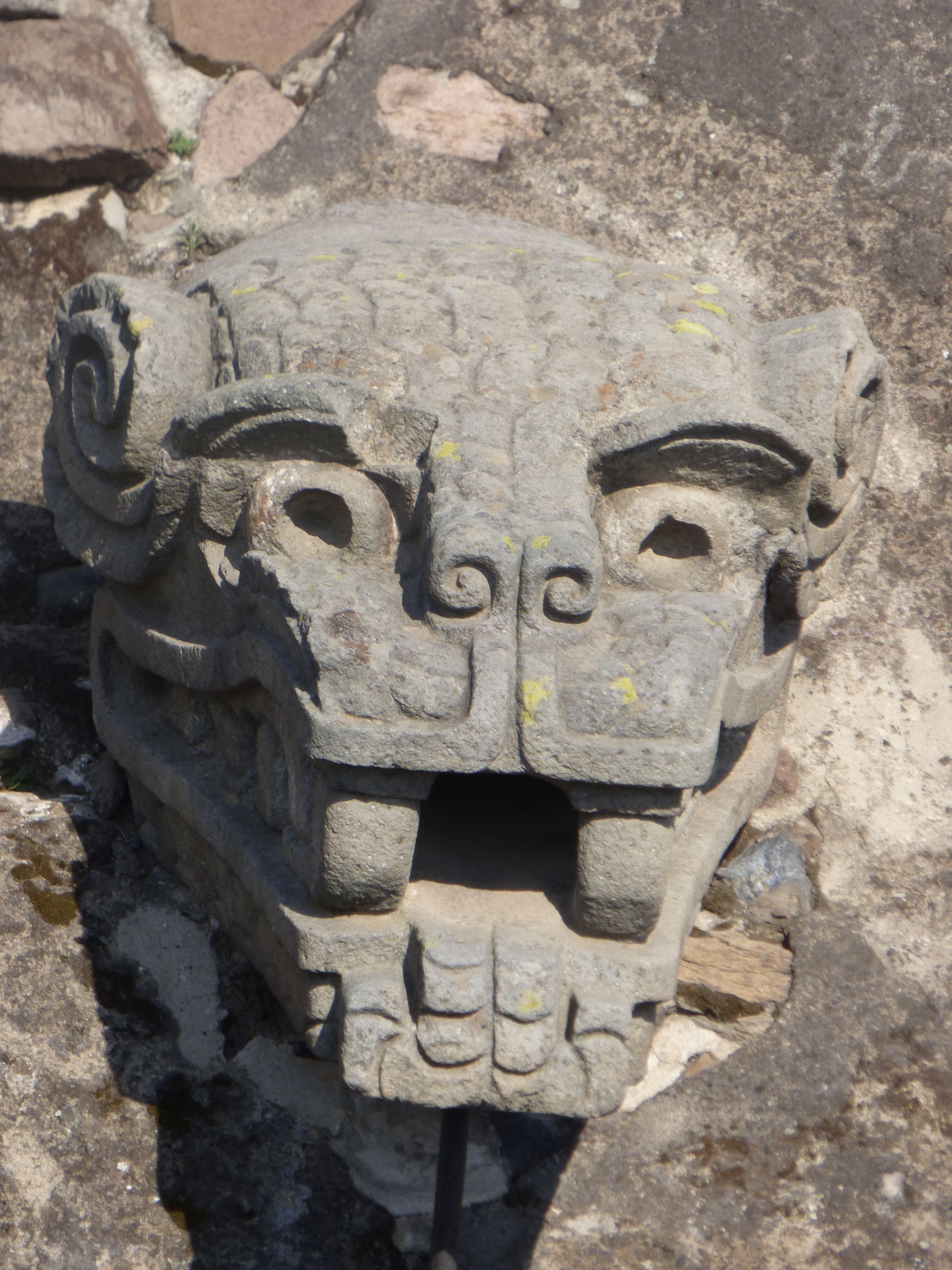
Back in Teotihuacán, I complete my ascent of both the Temple of the Moon and the Temple of the Sun (exhausting and at times perilous) and make my way along the Avenue of the Dead, to the visit the Temple of Quetzalcoatl (ket-sal-kwaht-uhl) – the plumed serpent deity – which is far smaller, but equally impressive in its way. Its façade is adorned with huge sculptures of a plumed serpent and of the rain god Tlaloc. A series of tunnels were found beneath the structure in 2010. They are thought to house the remains of the ruling elite.
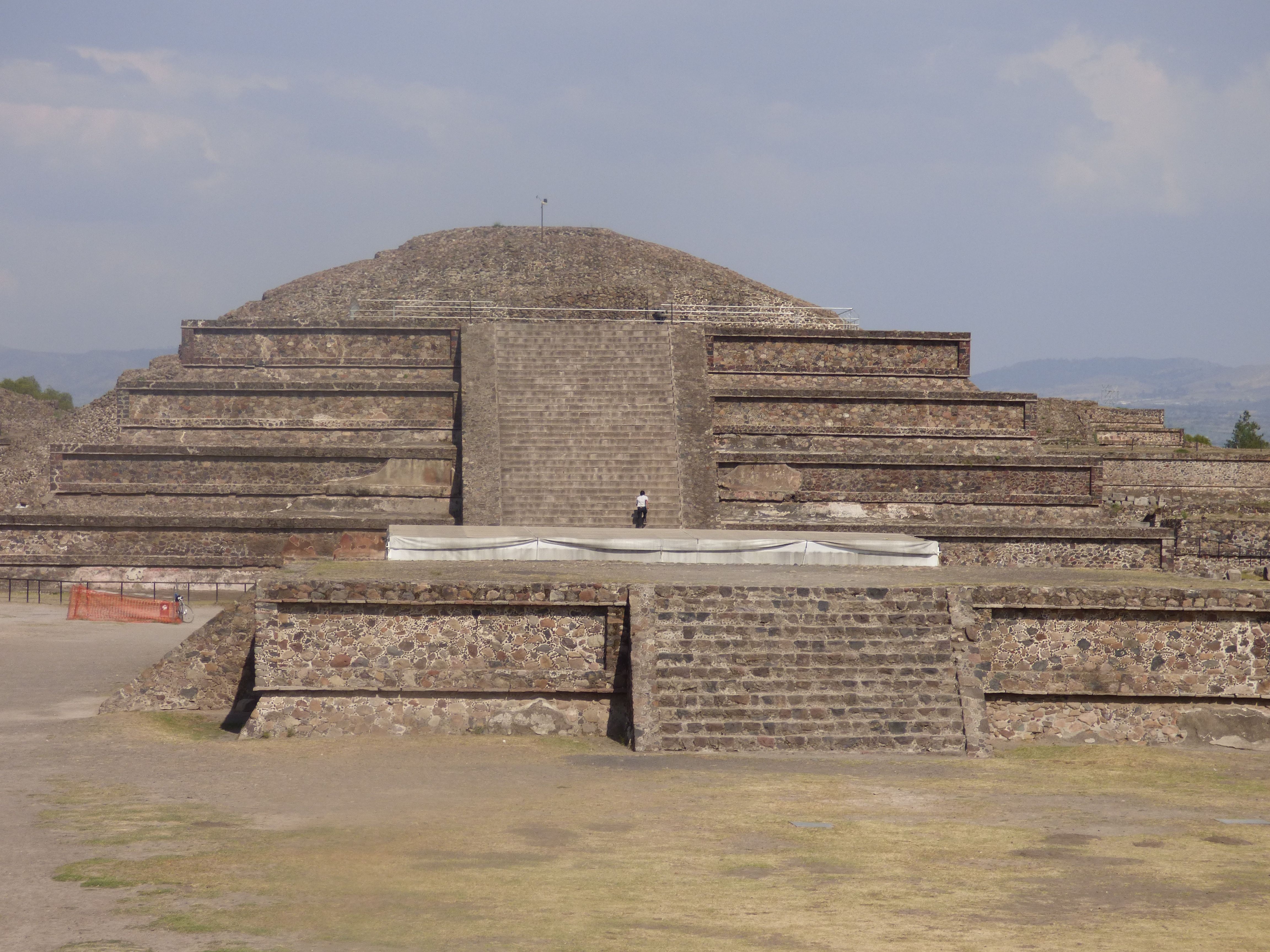
Temple of Quetzalcóatl (the plumed serpent)

Temple of Quetzalcóatl (the plumed serpent)

Nearby is the site of several mass graves, discovered in the 1980s. The remains of around 200 people who had been sacrificed were found, the victims’ hands tied behind their back (perhaps dispelling the notion that some Mesoamerican sacrifice victims were volunteers). Whichever version is true (and we know that sacrificial victims were most commonly captured enemies), we return again to the cult of death, which I have remarked upon in previous posts during this trip, and to which I will return.
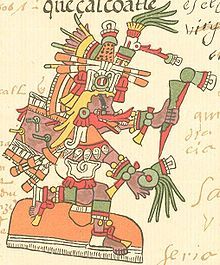
Quetzalcóatl, the plumed serpent deity
Quetzalcóatl, the plumed serpent deity


Stone jaguar on wall of Temple of Quetzalcóatl

Stone jaguar on wall of Temple of Quetzalcóatl


Feet

beautiful female legs isolated on white


A taster from Mexican poet Pedro Serrano’s collection, Peatlands, translated by Anna Crowe and fresh off the press from Arc, who are to be congratulated, yet again, for bringing another fine writer to the attention of the English language reader.

There is also an introduction by W.N. Herbert, where we find these lines, which seem so apposite with regard to the poem I have chosen: “The intention [is] to transform us through language, compelling us to rethink, re-imagine and re-envision the world and our place in it; and to break down our unconsidered assumptions about opposed categories like thought and feeling, human and animal, by continually returning us to the matrix of the body . . .”


FEET

Feet clench, make themselves small, run away,

creasing their wretchedness and fear in lines

identical to those on our palms and different.

Feet are extensions of God

(which is why they are low down),

hence their distress, their rounded bulk, their lack of balance.

Feet are like startled crayfish.

Such vulnerable things, feet.

When they make love they clench and huddle together

as though they were their own subjects.

So feet are not made, then,

to cling, like wasps

to every pine-needle pin,

to every branch of the soul that makes them there.

They are more wings than feet,

tiny and fragile and human.

However much we overlook them.


LOS PIES

Los pies se doblan, empequeñecen, huyen,

curvan su miseria y su miedo en unas líneas

que son las de la mano y no lo son.

Los pies son extensiones de Dios

(por eso están abajo),

de allí su angustia, su volumen redondo, su desajuste.

Los pies son como crustáceos asustados.

Tan sensibles los pies.

Se doblan y apeñuscan al hacer el amor

como si ellos fueran sus sujetos.

Los pies, así, no están hechos ahora

para prenderse como avispas

a cada aguja,

a cada rama del alma que allí los haga.

Son más alas que pies,

chiquititos y frágiles y humanos.

Tan desconsiderados que los tenemos.


Of Dogs and Death


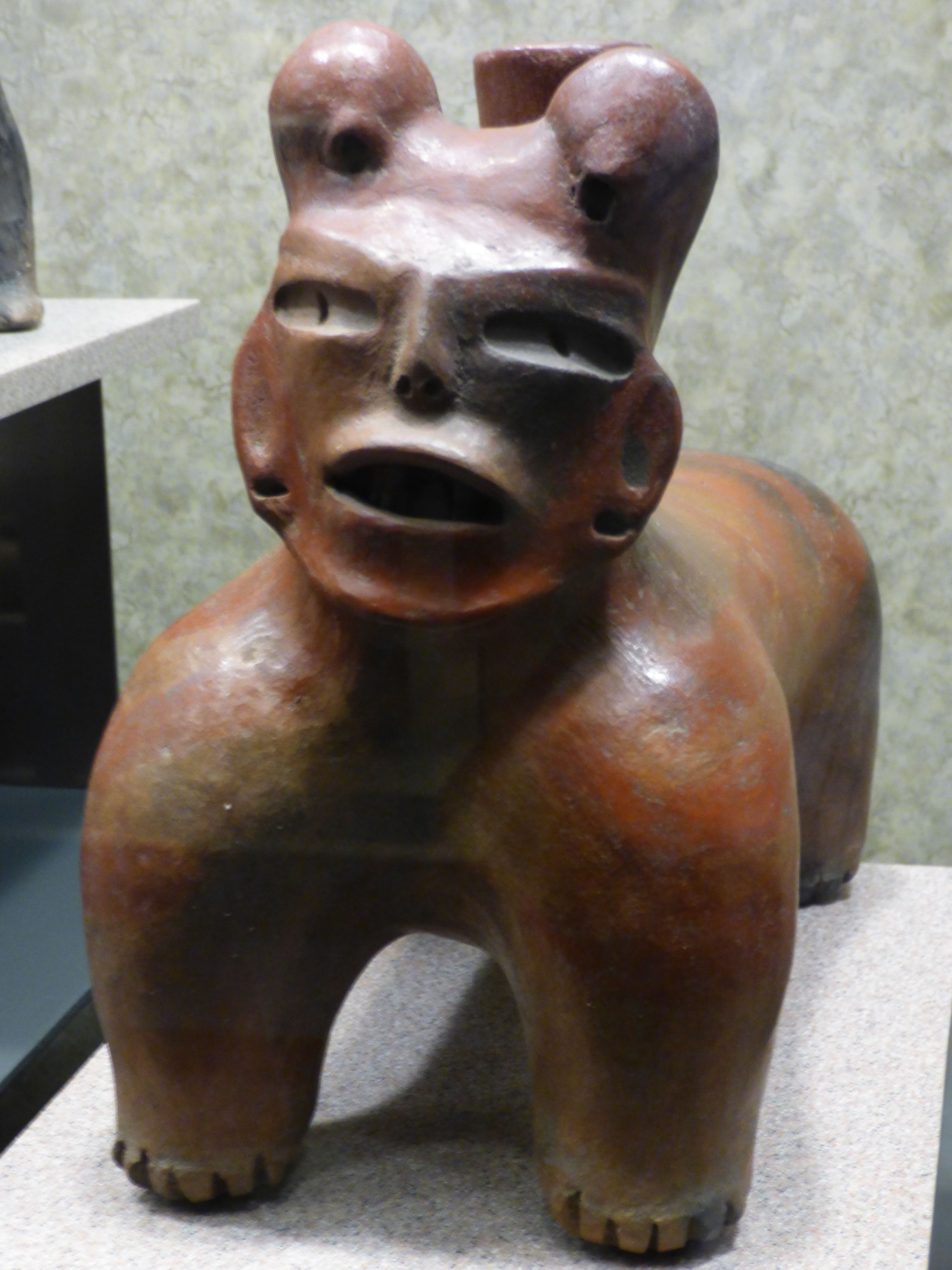
Dogs (such as this one, in the Museum of Anthropology, Mexico City) guided their people to the next world in Aztec culture.

Dogs (such as this one, in the Museum of Anthropology, Mexico City) guided their people to the next world in Aztec culture.


I wrote once before about Juan Rulfo and his novel Pedro Paramo, which has unparalleled status in Mexican literature and was a major influence on the young Gabriel García Márquez on his arrival in Mexico City in 1961.

I recently spent an evening reading Juan Rulfo’s short stories El llano en llama (translated into English both as The Plain in Flames and The Burning Plain). The stories were written in the long wake of the Mexican revolution, which coincided with Rulfo’s own childhood in an orphanage in Jalisco where, he said later, he often saw corpses hanging from posts, and that he spent all his time reading, “because you couldn’t go out for fear of getting shot.” These stories lead the reader into a space of silence and mystery, where reality breaks down and we enter a world that might be the antechamber to the afterlife, if the afterlife you have in mind is bleak, featureless, devoid of anything that could pass as life at all. But there are ghosts, at least.

The rhythms of Rulfo’s prose remind me of what Octavio Paz wrote about his archetypal Mexican: “his language is full of reticences, of metaphors and allusions, of unfinished phrases, while his silence is full of tints, folds, thunderheads, sudden rainbows, indecipherable threats . . .” There are threats aplenty, but they are unformed, vaguely defined and usually at some distance from the place of narration – yet always getting closer. Events take place in a half-light, as characters stumble towards yet another failure, or else death.

In the first story in Rulfo’s collection, ‘They have given us land’, a group of four landless men trudge across an arid plain. They have been promised land by some government official, but the ground beneath them is dry, stony, utterly unsuitable for planting anything that might grow. There had been more than twenty in their group, and they had horses and rifles, but now there are only four, and they have nothing, apart from a hen, which one of them keeps hidden inside his coat. “After walking for so many hours without coming across even the shadow of a tree, even the seed of a tree, nor the root of anything, we heard the barking of dogs.”

In another story ‘Don’t you hear the dogs barking’, a man carries his adult son on his back to try and find a doctor in the town of Tonaya. The younger man is wounded. It is night-time and the old man cannot see where he is going. As the pair draw near to the town we learn through the father’s faltering monologue that his son is a thief and a murderer, and he is only carrying him out of respect for the boy’s dead mother.

In these two stories, the barking of dogs indicates the existence, if not of hope precisely, then of some form of life, of human dwellings at the very least. But perhaps that is a false reading. In Mesoamerican cultures dogs were considered to have the powers to guide the dead to a new life after death, which explains why dogs have frequently been found buried with people in pre-Columbian sites.

And of course, at the end of Malcolm Lowry’s masterpiece, Under the Volcano, a dead dog is thrown down the ravine after the dead body of the unfortunate consul.

To come full circle, I discovered today that Rulfo had a bit-part in a Spanish film based on a short story by Gabriel García Márquez. The film is called En este pueblo no hay ladrones (In this town there are no thieves), and is exceptional in that the cast is made up of notable writers, visual artists and film directors, including Luis Buñuel (clearly relishing his performance as the town priest), Leonora Carrington, Arturo Ripstein, Alfonso Arao, Abel Quezada, and Gabriel García Márquez himself.


Juan Rulfo (left) and Abel Quezada having a beer, in a scene from ‘En este pueblo no hay ladrones’ based on a short story by Gabriel García Márquez.

Juan Rulfo (left) and Abel Quezada having a beer, in a scene from ‘En este pueblo no hay ladrones’ based on a short story by Gabriel García Márquez.


Of Frida Kahlo, Diego (and Dylan)

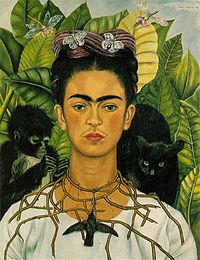
Frida self portrait


I have always been slightly worried by Frida Kahlo, perhaps it taps into some source of generalised male guilt, not for things that I have done myself – at least not intentionally, but that might be the very point – but for all the wrongs perpetrated by the men of the world against the women of the world since time began. And yet for all that, Frida does not come across as a victim: she made decisions, and tried to stick with them in spite of the disasters that overtook her (she said once that her life had been defined for her by two disasters: the first was being involved in an horrendous traffic accident when she was 18, the second was meeting Diego Rivera). She was also – and the two things, suffering and greatness, do not always go together – a great artist, independently of Diego, and the passage of time has probably elevated her to a higher position than him in the hierarchy, if not of ‘greatness’, at least of fame, since being adopted as a feminist icon (what a horrible term, I apologise for using it, but this collocation is always employed in reference to Frida, and a blog, for me, is a place of first drafts, which may or may not be developed and refined for publication elsewhere and at a later date).

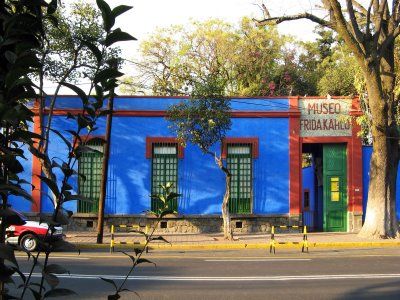
So yesterday I tried to immerse myself in Frida’s life; took a trip to the twin houses/studios where she lived in San Angél – in separate buildings, connected by a footbridge – with and without Diego, and where I watched a film about her life; and then down to Coyoacán and the blue house that was her parental home, and where she eventually settled (Leon Trotsky was famously one of the houseguests).

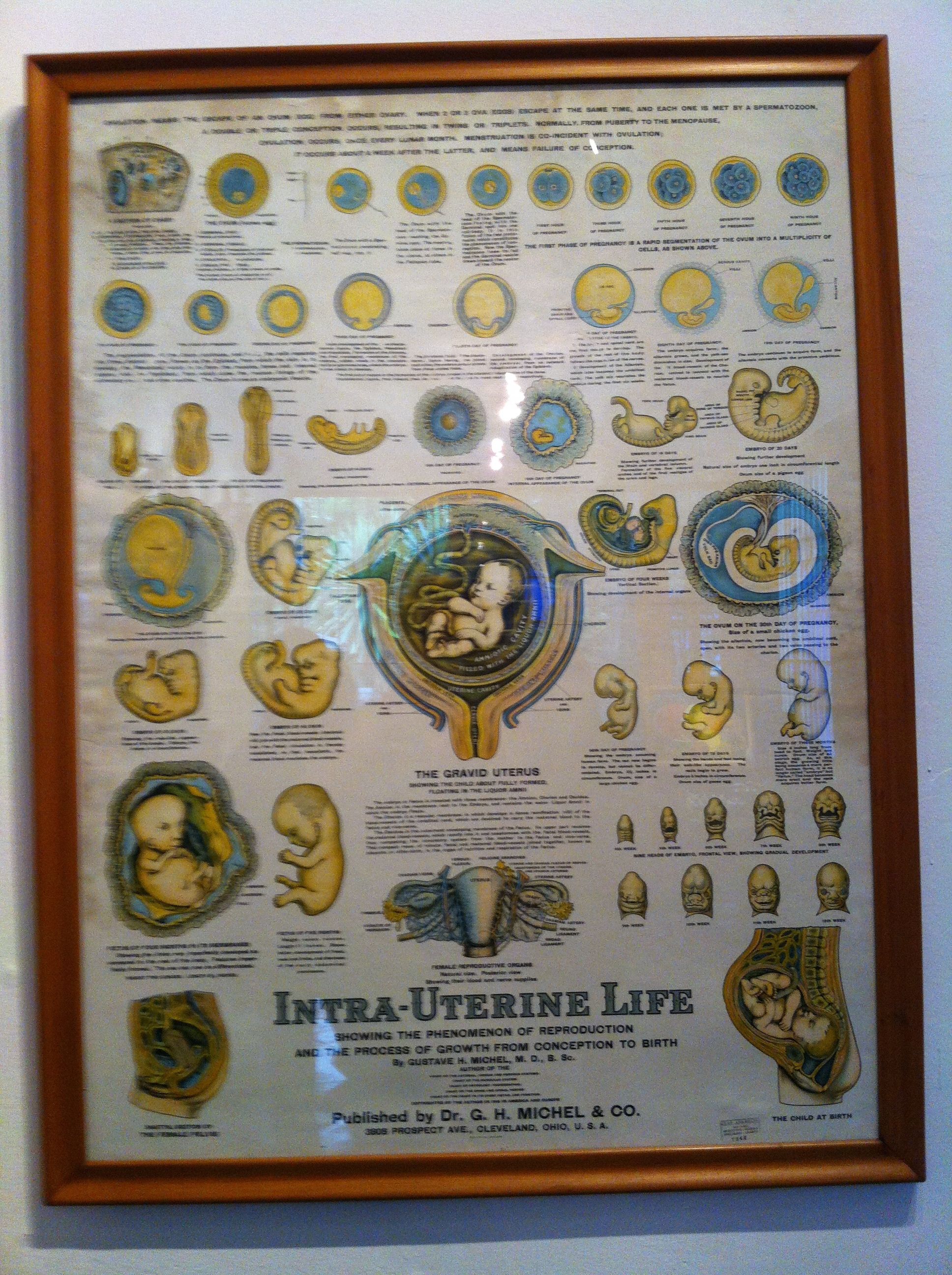
I am not going to write in any depth about Frida’s work here: I am not sufficiently knowledgeable, and besides, there is plenty of stuff out there, but I was profoundly moved – almost to tears – by visiting her house, by seeing her instantly recognisable paintings, the extraordinary collection of Mexican votive miniatures she collected, and the clothes she designed (including the painful-looking contraptions she was forced to wear as a result of her deforming accident). There was a queue outside and it had clouded over when I arrived, a straggle of beggars and street people selling wooden toys added to a growing sense of misery. Inside I didn’t feel like taking photos, certainly not of paintings that can be seen in any catalogue of her work, although this didn’t seem to bother the large man with the ipad who barged his way to prime spot in each room, holding his device before him like a weapon, an irony if there there was one. I did however take a picture of a poster designed by Frida of the inter-uterine development of a human child, as this seemed highly appropriate to her personal story (she suffered numerous miscarriages). As I left the house I walked into a brief downpour. It seemed to fit. I was impressed by Frida’s resilience but ultimately saddened by the story of her life, and while I am not all encouraged by much that Mexico is doing for its women (the Ciudad Juarez femicides still stand out as one of the greatest unresolved crimes of recent history), it is good that there are places like this to reflect on the way that one individual can translate her own suffering into such a universal and powerful creative statement.

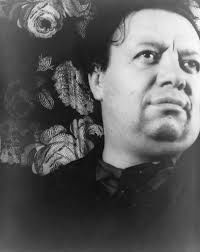
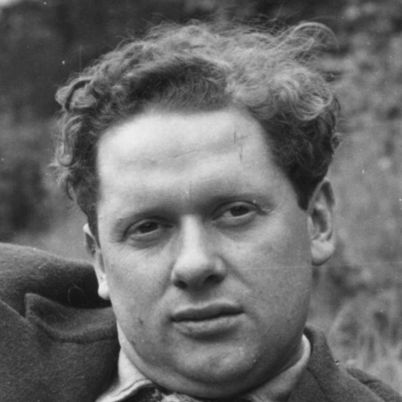
On a lighter note, I was struck in passing, while visiting the studios of Diego and Frida (his is still intact, hers is used a gallery for the work of contemporary artists) by the resemblance between Diego Rivera and Dylan Thomas. There is that whole 1940s things about their style and appearance, and something about the lips. That and the fact that both artists are widely known by their first names only. The similarity can only be glanced from certain perspectives, but for me at least, it is noteworthy.

Diego

Diego Rivera

Dylan

Dylan Thomas


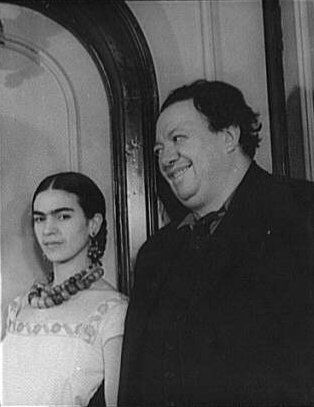
And with their respective long-suffering spouses:

Diego and Frida

Diego and Frida


Dylan and Caitlin

Dylan and Caitlin


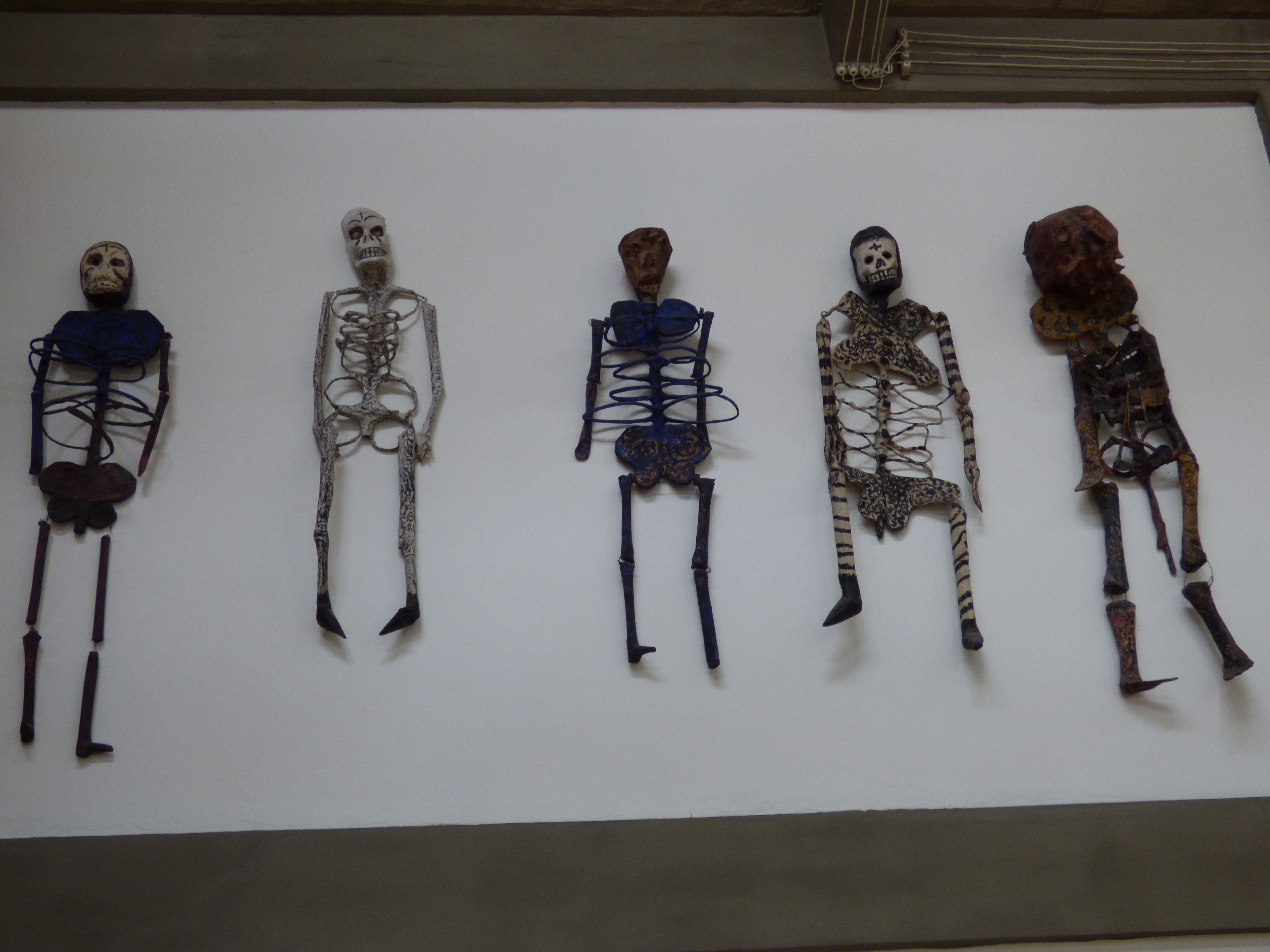
Skeletons in Diego Rivera's studio, San Angél

Skeletons in Diego Rivera’s studio, San Angél


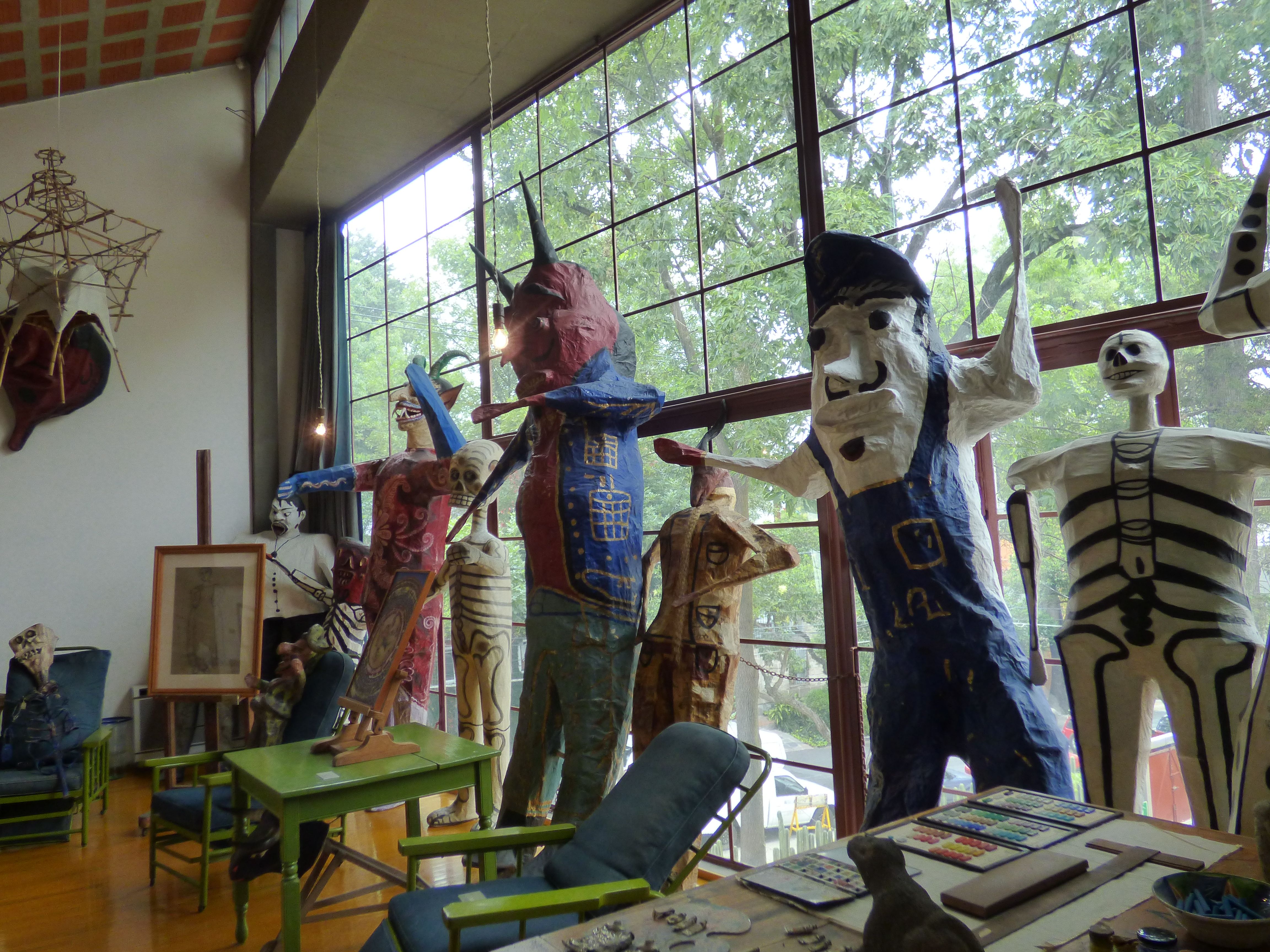
Diego Rivera's studio

Diego Rivera’s studio

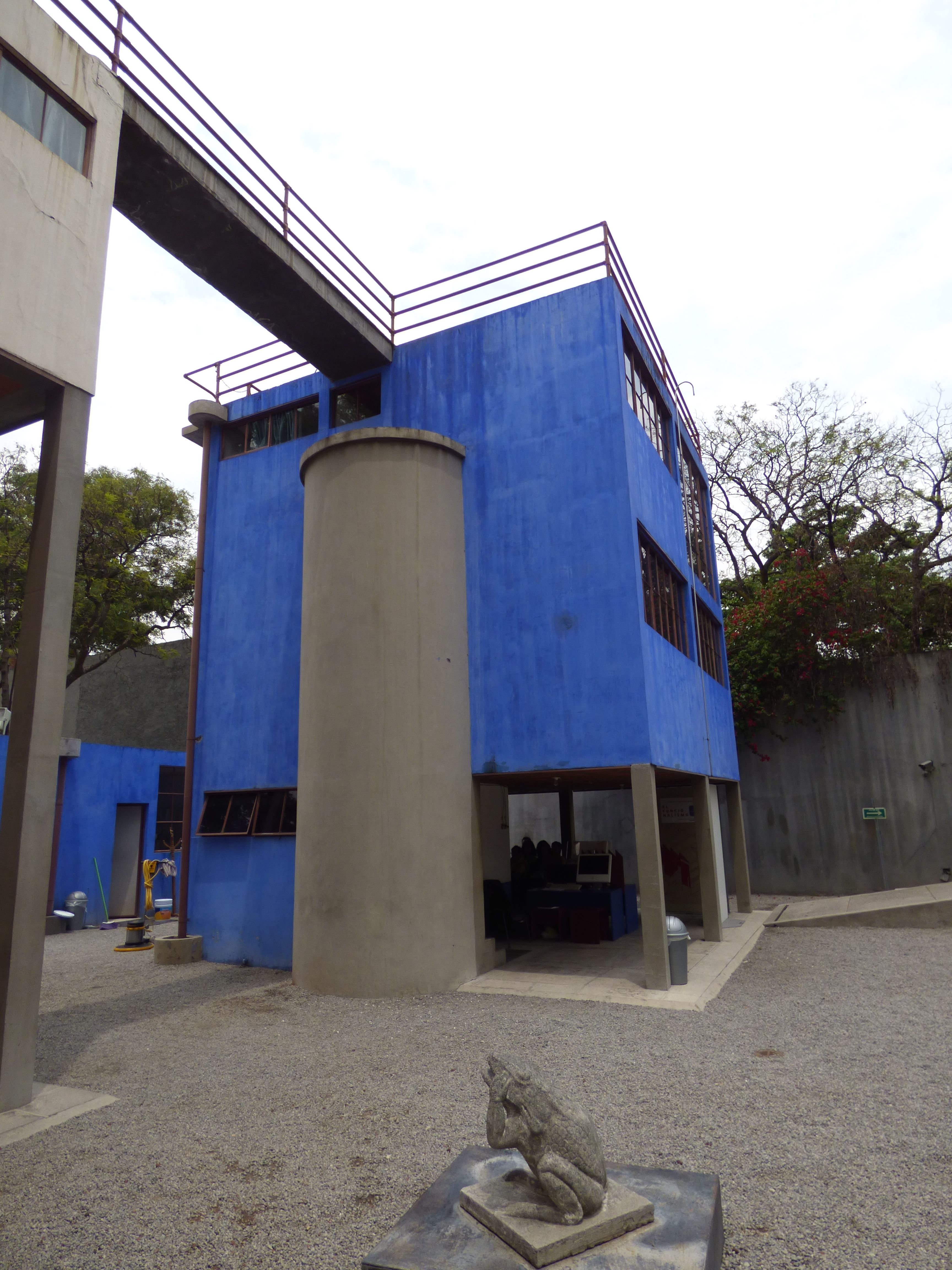
Diego's house from veranda of Frida's house, San Angél.

Diego’s house from veranda of Frida’s house, San Angél.

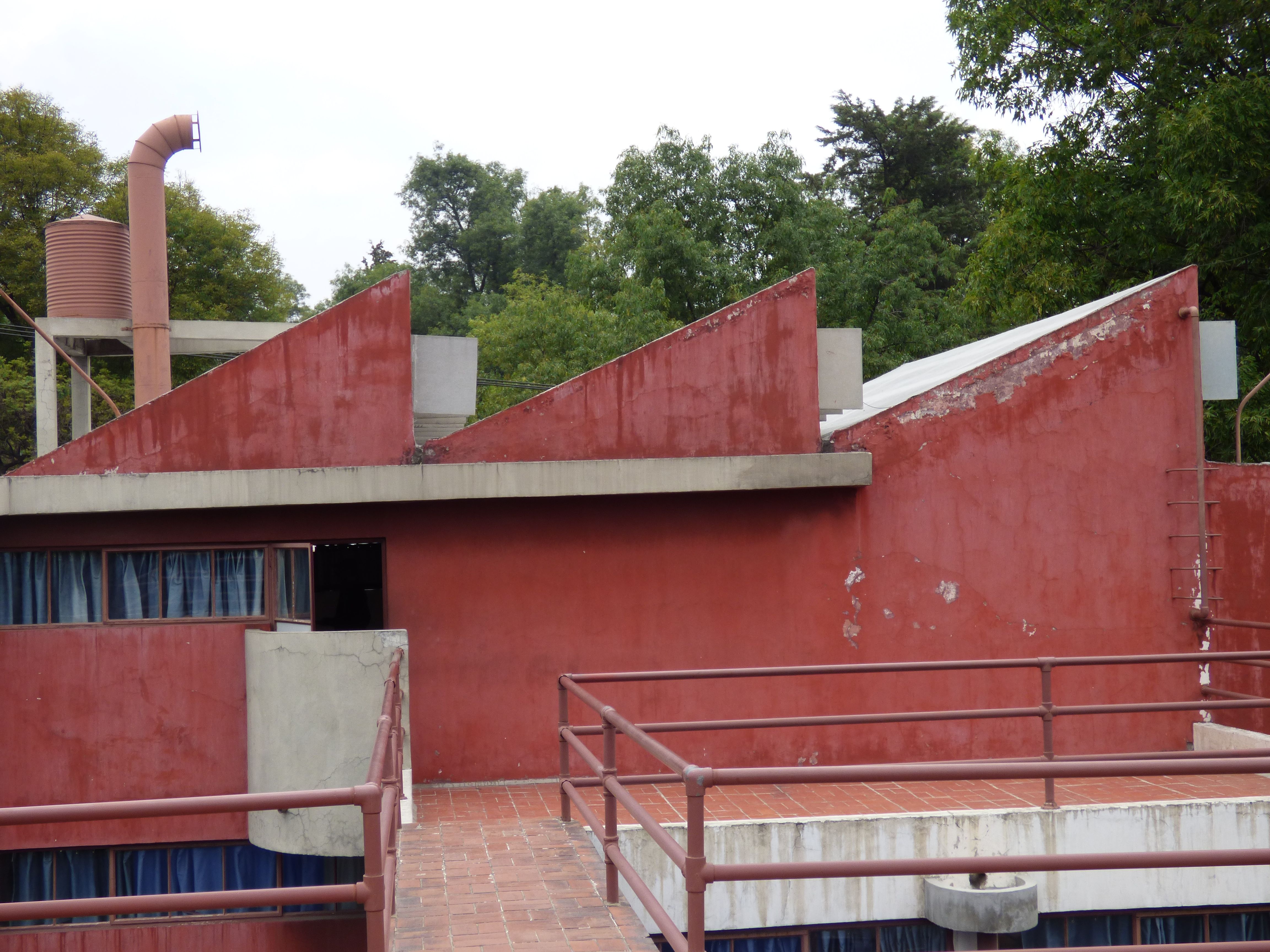
Frida's house, showing connecting bridge to Diego's house

Frida’s house, showing connecting bridge to Diego’s house

San Angél

San Angél.


frida_kahlo_frente

Frida Kahlo Museo, Coyoacan.


Frida Kahlo's design tracking interuterine life


Masks and Death

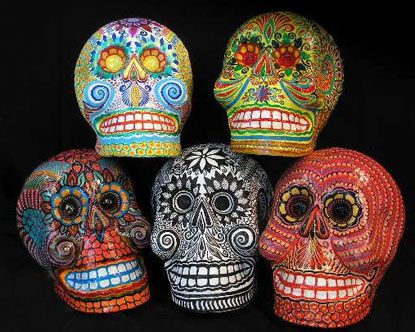
day-of-the-dead-masks


When travelling, how do we begin to learn when someone is wearing a mask, with intent to deceive, given that we all wear masks much of the time?

We all know, as Hamlet says, that ‘one may smile, and smile, and be a villain’, and so I am thinking about how one goes about making judgements in another culture with people whose ideas about what qualifies as ‘sincerity’ is, perhaps, at a remove from one’s own culturally engendered version. And how, I wonder, do ‘I’ appear, the person who passes as myself (my own current person impersonator) with my own pretensions at ‘sincerity’, when for all my interlocutor knows, I am wearing a mask too, perhaps one more efficacious in design than his or her own.

These things trouble me. Should they? And how much does any of this matter, if, as Javier Marías reminds us in his novel The Infatuations (Los Enamoramientos), we are all novice ghosts: ‘whatever we do, we’ll only be waiting, like dead men on leave, as someone once said’.

A mask conceals, but to wear death on the outside conceals nothing, nada: it only reveals what we wear on the inside, what we carry inside us – our own eventual death – because we are ‘dead men on leave’ and one cannot conceal what can never be erased. So the mask of death, the grinning skull, is a double bluff, it is a way of anticipating our status as fragile ghosts, a way perhaps of trying to con or cheat or temporarily delay Death into thinking we are already dead, so he cannot choose us, he needn’t waste his time with us. This is not the same as the rather simplistic explanation I have read in tourist guides, namely that Mexicans like to display images of death and the skull in order to familiarise and trivialise it, to make it commonplace, to deny it real significance by flaunting it through macabre displays, even to the extent of eating chocolate skulls and skeletons. That, surely, would only constitute a bluff (a single bluff). And Death would not be fooled by that, surely?

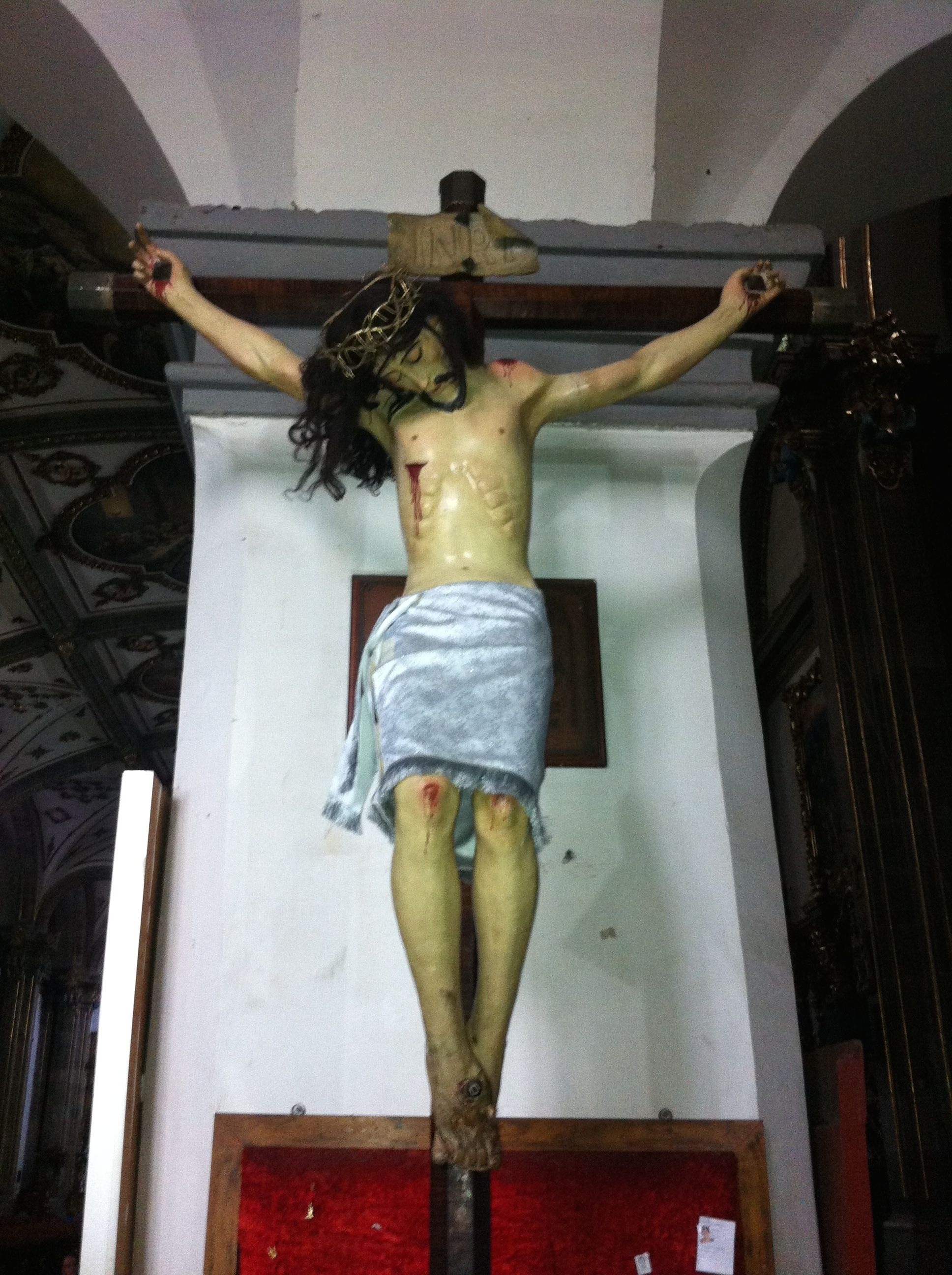
How does a people – according to Claudio Lomnitz in his extraordinary book, Death and the Idea of Mexico – come to have death as its national icon? This question was addressed at length by Octavio Paz in his seminal study on the Mexican character, or what I am coming to think of as Mexicality, which manages to carry an almost-reference to mescal, the national liquor (usurped for many years by the Jalisco version, tequila, but making a fierce comeback among the middle classes, who previously eschewed it as a poor man’s drink). It is a view corroborated in Mexican culture by the prevalence of further imagery of death: not just in the ‘national icon’, as Lomnitz would have it, but in the extraordinarily graphic pictures (which would never be publishable in a UK newspaper) that accompany headlines of the latest narco-murder, and which, significantly, also accompany the paraphernalia of Christian death – exemplified by Christ’s death on the cross – here represented in a crucifixion scene I photographed yesterday in a Coyoacán church.

A bloodied Christ, with real hair.

None of this will be new to anyone who knows anything at all about Mexico, but for me the whole symbology of death, celebrated so vividly in fiestas such as the Day of the Dead – well, all fiestas in fact, as the essence of a fiesta is to defy death, to celebrate a momentary explosion in time, thereby provoking an attraction of opposites: the fiesta beckons death by celebrating life with fanatical and joyous hubris – is a topic definitively at odds with our Western denial of death, our sterilising and alienating distancing of everyday life from any possible contact with the unspeakable void that death represents.  But these are only preliminary thoughts on the topic, to which I may one day return.

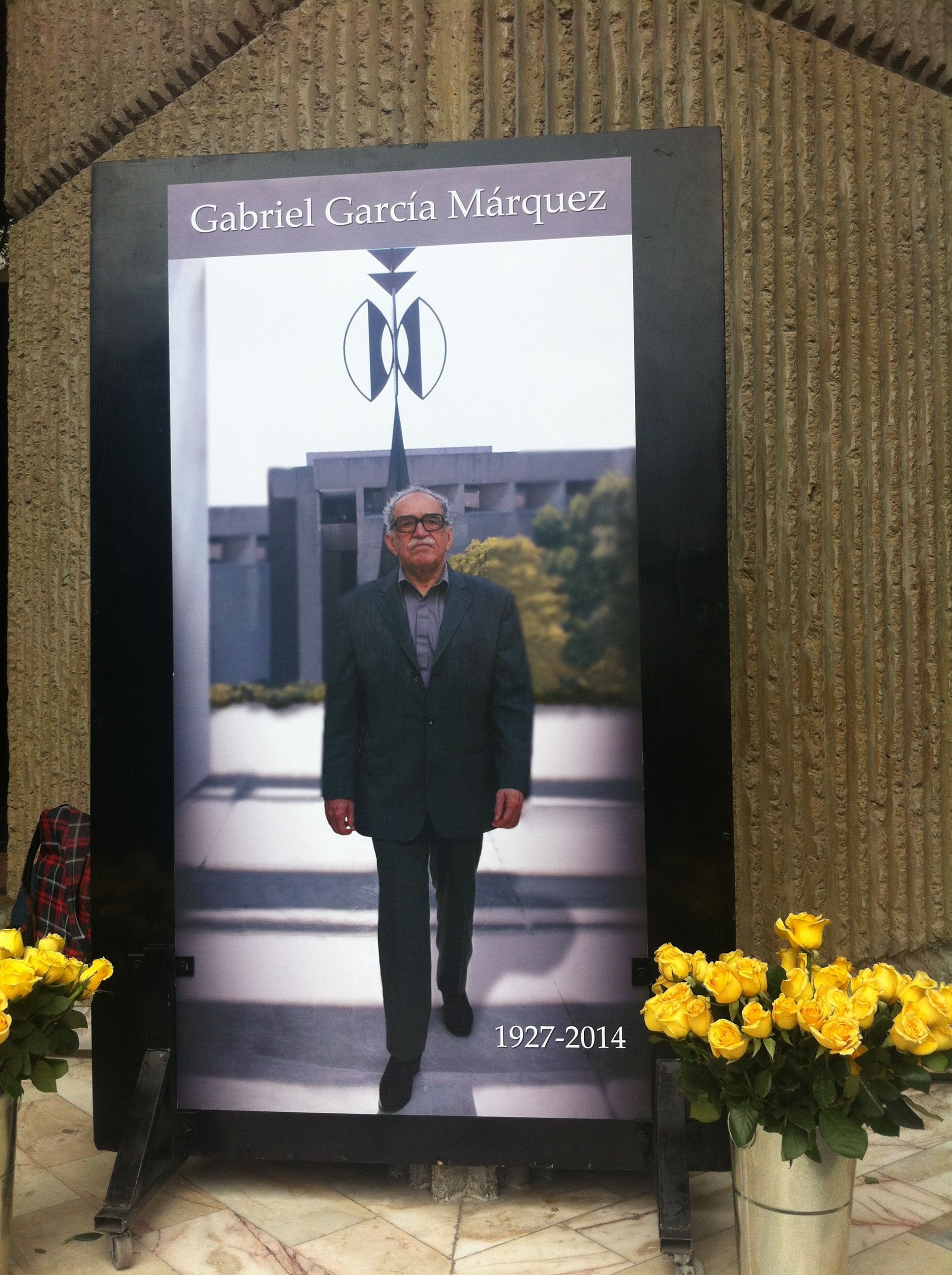
At the Festival of the Book and the Rose, which I attended yesterday, as a guest of the Periódico de Poesía, the celebrations were adjusted at the last minute to make way for an homage to Gabriel García Márquez, pictured below, on a placard, flanked by yellow roses. I also learned that the University (UNAM) is home to 325,000 students: the same population, give or take a few dozen, as the city of Cardiff.


Gabo memorial

Gabo memorial


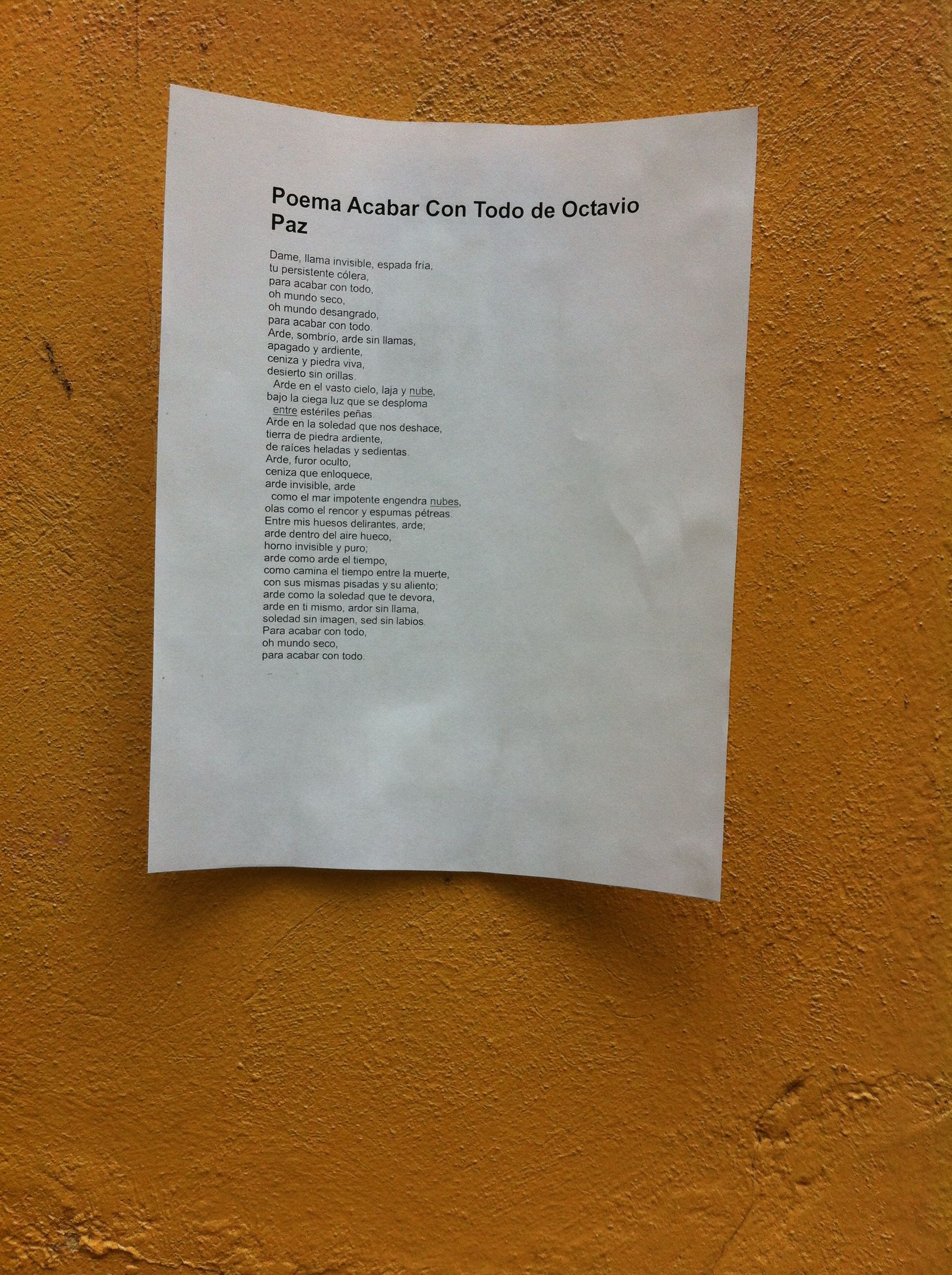
Poem stuck on wall lamenting the excess of celebration over Octavio Paz Centenary.

Poem stuck on wall lamenting the excess of celebration over Octavio Paz Centenary.

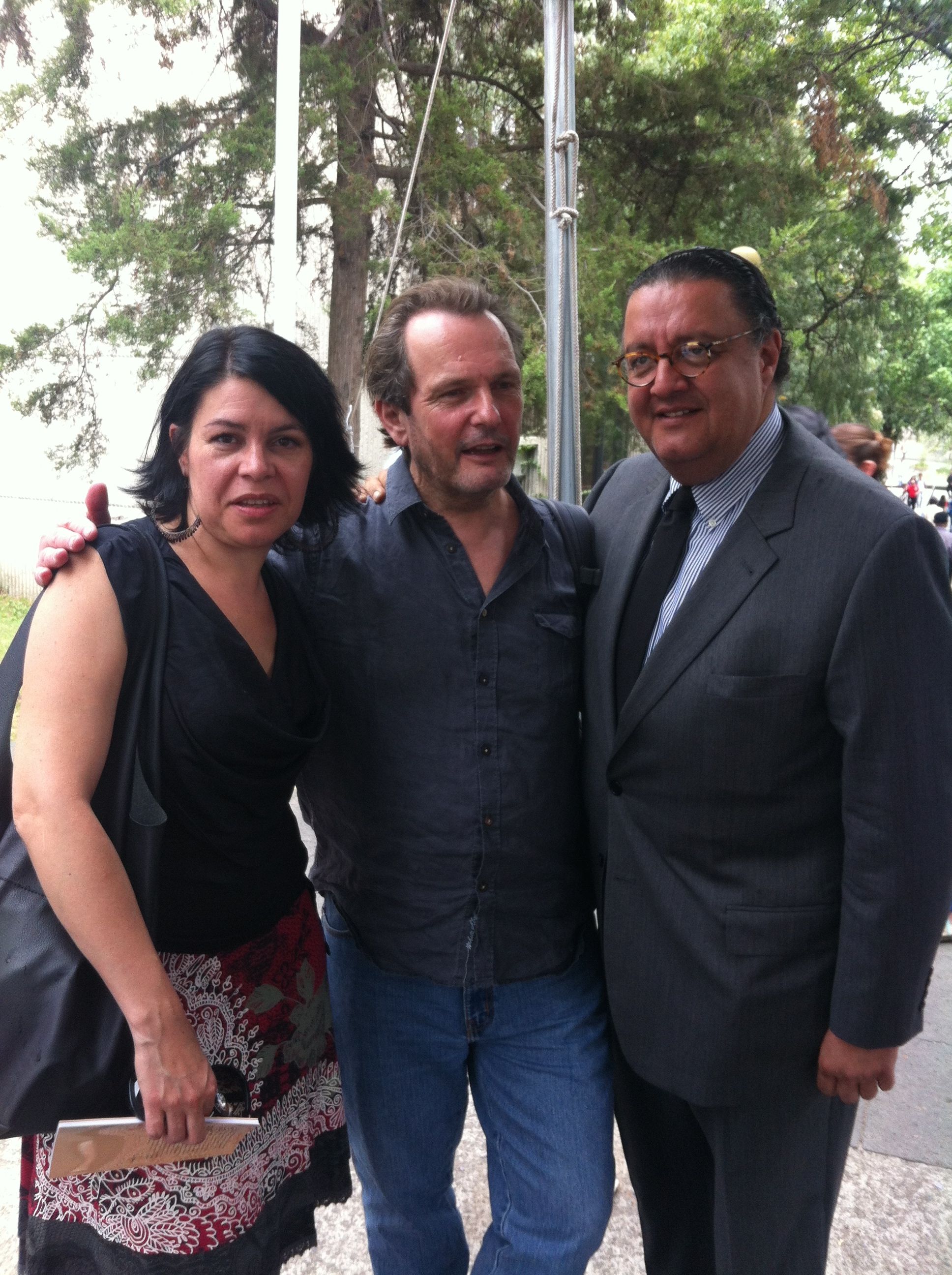
With Ana Franco of the Periódico de Poesía and novelist and interlocutor par excellence ,Jorge F. Hernández.

With Ana Franco of the Periódico de Poesía and novelist and interlocutor par excellence, Jorge F. Hernández.


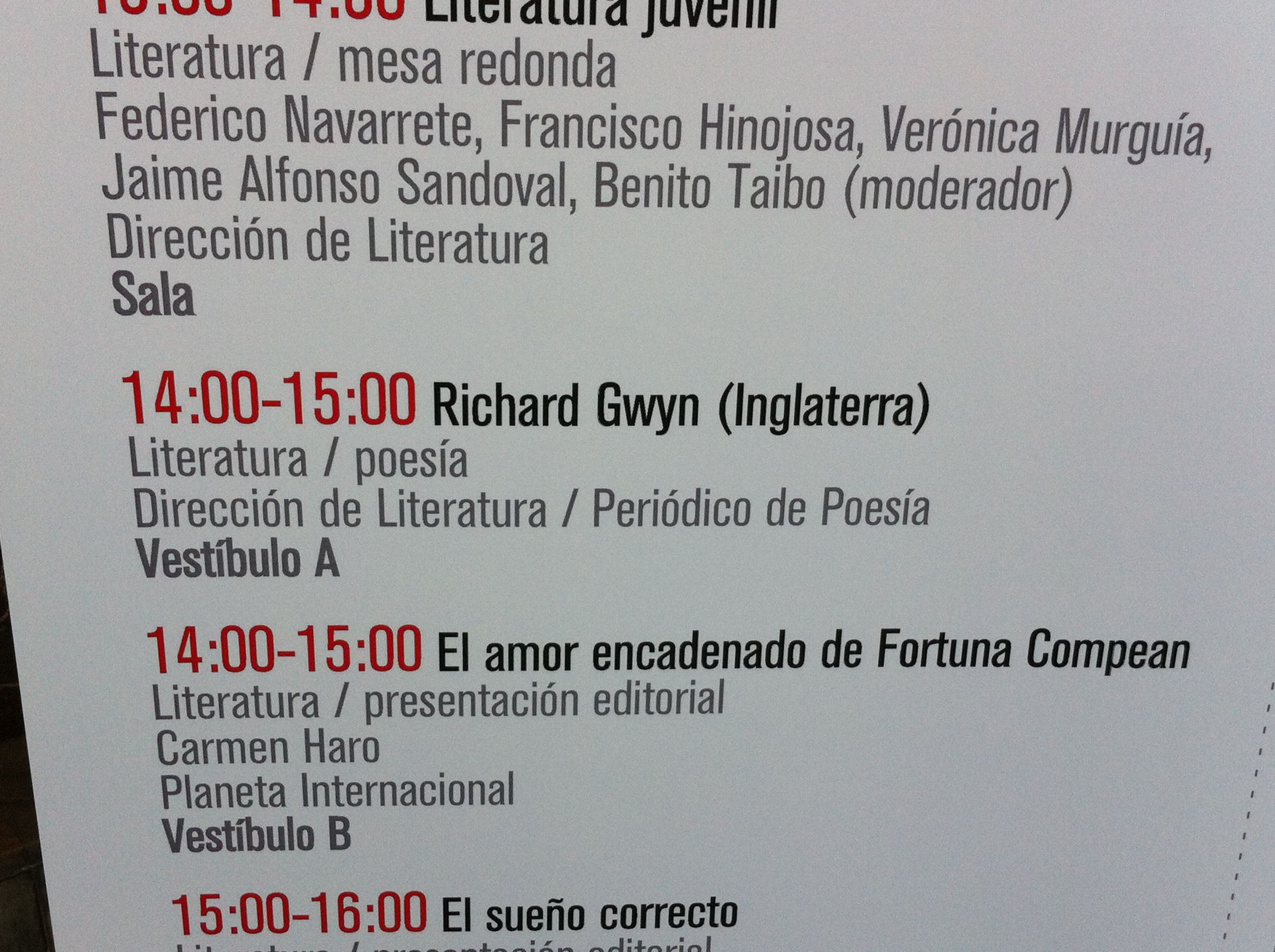
Inglaterra? Really? A tragic misallocation of nationality or a simplification for the geographically challenged?.

Inglaterra? Really? A tragic misallocation of nationality or a simplification for the geographically challenged?.


Mexican Masks: the ambassadorial posts

Octavio Paz centenary

Day 1

What is a creative ambassador? According to the blurb from the Arts Council of Wales, ‘The Creative Wales Ambassadors Awards are made by nomination and recognise . . . individual achievement in the arts along with the aim to raise the profile of Welsh culture outside of Wales.’ My application was called Unfinished Journey and in it I wrote the following (forgive me reproducing this paragraph in full, but I thought it fair to present what I aim to do):

‘Modern journeys often awaken in the traveller a sense of ‘travelling without seeing’, an idea that is perhaps uniquely contemporary. The title suggests that rather than having a fixed point of departure and arrival, all travel is a continuum, and that the only valid objective is to sustain the exquisite tension of the unfinished journey. My project is to research and write an account of the process of travel as a work in progress. Reports will initially appear as journal entries, posted on the blog written by my alter ego, Ricardo Blanco, as we tour Latin America in search of its poets and its wanderers; but this will only be a part of the narrative, as the project will also take us through journeys past, as well as across a very personal Latin America of memory and the imagination. Unfinished Journey is linked to, but discrete from, preparation of my forthcoming anthology of Contemporary Latin American Poetry (Seren Books, 2016), and the Cardiff-based Fiction Fiesta, and it builds on friendships with writers, and alliances with cultural organisations across Latin America. Unfinished Journey is sponsored by Wales Literature Exchange and the Club de Traductores Literarios de Buenos Aires, Argentina, with supporting partners at the Universidad Austral, in Validivia, Chile; the International Poetry Festival of Medellín, Colombia; and the Periódico de Poesía, at the Universidad Nacional Autónoma de México in Mexico City.’

It seems only fitting, in Octavio Paz’s Centenary year (yes, it’s not all about Dylan) that I should begin this journey in the country of, quite possibly, the 20th century’s finest ambassador for poetry. Paz, following the admirable tradition of Latin American countries in giving jobs to their poets, was also a real ambassador, to India, during which time he wrote some extraordinarily perceptive essays on Indian art and culture.

I first became interested in the literature of Mexico through the poetry of Paz and the fiction of Carlos Fuentes (I discovered years later that the two men detested each other). At a tangent, I also read the weird, apocryphal books of Carlos Castaneda with great enthusiasm, until at some point I felt he had gone off somewhere I was unable to follow. But Paz, whose Labyrinth of Solitude I encountered when I was 20, and which made a lasting impression, says this: ‘The European considers Mexico to be a country on the margin of universal history, and everything that is distant from the centre of his society strikes him as strange and impenetrable.’

I am not certain this is as true today as it was when it was written half a century ago: Europe has changed too, manifesting a slow but steady willingness to embrace minority or ‘peripheral’ perspectives (although this is not to say the work does not remain to be done, not least in the unravelling of an archaic class system based on an established white male elite). Likewise, as the Guatemalan writer Eduardo Halfon reminded me last year, the history and present of Latin America is as much based on race today as ever it was. This and other considerations, specifically those relating to Mexico, will occupy my attention, along with – I hope – more quotidian observations about the places I go and the people I meet.

So it is that today I am headed to the University in Mexico City, to meet students celebrating the festival of the book and the rose (Fiesta del libro y la rosa).

This celebration takes place on St George’s day, across the Hispanic world. I first became familiar with it during my time in Catalunya (of which St Jordi [i.e. George] is also the patron saint), a day in which lovers present each other with gifts of a book and a rose (in olden times the woman gave the man a book and the man gave the woman a rose, as women who read books were presumably not be trusted, but thankfully that part of the tradition has now been abandoned).

Later in the week, and in keeping with my brief of ‘raising the profile of Welsh culture outside of Wales’, I will be giving a lecture on Dylan Thomas in Spanish (a first for me, but given his Centenary, and given the abundance of translations of his poetry – he is, I discovered with some shock, after T.S. Eliot, the most translated 20th Century English language poet – I’m prepared to give it a punt); and I will seek to bring him into some kind of historical context, alongside R.S. Thomas and David Jones in a breakneck survey of Welsh poetry in English. Otherwise, over the next 24 days, I will be giving talks and readings of my own stuff (in the meticulous translations of Jorge Fondebrider) and travelling around the central part of Mexico, finding things to Blanquiloquise about.

‘Mexico is a country of many faces’, a teacher from Yucatán told me two and a half years ago on a previous visit to Mexico, as he drove me to the high school at Zapotlanejo where he taught history (please see Blanco’s blog about that trip in the post Dog-throwing in Zapotlanejo and other rare feats). These many faces, as in any other place, frequently appear as masks. It is something to bear in mind, as Octavio Paz reminds us in his ‘Mexican Masks’ chapter of The Labyrinth of Solitude, casting as harsh an eye on his own countrymen as R.S. Thomas ever did on the Welsh:

‘The Mexican, whether young or old, criollo or mestizo, general or labourer or lawyer, seems to me to be a person who shuts himself away to protect himself: his face is a mask and so is his smile. In his harsh solitude, which is both barbed and courteous, everything serves him as a defence: silence and words, politeness and disdain, irony and resignation. He is jealous of his own privacy and that of others, and he is afraid even to glance at his neighbour, because a mere glance can trigger the rage of these electrically charged spirits . . . his language is full of reticences, of metaphors and allusions, of unfinished phrases, while his silence is full of tints, folds, thunderheads, sudden rainbows, indecipherable threats . . . The Mexican is always remote, from the world and from other people. And also from himself.’


PS. I should note that in my last minute preparations for the Mexico leg of my ambassadorial journeyings, I read several essays from a collection of pieces on Art and Literature by Paz, in a book loaned to me, I realised with some horror, by Iwan Bala in 2001, and which, shamefully, I never returned (the non-return of loaned books stands out for me as a cardinal sin, so I am guilty of vile hypocrisy).  The book is covered in Iwan’s entertaining annotations, in both Welsh and English, an added bonus, to which I have now added my own (in pencil). Iwan, if you are reading this, I will get the book back to you on my return to Wales, 13 years on, but hey, better late than never.


Something we cannot see

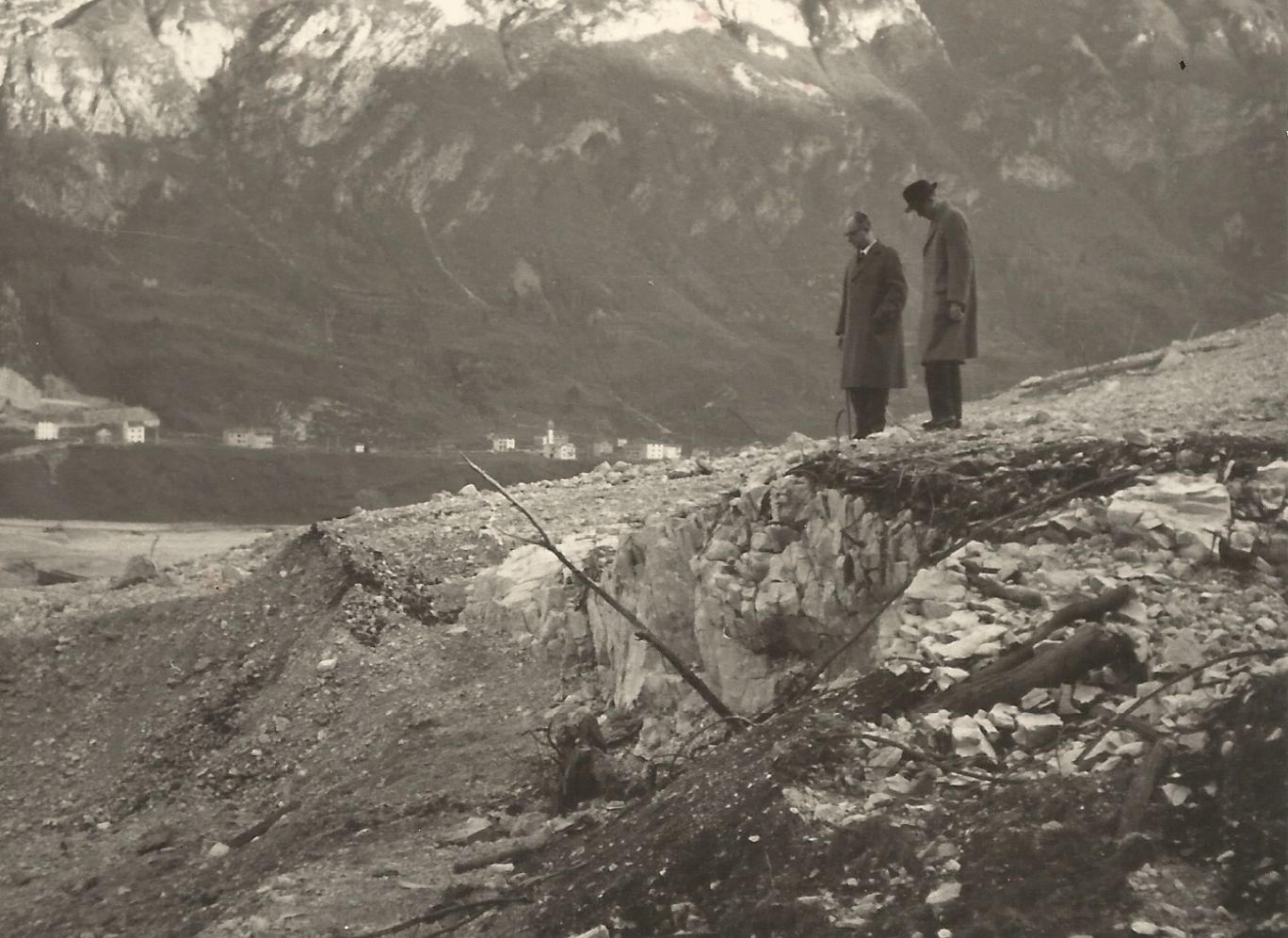
Two men and mountain

I have never been a great rummager, but perhaps that is changing. Last Sunday I was passing a second-hand bookshop in a quiet corner of Dorsoduro, Venice. In among the boxes of old photographs, no doubt excavated from house clearances, I come across this image. Among hundreds of pictures of Venetian wedding parties, fisherwomen on the Lido, grandees posing before their canal palaces, and ordinary family snaps of forgotten events, my eye selects this one, and for some reason I have to have it. Why has this photograph found its way into a box outside this rundown emporium of old books and discarded objects on the Fondamenta Briati?

Who are these men and what are they doing? Both are looking down, perhaps at a long trench that has been dug out of the hillside, or at something on the ground that we cannot see. A stick or branch protrudes from the ground beneath them at an angle of 45 degrees, but the men’s gaze appears to be fixed on something just the other side of this. Behind them stretches a line of buildings, and a church suggestive to me of the South Tyrol or Alto Adige. The man on the left carries a cane or walking stick, but he is not leaning on it. His companion, who wears a hat, is entirely occupied by the sight beneath him. His posture suggests a slight buckling or sagging, as though in reaction to the thing he has identified that cannot ever be communicated beyond this stolen moment in time. Perhaps it is the future he sees, emerging from beneath him like Walter Benjamin’s Angel of History, back turned towards the future. Perhaps it is an aleph, hidden among the shards and pebbles. Perhaps it is nothing of the kind, just a few bones, or a piece of broken mirror reflecting light. Behind them the mountains rise like a tsunami.


Brodsky’s Venice

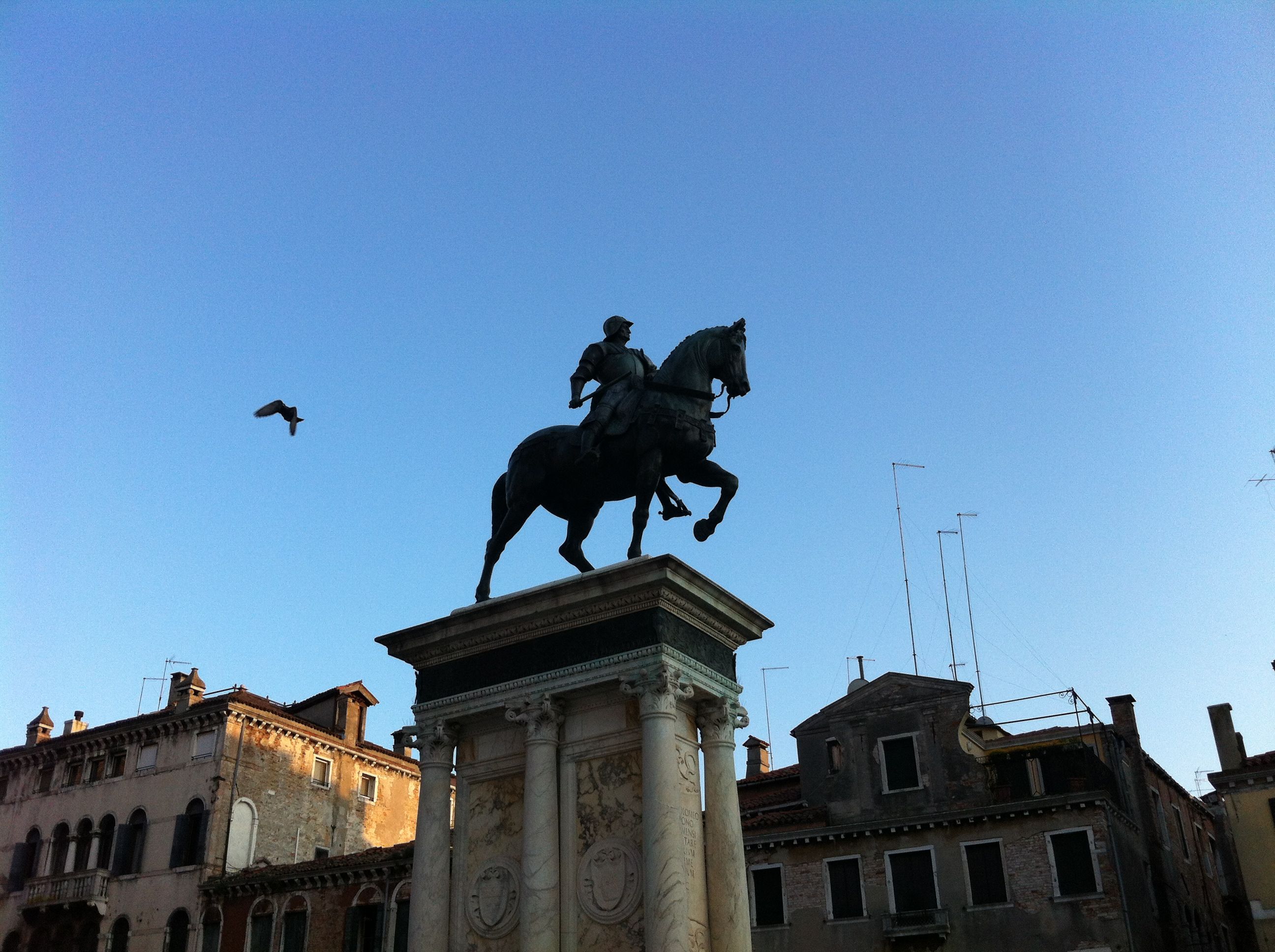
Colleoni statue with bird, evening.

Colleoni  (he of the three testicles) and bird, evening.

I have long admired the poetry of Joseph Brodsky – although with reservations – since hearing him read at Cardiff’s County Hall alongside Derek Walcott (a veritable pairing of poetic satyrs). Before travelling to Venice last Friday I purchased his Watermark, to see what he had to say about the city, where he spent a four-week vacation from his job as a U.S. college professor every winter for seventeen years. In the past I have read Jan Morris’ famous book on Venice, which I could not get on with, and Peter Ackroyd’s Venice: Pure City, which by contrast I enjoyed very much, and I approached Brodsky’s essay with trepidation. One hundred and thirty pages of large double spaced print, it is published as Penguin Modern Classic, though how it qualifies for this status is quite beyond my comprehension. It is a minor work by a once significant poet, who was the youngest ever recipient of a Nobel Prize (he was 47), perhaps awarded as much for his status as political opponent to the USSR – this was 1987 – as for his literary achievements. Early in the book, we accompany the young Brodsky on his first arrival at the city’s railway station, where he is to be met by a woman for whom he harbours amorous thoughts (his sentiments are not reciprocated). Then this: ‘The boat’s slow progress through the night was like the passage of a coherent thought through the subconscious.’

When I first read that line I thought it sounded interesting, but something nagged at me, because a thought does not really become coherent until after it has passed through the ‘subconscious’. But I didn’t wish to be unnecessarily antagonistic, so let it go. It sounds pretty, after all. Then some pages on, another nice passage: ‘The fog is thick, blinding, and immobile. The latter aspect, however, is of advantage to you if you go out on a short errand, say, to get a pack of cigarettes, for you can find your way back via the tunnel your body has burrowed in the fog; the tunnel is likely to stay open for half an hour.’ A nice conceit, I thought, which complements the earlier line well – but why spoil it with the literalism of that ‘likely to stay open for half an hour’, which sounds like the answer to a request made of a pub landlord.  And here: ‘Every surface craves dust, for dust is the flesh of time, as a poet says, time’s very flesh and blood.’ My response to ‘Every surface craves dust’ was one of admiration, even if it is what “a poet” says (irritating, as we want to know which poet), but why ‘flesh and blood’? Dust is flesh, but not blood. Dust is decidedly bloodless, and dry. Dried, desiccated flesh.

The essay is self-regarding and repetitive (not a woman enters these pages without Brodsky’s lecherous gaze resting on her, however peripheral her appearance). Then there is the prose: I realise English was not Brodsky’s first language, but there is too much in this short essay that is merely confusing: describing unenthusiastic meetings with the ex-pats he comes across in the city, he begins to fantasise about ‘some local solicitor’, and inevitably, as it is Brodsky, ‘his secretary’ (yawn): “Disparity of pursuits compromised by tautology of net results, if one needs a formula, that is.” Pardon me?

And this, of Pasiphaë, the mother of Ariadne and Phaedra, who famously enjoyed the attentions of a bull while sheathed in a cow-outfit: “perhaps she yielded to those dark urges and did it with the bull precisely to prove that nature neglects the majority principle, since the bull’s horns suggest the moon. Perhaps she was interested in chiaroscuro rather than in bestiality and eclipsed the bull for purely optical reasons?” What?!

And so on. I don’t wish to disparage the dead, but this is a very meagre piece of work, and is by no means a ‘Modern Classic.’ As a book set in Venice it comes ahead of Hemingway’s catastrophic Across the River and into the Trees, but not by a long way.

Perhaps it is a warning though. If you travel to Venice, be careful what you read. I have been to the city six or seven times, but it is only in the past few years that I have become interested in the literature about the city, from Casanova, who spent a while locked in upper reaches of the Doges’ Palace, to Régis Debray, who loathed the place and saw in it a reflection (and the source) of all the evils of Western Capitalism. On this last visit I dipped into Hugo Pratts’ Secret Venice of Corto Maltese, which came highly recommended from a friend. I was not familiar with the graphic stories, but you don’t really have to be to enjoy the itineraries around the city’s less visited corners that this anti-guide book offers, describing seven walks that lead you off the beaten track, into hidden nooks and across secret portals. Don’t take it with you around the city, but jot down a few notes first, otherwise you will end up like the perennial Venice tourist, leaning on the parapet of a bridge, trying to figure out why the map of the city you hold in your hands does not correspond to the physical actuality of the place around you.

Perhaps the best book about Venice is Italo Calvino’s Invisible Cities, which does not set out to be a guide at all, except for the imagination.

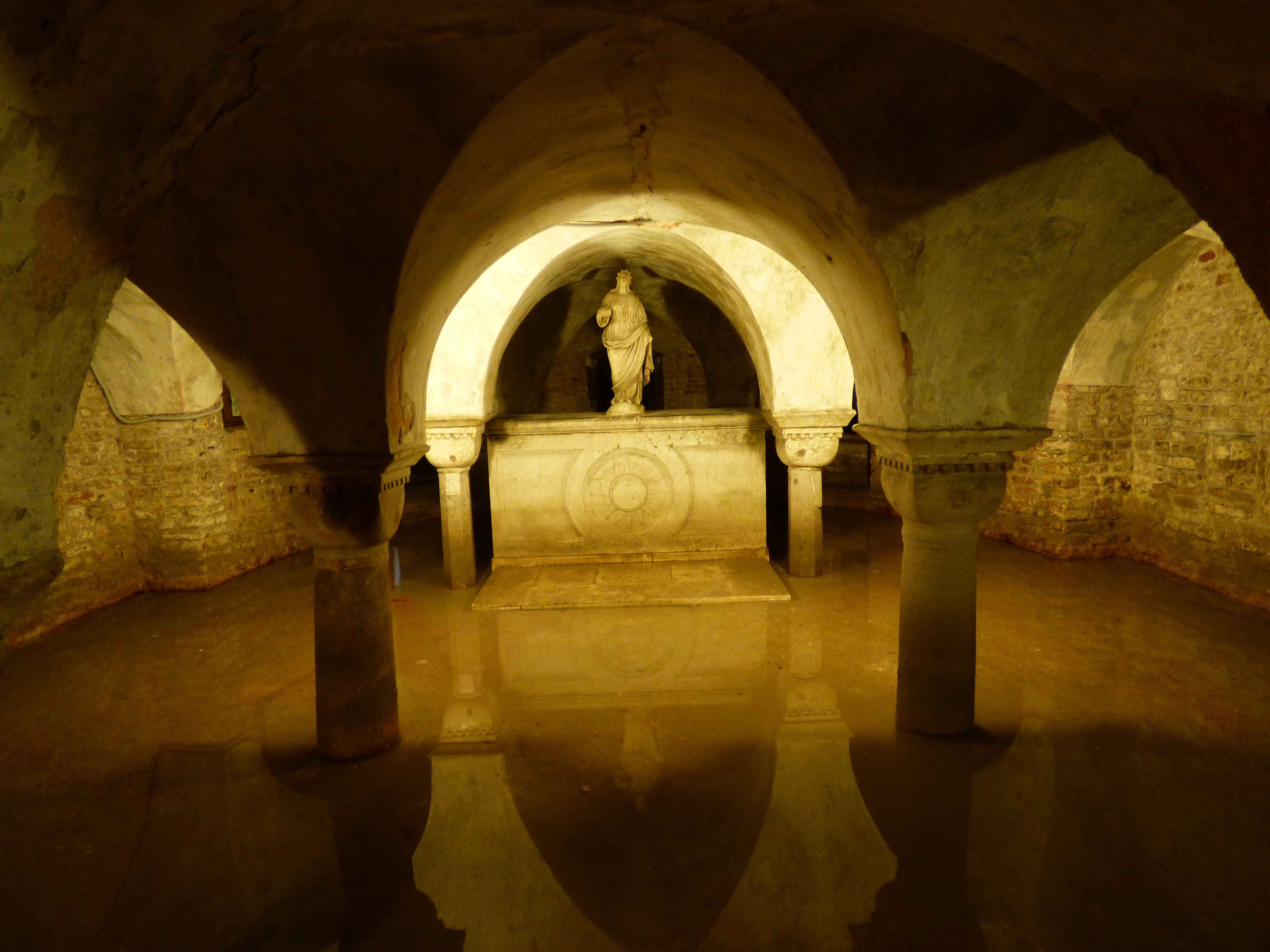
Below San Zaccharia, Venice.

Below San Zaccharia, Venice.

Note, 2022.  Some time after publishing this piece, in December 2014, I received a message from Jan Morris, which read: ‘So sorry you didn’t enjoy my book. I’ll keep trying, anyway.’ I realised then that I could have been considerably more critical of Morris’ Venice, but don’t much enjoy doing hatchet jobs, especially of people I know, if only a little.

Since then I have enjoyed other books on Venice, notably John Julius Norwich’s A History of Venice, and two little gems: the late Javier Marías’ Venice: An Interior (translated by Margaret Jull Costa) and Tiziano Scarpa’s Venice is a Fish (translated by Shaun Whiteside). Both are highly recommended.

Reflections on a first visit to Delhi

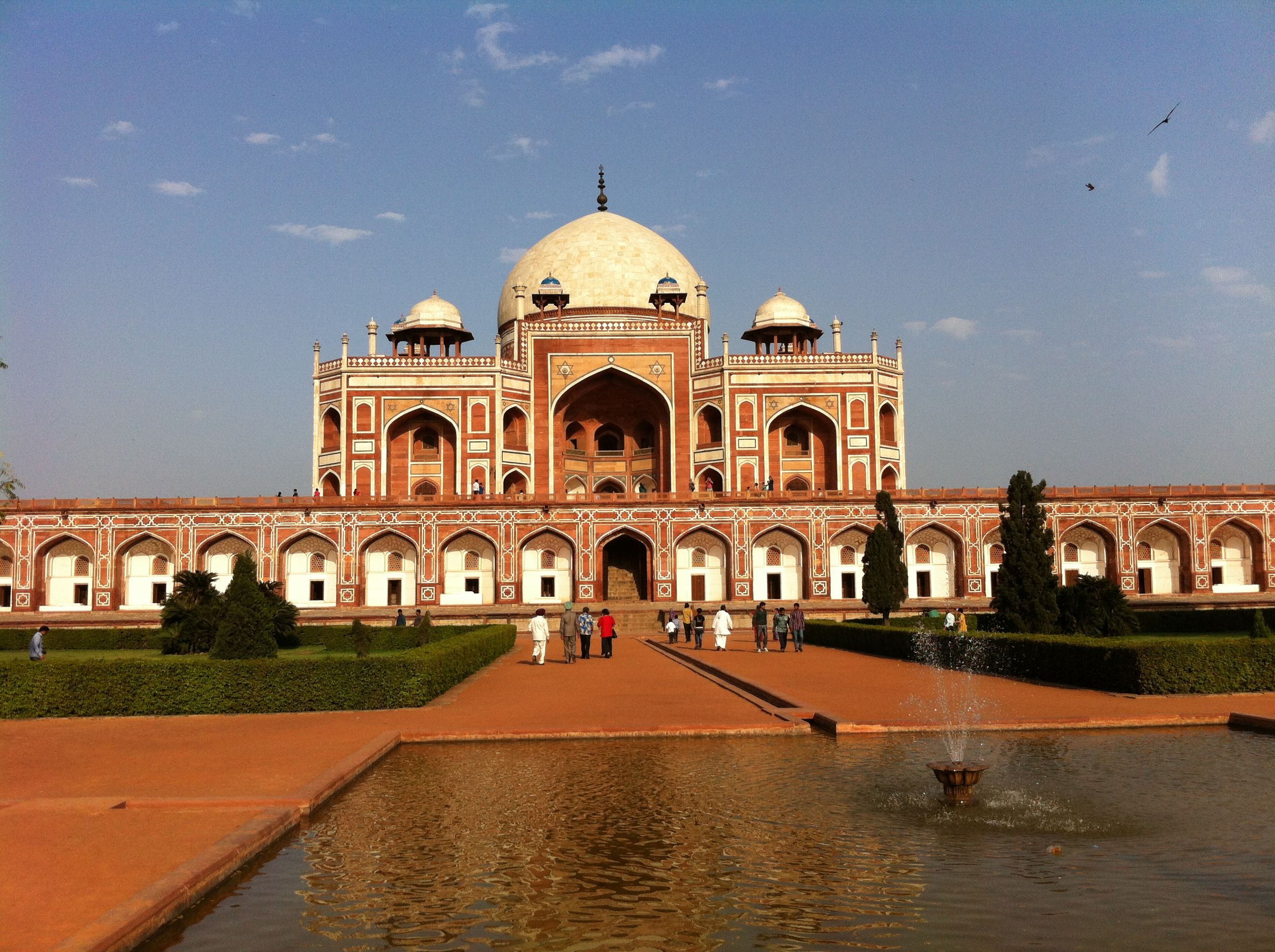
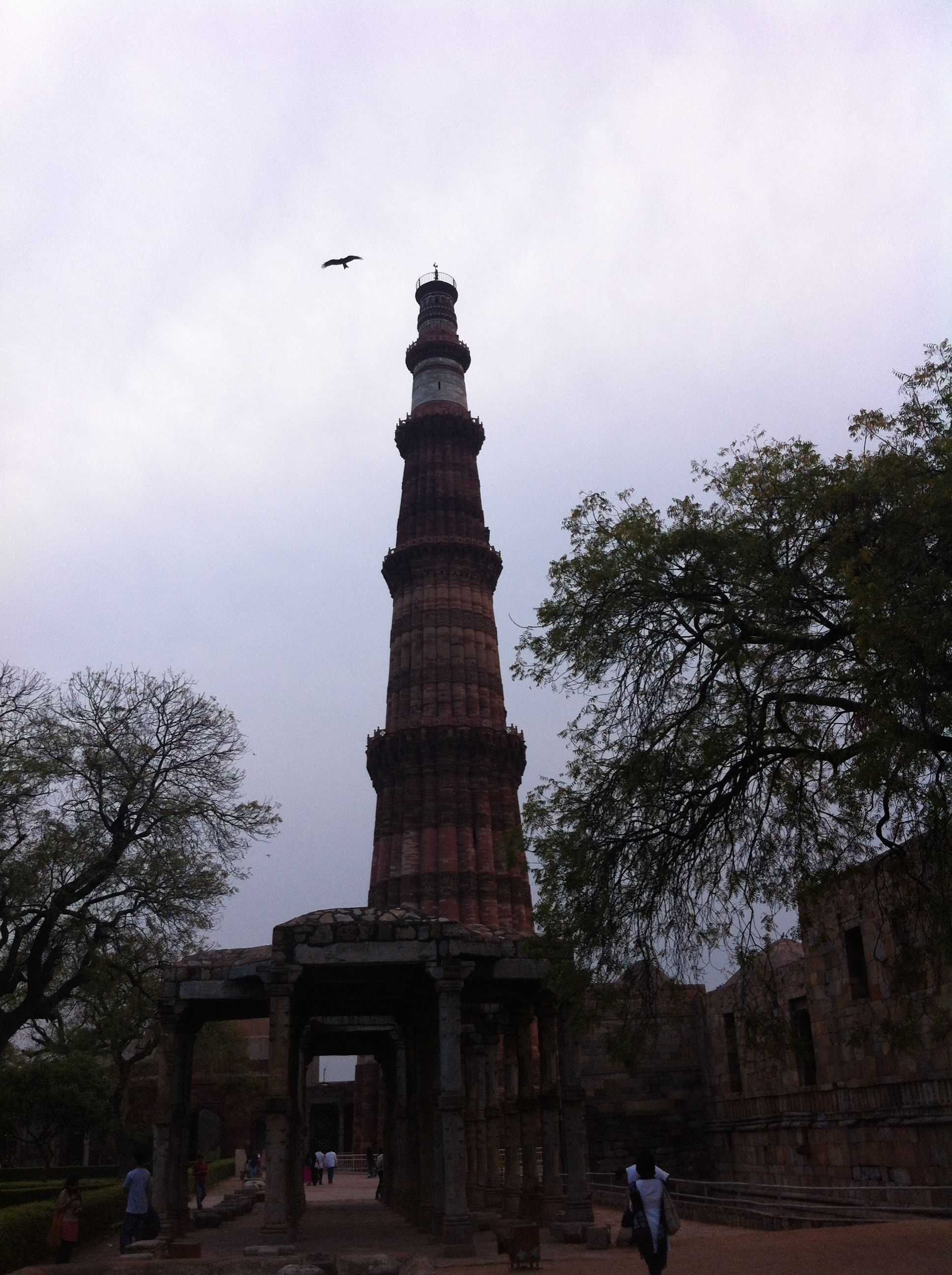
I like vultures. No, let me start again: I think they are vile creatures, but they are a useful reminder of our mortality, and of what might happen if we are careless enough to die in a public space at which these birds are attendant. During my brief stay in Delhi last week I had the opportunity to do very little apart from attend the First Sabad World Poetry Festival, where I was surprised (as a very minor poet) to be representing the United Kingdom – as opposed to my usual country of affiliation, Wales – alongside George Szirtes, a poet I have long admired. But, to return to my point, on the one opportunity that we were allowed out on a coach trip organised by our hosts (Sahitya Akademi, an offshoot of the Indian Ministry of Culture), I took five or six photos on my iphone in the fading light, and in two of these I inadvertently snapped vultures in flight (see below). Was this foreshadowing?

Delhi_Humanyun's tomb

Humanyun’s tomb with vulture, Delhi.


Qutub Minar tower, with vulture, Delhi

Qutub Minar tower, with vulture, Delhi

For an account of the festival itself, I can do no better than refer readers to George Szirtes’ website, where he gives a pretty full (and generous) account of what went down, especially in his analysis of the differences between the performance-oriented oral traditions of poetry and the page-oriented, European style of a one-to-one encounter between poet and reader:

“The oral tradition is rooted in the following: the community, the concept of the many and the sharing of an essentially conservative, traditional and ritualist space. The voice is public. It is heard by any within earshot. It moves into the individual’s space and occupies it, asserting its confidence in shared communal values. It can talk of private matters . . . but it does so on hallowed public ground. There is an implication of physical proximity, a swaying or flowing. The collective is greater than the individual. The poet performs a priestly role, mediating between the mass and the transcendent.

The page tradition depends on the one-to-one contract between writer and reader. The book is, most of the time, read silently and reorientated as voice in the reader’s imagination. The loud and the public are suspected of being rhetorical intrusions, acts of demagoguery, The poem is a meditated space that creates an internalised physicality that may produce a faster heart-rate, tears, finger tapping and so on but within the confines of individual sensibility. It values the individual more highly than the collective. It is to some degree, or so I suspect, an extension of the protestant sense of God as someone addressed directly without mediation. Inevitably I think of Rembrandt’s self-portraits or of the monasticism of Mondrian’s abstractions.”

I recommend anyone interested to read the whole account, and indeed to subscribe to George’s blog, which he does not call a blog, but ‘News’.

Other than attend many poetry readings, some of them good, others exceptionally dull, other still (my own session, in fact) infused with the kind of spontaneously robust anarchism at which India excels, I took notes, and I ‘networked’, but I saw very little of Delhi. There was not time. My one free day, I managed to spend shopping and chasing up an exchange dealer on the black market. I did however make several observations. I realise that none of these will be of much interest to practised India wallahs, and may even appear naive or disingenuous, but they are first impressions. The first was that I am unaccustomed to, and dislike, the sense of obligatory self-abasement or servitude imposed on the vast majority of Indians, which results in you, the European visitor, being treated with ridiculous and unearned deference. A second was that I had mistakenly expected the understanding and speaking of English to be of a higher level, especially in the service industries. But I realised after a short while that proficiency in English is pretty much limited to the professional middle classes. Taxi drivers and waiters by no means routinely speak or even understand English, as the following sample illustrates:

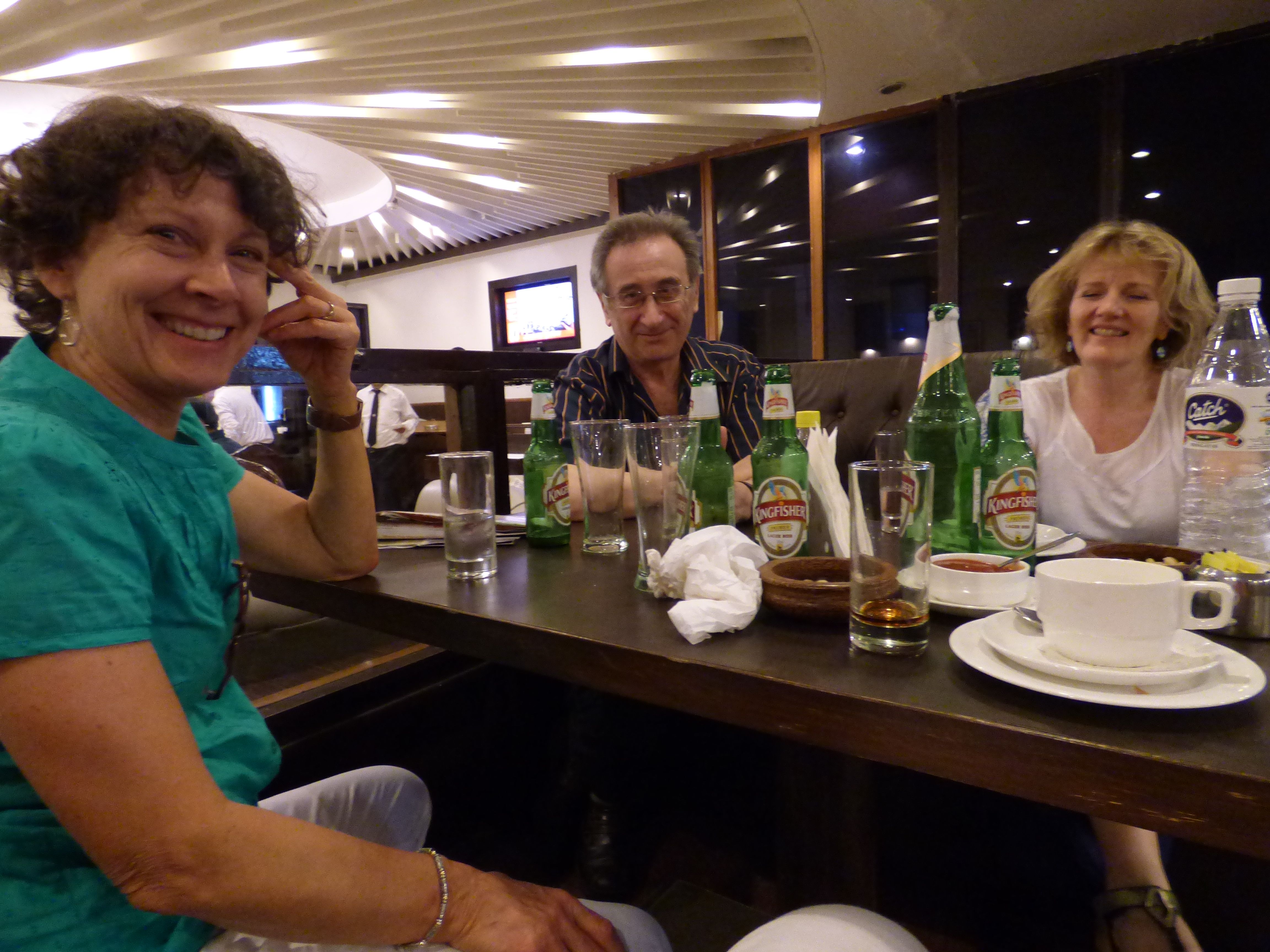
Blanco: Can I have a large beer please?

Waiter: Yes sir. Is that being small or big?

The third thing was vultures, which I have mentioned, and a fourth was the hell that is shopping. I will never again enter a shop in Delhi to buy anything more complicated than a packet of fags. Stress levels unacceptably high. Several people at once attempt to sell you goods you do not want, and at quite exorbitant prices, unless one is prepared to haggle, which after a couple of sleepless night, I was not. Fifth, and finally, I have always tried to avoid poverty tourism, for which reason I never went to India when most my friends did, back in the 1970s. As the Sex Pistols noted, there has always seemed to be something immoral about holidays in the sun – even under the convenient guise of the gap-year experience – when the great majority of a country’s residents live in a state of abject poverty. I know there are more ethical approaches to travel nowadays, and I attempt to follow them as best I can, but India, I fear, with its lasting resonances of Empire, will always be a difficult place for a British visitor.

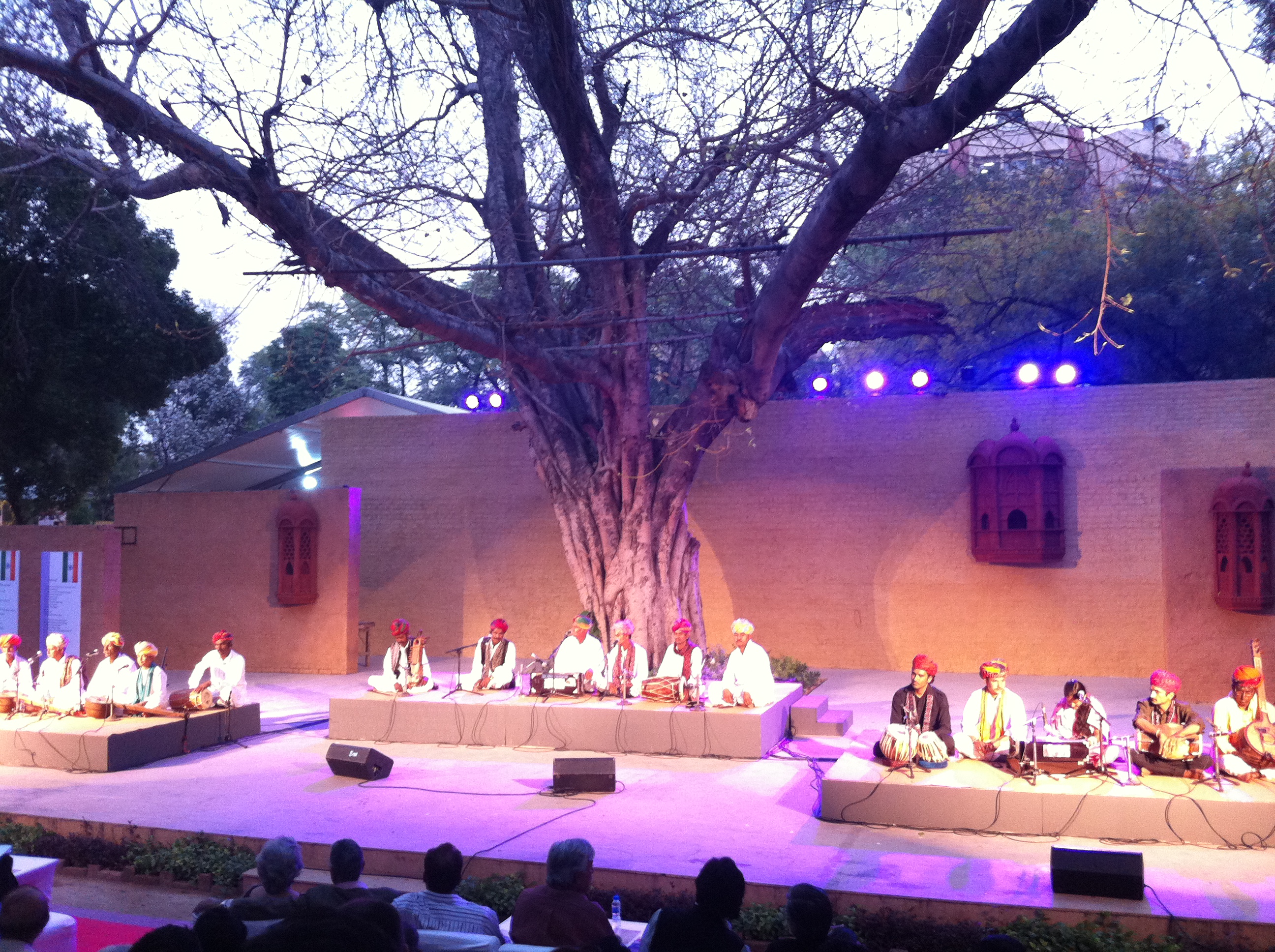
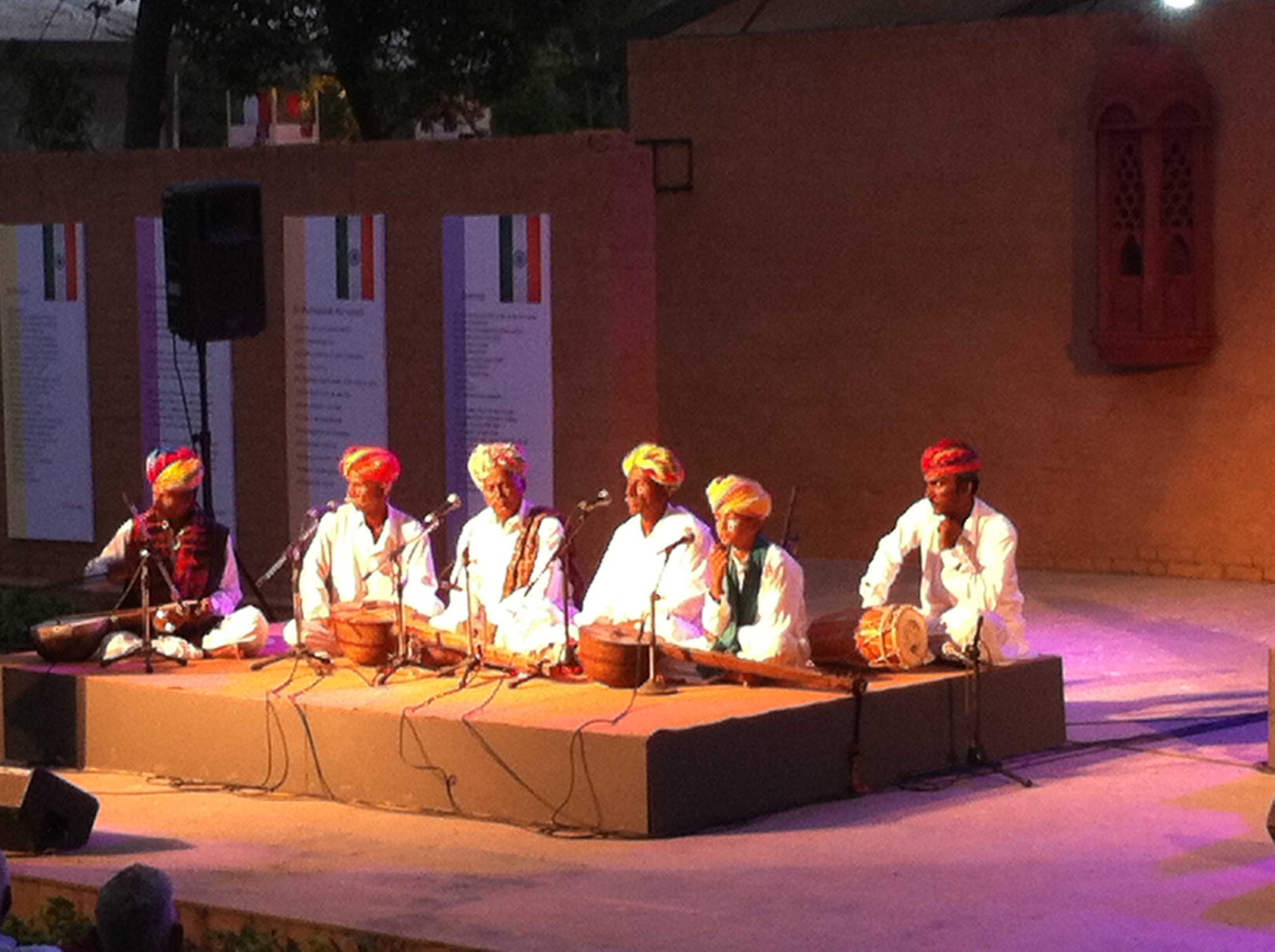
On a more positive note, I mentioned in my last post the musicians from Rajasthan, who played for us last Sunday evening. I was transported by their music into a zone of almost perfect bliss. It would have been worth the airfare just to listen to them, never mind the poets. Unfortunately the sound quality of my video does not do justice to the music, so I am just posting a couple of pictures instead.

Delhi_musicians

Delhi_band 1


Lorna Shaughnessy, George Szirtes, Moya Cannon

Lorna Shaughnessy, George Szirtes, Moya Cannon


Necrophiliacs of the written word

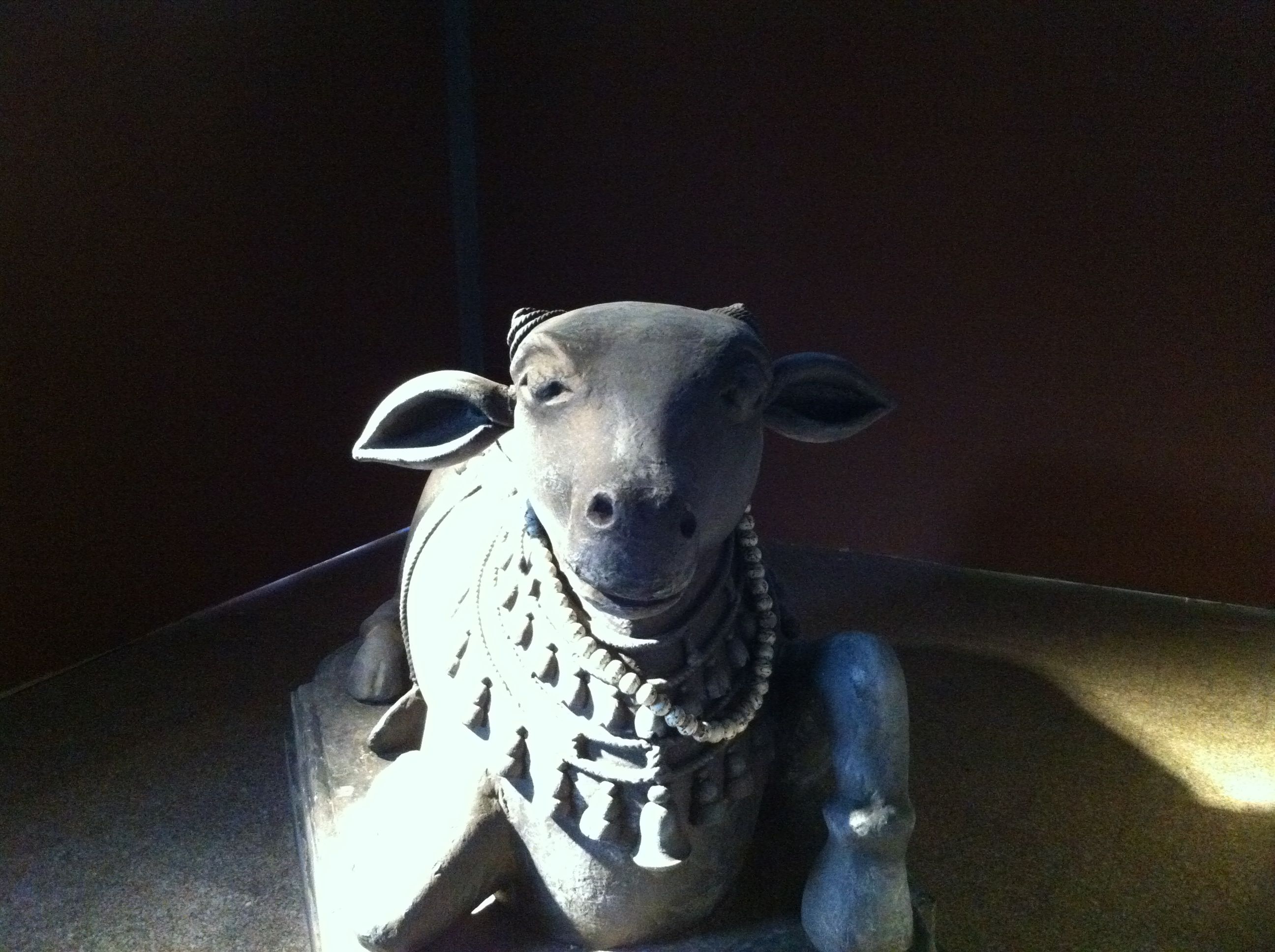
The sacred cow of poetry

The sacred cow of poetry


So what is poetry anyway? A rather perplexing question put about more than strictly necessary at the Sabad World Poetry Festival, which I have been attending in Delhi. On the first day, after a long haul from the airport through the dense traffic, noise, onslaught of colour and intense odour that is India, I arrived at the festival site, hosted by Sahitya Akademi and the Indian Ministry of Culture, and sat in the festival hall listening to a man sing. After he had sung his poem, or his song, they gave him a lovely bunch of yellow flowers. In fact, as I discovered, they give everyone a nice bunch of flowers (mine, on Sunday, were peach roses, which almost went with my shirt). Everyone was in a jolly good mood, what with the abundance of flowers and all. There were poets from all over the world, and especially from the subcontinent. I met up with George Szirtes from the UK, and Moya Cannon and Lorna Shaughnessy from Ireland, both of whom I have met before, and various other poets I have encountered over the past few years at festivals of this kind, including Sudeep Sen and (for the first time) the fine Indian poet Ranjit Hoskoté.  There is a dancer on the second night and a sublime group of musicians from Rajasthan on the third. But I am perplexed throughout by the recurring question of ‘what is poetry?’ I mean, who really cares? One rather cool suggestion in the opening speeches (which I missed, en route from the airport) was “witnessing, wandering and wonder”. Another, which I prefer, offered to me by Moya Cannon, in a slightly different context (but which still rings true) was the opportunity to indulge our negative capability. Someone raised the point that a recent article in the Washington Post – which cites a poet who shares Blanco’s name – had pronounced poetry dead, for once and for all. Bravo, I say. That makes us so-called poets the ghouls of literature. Don’t you love that idea? Or am I merely misquoting Don DeLillo, writing of the novel, another allegedly ‘dead’ form? Either way, poet or novelist, we are obviously the necrophiliacs of the written word.


Hanif Kureishi and the ongoing but tedious debate on Creative Writing courses

"It’s a real nightmare trying  to make  a living  as a  writer". Er . . .right, mate.

“It’s a real nightmare trying to make a living as a writer”. Er . . right, mate. I’ll take your word for it (but not your course).


As someone who makes his living from the teaching of creative writing I watched warily as the Hanif Kureishi story from the Bath Literature Festival unfolded last week. I had really begun to think that the argument about ‘whether you can teach creative writing’ was dead in the ground, but I was wrong. And the tremors that began in the staid and elegant streets of Bath have even rippled over the South Atlantic.

This morning I receive an email from Jorge Fondebrider in Argentina with a link to Ñ, the magazine supplement to the newspaper Clarín, and the most important cultural weekly in the country. The article suggests that ‘Kureishi’s bitter declarations belong to the hateful species of writers who go to literary festivals in order to spend their time complaining about how much they hate having to do publicity for their books.’ Indeed, perhaps Hanif was bored, and wanted to get something off his chest, or just rile someone. And that’s understandable, although not very professional. But he certainly knew that his outburst would get him publicity for his new novel, The Last Word. I don’t wish to add to that publicity, but do feel the need to make a contribution, as I am getting tired of the argument he has resurrected. Kureishi has frequently been outspoken in a heavy-handed, bombastic way and he is a didactic writer – which to my mind is at odds with being a good novelist. But he has also –and this might come as a surprise to many – written extremely lucidly on the practice of creative writing.

What shocked most people about Kureishi’s rant was the sheer, brazen hypocrisy of it all. Here is someone who makes his living from an activity that he evidently despises – much as he appears to despise the students he teaches – and yet is content to pocket the salary that accompanies this fruitless endeavour, without any consideration for either the people who have paid big fees to study at the university where he teaches (Kingston) or the consequences for the rest of us in having to pick up the broken crockery after this moribund and incredibly tedious domestic turbulence, once again. I am not even convinced how much of Kureishi’s polemic was for real, nor do I really care. The fact is that we have all had thoughts like Kureishi’s on a bad day, but we get over it. The evidence, as Tim Clare’s entertaining response to Kureishi: Can Creative Writing Be Taught? Not If Your Teacher’s A Prick is that many people get quite a lot from a Creative Writing course. From my own experience (I teach at Cardiff University) I would venture that MA students are not so naïve as to expect to make it into the upper zones of the literary stratosphere simply by gaining a qualification in Creative Writing. Most of them would accept that we, their tutors, cannot ‘teach them to write’, but that we can make them aware of certain techniques and strategies by which they can help themselves towards becoming better writers. Most of them would also accept that real talent – whatever that is – is rare (though whether the figure of 99.9% figure cited by Kureishi is relevant or not, I rather doubt: it reeks of the old prejudice about ‘genius’ and a ‘God-given gift’, or the equally defunct and baffling notion of inspiration from the muse). Those who do succeed (whatever the measure of success), and who possess a modicum of talent, begin with a strong urge to write – which often takes on the characteristics of an obsession – and they persevere through rewriting and rewriting until they get a result. Much as I suspect Kureishi did.

One of the modules on the Cardiff MA, taught by a colleague (Shelagh Weeks), is  ‘The Teaching of Creative Writing’ (Module SET203). The assessment comes in the form of a 3,000 word essay, submitted after the students have spent some weeks working with aspiring writers in schools and with our own undergraduates. Here is a sample quotation:

‘Some students have considerable phantasies about becoming a writer, of what they think being a writer will do for them. This quickens their desire, and helps them get started. But when the student begins to get an idea of how difficult it is to complete a considerable piece of work – to write fifteen thousand good words, while becoming aware of the more or less impossibility of making significant money from writing – she will experience a dip, or ‘crash’ and become discouraged and feel helpless. The loss of a phantasy can be painful, but if the student can get through it – if the teacher can show the student that there’s something good in her work and help her endure the frustration of learning to do something difficult – the student will make better progress.’

In marking this, I would have pointed out the clumsy repetition of ‘considerable’. Nor do I much care for ‘the more or less impossibility’, but the argument being made seems sound enough.

In fact, the piece was written by Hanif Kureishi and published in issue 37 of The Reader (Spring 2010). Much more helpful than the Kureishi who tells us that creative writing courses are simply a waste of time.


An inexplicable addiction

Lydia Davis

Lydia Davis

A joy to find this passage in the Freelance slot of last week’s TLS, written by the wonderful Lydia Davis:

“In spite of having translated during most of my life, I still don’t really understand the urge. Why can’t I simply enjoy reading the story in its own language. Or, on the other hand, why can’t I be content to write my own work in English? The urge is a kind of hunger; maybe the polite word would be appetite – I want to consume the text, and reproduce it in English . . . Or is translation merely a less demanding or anguishing mode of writing? The piece exists already in the other language, beautifully conceived and formed; now I will have the pleasure of composing it in English, without the uncertainty involved in inventing it. Or is it acquisitiveness? I want to take over something that does not belong to me, and by writing it in English, claim it. I don’t have a completely satisfactory answer. The desire to translate may be something of an inexplicable addiction.”